Posted in Articles.
Tidal Pools from Kleinmond to Cape Agulhas
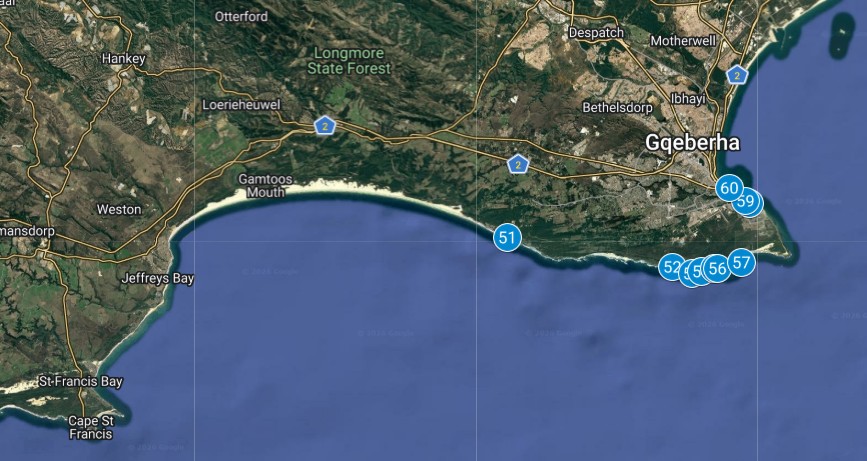
The coastline here was relatively inaccessible due to the mountains and the few roads from the interior. There are also only a few towns which have traditionally served as holiday destinations, benefiting from the warmer waters washed down east coast by the Agulhas Current. Much of the coast is part of declared nature reserves, which further limits the establishment of towns. Whale watching has made the area an international tourist attraction.
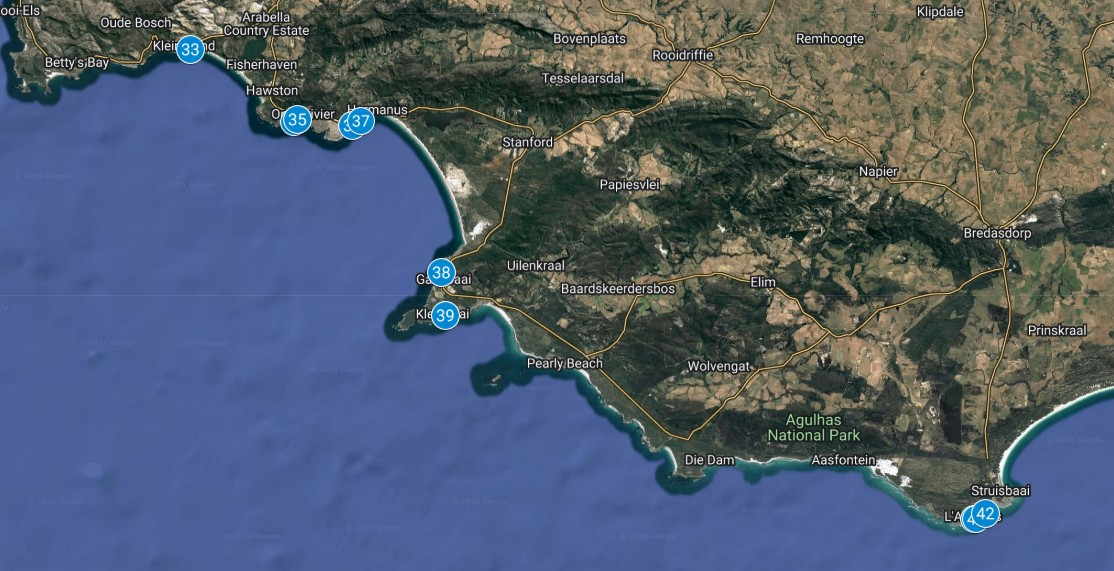
35. Kleinmond - Drievis, Die Bruggie
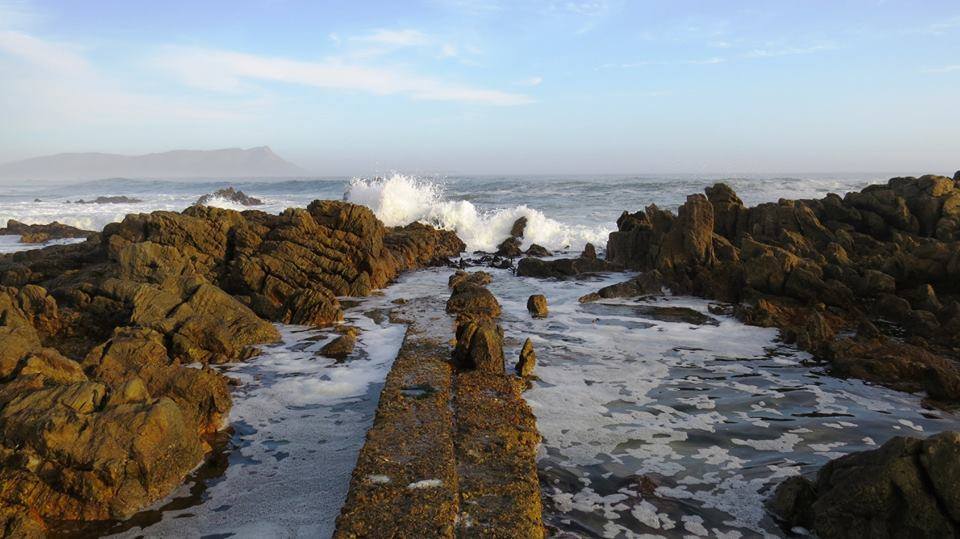
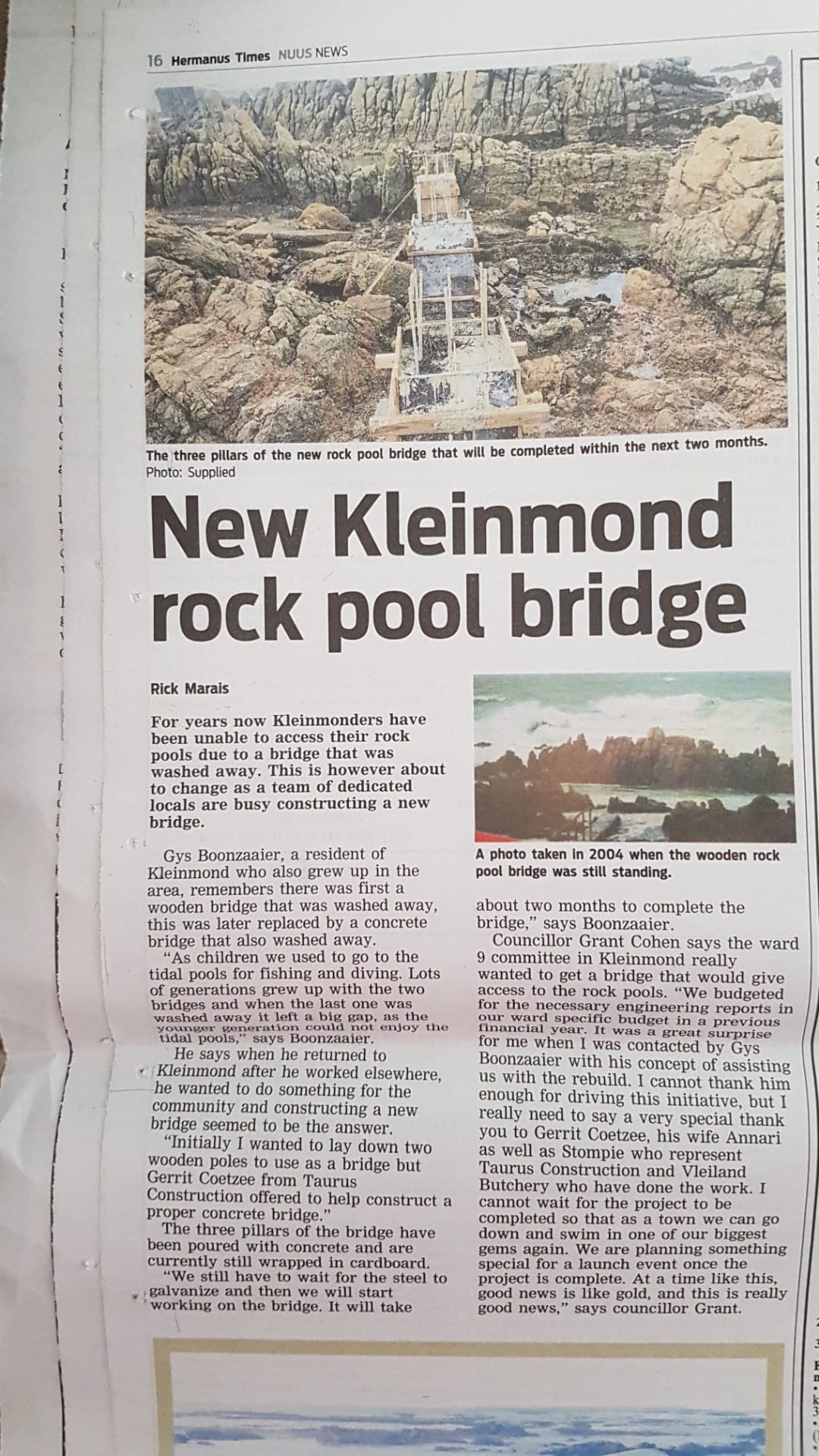
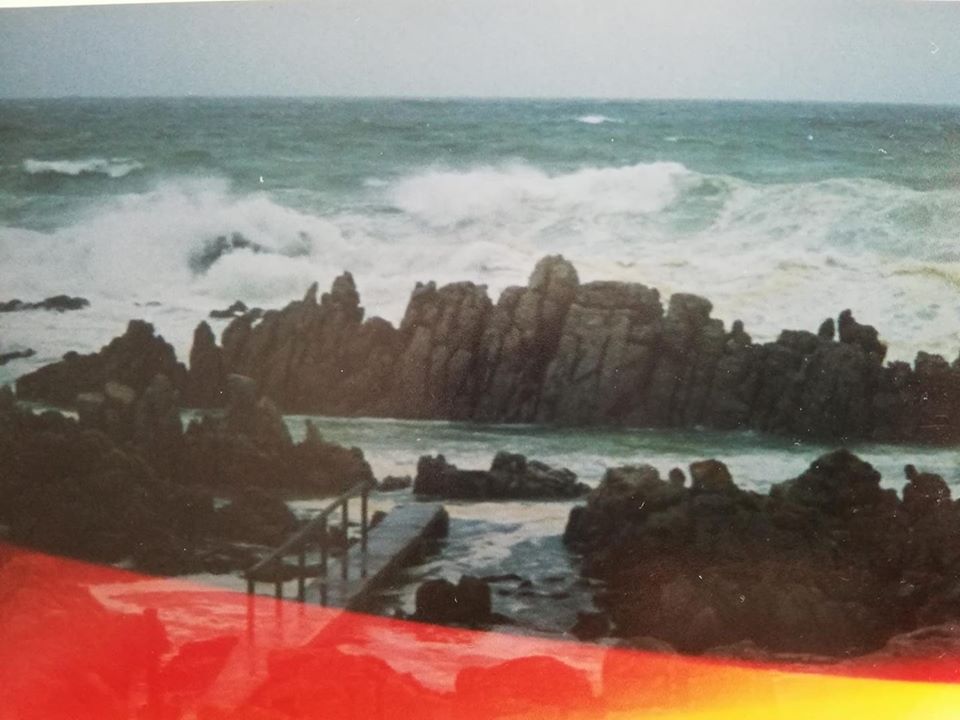
Before the town of Kleinmond was formally established, early holidaymakers in the 1800s referred to the area as Sandown Bay. Today, "Sandown Bay" often refers specifically to the spectacular 5km stretch of white sandy beach and the broader bay area where the town is located.It was a favourite vacation spot for farmers from the hinterland long before it became a permanent settlement. For years now, it has been difficult to access the tidal pool due to the bridge that washed away. This is, however, due to change Vleiland Slaghuis and Taurus Construction are busy constructing a new bridge. This is a very popular tidal pool. People do not just swim and dive in this pond but also fish in this pond. Die Bruggie Tidal pool is within walking distance from Xanske's Place.
36. Jan Rabie Tidal Pool
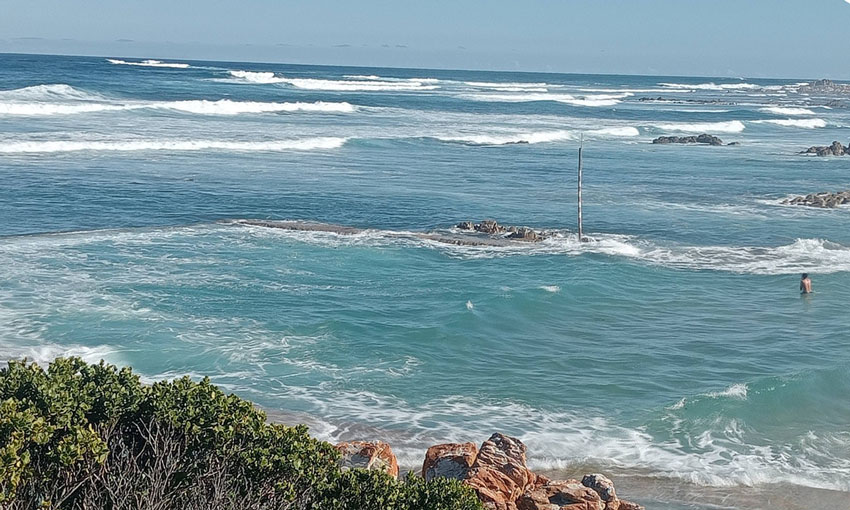
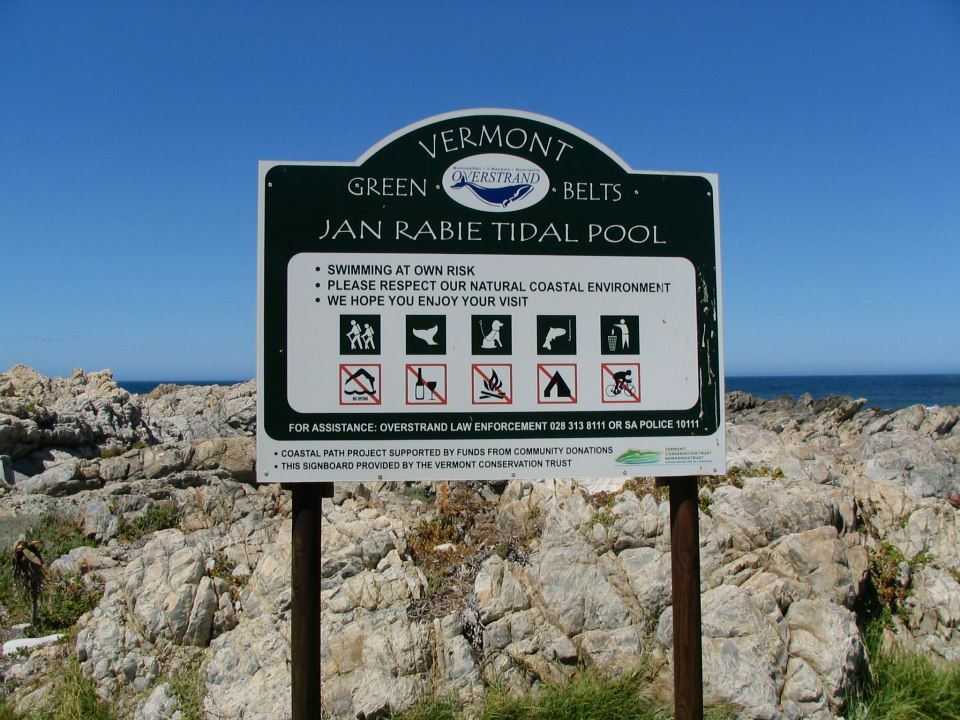
Onrusrivier offers two tidal pools. The first one was named after the author Jan Rabie, who was an Afrikaans writer of short stories, novels and other literary works. The Jan Rabie Tidal Pool is a small, scenic pool on the coastal path between Onrus and Vermont. It is great for swimming or just enjoying the sunsets, though during high tide, care should be taken as the waves crash into the pool.
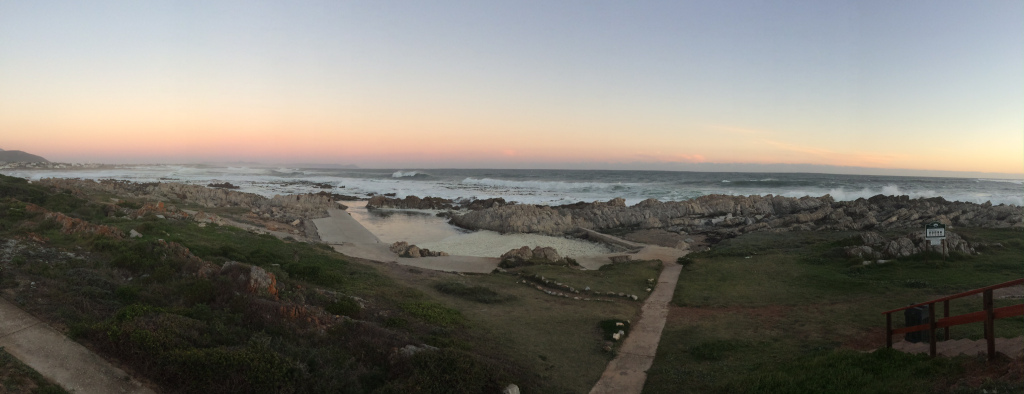
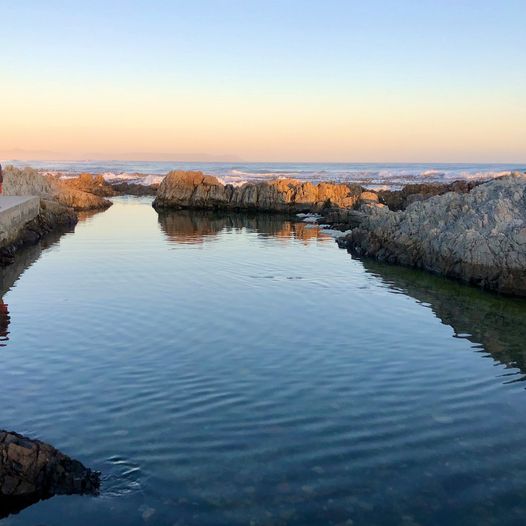
37. Davies Tidal Pool
Just a short walk along the same path lies Davies Pool, right in front of the Onrus Caravan Park, constructed by Mr David Jonathan Davies. It was also locally known as "Mermaid's Pool".
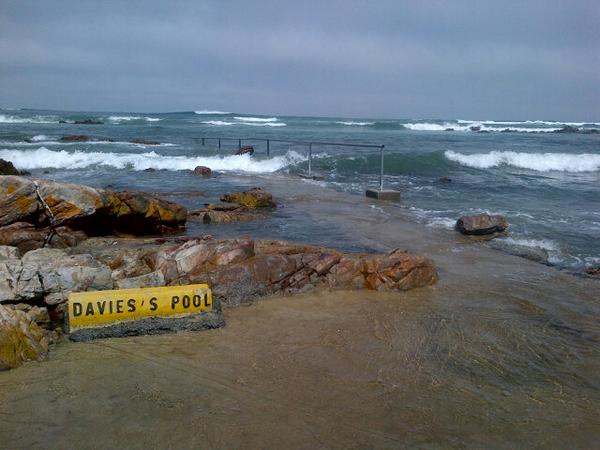
Davies Pool Onrus. It’s a tidal pool, a spa, a meeting place, time-out setting, coffee stop, outdoor gym, dog walkers gathering spot, sit and stare location - it's the heart of the Onrus community
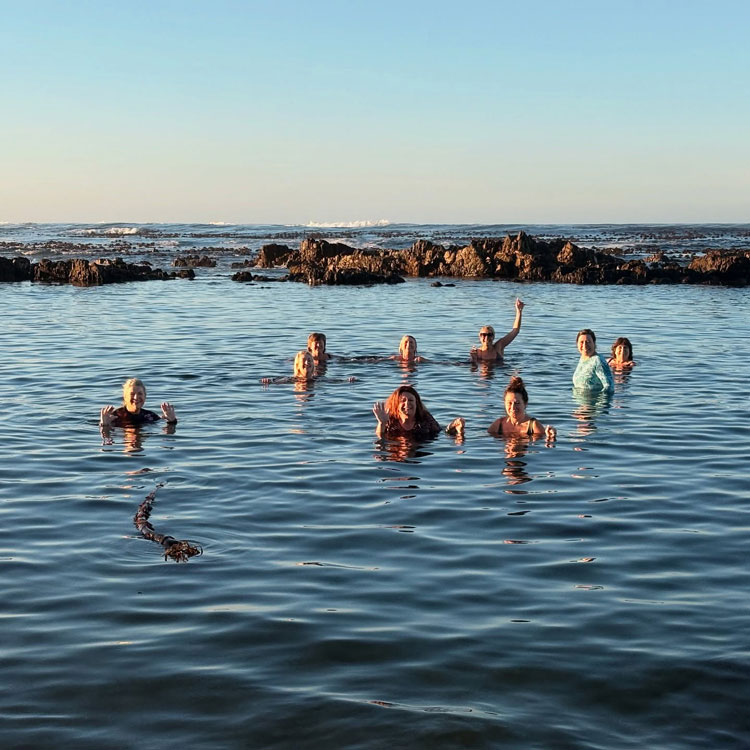
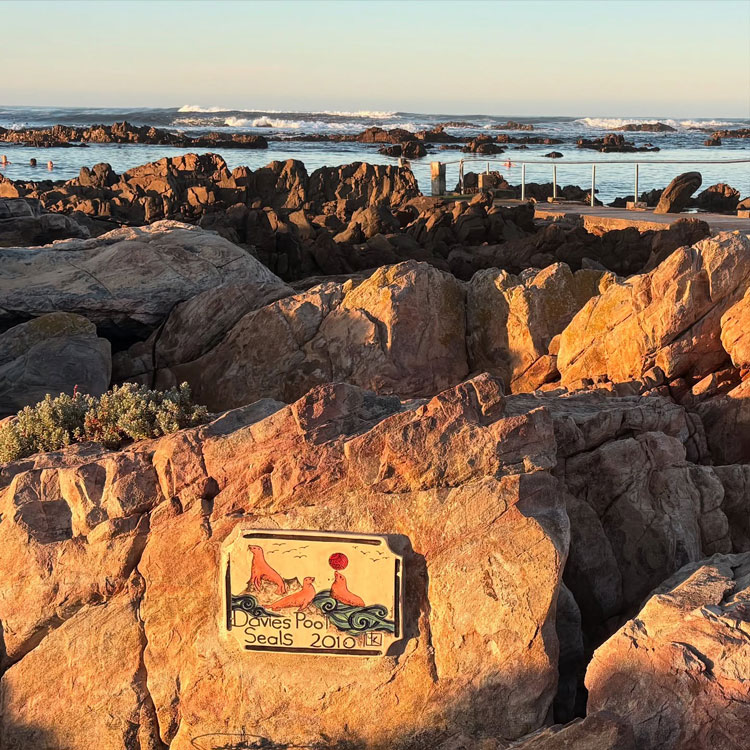
Pools of Timeless Memories
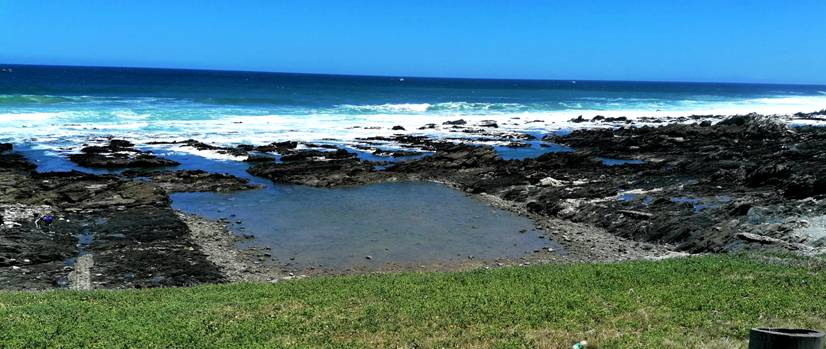
Tidal pools are rocky pools built along our coastline that provide a safe, family-friendly place to swim and play. They are shallow pools of seawater that form on the rocky intertidal shore. Many of these pools exist as separate bodies of water only at low tide and are habitats of specially adaptable animals, which have engaged the attention of naturalists and marine biologists, as well as philosophical essayists: John Steinbeck wrote in The Log from the Sea of Cortez, "It is advisable to look from the tide pool to the stars and then back to the tide pool."
The Western Cape has many tidal pools making sure we are spoilt for choice and Hermanus has a few gems of its own. Not only are they safe and free to use, but small fauna and flora can be observed if you put on a pair of goggles (or a mask if you're more serious about your snorkelling).
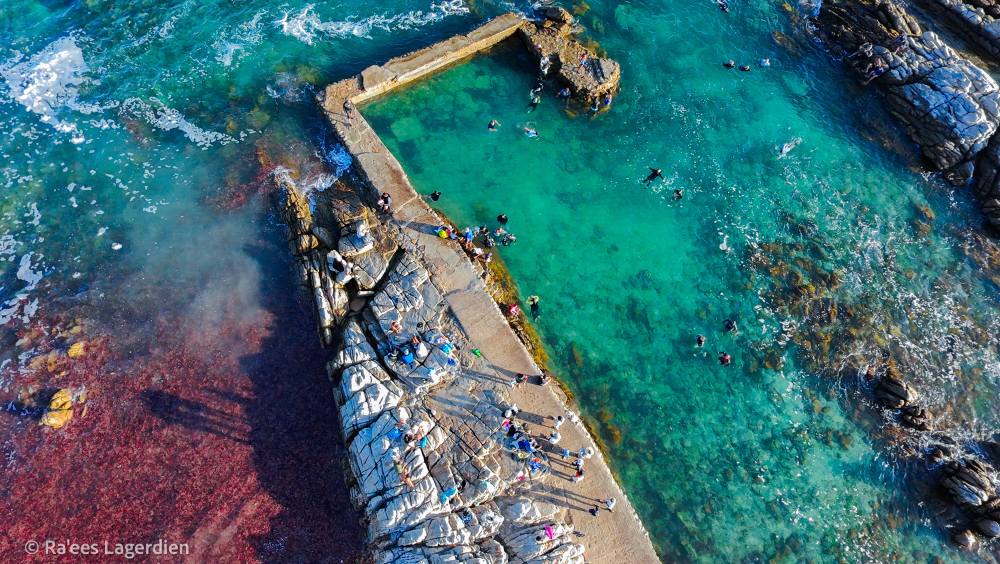
Fick's Pool is cradled between the rocks and is ideal for swimming and watching the ocean. With a utopian feel and waters that can be likened to the Croatian coast or Greek islands, this pool has been used for over 90 years for swimming, fitness, and ocean lovers.
Found down by the seaside of Westcliff, just off Marine Drive, where many stairs will take you down to the water's edge, snugly tucked in a sheltered cove. In the 1920s the concrete wall was built to encase this pristine ocean pool. The occasional swell and crashing of large waves naturally maintain and flushes the pool clean.
There are two possible ideas as to the origins of the pool's name. Either it was named after Mr J.J. Fick, the principal of the government school, 'Klipskool', whose home was just above the pool. Or, one of the Fick's, Josias Servaas Fick, who frequented the pool and convinced many to swim with him, later endearingly referring to it as "Fick se gat" (Fick's Hole) which later became known as Fick's Pool.
Ficks Pinchos & Wine restaurant with its wooden decks that hug the cliffs surrounding the pool was opened on 6 Dec 2019. Pack something warm for when the weather turns without notice. Access is free, though note that the restaurant does not take reservations as it is completely open air and will not be open for trade during days with rainy weather or extreme winds. First come, first served. For more information phone +27 283124082 or e-mail This email address is being protected from spambots. You need JavaScript enabled to view it.
The Marine Hotel was established in 1902 and is one of South Africa's most spectacular seaside hotels. Located on Hermanus' famous cliff path, overlooking the breathtaking Walker Bay in the Western Cape's Overberg region, this Small Luxury Hotels of the World property is the ultimate location for whale watching during our whale season - most often directly from the comfort of the sea view bedrooms. The popularity of the hotel grew along with its reputation for hosting grand affairs in its ballroom for the wealthy and well-known. The Marine Tidal Pool is situated below the Marine Hotel in Central Hermanus and is close to a number of excellent restaurants. Access is from the cliff path leading down to the pool via a set of steep steps and is not recommended for people who have difficulty walking. It offers safe swimming and good snorkelling at low tide for all, but dive shoes/booties are recommended due to the sea urchins and sharp rocks. The Pool is also safer for children as it is separated from the crashing waves and is in full view of the hotel and roads.
Onrusrivier offers two tidal pools. The first one was named after the author Jan Rabie, who was an Afrikaans writer of short stories, novels and other literary works. He was born in George, and was the writer of twenty-one works. He was included under the Sestigers, a group of influential Afrikaans writers of the 1960s. The Jan Rabie Tidal Pool is a small, scenic pool on the coastal path between Onrus and Vermont. It is great for swimming or just enjoying the sunsets, though during high tide care should be taken as the waves crash into the pool.
Just a short walk along the same path lies Davies Pool, right in front of the Onrus Caravan Park, constructed by Mr David Jonathan Davies. It was also locally known as "Mermaid's Pool". A coffee kiosk selling delicious take-away cappuccinos, milkshakes, ice-creams, and ice-coffee is based at Davie's Pool on the grass verge overlooking the sea! Outdoor exercise equipment is spread along the grass verge providing an outdoor exercise venue with the most beautiful view. The pool has been the venue for the occasional musical concert. A beautiful mosaic by artist Marie Peacy, in remembrance of her mother, adorns the wall of the clean ablution facilities.
Excellent for
swimming, even during high tide and rougher weather, as the pool has a level bottom and is protected from waves breaking into the pool. It provides endless hours of fun for all ages, especially exploring all types of marine life. Booties are recommended here because of the huge number of sea urchins. This tidal pool never ceases to amaze in providing different experiences, from watching small schools of fish to the occasional octopus, perlemoen (though small) to alikreukel and sea stars. One can always spot the youngsters hauling in their 'catch' in the form of 'klipvissies' - just to release them back to the ocean. Many childhood memories were created at this very safe tidal pool.
38. Fick's Tidal Pool
Built around 1933, the pool is ocean-fed by waves crashing over a concrete wall, keeping the water fresh and clean. It features a sandy bottom and is sheltered from the wind by high rock faces.
Today, Ficks is made up of a series of wooden decks that hug the cliff contours. There, broad umbrellas have been set up to provide shade for guests. The view is of shy resident dassies on the surrounding rocks, pods of dolphins beyond the tidal pool wall, or yachts in full sail tacking to the direction of the wind.
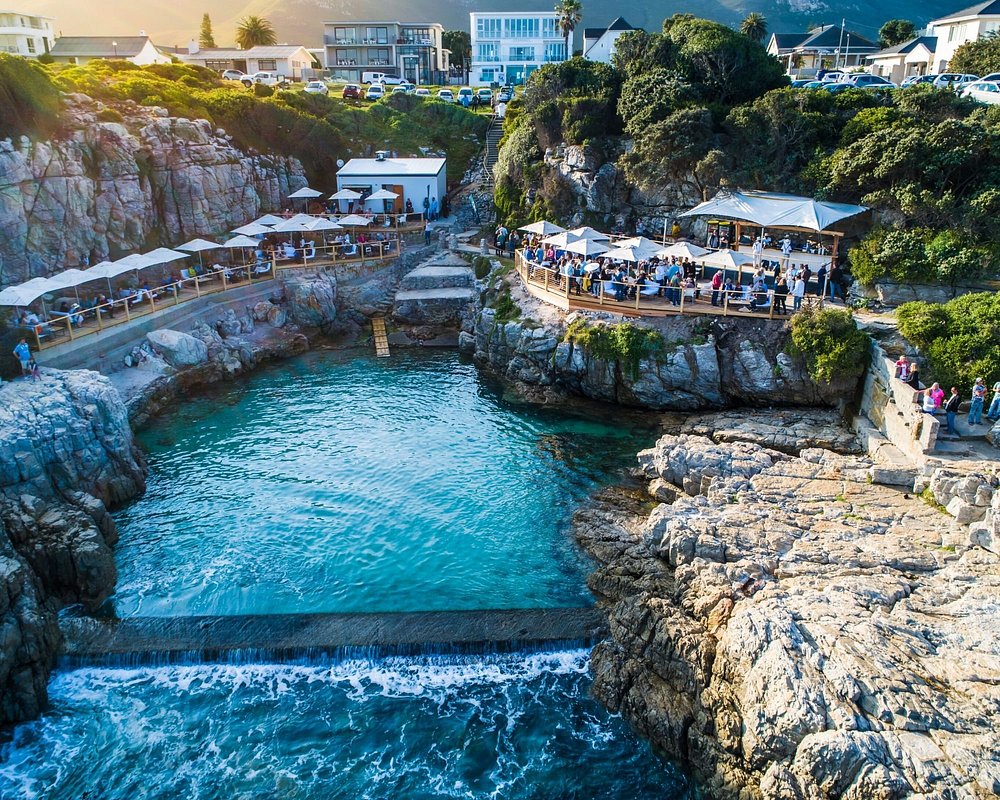
Fick’s Pool is situated below Marine Drive, where the formal houses on the seaside of the road come to an end. Look out for a tarred parking area next to a substantial thatched residence. At this point the ground drops away quite sharply towards the ocean, and Fick’s Pool comprises a narrow inlet from the open sea to a sheltered cove. This is one of the oldest parts of Hermanus. In 1854, while Hermanuspietersfontein was still the official name of the area and the first settler families had not yet left Herries Bay, the first twelve sites for houses were put up for sale by the Municipality just above Fick’s Pool at £1. 4 shillings each.
In the early 1930s a concrete wall was built across the opening of the cove, creating a tidal swimming pool. Waves break with considerable force into the pool and scour out sand and water that has stood for too long. As a result, swimming in the pool is a very refreshing experience. At present it is seriously under-utilised.
Who was Mr Fick?
There are two different explanations of how Fick’s Pool came into existence and who it was named after. Some accounts attribute it to Mr J J Fick, who was the principal of the only government school in Hermanus during the 1920s and early 1930s. Known as the ‘Klipskool’, it was situated at the foot of Klipkop, which we now call Hoy’s Koppie. Mr J J Fick lived in a house on one of the sites above the inlet, then named the ‘gat’.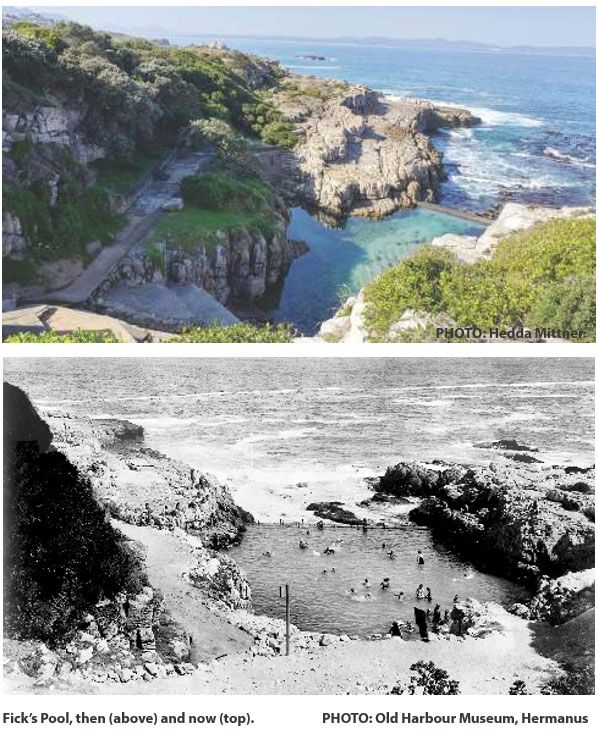
It was the time of the Great Depression, and times were tough economically. There was little money available to provide entertainment for pupils during weekends and holidays. Children from families living in Mossel River and Voëlklip had access to several beaches (Langbaai, Voelklip, Kammabaai and Grotto) and could entertain themselves. But there was not much to do in the town itself, except hanging around the Old Harbour, then known as ‘Visbaai’, watching the fishermen and getting into bad habits.
We know that the Oblowitz family, which owned a prosperous general dealers store at the corner of Main and Harbour Roads, actually sold up and returned to Cape Town because their only son, Sidney, could not be prevented from playing truant and hanging around with suspect companions at Visbaai. Sidney reveals this himself in a remarkable set of television interviews he gave at the age of 95 in 2010.
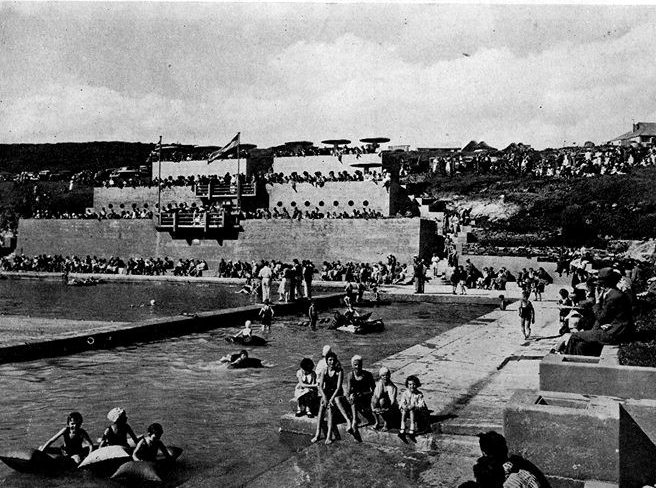
Mr Fick petitioned the Council to create a swimming pool in front of his house. This involved considerable blasting of the rocky cliffs and the removal of a large pointed rock that would have been in the middle of the pool. Then the concrete wall was built and, a little later, basic wooden changing facilities were added. These were painted white and were erected on the north side of the pool. They can be seen in old photographs and were attractive in themselves, unlike the unattractive face-brick building to be seen there now.
It seemed a good thing to name the pool after the man who had motivated its construction and so ‘Fick’s Pool’ came into existence, probably in 1933. It was an immediate hit with schoolchildren.
The other Mr Fick
The second explanation is more prosaic, but it contains more verifiable data. Another family with the name of Fick had been living in the Caledon area since at least the 1870s, according to Mr ‘Lampie’ Fick, the present owner of the farm Weltevreden and former Cabinet Minister. Documents exist proving that his ancestor Josias Servaas Fick served as Field Cornet for the Caledon ward from 1870 to 1885.
There is further documentary evidence that on 16 August 1889, an erf (plot) in Hermanus, adjacent to the twelve previously sold, was granted on a quitrent basis to the same Josias Fick. The erf extended from the northern end the pool, across Marine Drive (which had not yet been built) and all the way to Church Street, enabling the family to keep chickens, a cow and sheep. Josias Servaas Fick began to spend more time at this holiday home and got into the habit of going for a morning swim each day. He apparently also successfully persuaded others to join him and soon people were referring to “Fick se Gat”. This was later changed to the socially more acceptable ‘Fick se Poel’ and then anglicised into “Fick’s Pool” .
The summer haunt of 1940s teenagers…
Either way, by the mid-1930s young people were enjoying themselves at Fick’s Pool, using the term of endearment “Fikkie’s Pool”. Numerous photographs show numbers of people using the facilities, but the best written description I can find refers to Fick’s Pool in the 1940s. It was written in 2003 by Una Graven, a grandchild of Christiaan Warrington, of the original settler families. It is part of a contribution she made to S J du Toit’s Hermanus Stories
When we were approaching our teenage years, Fikkie’s Pool was our summer haunt. The beaches of Voëlklip and the New Beach as we called the Grotto Beach then, were out of our reach as none of us had any means of transport… Fikkie’s Pool was where it all happened – splashing in the tidal pool, being frightened when the high tide swept over the retaining wall, clambering over the large rocks and spreading a towel on the warm stone to lie for hours with the glow of the sun on your back. It was giggling, gossiping and taking shy peeks at the opposite sex. It was showing off and innocent flirting with the exciting uncertainties of romance. It was where the boys challenged each other to what seemed to us then, death-defying dives from the top of the cliff just outside the sea wall of the pool… Fikkie’s Pool was an idyll.
…And the site of tragedy
Another story linked to Fick’s Pool is tragic and concerns the death of a member of the same original settler family, the Warringtons. On a New Year’s Day in the late 1920s, Joe Warrington persuaded Skipper van Dyk, Tommy Montgomery and a couple of other men to go after a school of sardines just off Fick’s Pool. Unfortunately, a whale became interested in the boat and eventually capsized it. Arderne Tredgold describes the resultant events in this way:
Joe Warrington was fishing, as the custom was, with his lines tied to his big toes. He was thrown out of the boat, the lines must have twisted round his feet so that he could not swim, and he was drowned. The others managed to cling to the boat. They were not very far from the shore, but it would have been dangerous to swim to the rocks (around Fick’s Pool) with the waves breaking over them. They shouted for help but most of the village was resting after New Year’s celebrations and one or two who did hear them thought that someone was playing a New Year's joke.
The men were eventually rescued, but Joe Warrington’s body washed up some days later near the harbour. His feet had been severed by his lines.
General Jan Smuts
Fick’s Pool has yet another claim to fame. It was used frequently by General Jan Smuts. Smuts often visited Hermanus, staying in The Sanatorium, his sister being married to the owner and medical practitioner, Dr Joshua Hoffmann. Smuts started his daily routine with a swim in Fick’s Pool, followed by breakfast, working during the morning, rest in the early afternoon and then a brisk walk to the top of the mountain behind Northcliff before dinner.
For a relatively obscure site Fick’s Pool has a lot of history attached to it. There is no doubt that it deserves to be more widely known and appreciated in Hermanus.
Date: 02 July 2017
39. Marine Hotel Tidal Pool
The tidal pool is situated at the foot of the cliffs in Central Hermanus, right in front of the hotel.
The hotel was originally established as the Golfers Hotel in 1897, before being renamed the Strand Hotel and eventually becoming The Marine Hotel in 1913. The primary structure, recognised as the historic landmark today, was completed in 1902. Today the Marine in Hermanus is a member of Small Luxury Hotels of the World (SLH). It is one of only a few hotels in South Africa to hold this prestigious endorsement,
The Hermanus Cliff Path is a world-renowned coastal walking trail in the Western Cape, South Africa. It is primarily famous for offering some of the best land-based whale watching in the world, particularly for observing Southern Right Whales during their migration from June to November. he path stretches approximately 11 to 12 kilometres (6.8–7.5 miles) one-way. It meanders along the rugged coastline from the New Harbour in the west to Grotto Beach and the Piet-se-Bos milkwood forest in the east.
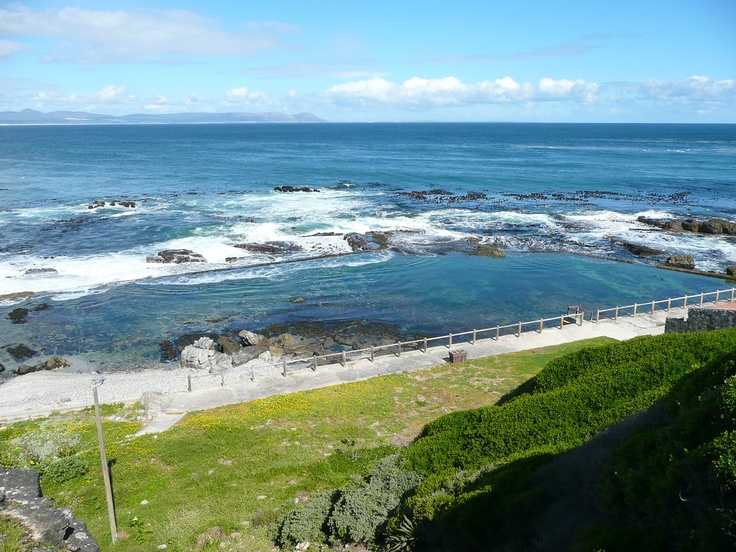
40. Gansbaai
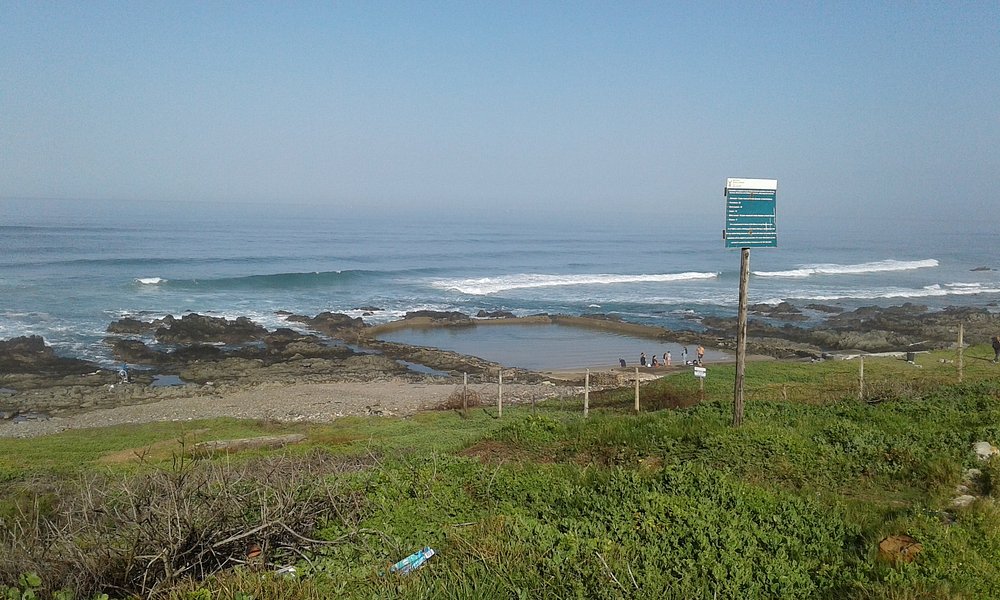
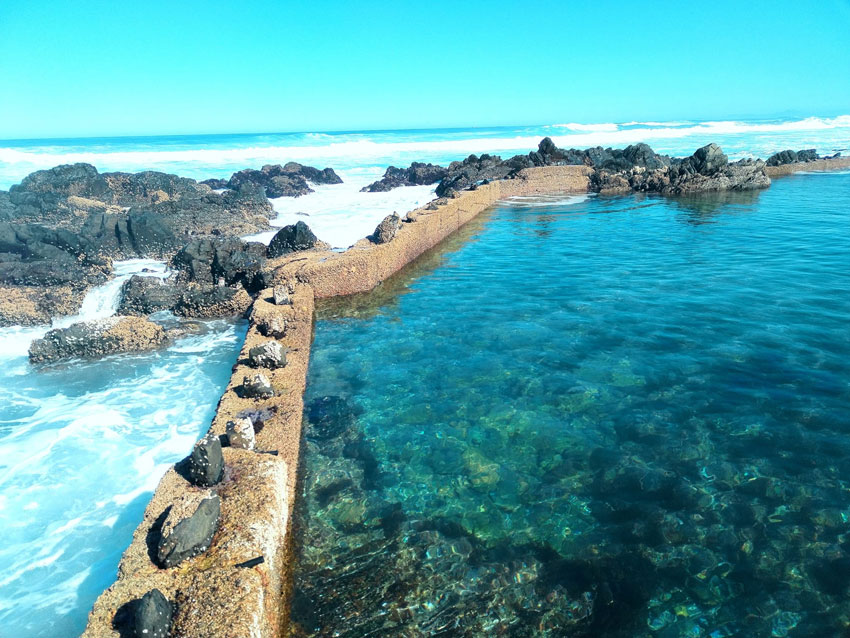
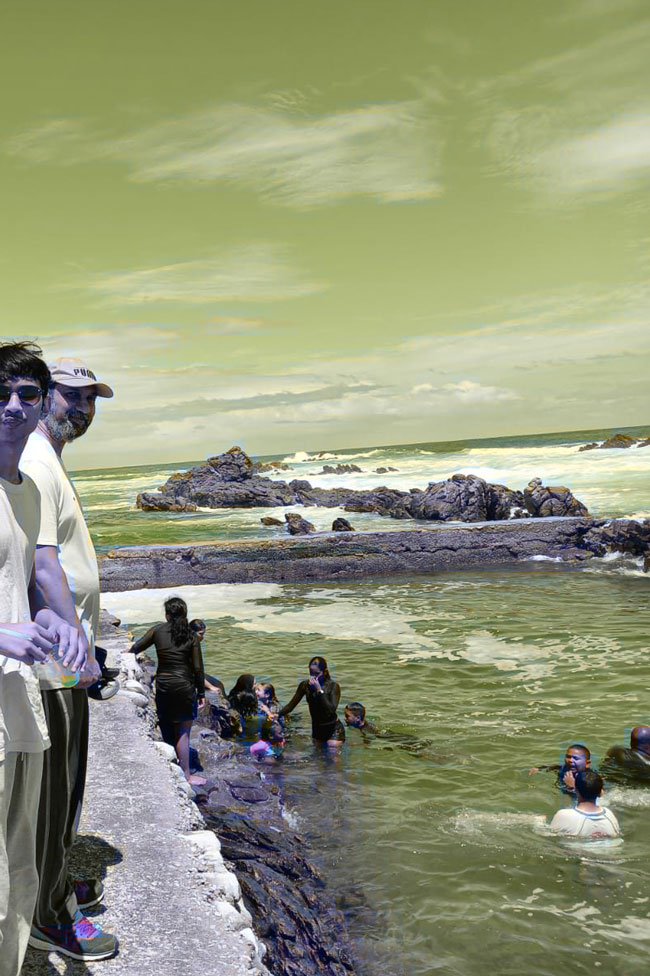
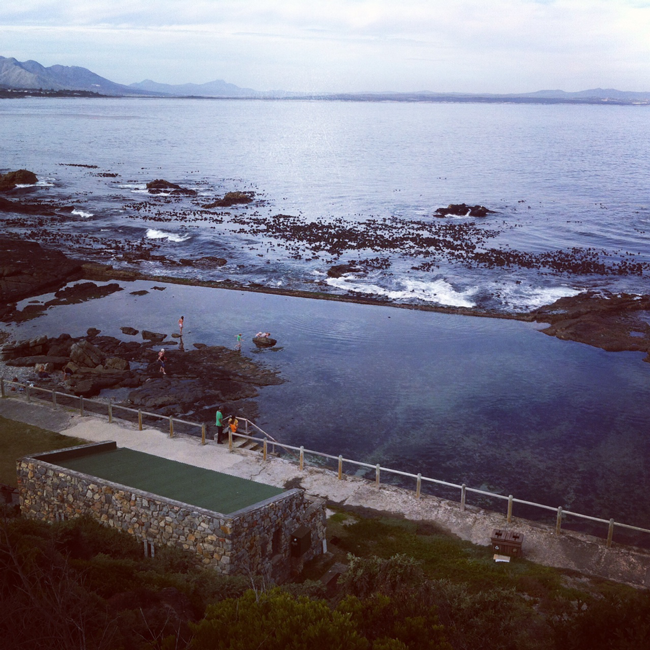
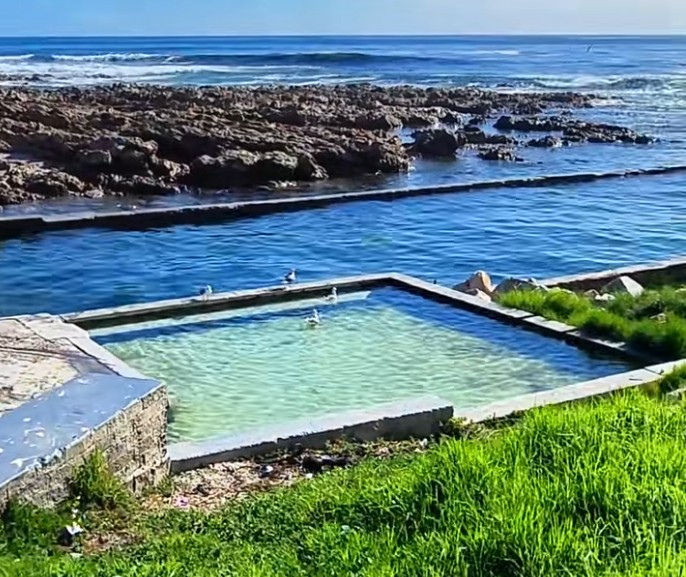
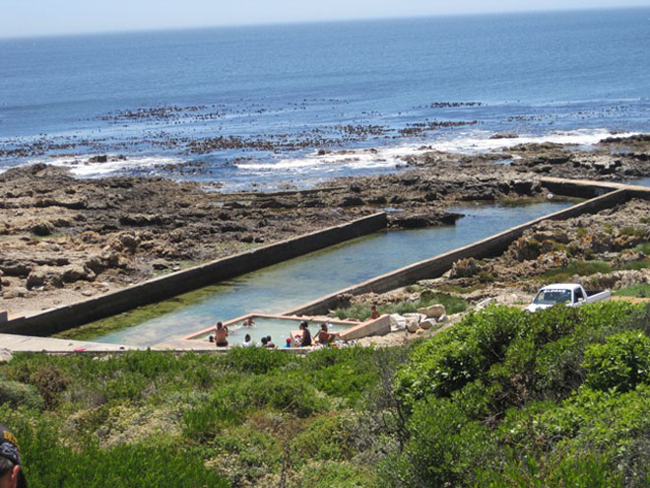
Gansbaai Tidal Pool can be found along the gravel road that is part of the Perlemoen Hiking Trail, which runs parallel to Kusweg in Gansbaai. The large tidal pool has been a popular gathering spot for generations of revellers who enjoy swimming, diving, braaing and late-night shenanigans. The Gansbaai Tidal Pool comprises one large pool that varies in-depth, depending on the tide, and a shallow freshwater kiddies pool which is filled with spring water that flows down from an underwater spring.
Gansbaai is known for its dense population of great white sharks and as a whale-watching location. It is also famous for being the site where the HMS Birkenhead sank in 1852.
The troopship HMS Birkenhead was wrecked off Danger Point in 1852. A barely visible rock 2 kilometres (1.2 mi) from Danger Point (now aptly called "Birkenhead Rock") was fatal for the troopship carrying young Welsh, Scottish and English soldiers and their officers and family on their way to Eastern Cape to fight the Xhosa. The Birkenhead became famous because it was the first shipwreck where the "women and children first" protocol was applied. All women and children were saved but 445 of the men, mostly soldiers, perished.
41. Kleinbaai
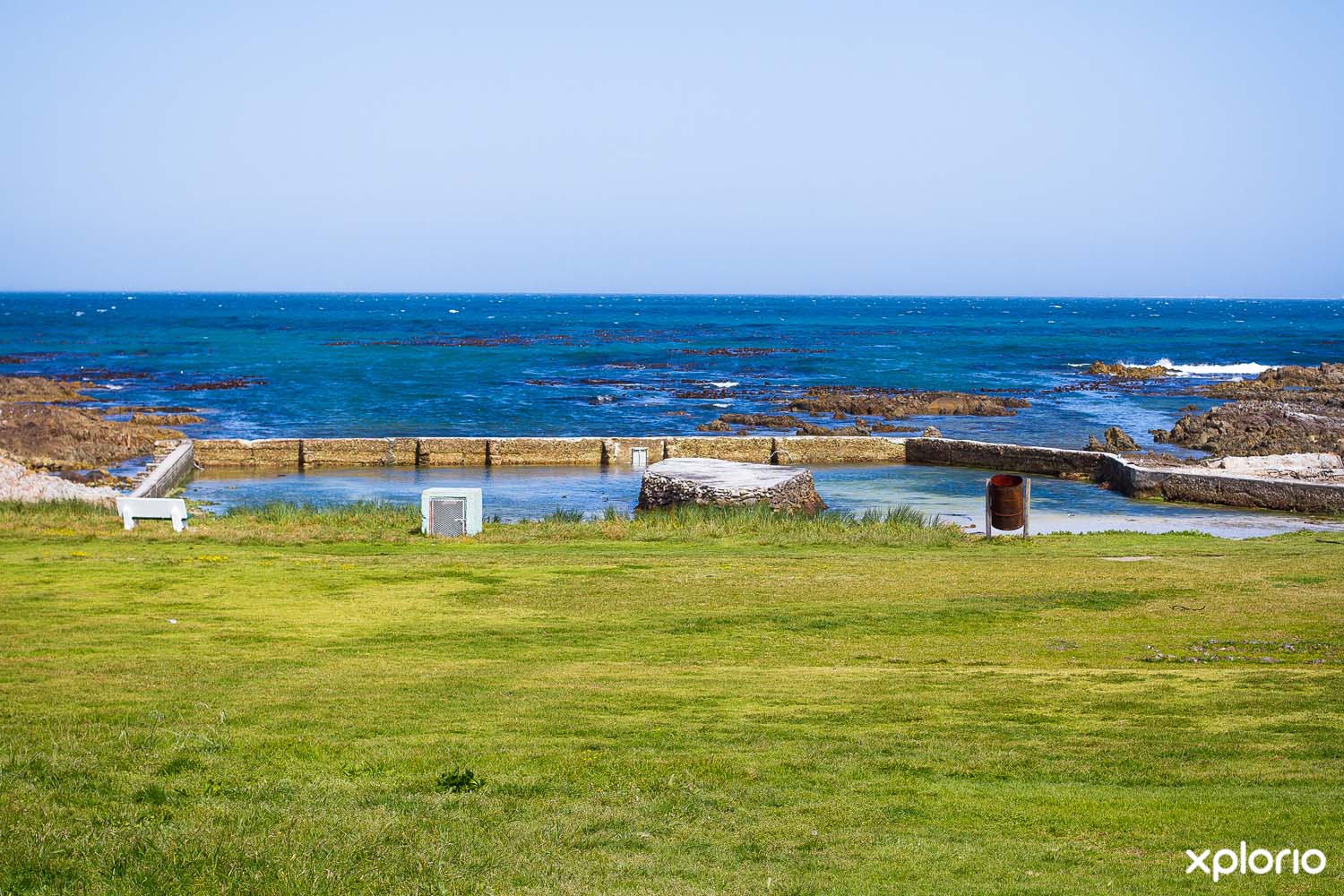
A large, well-kept lawn at the Kleinbaai Tidal Pool is ideal for picnics or lazy days reading your favourite book. The grassy alcove has a few outdoor gym equipment machines as well as a jungle gym for the little ones.
Cape Agulhas
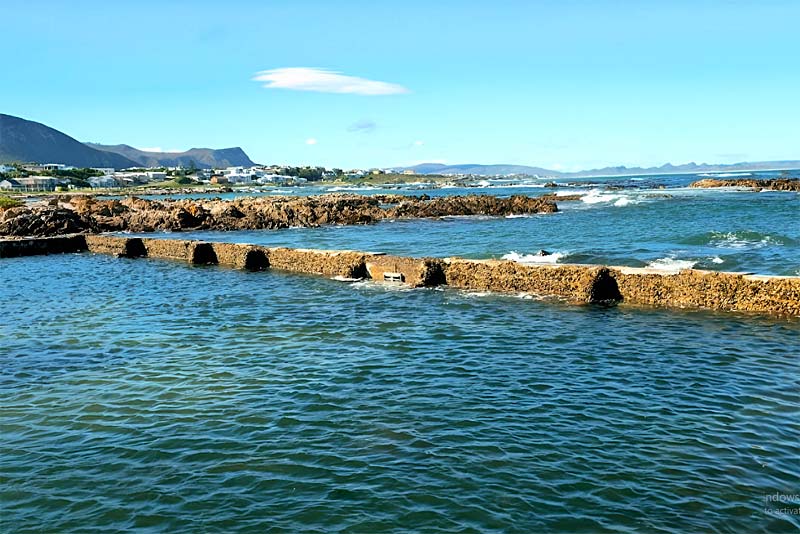
Cape Agulhas is the southernmost point of the African continent, where the town of L'Agulhas is located. Here, the waters of the southward-flowing warm Agulhas Current meets the northward flowing cold Benguela Current. Cape Agulhas has a gradually curving coastline with rocky and sandy beaches. The waters of the Agulhas Bank off the coast are relatively shallow and are renowned as one of the best fishing grounds in South Africa, which has attracted sports fishermen and led to the founding of the town of Struisbaai, which is 4km east of L'Agulhas.
The name "Agulhas" has a rich maritime history, originating from the Portuguese word "Agulha," meaning "needle." This name was bestowed by Portuguese explorers in the 15th century, who observed that around the Cape, the magnetic declination (the difference between magnetic north and true north) was zero. In other words, the compass needle pointed directly to true north, unlike in Europe where there was a noticeable difference.
To the sailors of old, it was a treacherous headland which saw the wrecking of numerous ships. The sea off Cape Agulhas is notorious for winter storms and mammoth rogue waves, which can range up to 30 metres (100 ft) high and can sink even large ships. The Cape has seen many shipwrecks since the first East Indiaman sank there in 1682. Situated at the southernmost tip of Africa, the Cape Agulhas lighthouse (built in 1849) is South Africa's second-oldest working lighthouse.
L'Agulhas and its close neighbour Struisbaai developed after 1950. Struisbaai attracted the fishermen who launched boats from the harbour built in 1959. Before 1950, the only buildings were a boarding house and a small shop. Holiday homes were only built after 1950. The rocky coast at L'Agulhas led to the creation tidal pools, while Struisbaai is at the start of a 14km long sandy beach and has no tidal pools.
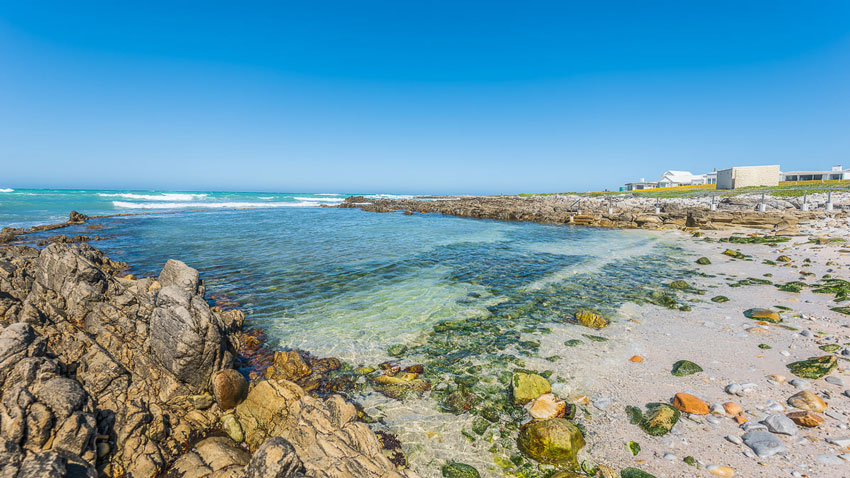
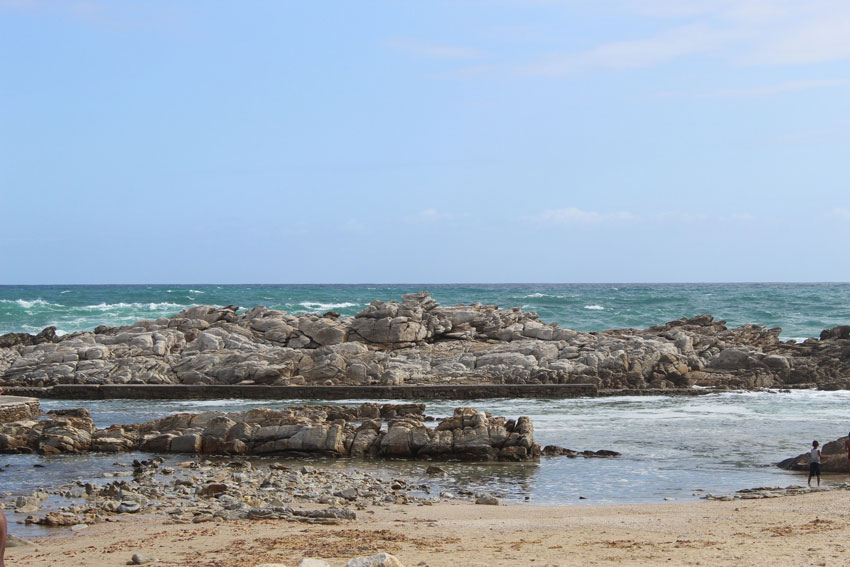
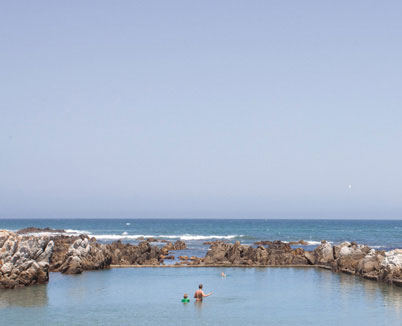
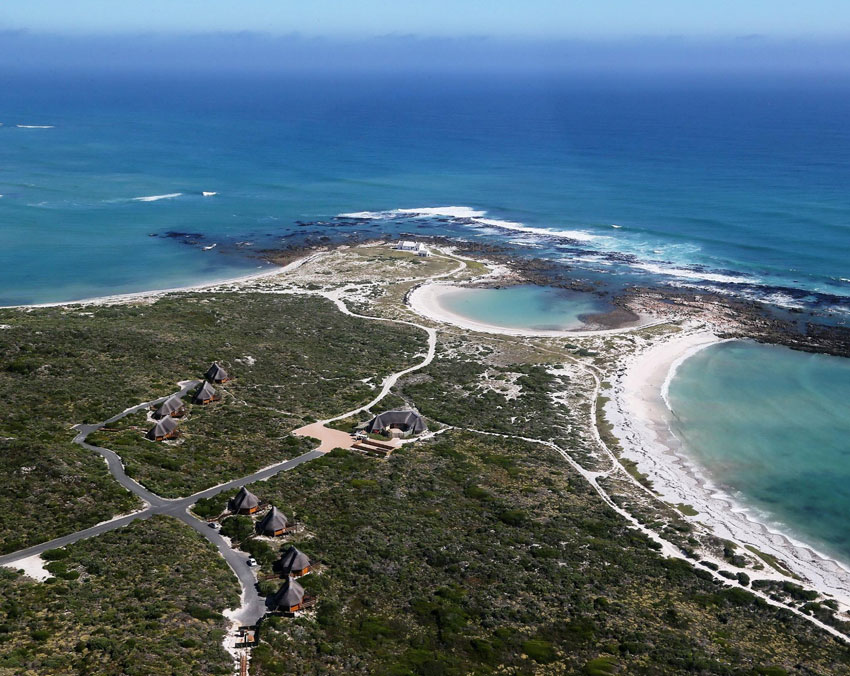
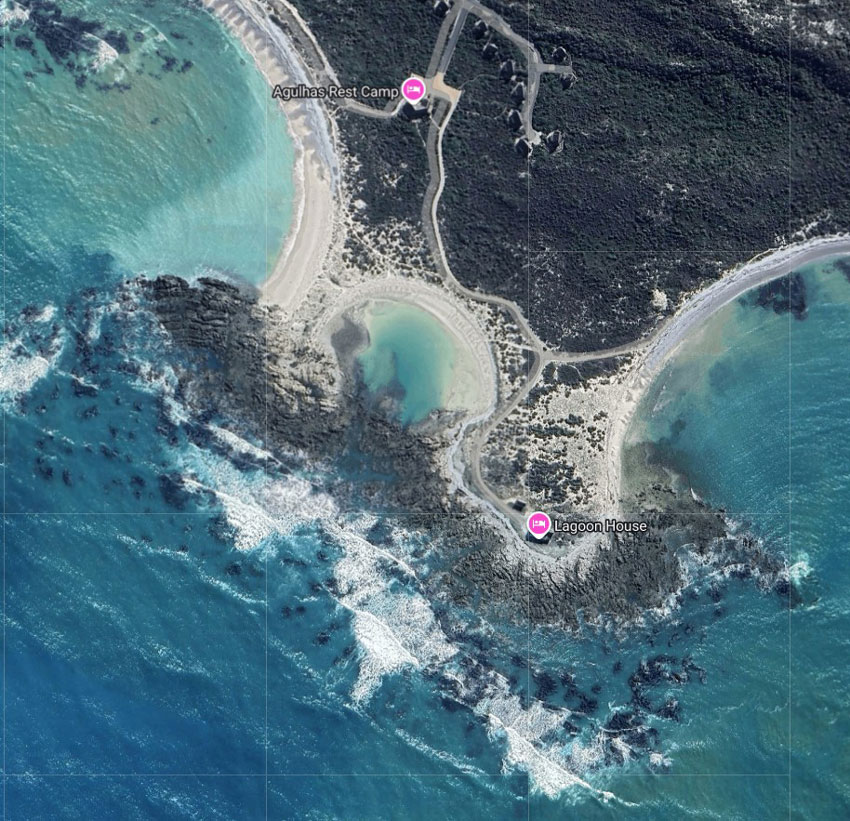
There is a natural tidal pool, known as the lagoon, situated in the National Park west of the Cape.
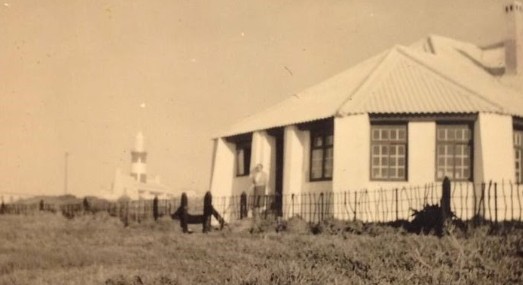
Southermost, (and no, it's not a spelling mistake), the first house in the village of L’Agulhas, is closest to the lighthouse. The southernmost private home on the continent of Africa was built in 1929 by Michiel van Breda as a family beach home. Today, it is a B+B venue. Originally, all the houses in L’Agulhas, when the village was established, were supposed to have been built according to the Southermost’s architectural style.
Michiel van Breda, the first Mayor of Cape Town, who was also known as the father of South Africa's merino sheep industry, owned the historic farm Zoetendals Vallei, which is still in the family today. In 1838, Michiel van Breda, founded the town of Bredasdorp. In 1848, when the urgent need for a lighthouse at Cape Agulhas arose, Michiel generously made available a portion of the family estate for this purpose.
42 + 43. L'Agulhas Tidal Pools
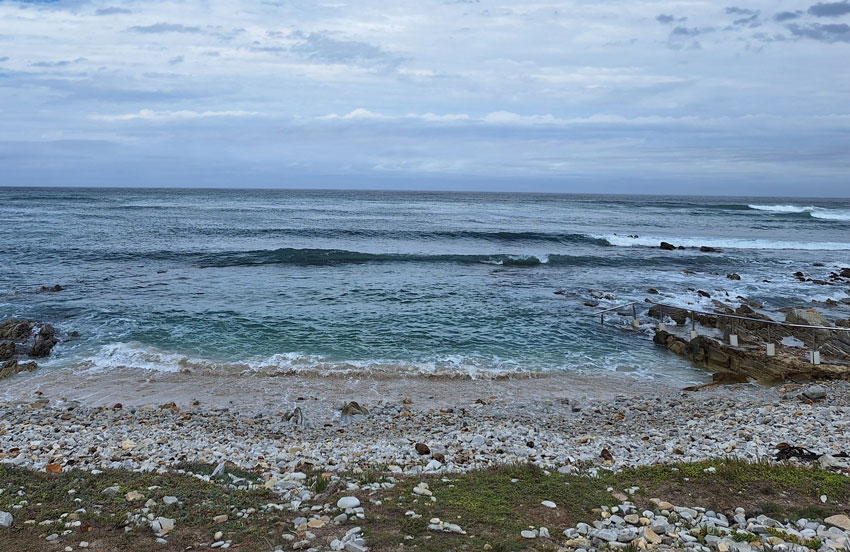
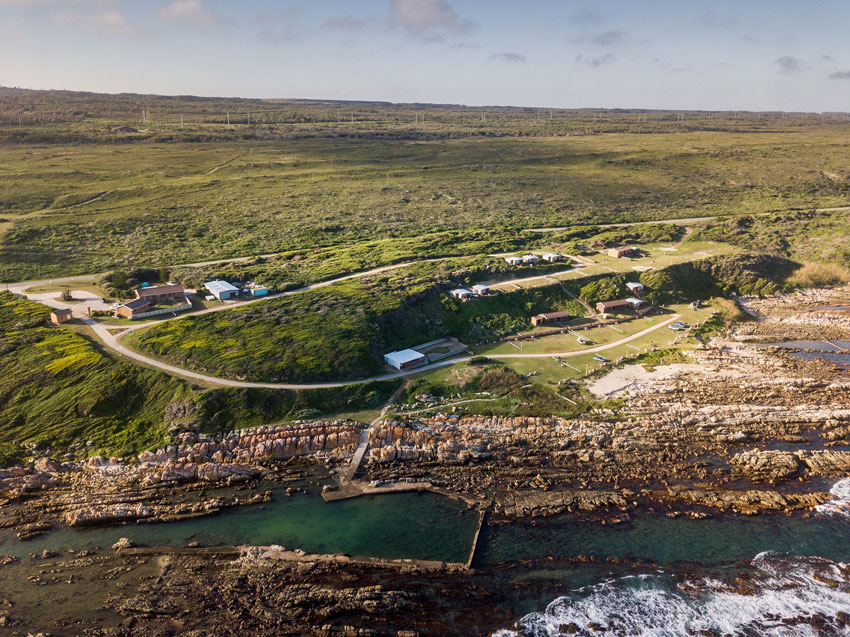
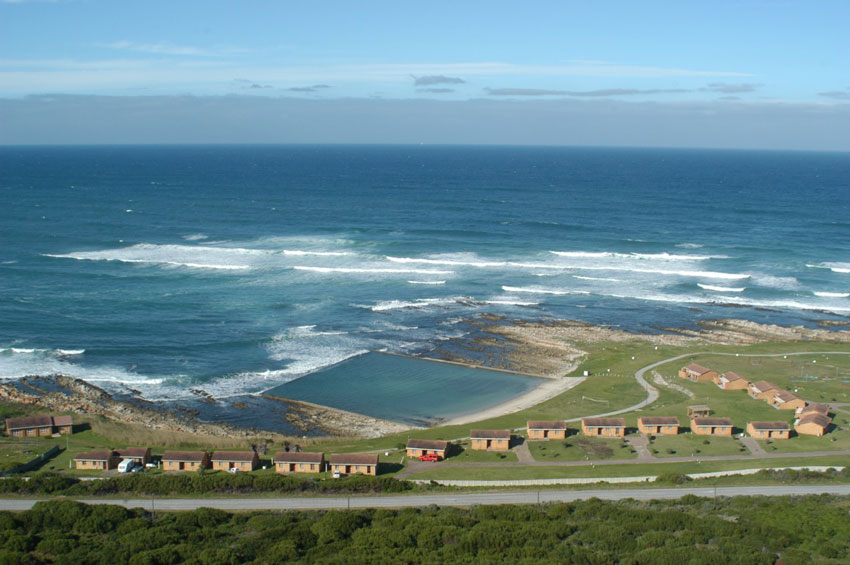
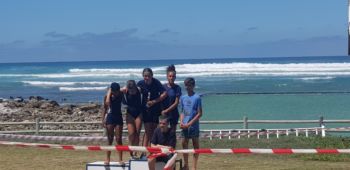
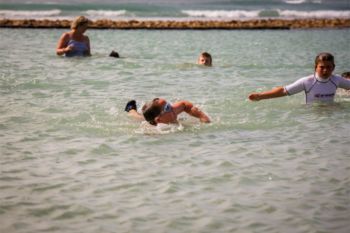
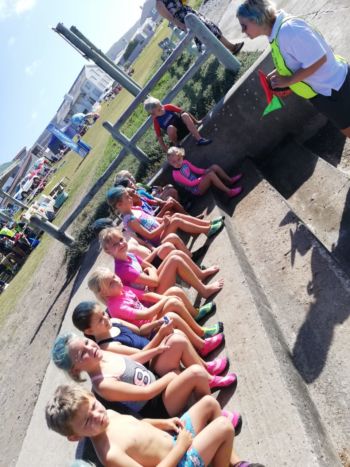
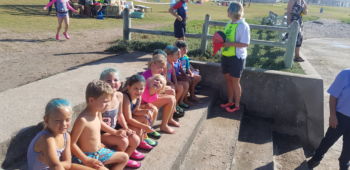
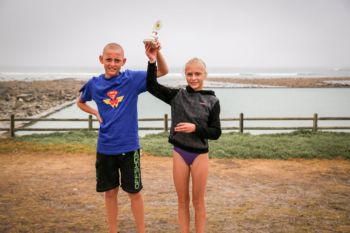
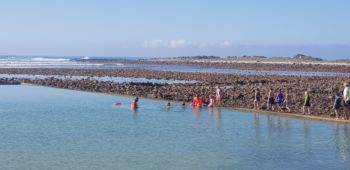
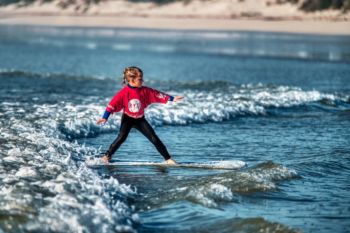
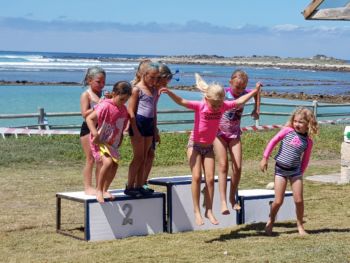
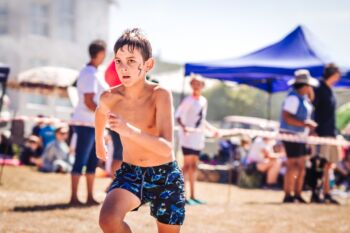
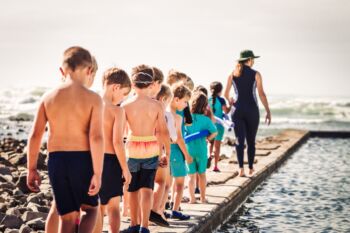
The town of L'Agulhas has two tidal pools, used by the local school for official swimming activities.
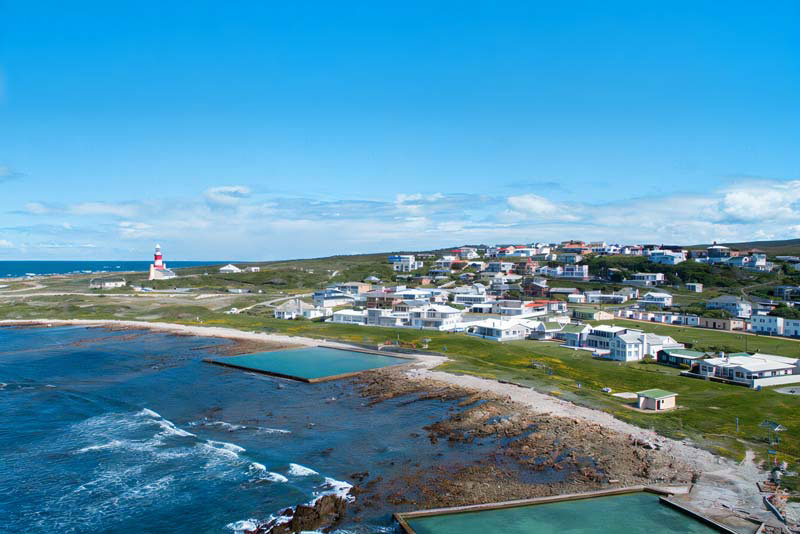
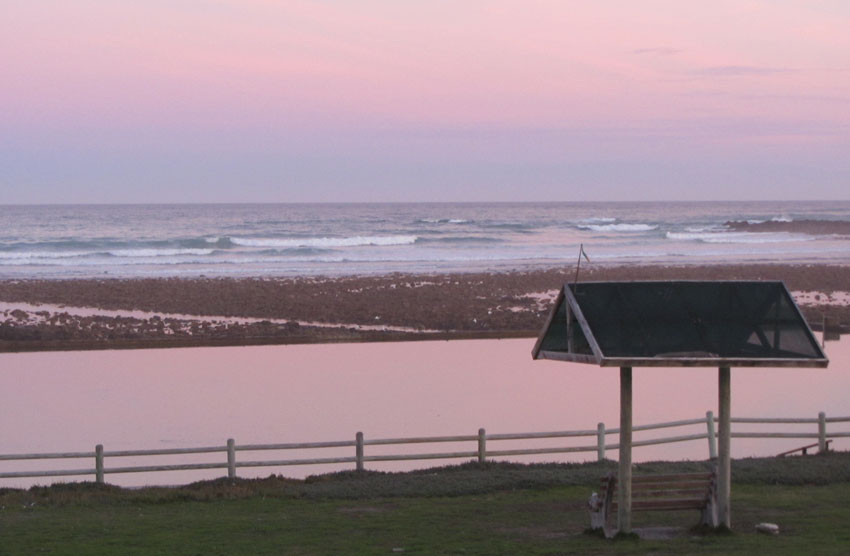
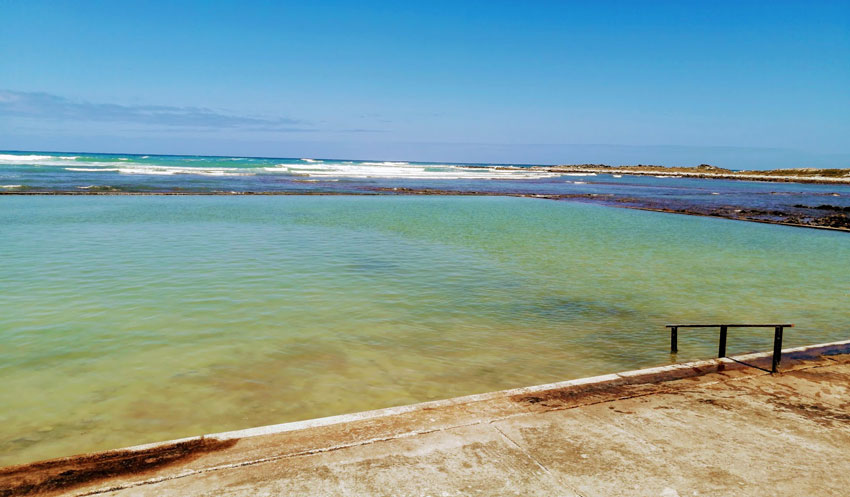
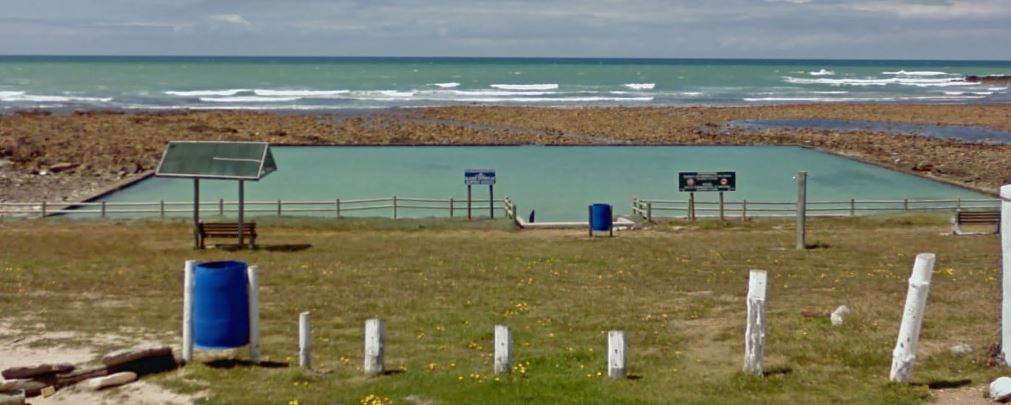
Swimming and triathlon races in the local tidal pool. Each year, the school hosts triathlons, which involve our learners swimming in the local tidal pool, a bicycle ride through a marked course along the roads running parallel to the ocean, as well as a run along the beachfront. There are usually 2 events, the first being in-house, and the second being an inter-school event.
Read more about the school →
-
849251224
-
943895300
-
2731221872
-
2988054456
-
3200876177
-
3749994579
-
3871309031
-
3971721668
-
-
44. Soldatepoel
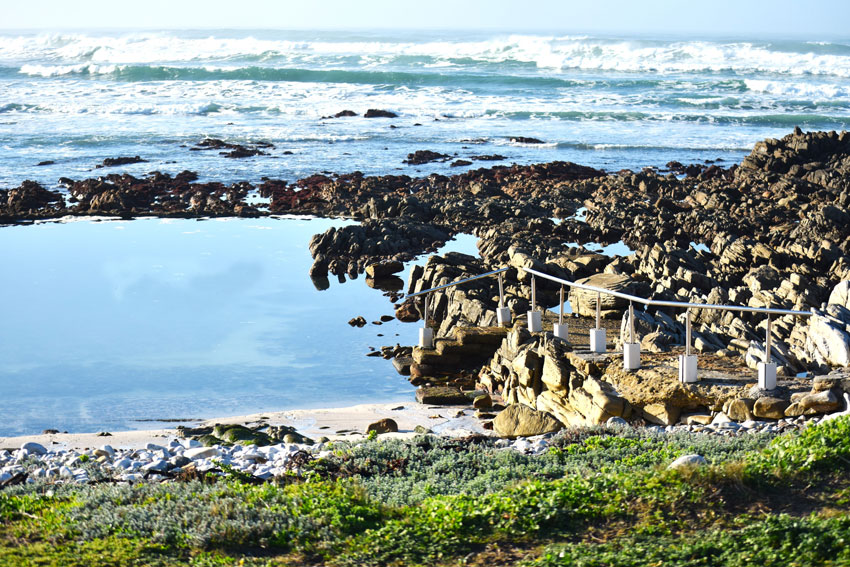
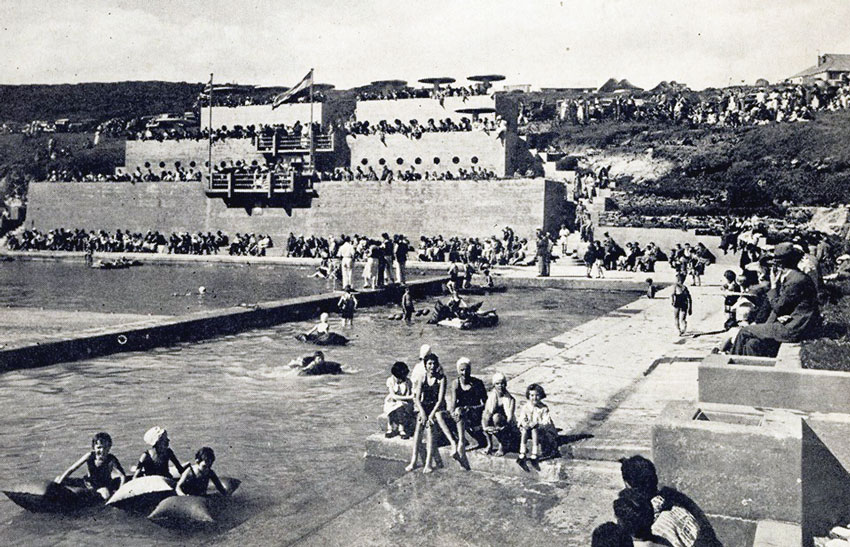
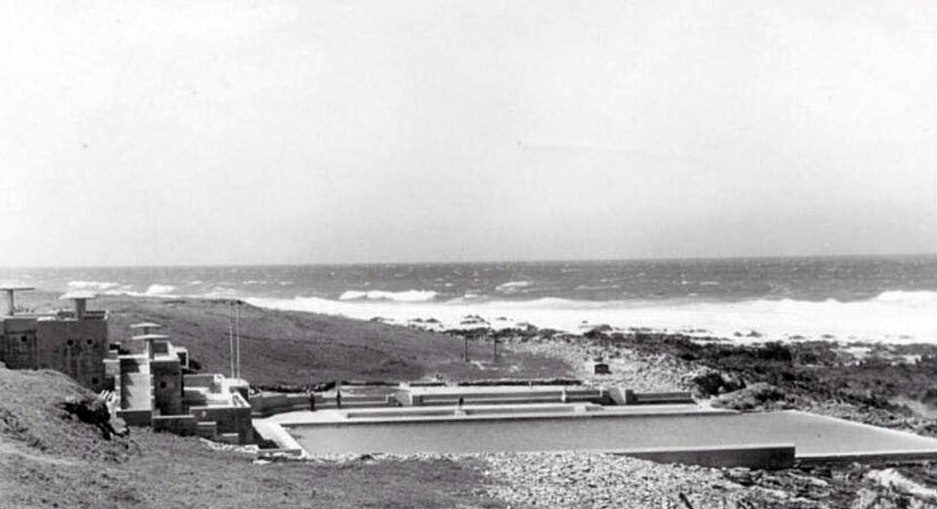
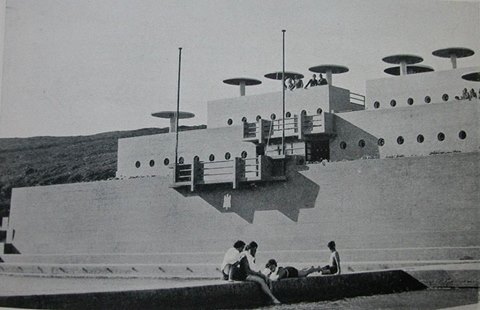
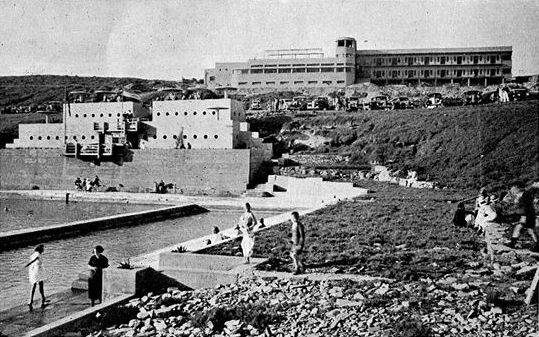
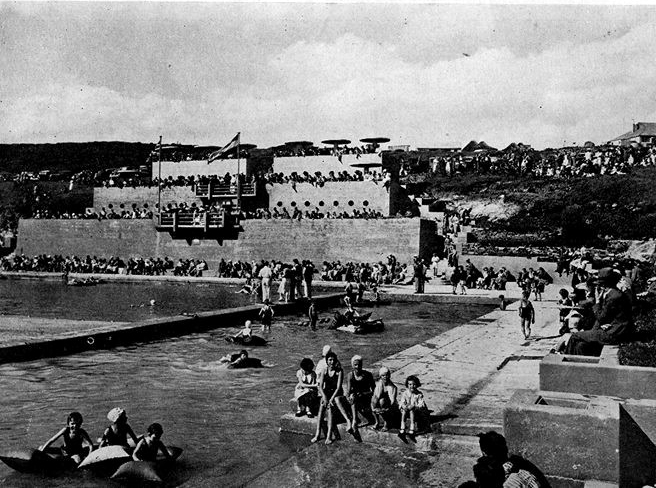
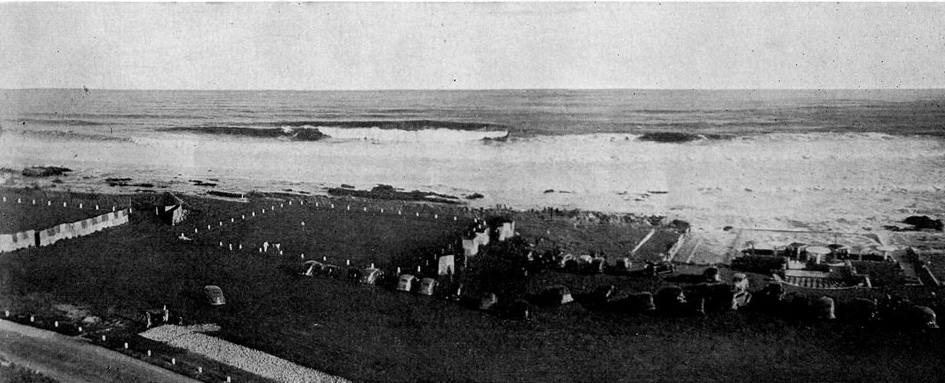
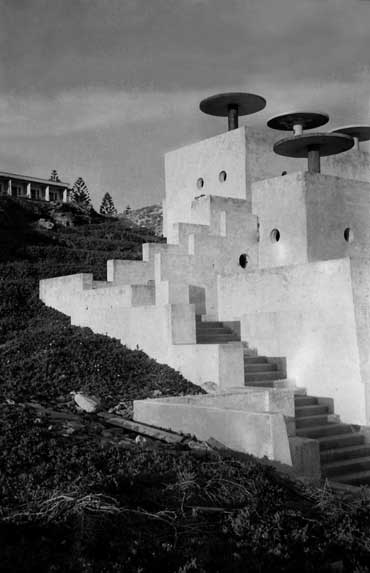
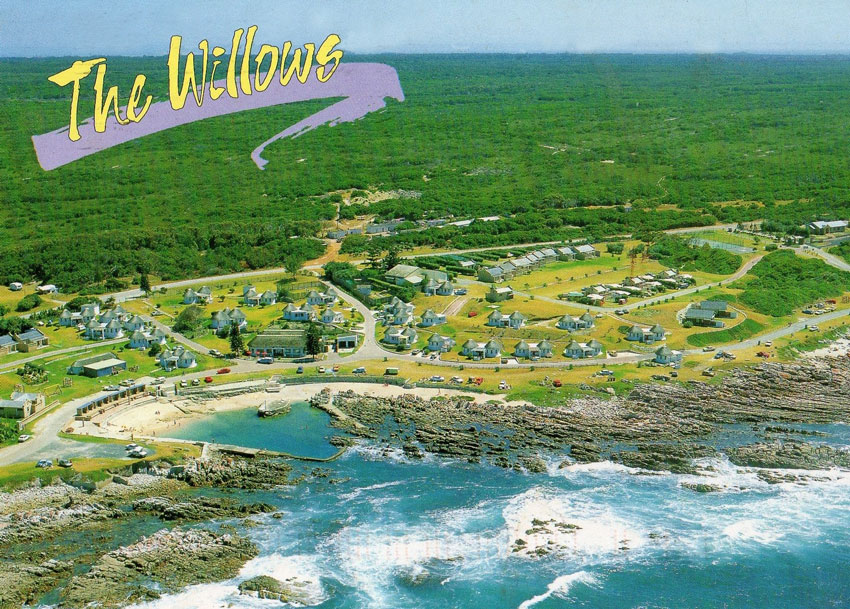
The pool was originally known as Wiener’s Pool, built before the Second World War (1939–1945) by a Mr Wiener, who is also credited with building "Shalom," the first house in the St Mungo's Point area of L'Agulhas. It earned the name "Soldatepoel" (Soldiers' Pool in Afrikaans) because soldiers and radar operators stationed at the nearby "Mount Pleasant" camp frequently visited the pool during WWII.
Click here to read more about the JB radar system developed in South Africa, under Professor Basil Schonland at Wits, and used in coastal installations during the war to detect German shipping. Many of the soldiers in the Special Signal Services Corps were women.
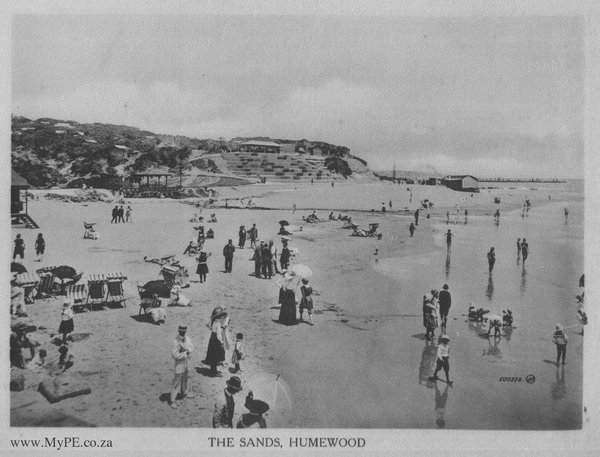
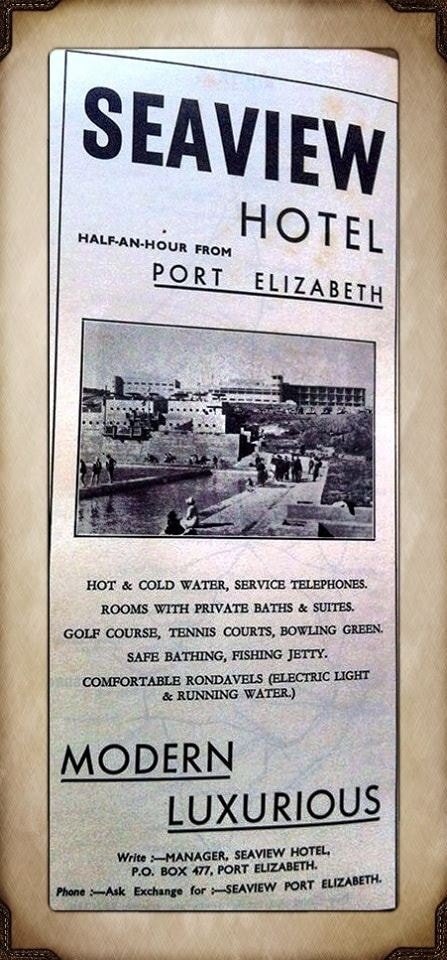
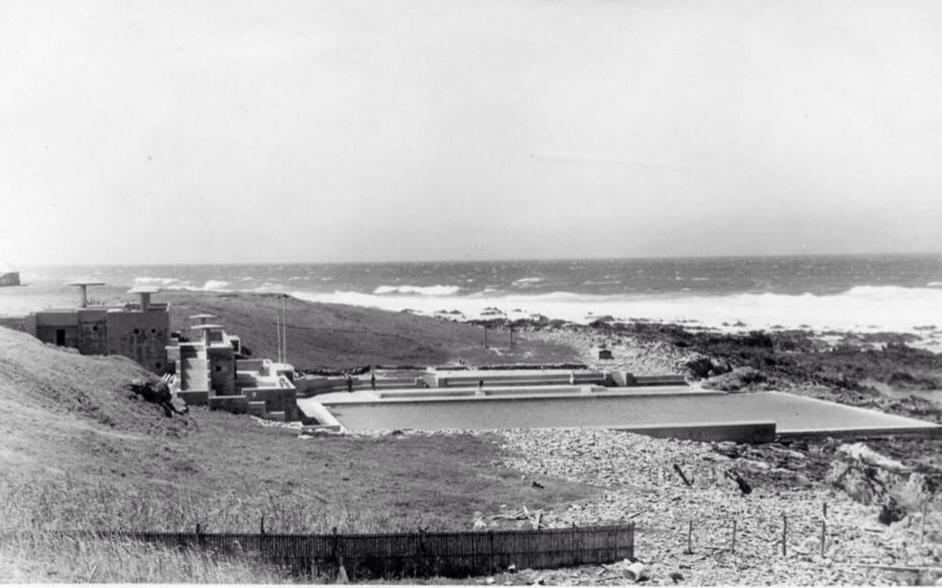
Further east, at the Hotel Minhetti outside Port Elizabeth, there was a tidal pool that was used by soldiers during the war.