59. Seaview Tidal Pool
The Seaview Tidal Pool was an art deco marvel. It was built by for a local businessman Lewis Richardson, who also established a hotel on the site.
The Richardson family played a pivotal role in the founding and commercial development of Seaview. The family was led by Sir Lewis Richardson (1873–1934), a prominent businessman and baronet who founded L. Richardson & Co. In the 1920s, the family began developing the "Clarendon Marine Township" at Seaview.
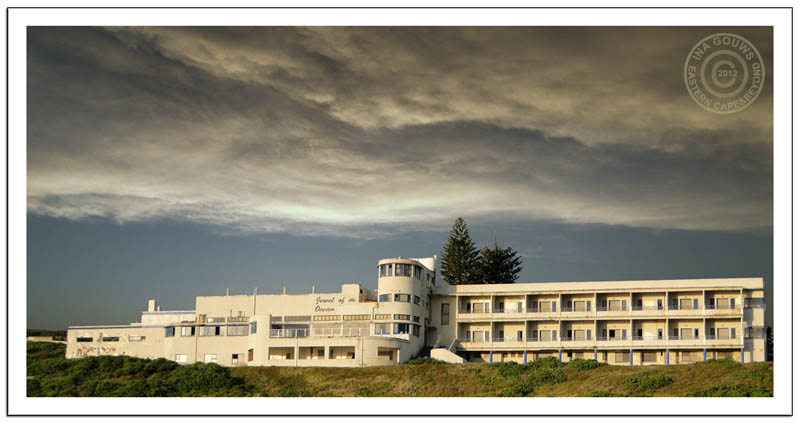
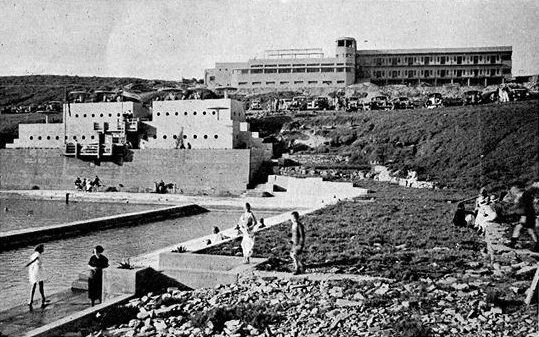
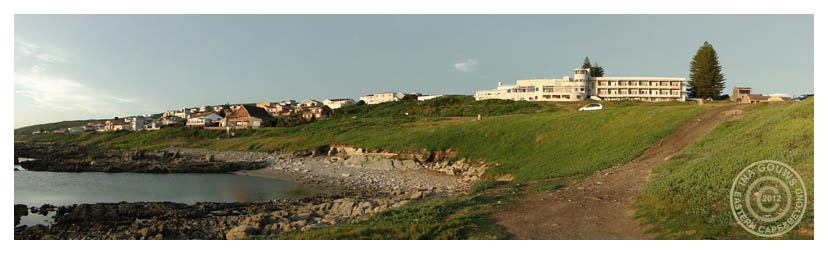
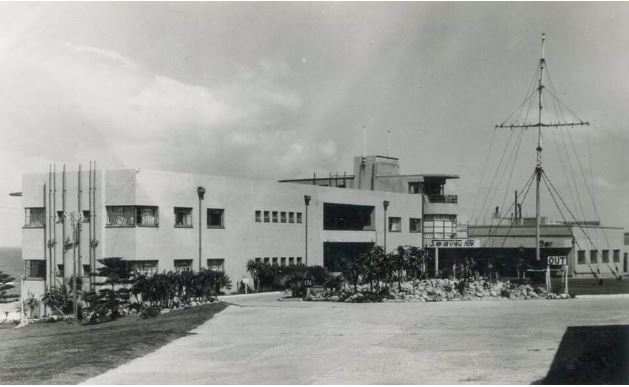
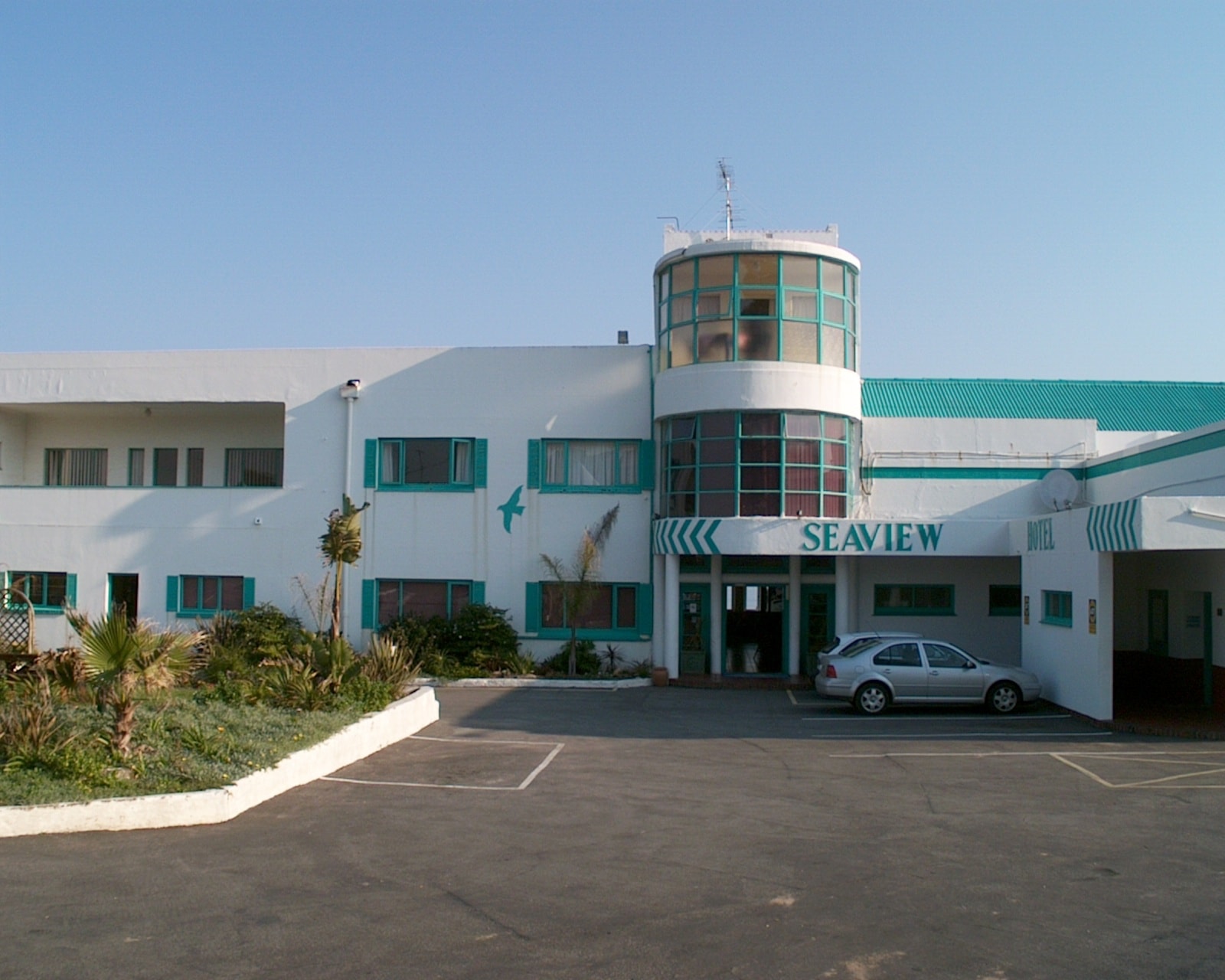
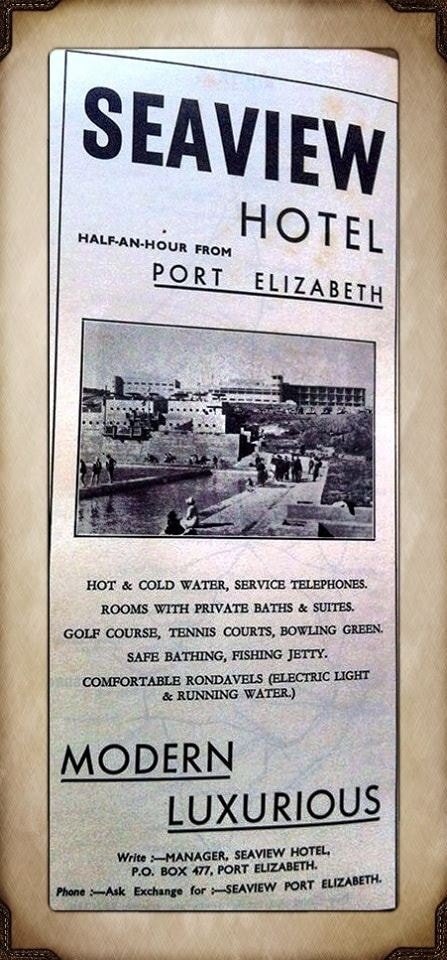
The Seaview Hotel outside Port Elizabeth was a prominent landmark built in 1938 that served as a holiday resort and a military base before being demolished in early 2014. The sad story of is well documented here and hereand also here. During World War II, the Seaview Hotel in Port Elizabeth served as a critical naval training base known as HMS Good Hope. It holds the distinction of being the first Royal Navy officer training establishment located outside of Britain.
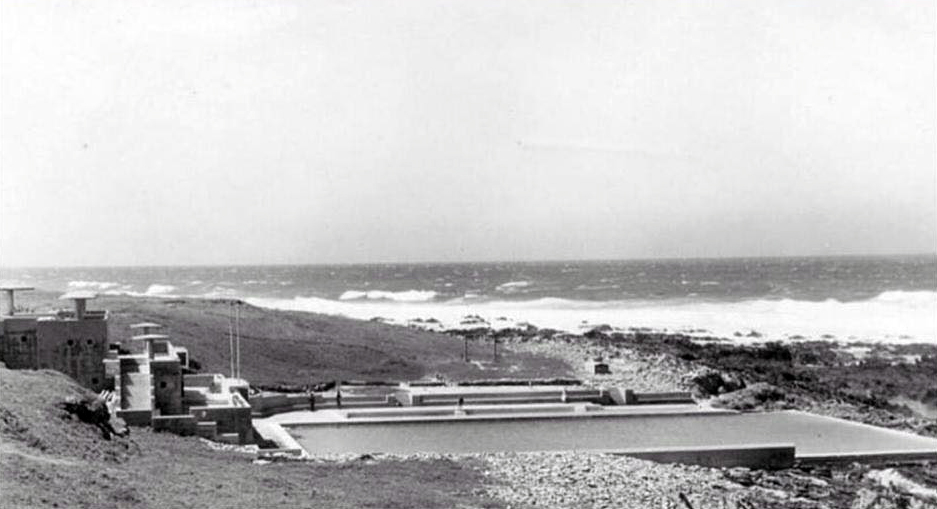
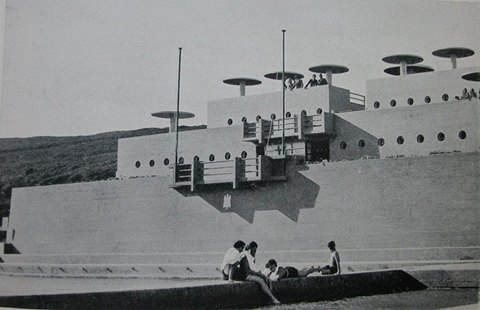
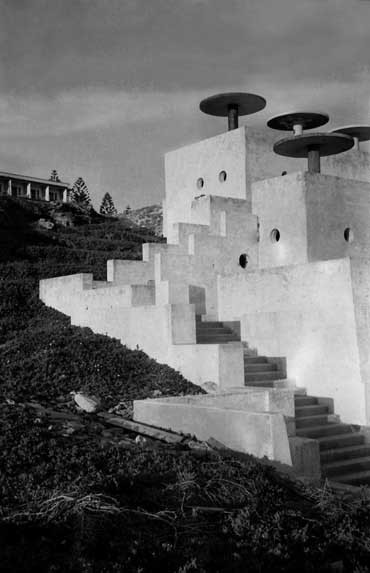
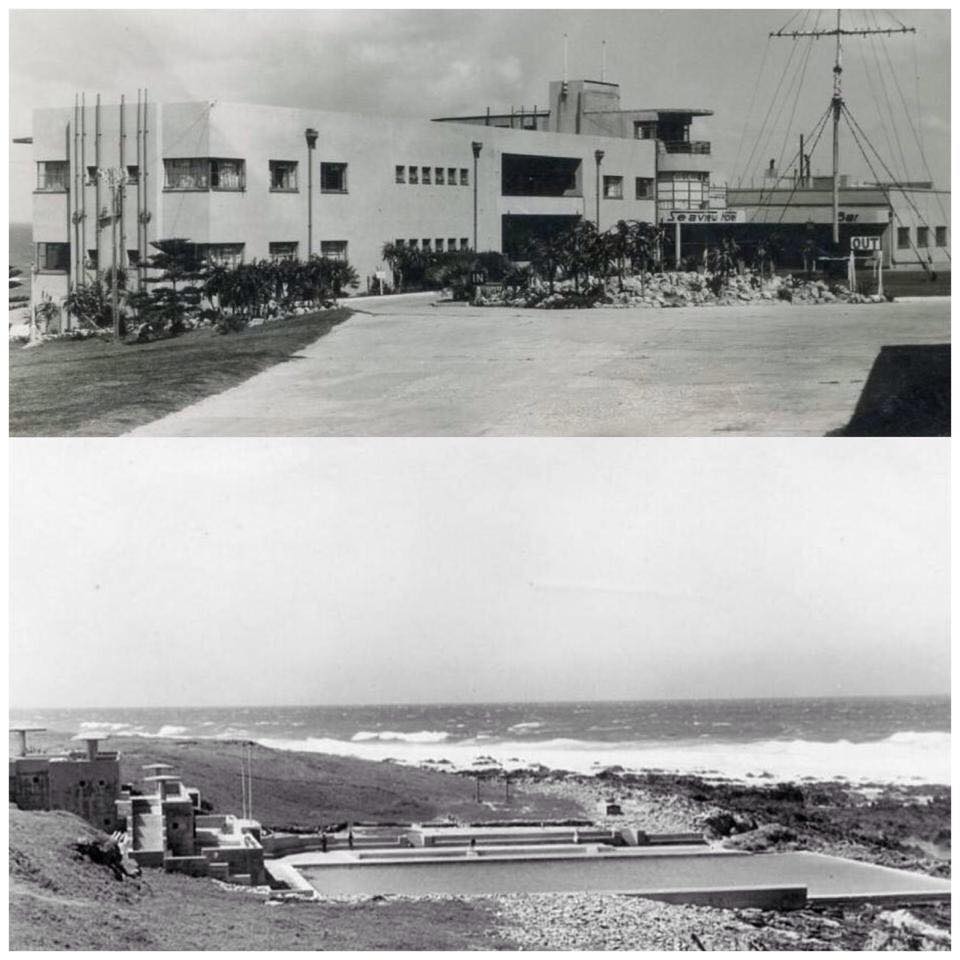
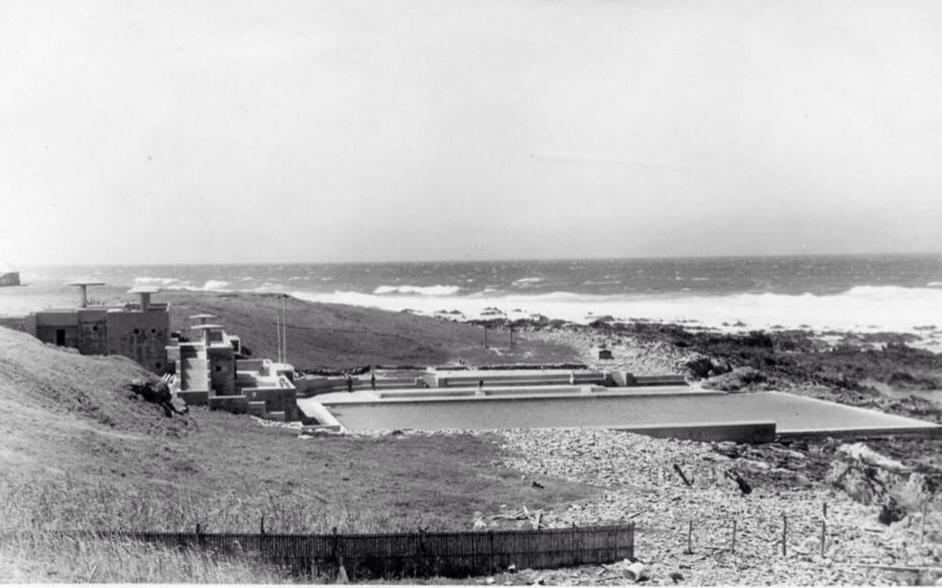
In 1931 local architects Jones and McWillams designed an art deco style tidal swimming pool to be built on the rocks below the Seaview Hotel. Constructed in 1931, the pool was part of a larger resort development by the Richardson family. It was built by Gilbert Curtis Billson, who also later served as the builder for the hotel itself when construction began in 1937. Key details regarding the pool and hotel include: Art Deco Design: The tidal pool was noted for its unique Art Deco structure at one end. The Hotel: While the pool was built first, the hotel was designed in the streamlined International Style by local architect Maurice Berman and opened in June 1938.
The pool is still a popular attraction, but it remains dangerous for swimmers, as drowning coninue to occur ther.


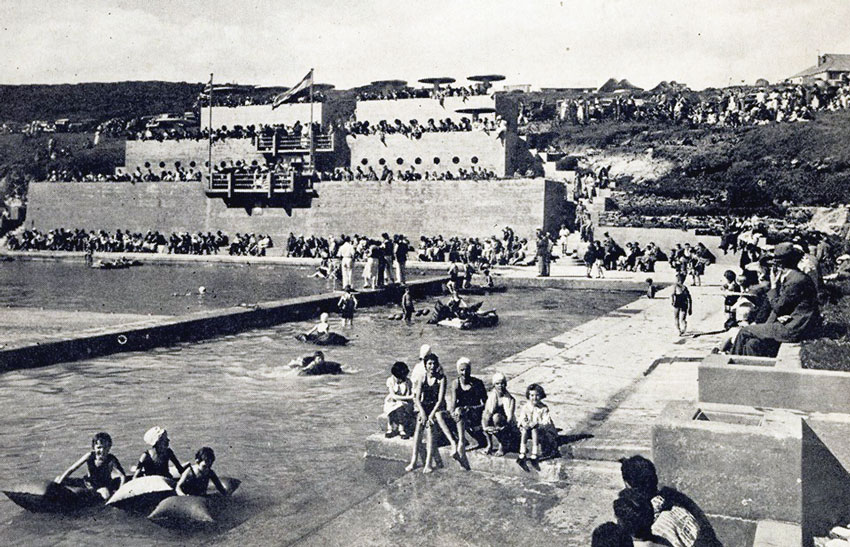













Seaview - an Art Deco tidal pool
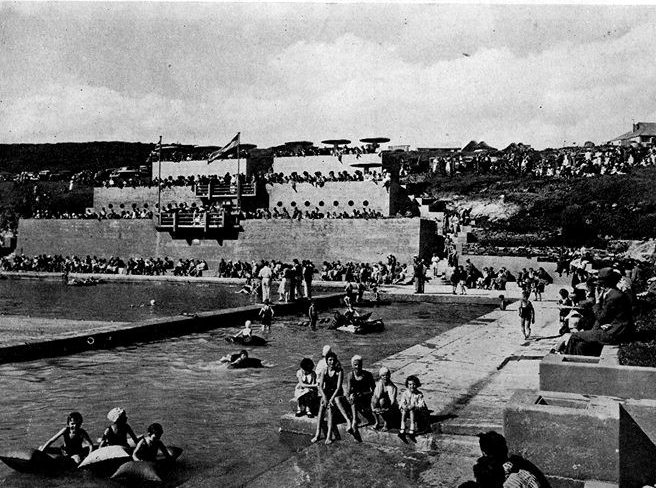
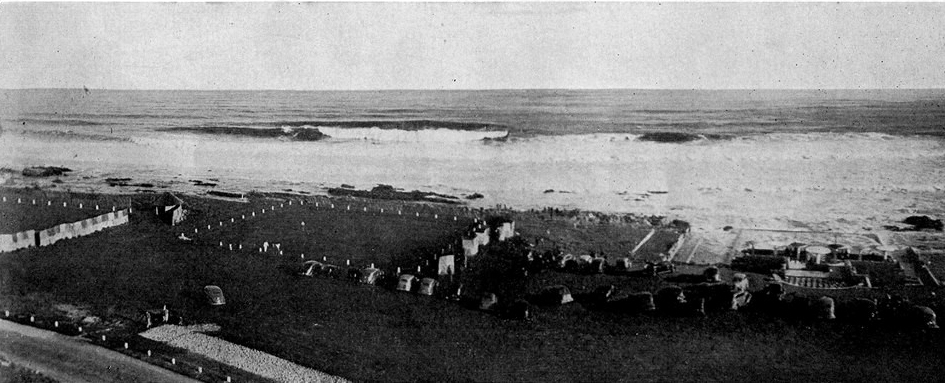
A famous tidal pool once graced the shoreline outside of Port Elizabeth. Built in 1931, it the largest tidal pool in the country.
Unfortunately, the Seaview hotel was demolished in April 2014. A blog about the ruined hotel before being demolished can be found here.
(Note: Artefacts website states the pool was constructed in 1936 but originally designed 1934)
 The South African Architect website (Artefacts) had the following article:
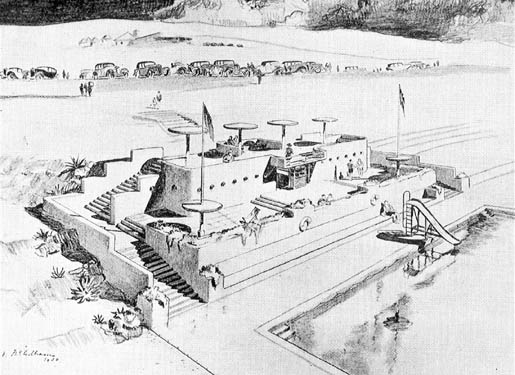
The bath itself is the largest tidal bath in this country, being even greater in size than the Sea Point one. The pavilion shown in the sketch is probably the first stage only of what will eventually be a series of similar terraces containing dressing-boxes, etc. The unit shown has accommodation for 160 persons of both sexes, with lavatories, stores and attendants' rooms.
The whole structure is of reinforced concrete left rough from the shuttering and bagged; with a final coat of light tan distemper.
The woodwork — such as doors, etc. — is to be painted in bright clean colours, while the undersides of the concrete umbrella-shelters are to be tiled with coloured glazed tiles.
The retaining wall is about 3 ft. (915 mm) thick at the base, as, during high tides, the waves break against it. The top is hollow — allowing plants to be grown along the parapet.
Future extension will consist of another "deck" of undressing boxes, forming yet another terrace behind the existing building.
The paving of the terraces and surround to the bath is in alternate blue and cream concrete slabs; the whole area of the bottom of the bath also being similarly treated.
The wall forming the sea end of the bath is arranged with funnel-shaped apertures facing the waves, and inclined tubes leading up through the wall, making a series of blowholes. Each wave that breaks against the wall sends a jet of water twenty feet into the air over the bath!


The Jubilee Pool - Cornwall’s art deco lido
For some context to the Sea View pool, the Penzance saltwater pool in Cornwall was built around the same time, also with an Art Deco theme.
Part of just a handful of saltwater tidal pools left in Europe, the Jubilee Pool was originally built in 1935 to commemorate King George V's silver jubilee. Once package holidays came into play in the 1970s, the pool's popularity declined and became neglected and disrepair. After a £3 million-pound investment from the Coastal Communities Fund, the pool was restored to its former glory and reopened by Prince Charles in 2016.


