EM Wearin

Edward Melville Wearin

Ted Wearin

Edward "Ted" Melville Wearin was born September 25, 1876, in Australia. He lived from 1916-1935 at "Granville" on Romney Road, Greenpoint. Married Olive Gwladys Palgrave Potter (born Powys). In 1900, he travelled to the Cape Colony on the SS Kent, with 500 horses destined for the British soldiers fighting in the Boer War. (Another source states: The first to deliver the NSW Lancers from Sydney to South Africa, departing 28 October 1899 and arriving 6 Dec 1899. The transport consisting of 3 officers and 37 men of the Lancers, 6 officers and 80 men of the Medical Corps, 4 special service officers and 189 horses.)

Ted Wearin won a number of South African swimming championships, including both the 100 and 500 yards in 1902. In 1904 he won again won all of the races - 100, 220 and 500 yards, but did not return to defend his titles in 1905. In 1911 he re-appears, playing water polo for Transvaal. He came from Maryborough in Australia to fight in the Boer War, settled in the Cape (later in the Transvaal) and was a member of the Green and Sea Point Swimming Club. His story as a sailor is related by Lawrence Green in his book At Daybreak for the Isles seen below.

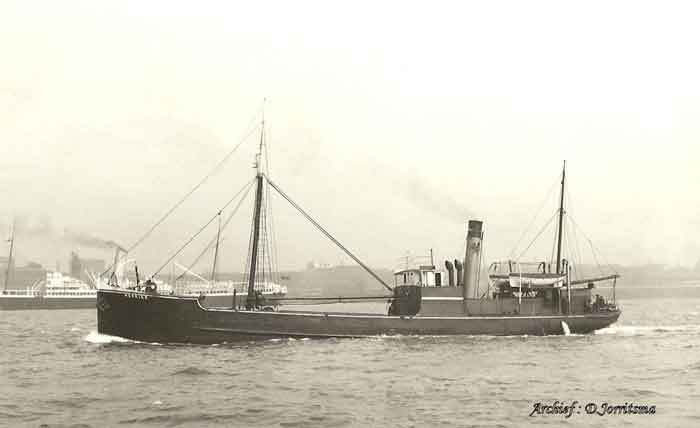
S.S. Harrier, which Ted Wearin sailed from Glasgow to Cape Town.

At Daybreak for the Isles

by Lawrence Green.

Finally the Cape Government decided to sell the Sea Bird and send a steamer sealing. There was an idea at that time that only a sailing vessel could landmen on a sealing-rock; the old hands swore that the seals would smell a steamer and make for the water. However, the Sea Bird was sold, and Skipper Edward Melville Wearin, owner of the S.S. Magnet, was offered the sealing contract.

A mighty man is Wearin, even in his old age. He and Mister Milo went sealing together for many years – a strong partnership. They worked Hollam's Bird successfully, and there they made the record catch of 2,400 seals in one day. There was a small fortune in it, and yet you should hear Skipper Wearin' s views of that islet."Of all the accursed places..."

Wearin is a man worth knowing, are incarnation of the fine seamen of last century. This huge Australian has massive shoulders and arms; he was a champion swimmer in his youth. As a boy he wanted to go to sea, but his father made him serve his time in an engineering works. He arrived at the Cape as a soldier during the South African War and stayed on in the Cape Town railway workshops after the war. The pay was good and he was able to have a twenty-two-foot yacht built for the weekends.

Wearin still hankered after the sea, and the little Advance helped to satisfy his longing. Then came a depression, and in 1905 Wearin was sacked. He took out a sealing-licence for Cape waters and turned his yacht into a sealer. After a few profitable seasons along the Cape coast Wearin heard of the rich sealing-grounds near Luderitz. So he sailed north, five hundred miles in his twenty-two-foot cutter, and thought nothing of it. He set nets for seals off Long Island, parallel nets in the seaweed, close to the reef. Lights attracted the seals at night, and those that jumped the first net were taken in the second. German poachers were raiding the British rocks, using dynamite, but they sheared off when they saw Wearin and the Advance. Once in a long while Wearin was able to land on Eighty-Four Rock, a treacherous place, but good for anything up to five hundred seals if the weather lasted. "I sent the large skins to Russia – they used them for sleigh-covers," recalled Wearin. "

Pup skins went to New York, and in a few years I was able to sell the Advance and buy a steamer. Poor old Advance! She dragged her anchor off Staple Rock and was lost with all hands. "Ay, it's a dangerous game, sealing. You're often close to the surf, and many a cutter has been caught between the rocks and the beach, caught broadside and turned over. Staple Rock has an iron bolt on the summit - you lash yourself to the bolt when the sea sweeps over. I was always lucky about accidents, though. I got two bites on the left arm and two on the left leg ... nothing more. They get excited and snap as they rush past you."

Wearin's tiny hooker, the fifty-ton Magnet, had been plying for years between Table Bay Docks and Robben Island. He ran her as an excursion steamer and did some fishing. Then the superintendent of the guano islands called him in and asked him whether he would go sealing for the government. "So I took the job on," said Wearin."

The government found the coal and stores, I provided the Magnet at £20 a month, and I was paid by results. Four shillings a skin I got for myself, and I signed on a sealing crew of twelve white men. Everyone said I was daft." On the October day in 1911 when Wearin steamed out for the islands, a group of old sealers gathered on the wharf at Table Bay Docks and jeered. "We'll eat all the skins you bring back," shouted the old sealers. "I hope you have a damned good feed," called back Wearin, and on that note the tiny Magnet slipped off to sea. That was the first time Wearin saw Hollam's Bird. He picked up Mister Milo and six coloured boatmen at Ichaboe and anchored off Hollam's Bird. "Of all the accursed places..."

Wearin pointed to it on the large scale-chart. "I worked it for twenty-five years - me and Milo," he told me."Since I retired in 1936 never a man has worked that island. The gear you need! Marks and anchors, buoy ropes, six-inch warps, barrels and chain. The bottom there is like polished granite, with nowhere for an anchor to hold."

Somehow the Magnet's anchors would grip at last, and then Wearin and Mila would climb the rocks and see how the seals were lying. One day they made a rough count - there were sixty thousand seals on the island. It usually supplied them with one-third of the season's catch. That first season Wearin cleared £1,000 in two months. He returned to Table Bay with five thousand pelts, a larger haul than any the Sea Bird had ever made. Wearin had six thousand skins on board the Magnet in August 1914,when war was declared. He knew nothing of it; but the Halifax Island headman, who was friendly with a German lighthouse-keeper, had received a warning. The headman passed it on to Wearin just in time. Wearin got his anchor up and steamed south at full speed; and as he departed a saw a German tug rounding Pedestal Point in pursuit of the Magnet. He got away with his six thousand skins.

When the South African forces invaded South-West Africa, the little Magnet was commandeered to reconnoitre the German-held coast. Wearin showed the troops the best landing-places and put intelligence officers on shore near Luderitz. One night he had to swim back to the Magnet - three-quarters of a mile, with a German patrol firing at him, trying to ignore bullets, the risk of sharks and the icy water. Only a man who held fifty gold and silver cups and medals for swimming could have done it. Wearin lost the Magnet in a Hout Bay gale in 1916.

Six years later he visited Britain and bought the ninety-ton Ranza, a Glasgow herring-carrier. He brought her to Table Bay with a crew of seven in six weeks, and went on with his sealing. South Africa's "one-man shipping line", as people called him, was established again. The Ranza served him well for five years; then he sold her and travelled to Britain again in search of another ship. This time he bought the coaster Harrier, his last ship and his largest -200 tons, and 120 feet in length. He and Milo made rich hauls at Hollam's Bird, and loaded her long fore-deck with skins. "

But I had to clear out for my damn life when the weather made," said Wearin. "You can't steam into the wind with a heavy deck-load like I often had - it meant running to save the skins." Wearin told me about a sealer who lost his nerve on Hollam's Bird when he saw the whole herd rushing towards him. This man lay flat in a rocky crevice, protecting his head. Scores of seals passed right over him, making for a cliff from which they dived fifty feet into the sea. The man got up unhurt. One of the tricks of the trade is to wear old; tattered clothes - garments that fall apart if a seal grips a coat-sleeve or trouser leg.

Covering a thousand miles of South African coastline and the offshore islands. Adventures to far places, a peek into the lives of people living on these remote islands, shipwrecks, treasure and looting. Strange characters, like Black Sophie, who kept a seaman’s boarding house in Cape Town and gave her name to an island. 

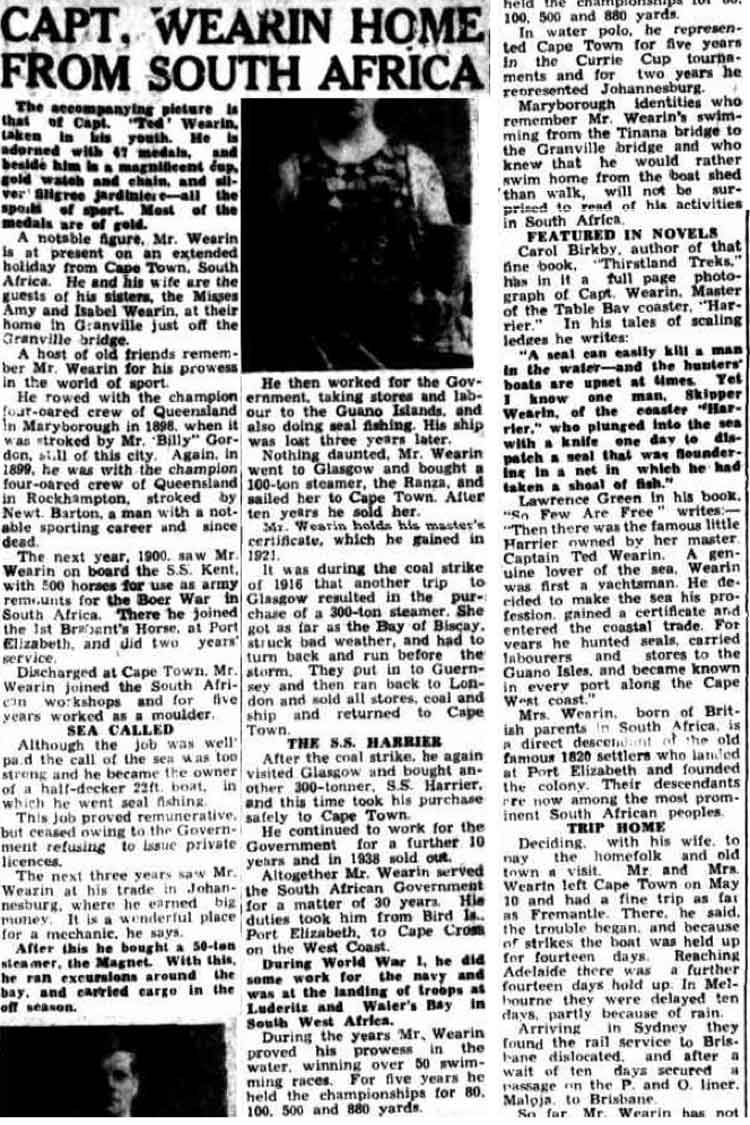
Captain Wearin home from South Africa

5 August, 1950

1913 EM Wearin

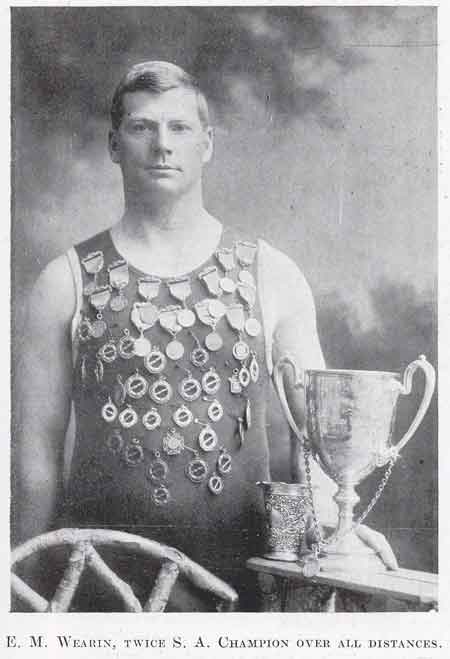
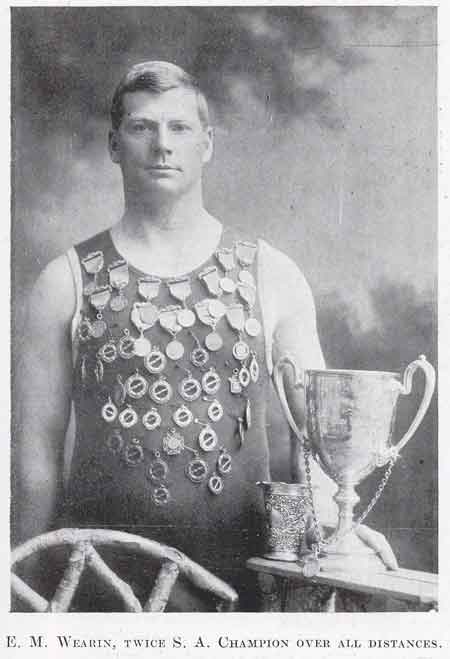
The accompanying picture is that of capt. ‘Ted’ Wearin, taken in his youth. He is adorned with 47 medals, and beside his is a magnificent cup, gold watch and chain, and silver filigree jardinière – all of the spoils of sport. Most of the medals are of gold.

A notable figure, Mr. Wearin is at present on a extended holiday from Cape Town, South Africa. He and his wife are the guests of his sisters, the misses Amy and Isabel Wearin, at their home in Granville just off the Granville bridge. A host of old friends remember Mr. Wearin for his prowess in the world of sport. He rowed with the champion four-oared crew of Queensland in Maryborough in 1896 when it was ‘stroked’ by Mr. Billy Gordon, still of this city. Again, in 1899, he was with the champion four-oared crew of Queensland in Rockinghampton, stroked by Newt. Barton, a man with a notable sporting career and since dead.

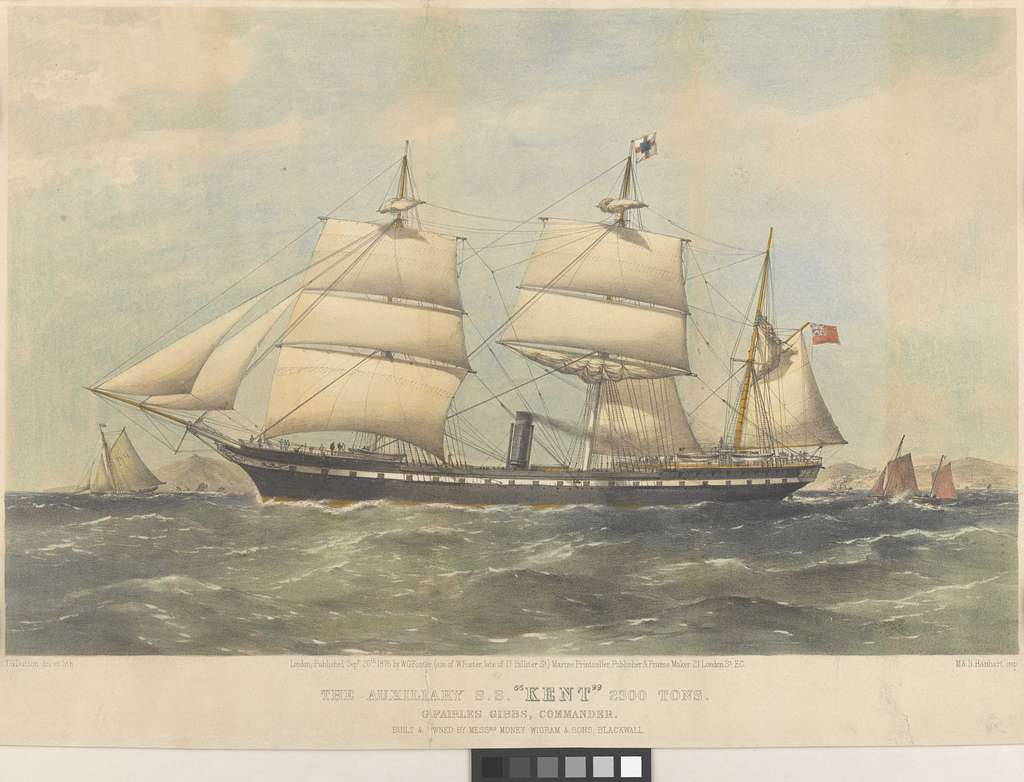
The next year, 1900, saw Mr. Wearin onboard the S.S> Kent with 500 horses for use as army remounts for the Boer War in South Africa. There he joined the 1st Brabant’s Horse at Port Elizabeth, and did two years service. Discharged in Cape Town, Mr. Wearin joined the South African workshops and for five years worked as a moulder. Sea called Although the job was well paid the call of the sea was too strong and he became the owner of a half-decker 22ft. boat., in which he went seal fishing.

The job proved remunerative, but ceased owning to the Government refusing to issue private licenses. The next three years saw Mr. Wearin at his trade in Johannesburg, where he earned big money. It is a wonderful place for a mechanic, he says. After this he bought a 50-ton steamer, the Magnet. With this he ran excursions around the bay, and carried cargo in the off-season. He then worked for the Government, taking stores and labour to the Guano Islands, and also doing seal fishing. His ship was lost three year4s later.

Nothing daunted, Mr. Wearin went to Glasgow and bought a 100-tonsteamer, the Ranza, and sailed her to Cape Town. After ten years he sold her. Mr. Wearin holds his Masters Certificate, which he gained in 1921. It was during the coal strike of 1916 that another trip to Glasgow that resulted in the purchase of a 300-ton steamer. She got as far as Bay of Biscay, struck bad weather, and to turn back and run before the storm. They put into Guernsey and then ran back to London and sold all stores, coal and ship and returned to Cape Town.

The S.S. Harrier After the coal strike, he again visited Glasgow and bought another 300-tonner, S.S. Harrier and this time took his purchase safely to Cape Town. He continued to work for the Government for a further 10- years and 1938 sold out. Altogether Mr. Wearin served the South African Government for a matter of 30 years. His duties took him from Bird Island, Port Elizabeth to Cape Town and the West Coast. During World War I, he did some work for the navy and was at the landing of troops at Luderitz and Walker’s Bay in South West Africa.

During the years Mr. Wearin proved his prowess in the water, winning over 50 swimming races. For five years he held the Championship form the 80, 100, 500 and 880 yards. In water polo, he represented Cape Town for five years in the Currie Cup tournaments and for two years he represented Johannesburg. Maryborough identities who remember Mr. Wearin’s swimming from the Tinana Bridge to the Granville bridge and who knew he would rather swim home from the boat shed than walk, will not be surprised to read of his activities in South Africa.

Featured in novels Carol Birkby, author of that fine book “Thirstland treks” has in it a full page photograph of Capt. Wearin, Master of the Table Bay coaster “Harrier”. In his tales of scaling ledges he writes: ”A seal can easily kill a man in the water – and the hunter’s boats are upset at times. Yet I knew one man, skipper Wearin, of the coaster “Harrier”, who plunged into the sea with a knife one day to dispatch a seal that was floundering in a net in which he had taken a shoal of fish.”

Lawrence Green in his book “So few are free” writes – “Then there was the famous little Harrier owned by her master Captain Ted Wearin. A genuine lover of the sea, Wearin was first a yachtsman. He decided to make the sea his profession, gained at certificate and entered the coastal trade. For years he hunted seals, carried labourers and stores to the Guano Isles, and became known in every port along the West Coast.”

Mrs. Wearin, born of British parents in South Africa is a direct descendent of the old famous 1820 Settlers who landed in Port Elizabeth and founded the colony. Their descendants are amongst the prominent South African peoples. Trip Home Deciding, with his wife, to pay the homefolk and old town a visit, Mr. and Mrs. Wearin left Cape Town on May 10 and had fine trip to Freemantle. There, he said, the trouble began, and because of strikes the boat was held up for fourteen days.

In Melbourne they were delayed ten days, partly because of rain. Arriving in Sydney they found the rail services to Brisbane dislocated, and after a wait of ten days they secured a passage on the P. and O. liner Maloja, to Brisbane. So far Mr. Wearin has not been very complimentary to us, for he is planning already to get back to Cape Town and says he will be delighted to see dear old Table Mountain again.

5th August 1950

SS Kent

  • Hits: 2983

Craig Jackson

Craig Jackson

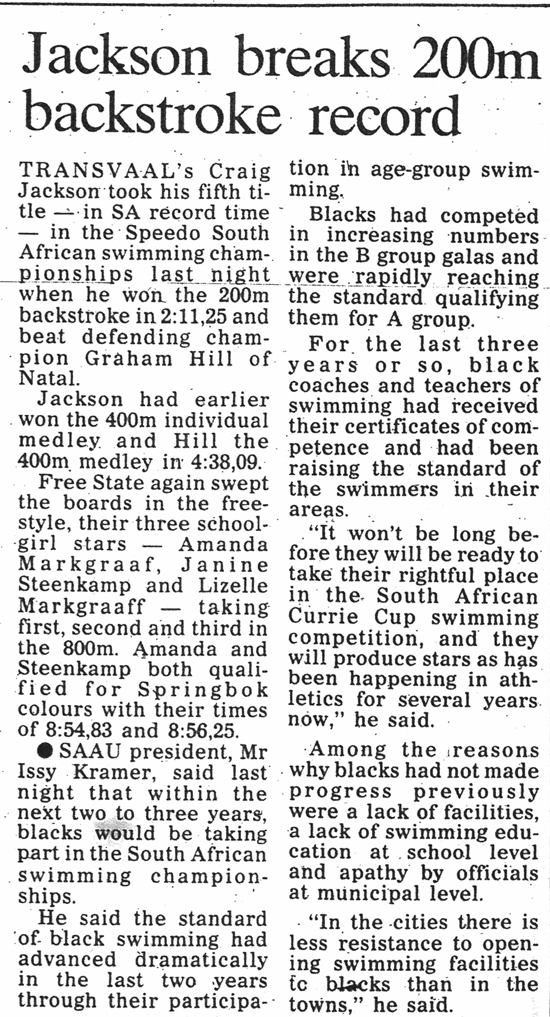
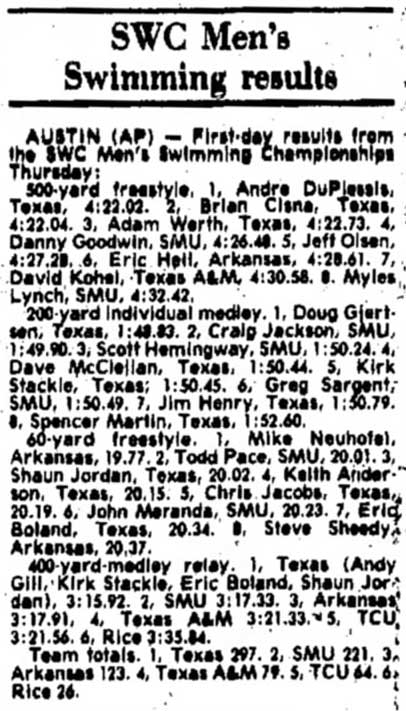
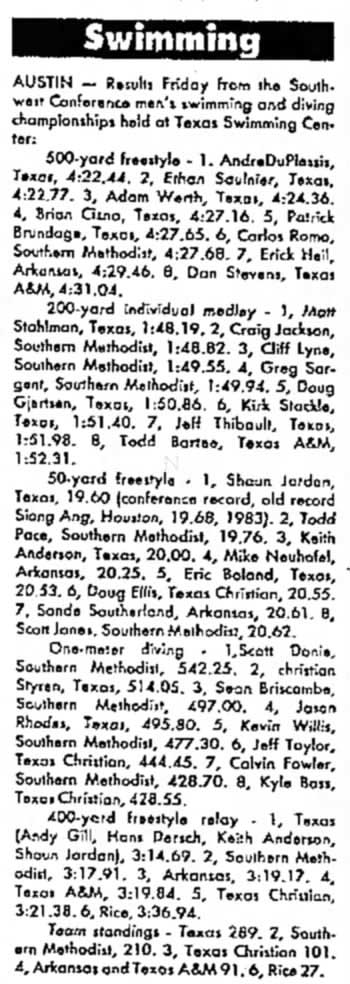
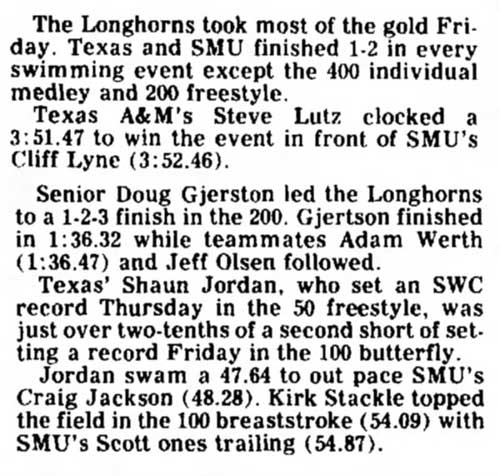
Craig Jackson swam for Transvaal from 1982 to 1986 and again from 1991 to 1992, after completing a degree in engineering at Southern Methodist University in Texas. He was an NCAA All-American in 1988, 1989 and 1990 for the 200 yards butterfly.  He returned to South Africa, where he trained with coach Dean Price, and won a place in the 1992 Barcelona Olympic Games team.

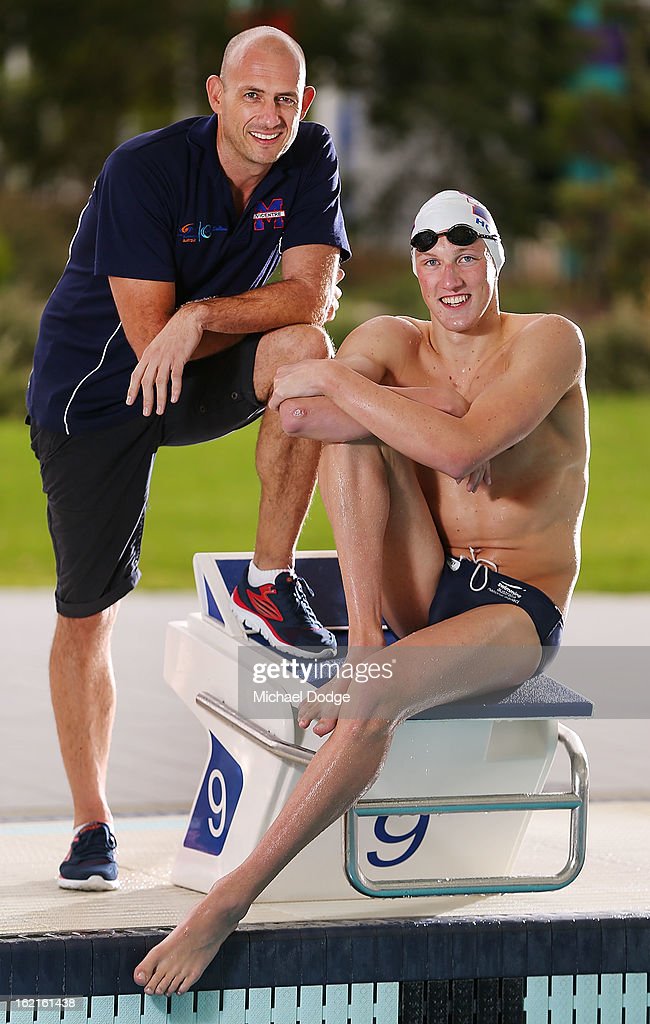
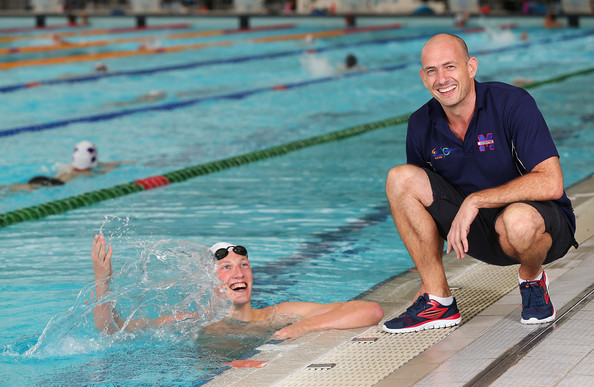
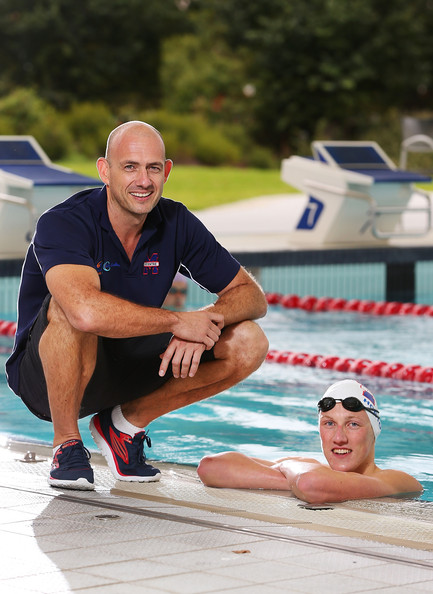
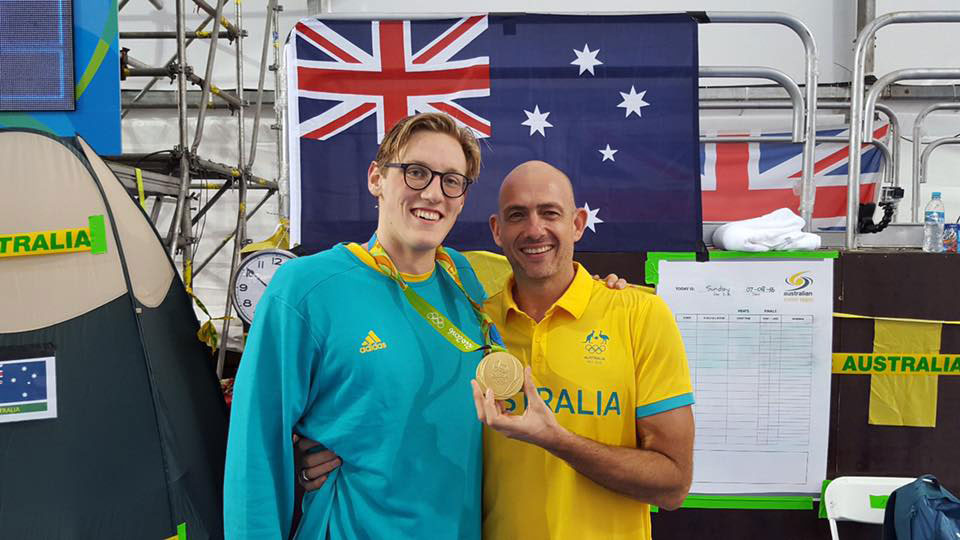
After the Games, Craig became a swimming coach in Johannesburg, winning the Junior Coach of the Year in 2005 with the Mustangs SC in Bedfordview. He then moved to coach swimming in Victoria, Australia, producing the 400 freestyle Olympic champion Mack Horton in 2016.

A star swimmer during his
time at St John’s College, Craig
represented South Africa
in the 1992 Olympic
Games in Barcelona. In
2005 he was named South
African Junior Coach of
the Year. Craig continues
to bring significant value
to competitive swimming.
Now based in Melbourne
and training athletes at an
elite level, he is regarded as
one of the top swimming
coaches in Australia.

At the  2024/25 Swimming Victoria Awards, Craig was awarded the prestigious Jack Foster Trophy as the Victorian Coach of the Year in recognition of his outstanding contributions to coaching and the development of athletes in the state. He was also named Victorian Open Water Coach of the Year for coaching Nick onto the Australian Dolphins Team to compete at the World Championships.

The 2024 World Aquatics Swimming Championships (25m) concluded in Budapest, Hungary, running from 10-15 December. Representing Victoria were swimmers Tara Kinder (Melbourne Vicentre) and David Schlicht (MLC Aquatic), along with coach Craig Jackson.

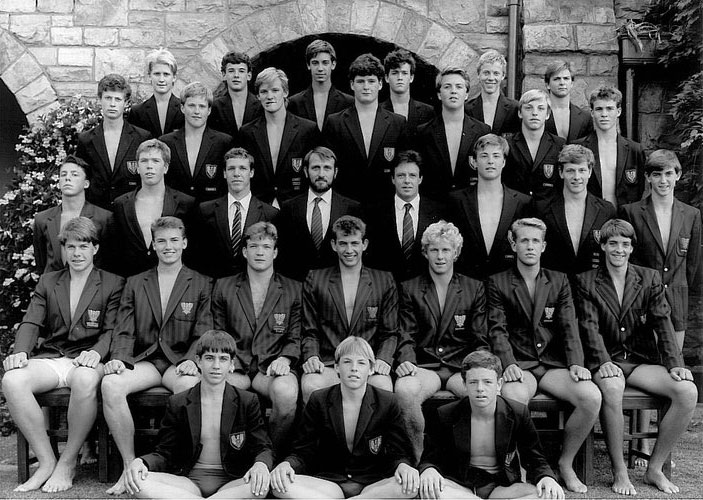
  • 1st Team Swimming 1986

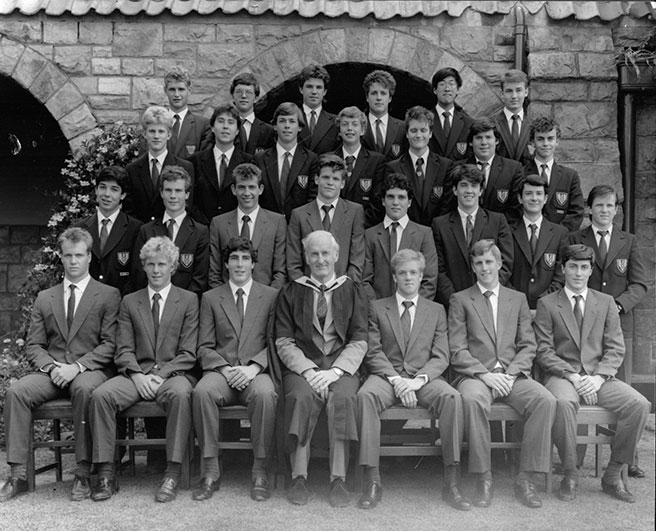
  • Matric 86

  • 1992 Tvl Team Jaco Kruger FB

  • Inland Vs Coastal Durban 1983 Most Likely A 400 IM With Graham Hill And Craig Jackson

  • 1992 Olympic Trials Kings Park

  • Natalie Tissink Jane Lyne Alison Curtis Craig Jackson Sue Rigato Mike Kritzinger Alison Stevenson Allan Kelsey Alan Ford

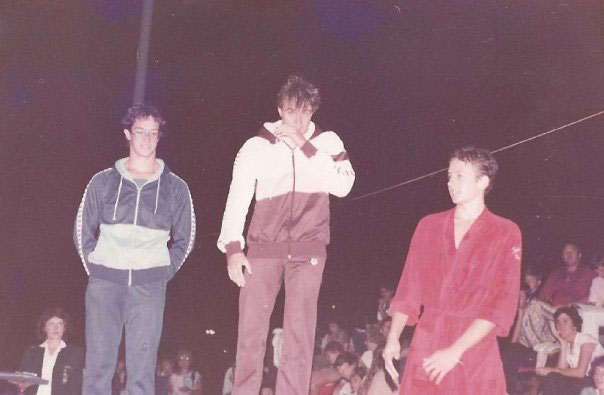
  • 1986

  • 1988 March 11 Jackson Du Plessis 3

  • 1989 Mar 3 Lyne Jackson 3

  • 1990 March 3 Cliff Lyne Craig Jackson 3

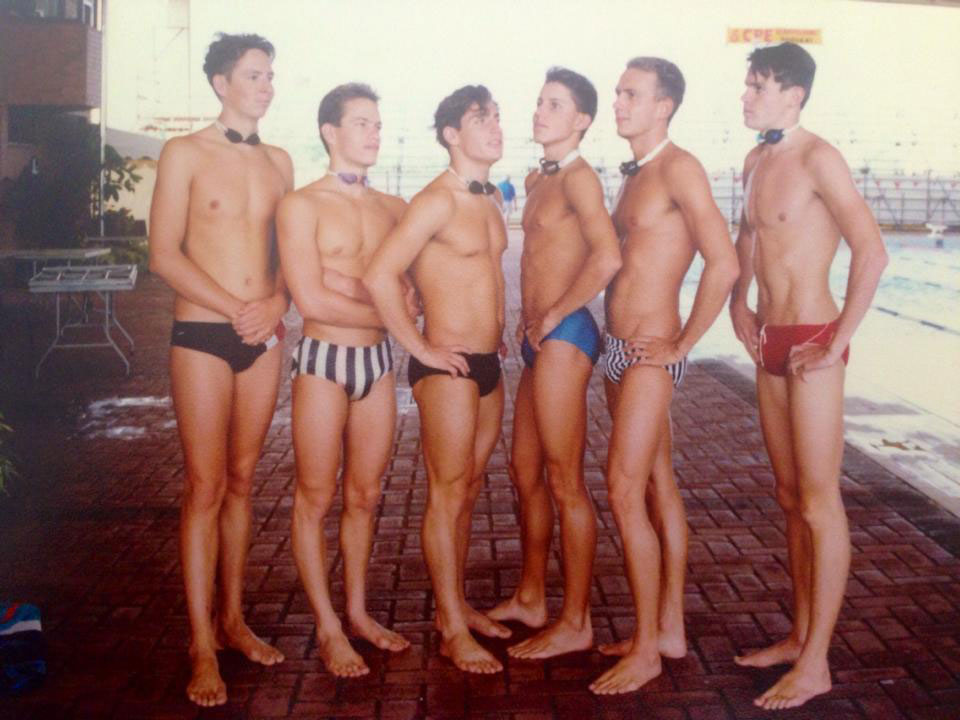
  • Craig Jackson 1991

  • Craig Jackson And Mack Horton

  • Craig Jackson

  • Craig Jackson

  • Eter Bishop Joint Winners Of The 2017 ASCTA Coach Of The Year

Craig Jackson: The engineer who builds champions

05 December 2025
Written by: Linda Pearce

Craig Jackson was combining a swimming scholarship in Texas with a mechanical engineering degree and several part-time jobs when one memorable fortnight helped to put the South African on an unexpected path.


Working as an assistant at the popular learn-to-swim program at Southern Methodist University, for which parents eager to enrol their kids would camp out overnight, he was tasked at the end of the summer to work one-on-one with a boy who had not progressed from the bottom level.


“I've ended up teaching him out of his grandmother’s backyard pool,’’ Jackson recalls. “His mum was working, so his final lesson was the first time she actually saw her kid swim, and she jumped into the pool, fully clothed, just so she could swim with him. 


“It was sort of a tipping point for me. It was one of those special moments that showed me it was worthwhile.’’


Now 57, Jackson would return to represent his homeland at the 1992 Barcelona Olympics once its apartheid exile - and thus his brief retirement - ended suddenly. By then, though, the 23-year-old butterfly specialist and freestyle relay swimmer was a little past what, in those days, was his prime.


Yet, out of the water, just three months working as a mechanical engineer would contrast with more than three decades as a coach, as a start-up program in Johannesburg that included zero clients on day one blossomed into a thriving business and national junior coach-of-the-year award in 2005.


It would continue with a move to join Ian Pope’s team at Melbourne Vicentre from mid-2008 on, initially, a two-year Australian adventure that became permanent, Jackson saying he learnt more in his first three months at MSAC than during the previous three years.


So is he an Aussie now? “I think I’ve been here long enough!’’


The man who guided Mack Horton to an historic 400m freestyle gold medal at the 2016 Rio Olympics is also Swimming Australia’s head MSAC/VIS Hub Coach - one lauded by the reigning 50m breaststroke world champion Sam Williamson as forward-thinking, modern and collaborative.


“Craig’s incredibly knowledgeable and well-rounded. He has the ability to take someone like me, who races for 26 seconds, and get them to a world championship gold medal, but he also has the ability to take someone like Mack to an Olympic gold medal in a 400 freestyle, an event that’s nearly four minutes long,’’ Williamson says.


“But he’s got (open water swimmer) Nick Sloman to world championship status, as well, in a two-hour race. So he’s not just limited by one stroke or by one distance. Craig’s incredibly capable when it comes to everything.’’


For the younger Tara Kinder, Jackson has the right balance of the personal and the professional, the calm and the passionate, is organised and methodical in his planning and enthusiastic in his love of colour-coded spreadsheets but also - with strong VIS support - heavily science-based.


“He has obviously been coaching for a very long time, both in South Africa and in Australia, and being an Olympic swimmer himself, he knows what we're doing,’’ she says.


“The sets he did in his day with a lot less physiological research than we have today were brutal. He was training in an outdoor pool with no heating. Like, he knows what we're going through, but worse. And then he did his college days over in the US. 


“So I really just trust him… he’s just sort of like my second dad. Without that sounding weird, because my dad is my dad!’’


Asked to describe his coaching philosophy, Jackson laughs that he challenges young coaches to develop one, but, ahem, can’t exactly remember his own.


Via a screenshot from his “coaching bible”, it’s later revealed as “clear communication, innovation/growth, knowledge, belief/confident”, from a coach who strives “to provide a safe and supportive environment with clearly communicated behaviours to drive behaviours that allow athletes to excel in and out of the pool”.


What he concedes are high standards and expectations means, for example, Jackson insists his 12 squad members - about half of whom are categorised - either get to training on time at 6am or text to advise of a delay. 


There is no such thing as a bad swim, only the kind from which nothing is learnt.


“Each athlete's very different,’’ says Jackson, who likes to plan ahead but remain flexible, and uses the analogy of a drive from Melbourne to Sydney.


“You know which route you're going to take and where you want to end up. But along the way if you want to take a trip into the Blue Mountains or something like that, you know you can do that. So it's always just a case of rerouting and coming back to that (destination).


"On the mental side of things, it depends on the athlete. And I think it takes a season or two to truly get to understand an athlete and figure out which buttons to push when they’re in the water and which buttons you should or shouldn't push when they're out of the water as well.’’


With Horton, Victoria’s only individual male Olympic swimming gold medallist, there was joint learning and bonding as 12-year-old Mack moved into the squad of newly-arrived Craig.


“I was very fortunate to have Ian Pope in the head role. At any point, he could have gone, ‘OK, Mack is in my group’. But he did allow me to grow with Mack and develop with him,’’ Jackson says. 


“And I think that was probably two-fold: one, Ian recognising that it was a good evolution for me and, two, I think Mack and I suited each other in terms of personality.


“I remember where I was trying to get him to do something and I said, ‘you don't want every day to be like Groundhog Day’, and Mack turned to me and he says, ‘but I like Groundhog Day!’.’’


Yet coaching was not so individually tailored back in Jackson’s era. Every session was identical. Every Monday night the same as the last and the next. Every week. Every year. And the year after that.


Groundhog? 


“It literally was… And the coaches in the US were just you worked as hard as you could all the time. And there wasn't a lot of technical feedback. 


“So there are a lot of things that I've drawn from that, but it's about evolving with the times because doing 80-100km weeks might work for one or two swimmers, but not for everybody.’’


Nor is too much emphasis on times and medals healthy, with Jackson and Horton speaking only once - a year or so out from the Games - about their gold medal ambitions. Instead, it was all about ticking the boxes that would put the great freestyler in the position to win the race of his life.


In Rio, he was as thrilled for Koti Ngawati to have qualified, given the year the medley swimmer had endured, as he was for Horton to stand on the podium.


Jackson: “As long as you've done the best job you can to get there, that's the most important part of the journey.''


Williamson is grateful that his coach eschews the one-size-fits-all model in favour of extracting the most from each individual: working out an athlete’s capabilities, then getting them past where they think they can go.


Humour is a key ingredient, as is Jackson’s ability to be level-headed, whatever the moment.


“At 6am at the end of a month-long training block, you don’t really want to be stepping onto pool deck, but he’s always there, he’s there first, he’s there smiling, he’s there greeting everybody, and he’s there picking everyone’s energy up,’’ Williamson says.


“But then when it comes time to do it, he’s also the one to bring everyone’s energy down so you’re not spending all your tickets too early.


“He knows when he needs to get in my face, and when he needs to fire me up, and he knows when to just leave me alone and when I need to get into my own head and be the one to pull the strings. He knows that about every single one of his athletes.


“Given my age as an athlete and the tenure I’ve had, he respects my decisions and he respects my feedback, and I’m never afraid to come to Craig with what could be a contentious or a really dicey opinion, because I know that whatever I bring to him he’s going to take on board. 


“He actively inspires all the athletes he works with to have their own voice. There’s not another coach I’d work with. Craig is the coach I’ll be working with through to LA and to the end of my career.’’


Yet Williamson does not believe Jackson gets “an ounce of the credit he deserves’’. 


Why?


“Because he coaches in Victoria. I think what he’s been able to achieve in the last 10 years as a coach and what he has been able to do in just a short time with a lot of Victorian athletes is incredible, and just because some of those athletes aren’t necessarily on the team breaking world records doesn’t mean what he’s been able to do hasn’t been impressive. 


“And I think that for far too long, swimming as a sport has viewed a world record or a gold medal as the only metric of success. Not something as ‘trivial’ as the happiness of an athlete, or what an athlete goes on to achieve after that career, or how far the athlete progresses through their career. 


“I think those should be metrics of success.’’


Jackson insists any differences between the states are simply a matter of scale and volume, with Queensland the location for the majority of programs and Dolphins. “But in terms of the facility we have access to, the staff that I've got, (the program) is one of the best in the country, if not the best, in terms of what we are able to offer.’’


Personally, he remains utterly invested, adamant it’s essential in a high performance environment to match the athletes’ commitment, while recalling another instructive moment in his early days coaching in one of South Africa’s few 25m indoor pools.


The facilities manager, a former rugby coach, was waiting to lock up after the session and declared himself amazed by what he had just witnessed.


“I'm like, ‘it's just a Friday night training session’,’’ Jackson recalls.


“And he says, "No, no, these guys are here on a Friday night, training. They could be out drinking, taking drugs, doing all sorts of things. You don't know what you've got in front of you’. 


“You do kind of lose perspective of the type of individuals that come through this sport.’’


Yet Jackson never takes for granted the thrill of a positive outcome or growth of an individual, regardless of talent, and recounts an experience in his first month on the job in Johannesburg with just a handful of PAYG swimmers. 


Including one in particular, who could pay (tick), but about whom multiple previous coaches had said Jackson would be wasting his time.


“He wasn't the most talented kid, but all he wanted to do was swim. His parents were well enough off that he was able to go to the US and swim there, but he never won a single medal the whole way through his career,’’ Jackson says now.


“The funny thing was that about a week or so into his training with me, he said, ‘we will be friends’. And I'm like, ‘no, we won’t. You're a swimmer, I'm a coach, that's not the way it works’.


“And every time I go back to South Africa now, I still catch up with him. And it’s just those relationships that make it all worthwhile.’’ 

https://vic.swimming.org.au/news-articles/craig-jackson-engineer-who-builds-champions 
  • Hits: 2187

Charl Bouwer

Charl Bouwer

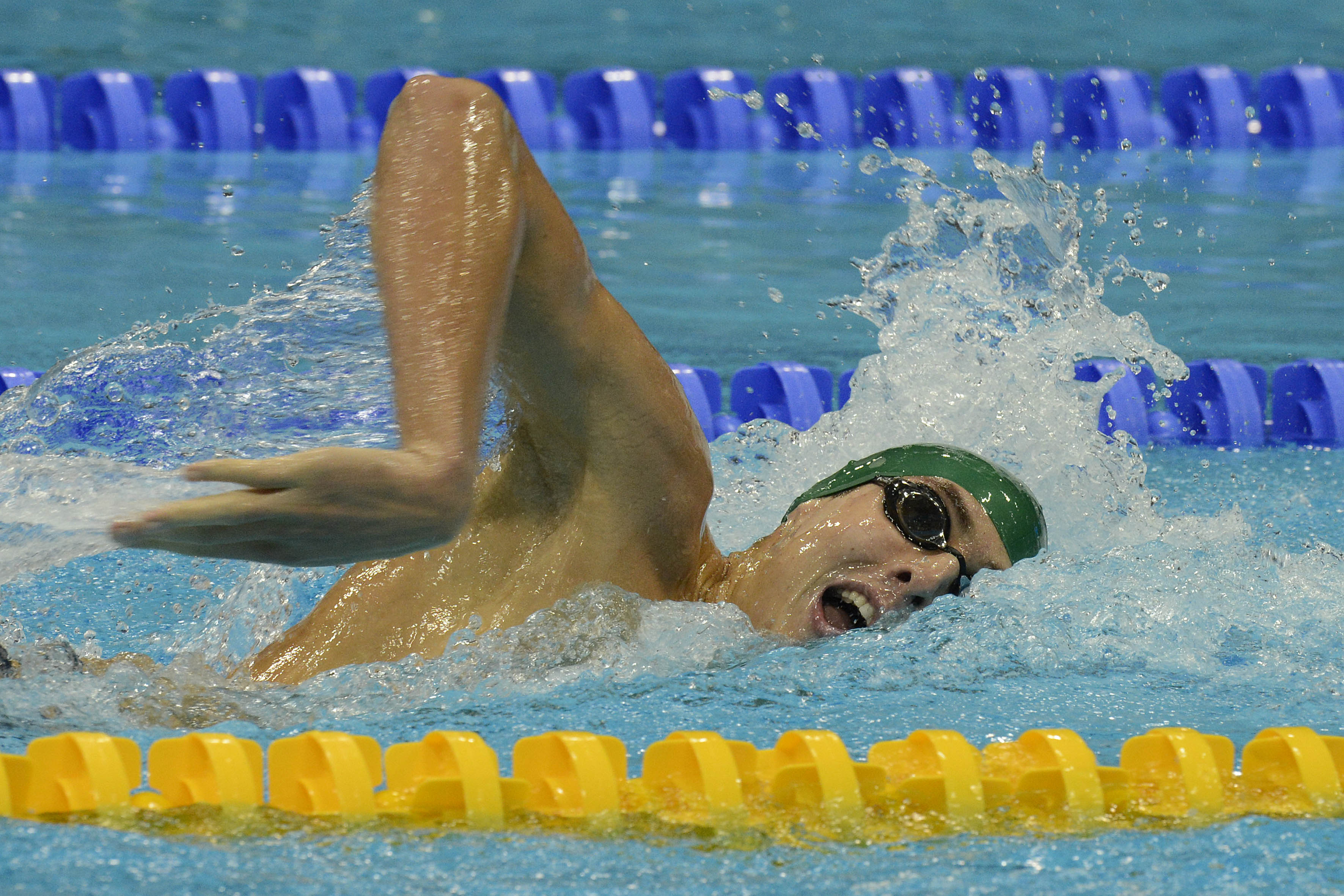
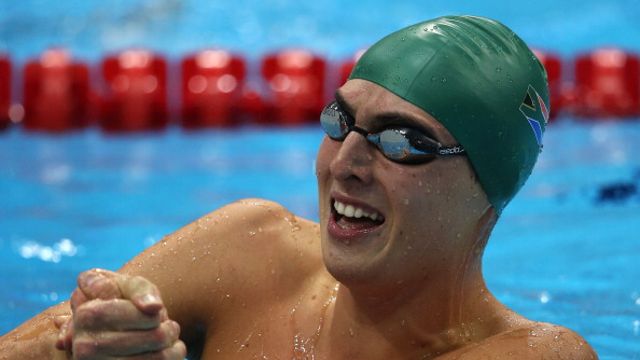
Charles "Charl" Bouwer was born in Kimberley in March 1990 where he attended the Elizabeth Conradie School where he was coached by Paralympian Ebert Kleynhans. He moved to Stellenbosch University to study theology and swim under coach Pierre de Roubaix at the Matied SC.

At the 2004 Summer Paralympics he competed in the 100m backstroke, 200m individual medley and 400m freestyle.

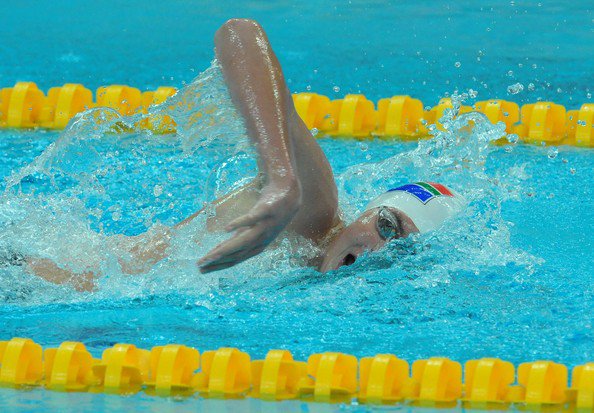
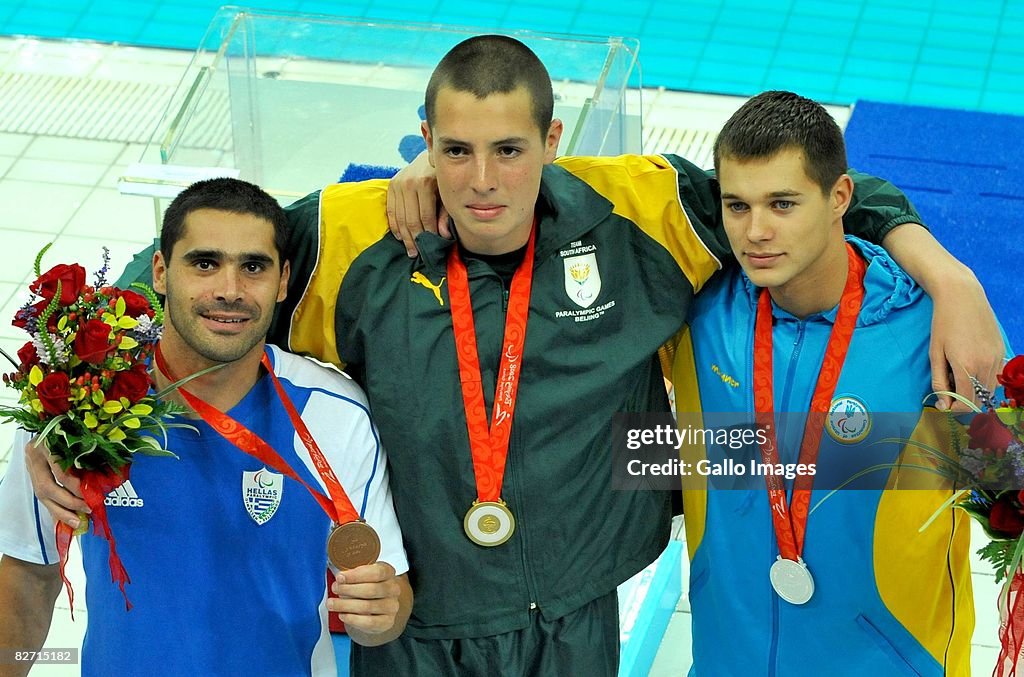
At the 2008 Summer Paralympics he competed in S13 100m butterfly, 400m freestyle, 100m freestyle, 100m backstroke, 50m freestyle. He won gold and set a new world record in the 400m freestyle.

At the 2012 Summer Paralympics he participated in the S13 class Men's 50m, 100m and 400m freestyle; 100m butterfly; 100m backstroke and the SM13 Men's 200m individual medley. He won gold in the 50m freestyle.

“Before every major event I always think to myself, am I going to return with any medals,” he said.

“This time, I said to myself just to bring back the same amount of medals I won in London. I was really surprised when I won a fourth medal for my country.

“It shows that my training for the past few years is paying off.”

Bouwer has had a busy year, trying to balance swimming with studies at Stellenbosch University. “This was a very tricky year for me.”

Bouwer was full of praise for his coaches

“I attribute my success to my coaches at Stellenbosch and my first coach in Kimberley, where I trained the during the winter.”

“My coaches do so much for me and will do anything to help me. So, I can only say thank you to my coaches for all their hard work and help.”

Bouwer says he lives by the motto “no pain, no gain”, and that his success is due to his hunger to always be the best.

Bouwer wins on debut

Beijing Paralympic gold medallist Charl Bouwer recently transfered his pool prowess to the open water discipline when he won the annual Os Fees 1.5 kilometre swim in Theunissen, Free State.

In Beijing, Bouwer won the 400m freestyle event in world record time but the open water event on the Erfenis Dam was something else for the visually impaired athlete.

“It was very different to what I’m used to, and I have to admit I’ve always had a bit of a phobia about putting my head into dirty dam water. But it all went well and luckily, with my disability I wasn’t able to see any catfish swimming around.

“I had a guy on a paddle-ski next to me, just keeping me on the right path. From the beginning I tried to stay ahead so that I didn’t bump into the guys ahead of me and also so that they didn’t follow me if I went wrong.

“I had a nice lead for most of the way and then a guy from Bloemfontein, Christoff Botha, almost caught me and I had to put in a bit of a spurt at the end.”

The annual event attracted hundreds of swimmers and is organised by Springbok rugby legend, Os du Randt and his wife Hannellie. Du Randt farms in the area.

Bouwer recently wrote his matric exams and has recently moved from Kimberley to Stellenbosch where he plans to study Sports Science at Stellenbosch University. He is already training with the Maties swimming club under the guidance of Pierre de Raubaix. His former coach was Ebert Kleinhans.

And will there be more open-water adventures? “I definitely think so. I’d like to give the five and 10km distance a go, I’m just not sure exactly when.”

Former city learner off to compete in Paralympics

24 Aug 2012

FORMER Elizabeth Conradie School learner, Charl Bouwer, who is currently pursuing his studies at Stellenbosch University, will be competing in this year’s Paralympics as part of the 62-strong South African squad.

The team departed for London this week.

The Paralympic Games kick off on Wednesday and ends on September 9. In Beijing four years ago, South Africa came back with 30 medals, 21 of them gold and was placed sixth on the medal table. This year the South African Sports Confederation and Olympic Committee has set a 40-medal target.

Bouwer, who has already taken part in two previous Paralympics, is competing in category S13 events.

Bouwer’s first stint in the Olympics was in 2004 where he competed in the 100-metre backstroke, 200-metre individual medley and 400-metre freestyle.

Four years later in 2008 he competed in numerous events from the 50-metre freestyle to 400-metre freestyle, an event in which he not only won the Paralympic title but also broke the world record.

Bouwer started swimming at a young age, growing up on a farm, and was prompted into swimming competitively when his mother discovered his talent.

Helonie, Bouwer’s mother said yesterday that he started swimming in the rivers and dams on the farm.

“I taught him doggy paddle and then how to swim properly and after that I took him for lessons.”

Bouwer developed Stargardt, a loss of the central vision which af­fects one in 100 people. “One of his school teachers recommended that we take him to have his sight tested. “Although we visited five optometrists, none of them could find anything wrong until a specialist from Bloemfontein diagnosed him with Stargardt.”

Bouwer has been swimming in galas since he was six years old and earned his provincial colours. “While he had to adjust to his vision being impaired, in terms of swimming nothing changed,” his mother said.

Bouwer has always loved swimming and first he did it partly to be with friends. “It was fun to hang out together at the galas,” he said before his departure.

Bouwer said that when his vision became impaired his life changed. “I changed schools and attended Elizabeth Conradie school instead of a government school, but in terms of swimming nothing changed as we got a sponsor and a swimming pool was built for us at school to practice.

“I won my first Nedbank championships at the age of 12 and in 2004 I was the youngest ever member to join the South African squad to attend and participate at the Athens Paralympics.

“I was very young, I can remember it now like it was yesterday. I really love being at the Paralympics, competing and also mixing with athletes from all around the world.

Bouwer’s discipline also helped him to be a good swimmer. He pointed out that he attributed the discipline to his parents.

“It is such an honour and privilege to be representing my country and compete for medals in South African colours in London.

Charl Bouwer swem SA se negende Paralimpiese medalje los

2012-09-02

LONDEN. – Die gesiggestremde Stellenbosse swemmer Charl Bouwer het gisteraand vroeg hier Suid-Afrika se negende medalje op vanjaar se Paralimpiese Spele verower.

Die 22-jarige boorling van Kimberley het in die 100m-vryslag die silwermedalje verower nadat hy eergisteraand die titel in die 50-vryslag gebuit het. Bouwer het sy teologie-studies vir ’n jaar opgeskort om vir die Paralimpiese Spele voor te berei. Nadat hy met die omdraaislag nog derde was, het Bouwer sterk geëindig en die beste tyd van sy loopbaan twee keer op dieselfde dag verbeter – eers met ’n tyd van 53.28 s en toe in die eindronde met 52.97 s. (Lees ook die berig op Sport24).

Gisteraand laat sou die Pretoriase lemnaeller Oscar Pistorius (klas T43) sy titel in die 200m verdedig. Sy kamermaat, Arnu Fourie (klas T44), ’n ouditeur op Stellenbosch, was in dieselfde wedloop. Fourie het een geamputeerde been, terwyl albei Pistorius se bene weens ’n geboortedefek onder die knie geamputeer is.

Pistorius het in sy uitdun voor 80000 juigende en jillende toeskouers behoorlik lemme neergelê en ’n nuwe wêreldrekord van 21.30 s aangeteken. Dit was hoendervel mooi.

Met dié kragvertoning het hy ’n duidelike boodskap aan sy teenstanders gestuur dat hy nie hier is om op sy louere te rus nie.

Fourie het ook in sy klas ’n wêreldrekord van 22.57s opgestel.

Suid-Afrika spog nou met twee goue, drie silwer- en vier bronsmedales. Op die vorige Paralimpiese Spele vier jaar gelede in Beijing het die span 30 medaljes verower, waarvan 21 goud was.

Die ander lede van die span wat eergisteraand medaljes ver-ower het, is die swemmer Achmat Hassiem (100m-vlinderslag, brons) en die atlete Jonathan Ntutu (100, brons), Teheboho Mokgalagadi (100, silwer), Dyan Buys (100, silwer) en Anrune Liebenberg (200, brons).

Vroeër het die swemmers Natalie du Toit (100-vlinderslag, goud) en die siggestremde Hendri Herbst (100-vryslag, brons) ook medaljes gewen.

Pistorius het gesê dit is altyd “baie spesiaal” om ’n wêreldrekord op te stel en hy was baie opgewonde oor die eindronde.

Pistorius, die eerste gestremde atleet in die geskiedenis wat toegelaat is om aan die Olimpiese Spele deel te neem, het weer benadruk die 400 is waarskynlik sy beste item en dat die 100 die moeilikste sal wees.

- Volksblad


Charl Bouwer Sets Paralympic World Record in South Africa

18 April 2013

PORT ELIZABETH, South Africa, April 18. AFTER a two-day delay due to a burst pipe, and a switch to a pure timed finals schedule, the South African Nationals returned with a bang as Charl Bouwer downed the world record in the S13 200-meter free event.

Bouwer clocked a time of 1:56.78, demolishing the previous mark of 2:02.12 set by Greece's Charalampos Taiganidis in 2006.

Charl Bouwer 2013 IPC Canada medals

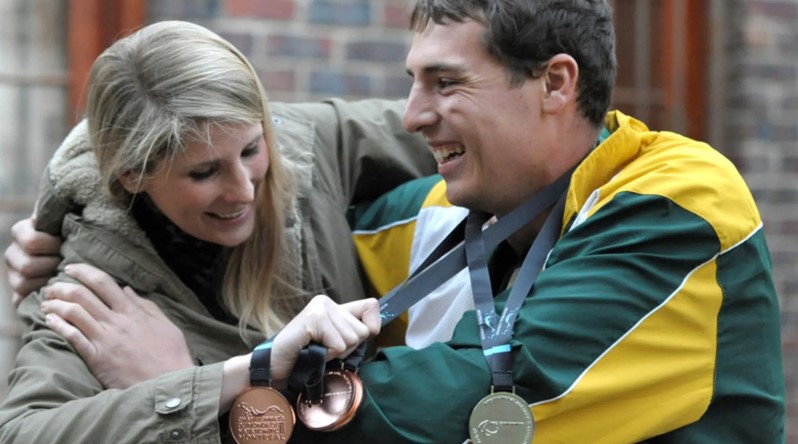
22 August 2013 - Charl Bouwer won three bronze medals and a silver at the IPC championships in Canada. His sister Helena Bouwer tries to take them from him.

Charl Bouwer en Ilse Hayes 2013

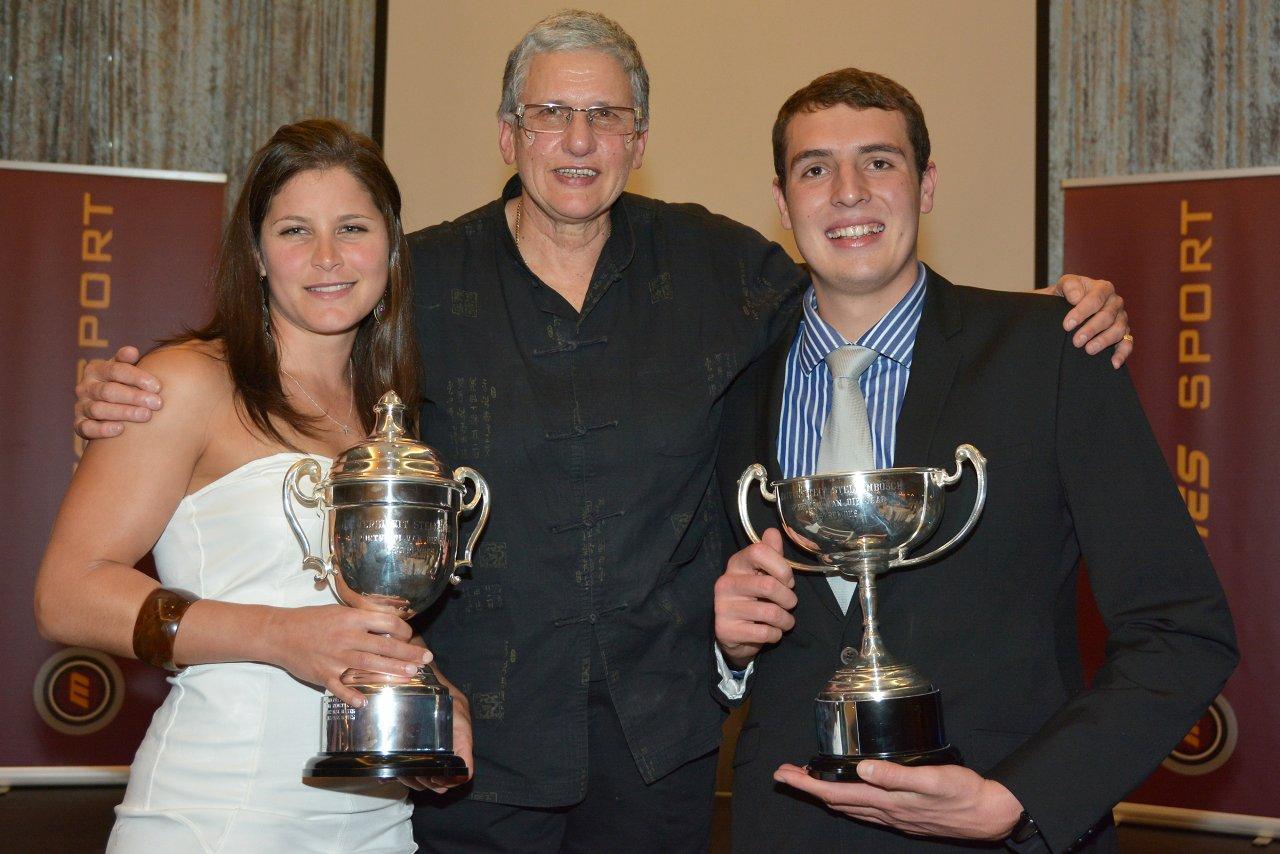
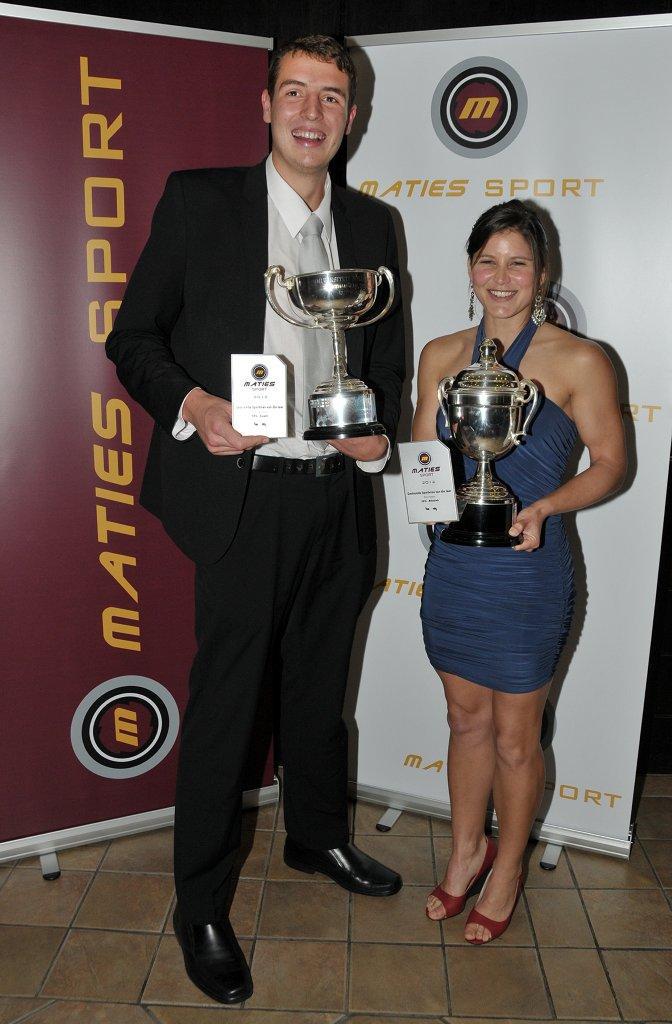
10 Oktober 2013  Maties Sport Ere kleure dinee - Ilse Hayes en Charl Bouwer as Sportman en -vrou met Gestremdheid, saam met Dir Maties Sport Jackie Wiese


Paralympic gold medallist Bouwer calls quits on career

April 16, 2015

Let there be no doubt about it… Team South Africa has something of a mountain to climb if they are going to get close to emulating their achievements at the 2012 Paralympics in London.

Three-time Paralympian swimmer Charl Bouwer is the latest ‘casualty’ from the team of 2012 who won’t be part of the Rio equation. The visually impaired Kimberley-based swimmer has hung up his costume and swopped the swimming pool for the business pool.

That means he joins a list of high profile athletes who won’t be in Rio.
Fellow swimmer and Paralympics legend Natalie du Toit called it quits after the London games while track athlete Oscar Pistorius was found guilty of culpable homicide and is still involved in a protracted legal battle.
Fact of the matter is that of the 29 medals won by the SA Paralympians in London, more than a third were won by this trio of athletes.
The trio won 10 medals in total (six gold and four silvers). So there’s no getting over the fact that the current generation of Paralympic talent are going to have to step up to the plate in a big way.

Now 25 years old, Bouwer, who won three medals in London (one gold and two silvers) has been toying with the idea of giving up for some time and the business world is calling him.

He told Road to Rio 2016: ‘I came to a point in my life where I realised that I have to start focusing on the bigger picture in life. I simply can’t swim for ever and then ask myself the day when I stop ‘what will I do now?’.

‘I’m very privileged to have parents who have also taught me a lot in life and who are great mentors. I’ve started my own business here in Kimberley where I manufacture tombstones and table tops.  My products are a lot cheaper than granite and is therefore more affordable for the average guy on the street.

‘I’ve wanted to stop for a while now but ended up just accepted having to go to training and then if I was chosen for the team I’d go along. I think this was because I liked the idea of quitting more than actually doing it. I think it’s hard for anyone who has gone through training for an Olympics or Paralympics to finally call it quits.’
But Bouwer was quick to thank all those behind his impressive career that saw him swimming at the Athens, Beijing and London Paralympics.

‘I must say I’ve had great coaches in my life. Pierre de Roubaix is the coach I respect the most in life and I’ve have learned a lot from him. Not only in the swimming pool but in life itself.

‘The years I trained at Maties with Pierre must have been the hardest training I have ever done. Some weeks we swam between 80 to 100 kilometres. For someone coming from a small place like me, that took some getting used to. Thankfully Pierre and Heerden Herman [himself an Olympic swimmer] was there to help me get used to all of that. I’ve learned so much in my life from the sport and without my swimming I don’t think I’d be the same person I am today. For the rest of my life I’ll always look back at my swimming and I think it will help me in my life.

‘The swimming was hard work but I think that hard work made it so much more worthwhile. Pierre use to say that ‘if it was easy everybody would have done it’. That meant a lot to me and I know I will always remember it and use it whenever something gets hard to do.’

He also took time out to thank the administrators behind the scene. ‘I can only say thank you to SASCOC and Swimming South Africa. Without them, I would never have reached the same heights of my swimming career. I’ll miss my swimming days and will defiantly miss the competition but I’ll just have to take my competitive spirit to my business and compete in business.’
The lanky swimmer says two highlights stand out in his career. ‘The first was when I won my first Paralympic gold medal in Beijing and broke the world record in the 400 free. The second was when I won my second gold medal at the London 2012 Games in the 50m free.’

And before he turned his attention away from times to tombstones and table tops he left some advice to the next generation of swimming. ‘Do the hard work and never give up. Just to be able to swim at an event means that you have got a talent from God. Just to be able to swim is a very big and great talent to have. Use it and work hard at it. Remember, no pain no game and swimming is all about the pain.’

Picture of Bouwer, courtesy of Wessel Oosthuizen/SASPA

Charl Bouwer en Ilse Hayes - 2012

  • Hits: 6080