Minhetti
- Hits: 6
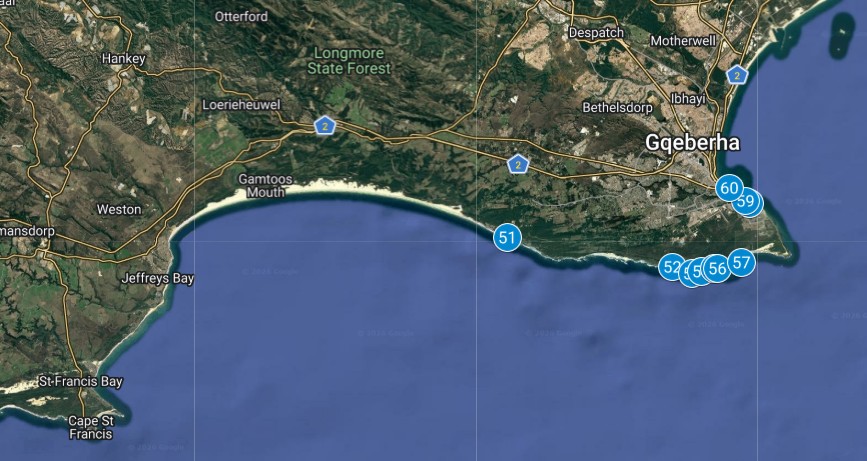
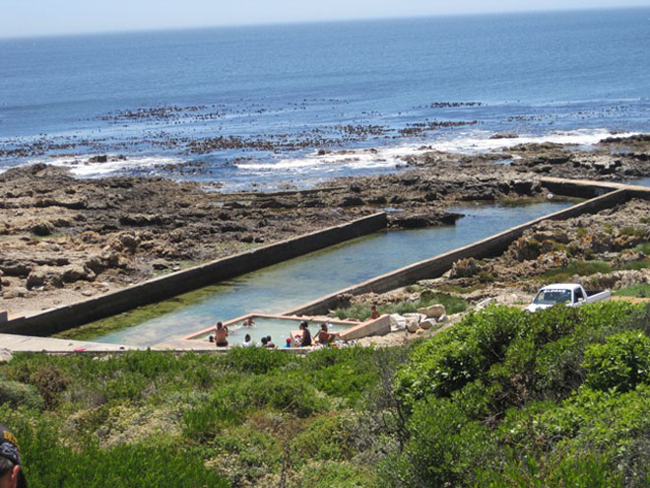
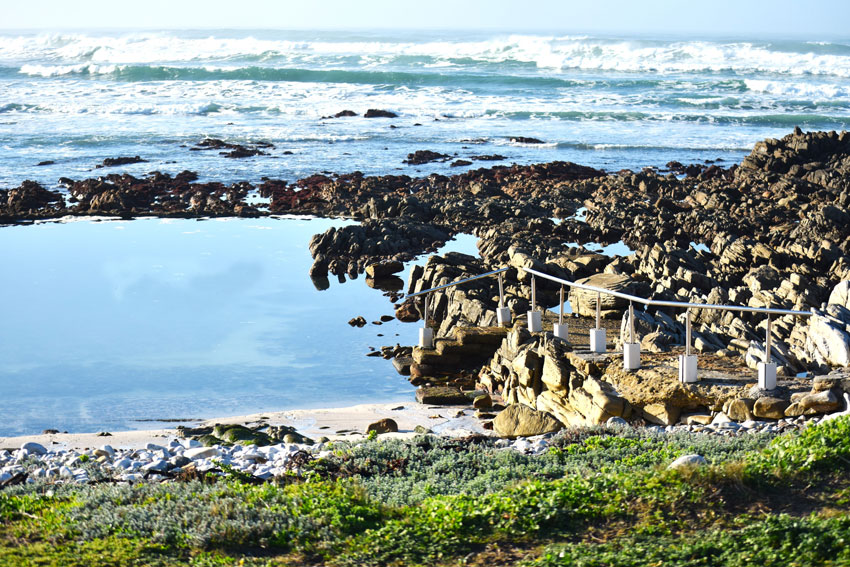
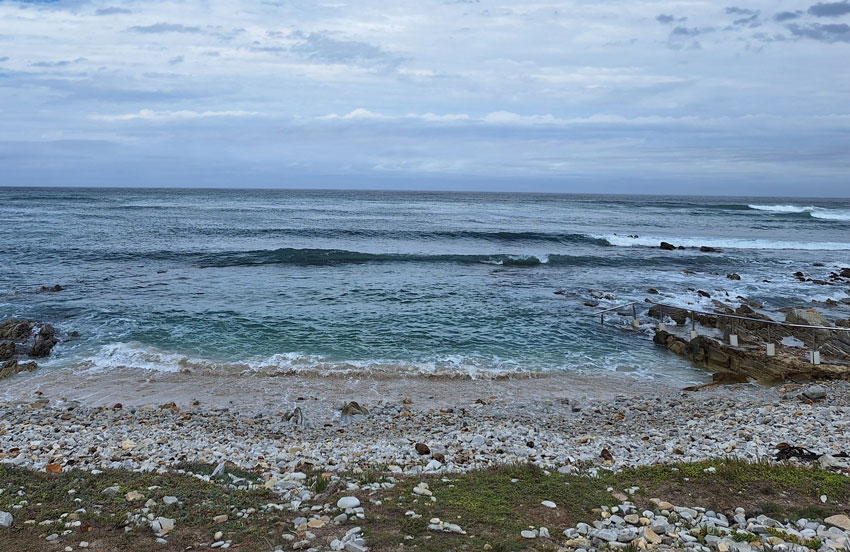
MacArthur's Baths and the Minhetti Hotel Tidal Pool were two notable tidal pools around Port Elizabeth, although the Minhetti Hotel pool has now been demolished.
Two other swimming pools, both of which have also now disappeared, are included here because they were saltwater pools, built close to the shore to allow salt water to be pumped in.
The coastline here was relatively inaccessible due to the mountains and the few roads from the interior. There are also only a few towns which have traditionally served as holiday destinations, benefiting from the warmer waters washed down east coast by the Agulhas Current. Much of the coast is part of declared nature reserves, which further limits the establishment of towns. Whale watching has made the area an international tourist attraction.
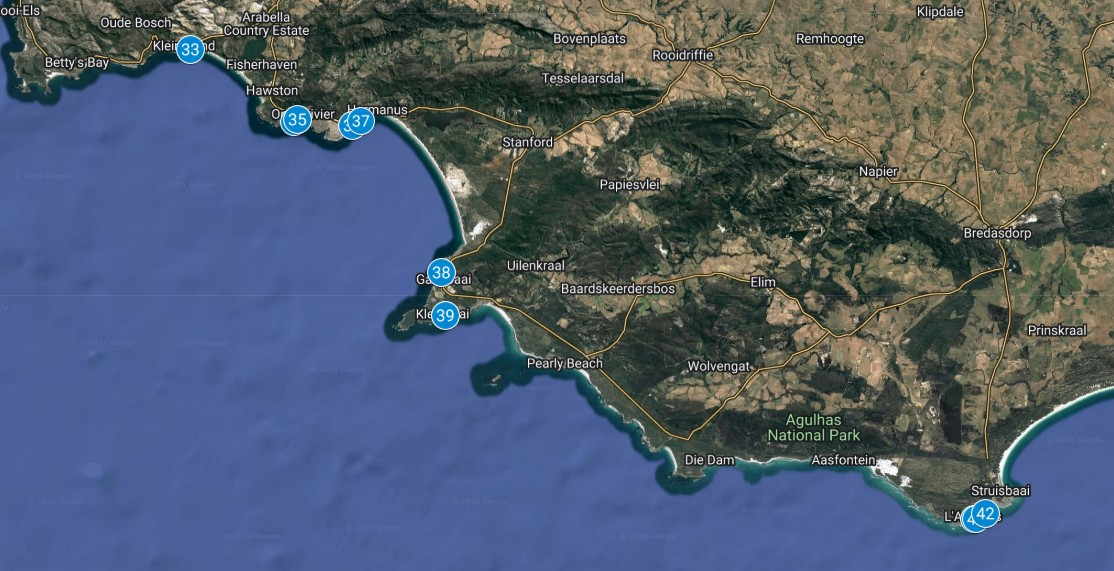
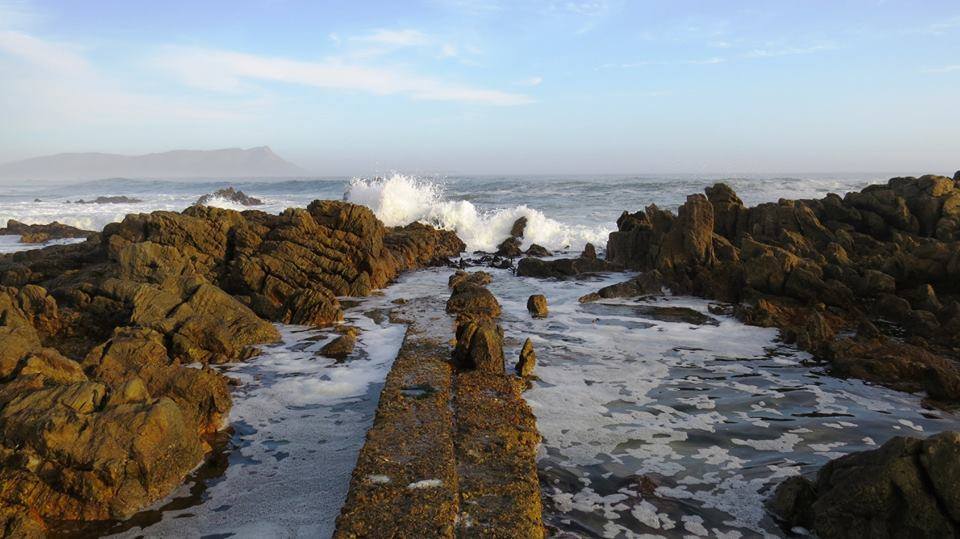
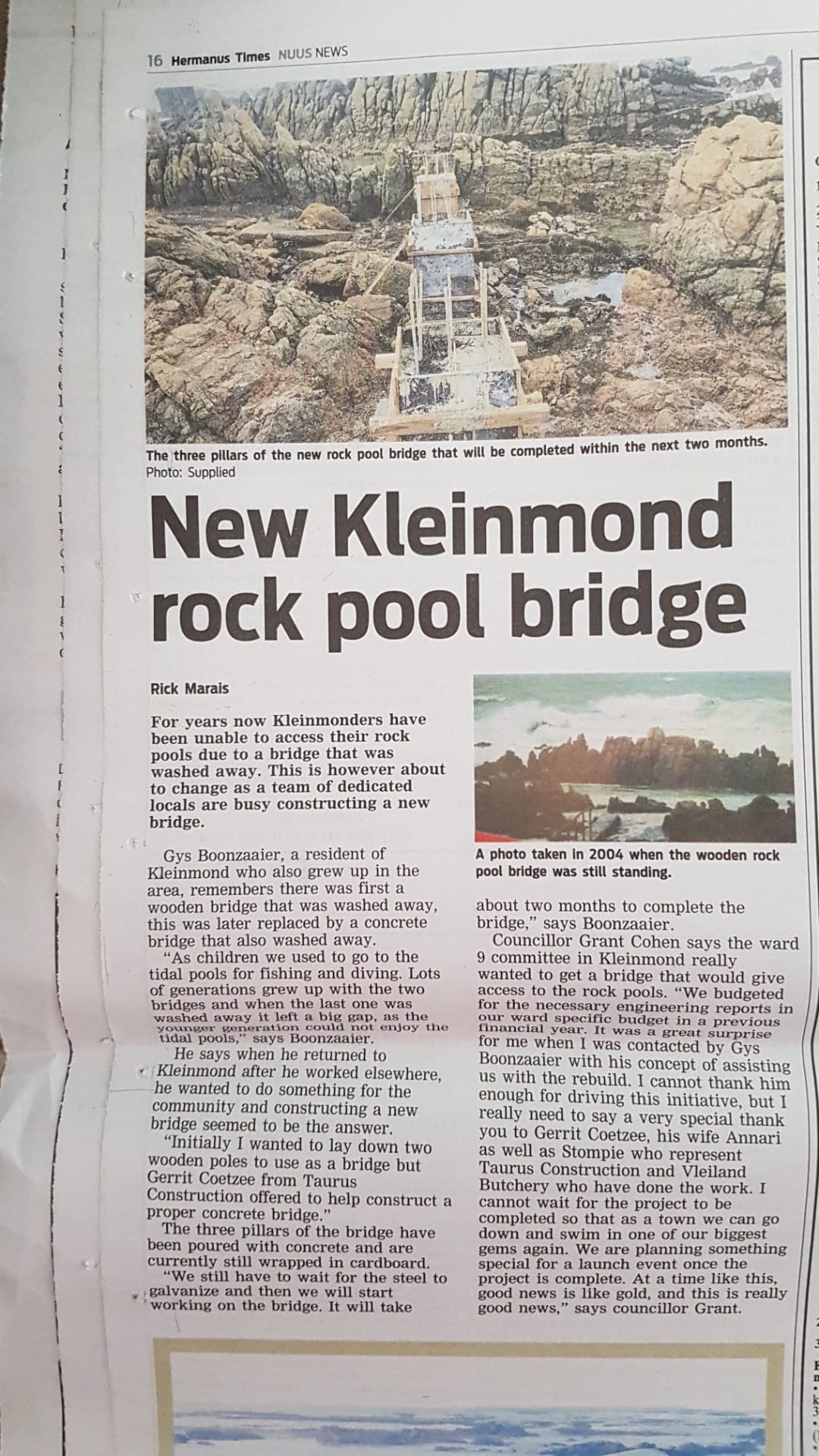
Before the town of Kleinmond was formally established, early holidaymakers in the 1800s referred to the area as Sandown Bay. Today, "Sandown Bay" often refers specifically to the spectacular 5km stretch of white sandy beach and the broader bay area where the town is located.It was a favourite vacation spot for farmers from the hinterland long before it became a permanent settlement. For years now, it has been difficult to access the tidal pool due to the bridge that washed away. This is, however, due to change Vleiland Slaghuis and Taurus Construction are busy constructing a new bridge. This is a very popular tidal pool. People do not just swim and dive in this pond but also fish in this pond. Die Bruggie Tidal pool is within walking distance from Xanske's Place.
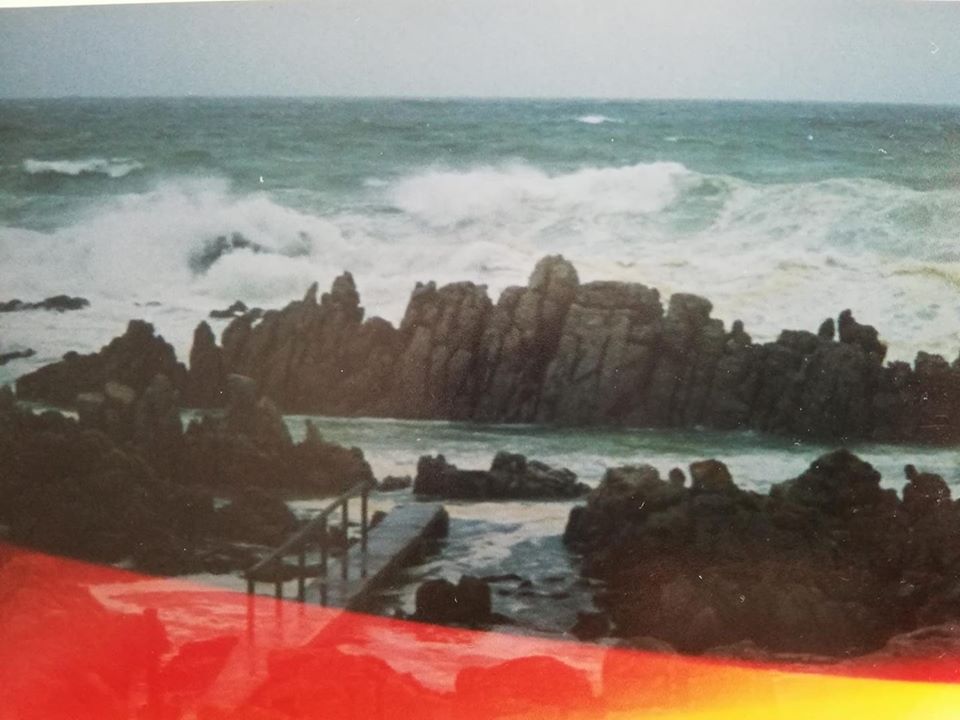
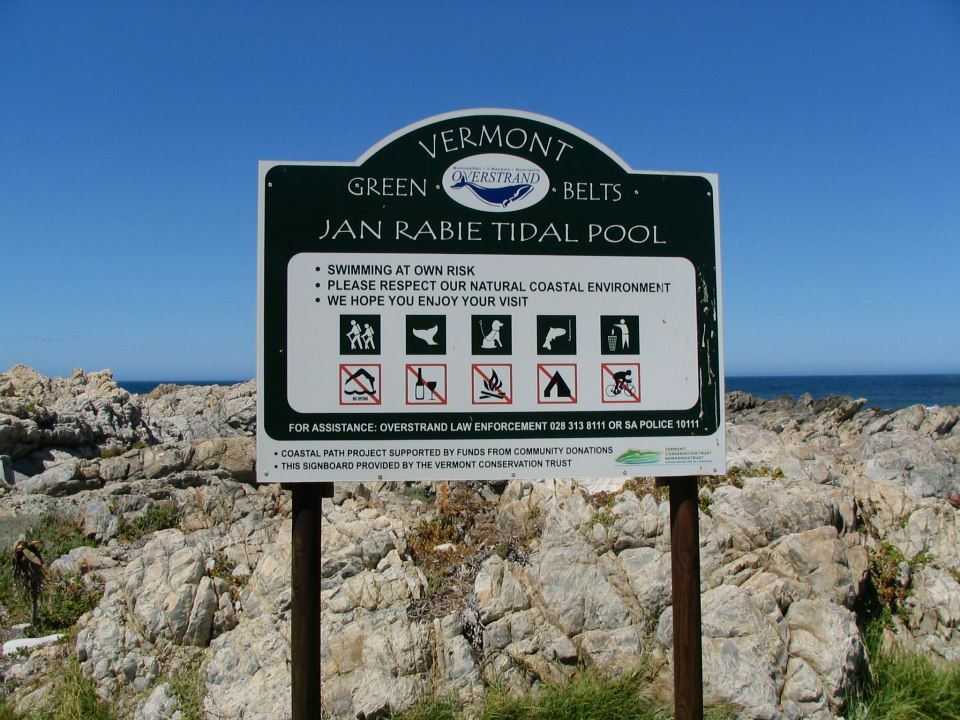
Onrusrivier offers two tidal pools. The first one was named after the author Jan Rabie, who was an Afrikaans writer of short stories, novels and other literary works. The Jan Rabie Tidal Pool is a small, scenic pool on the coastal path between Onrus and Vermont. It is great for swimming or just enjoying the sunsets, though during high tide, care should be taken as the waves crash into the pool.
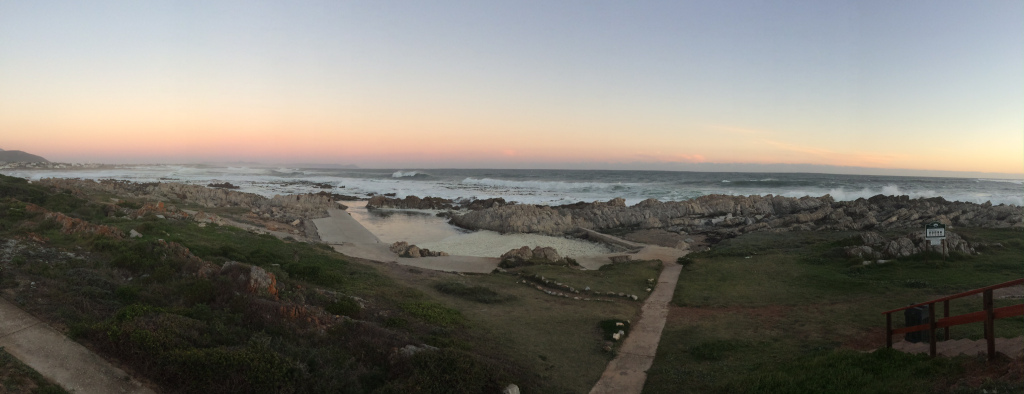
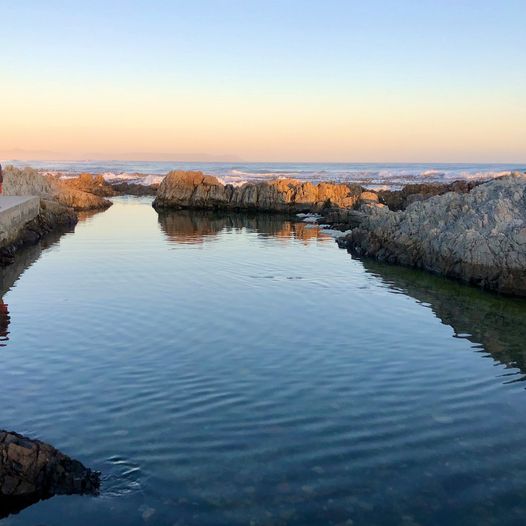
Just a short walk along the same path lies Davies Pool, right in front of the Onrus Caravan Park, constructed by Mr David Jonathan Davies. It was also locally known as "Mermaid's Pool".
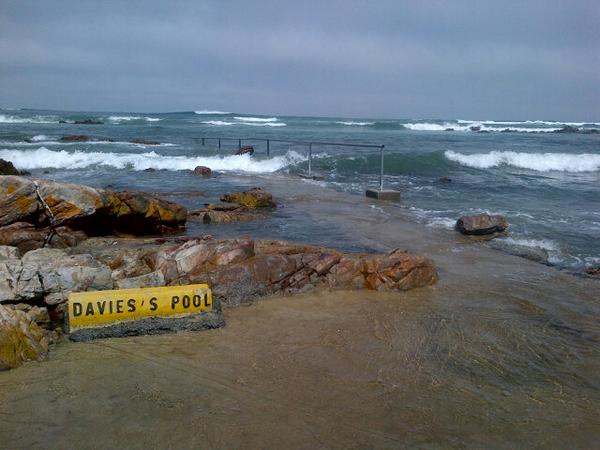
Davies Pool Onrus. It’s a tidal pool, a spa, a meeting place, time-out setting, coffee stop, outdoor gym, dog walkers gathering spot, sit and stare location - it's the heart of the Onrus community
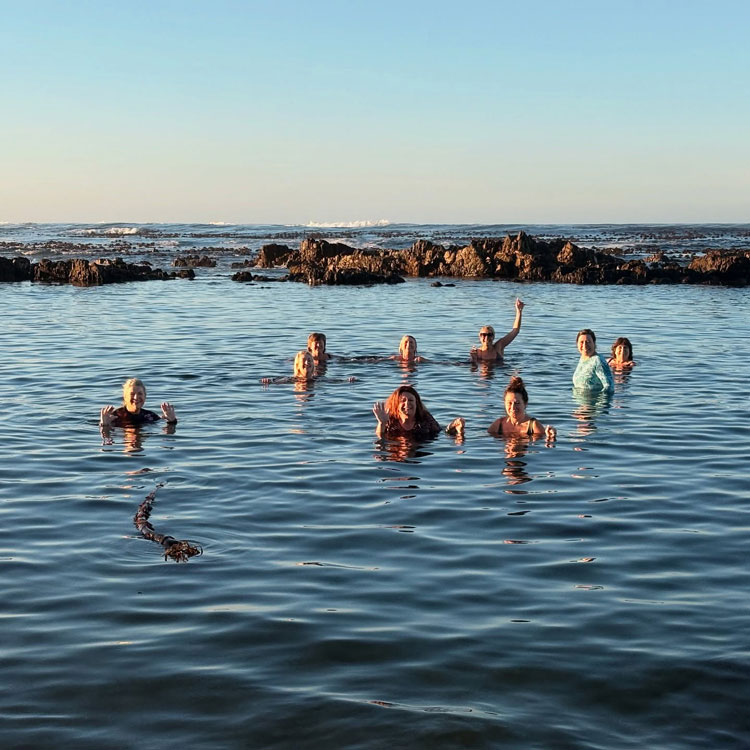
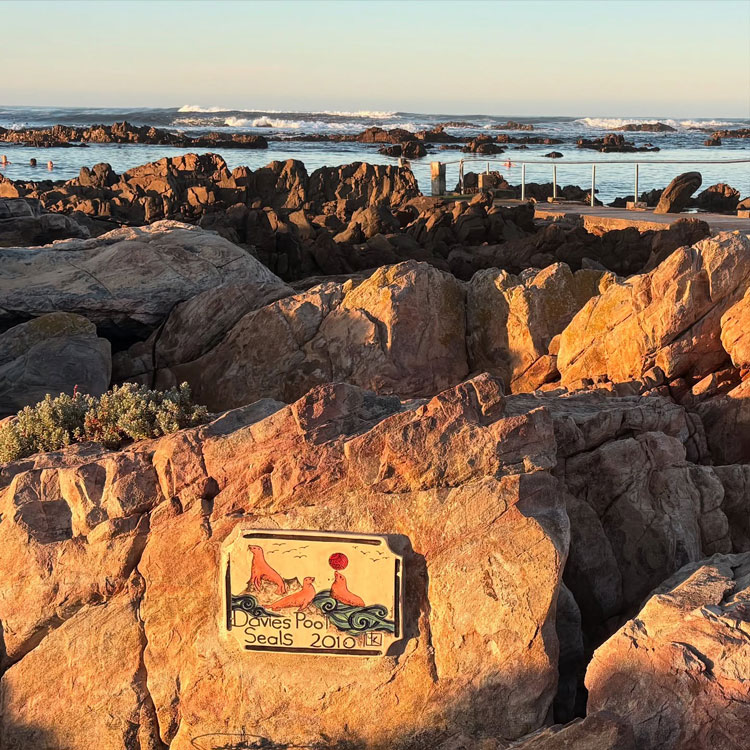
Author: Seeff Hermanus, 24 May 2021, Area Focus
Built around 1933, the pool is ocean-fed by waves crashing over a concrete wall, keeping the water fresh and clean. It features a sandy bottom and is sheltered from the wind by high rock faces.
Today, Ficks is made up of a series of wooden decks that hug the cliff contours. There, broad umbrellas have been set up to provide shade for guests. The view is of shy resident dassies on the surrounding rocks, pods of dolphins beyond the tidal pool wall, or yachts in full sail tacking to the direction of the wind.
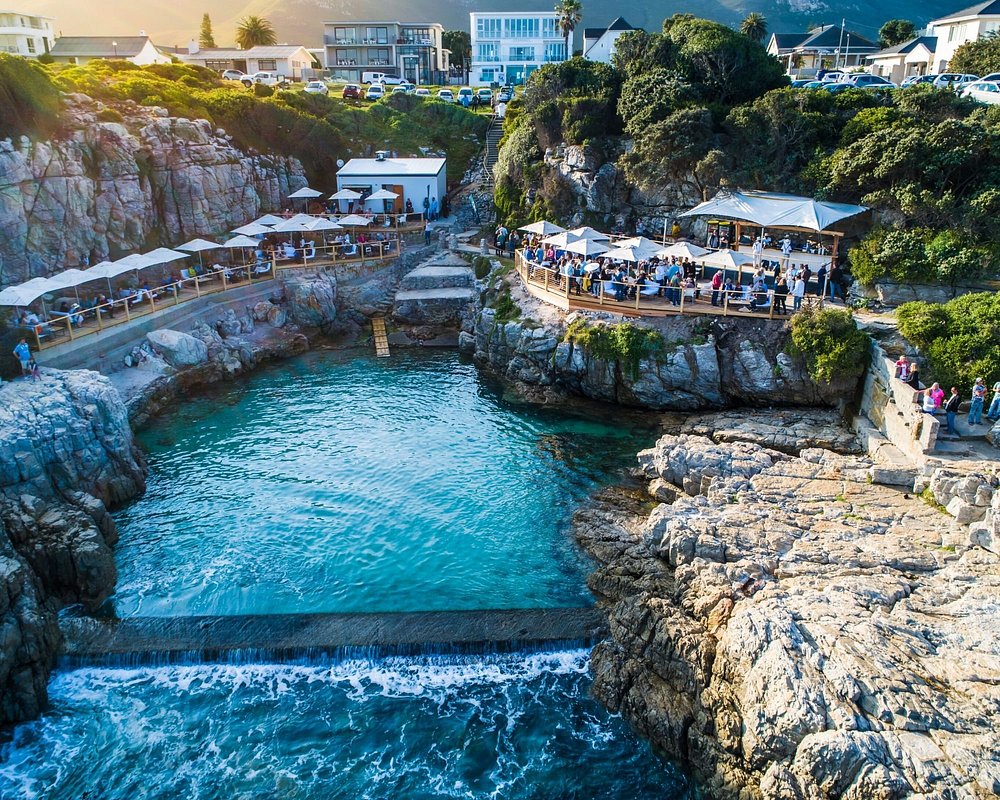
Fick’s Pool is situated below Marine Drive, where the formal houses on the seaside of the road come to an end. Look out for a tarred parking area next to a substantial thatched residence. At this point the ground drops away quite sharply towards the ocean, and Fick’s Pool comprises a narrow inlet from the open sea to a sheltered cove. This is one of the oldest parts of Hermanus. In 1854, while Hermanuspietersfontein was still the official name of the area and the first settler families had not yet left Herries Bay, the first twelve sites for houses were put up for sale by the Municipality just above Fick’s Pool at £1. 4 shillings each.
In the early 1930s a concrete wall was built across the opening of the cove, creating a tidal swimming pool. Waves break with considerable force into the pool and scour out sand and water that has stood for too long. As a result, swimming in the pool is a very refreshing experience. At present it is seriously under-utilised.
Who was Mr Fick?
There are two different explanations of how Fick’s Pool came into existence and who it was named after. Some accounts attribute it to Mr J J Fick, who was the principal of the only government school in Hermanus during the 1920s and early 1930s. Known as the ‘Klipskool’, it was situated at the foot of Klipkop, which we now call Hoy’s Koppie. Mr J J Fick lived in a house on one of the sites above the inlet, then named the ‘gat’.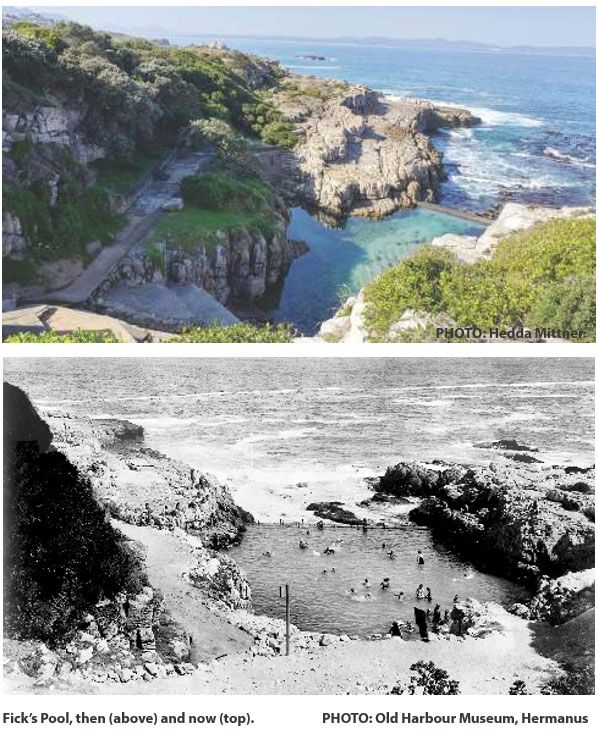
It was the time of the Great Depression, and times were tough economically. There was little money available to provide entertainment for pupils during weekends and holidays. Children from families living in Mossel River and Voëlklip had access to several beaches (Langbaai, Voelklip, Kammabaai and Grotto) and could entertain themselves. But there was not much to do in the town itself, except hanging around the Old Harbour, then known as ‘Visbaai’, watching the fishermen and getting into bad habits.
We know that the Oblowitz family, which owned a prosperous general dealers store at the corner of Main and Harbour Roads, actually sold up and returned to Cape Town because their only son, Sidney, could not be prevented from playing truant and hanging around with suspect companions at Visbaai. Sidney reveals this himself in a remarkable set of television interviews he gave at the age of 95 in 2010.
Mr Fick petitioned the Council to create a swimming pool in front of his house. This involved considerable blasting of the rocky cliffs and the removal of a large pointed rock that would have been in the middle of the pool. Then the concrete wall was built and, a little later, basic wooden changing facilities were added. These were painted white and were erected on the north side of the pool. They can be seen in old photographs and were attractive in themselves, unlike the unattractive face-brick building to be seen there now.
It seemed a good thing to name the pool after the man who had motivated its construction and so ‘Fick’s Pool’ came into existence, probably in 1933. It was an immediate hit with schoolchildren.
The other Mr Fick
The second explanation is more prosaic, but it contains more verifiable data. Another family with the name of Fick had been living in the Caledon area since at least the 1870s, according to Mr ‘Lampie’ Fick, the present owner of the farm Weltevreden and former Cabinet Minister. Documents exist proving that his ancestor Josias Servaas Fick served as Field Cornet for the Caledon ward from 1870 to 1885.
There is further documentary evidence that on 16 August 1889, an erf (plot) in Hermanus, adjacent to the twelve previously sold, was granted on a quitrent basis to the same Josias Fick. The erf extended from the northern end the pool, across Marine Drive (which had not yet been built) and all the way to Church Street, enabling the family to keep chickens, a cow and sheep. Josias Servaas Fick began to spend more time at this holiday home and got into the habit of going for a morning swim each day. He apparently also successfully persuaded others to join him and soon people were referring to “Fick se Gat”. This was later changed to the socially more acceptable ‘Fick se Poel’ and then anglicised into “Fick’s Pool” .
The summer haunt of 1940s teenagers…
Either way, by the mid-1930s young people were enjoying themselves at Fick’s Pool, using the term of endearment “Fikkie’s Pool”. Numerous photographs show numbers of people using the facilities, but the best written description I can find refers to Fick’s Pool in the 1940s. It was written in 2003 by Una Graven, a grandchild of Christiaan Warrington, of the original settler families. It is part of a contribution she made to S J du Toit’s Hermanus Stories
When we were approaching our teenage years, Fikkie’s Pool was our summer haunt. The beaches of Voëlklip and the New Beach as we called the Grotto Beach then, were out of our reach as none of us had any means of transport… Fikkie’s Pool was where it all happened – splashing in the tidal pool, being frightened when the high tide swept over the retaining wall, clambering over the large rocks and spreading a towel on the warm stone to lie for hours with the glow of the sun on your back. It was giggling, gossiping and taking shy peeks at the opposite sex. It was showing off and innocent flirting with the exciting uncertainties of romance. It was where the boys challenged each other to what seemed to us then, death-defying dives from the top of the cliff just outside the sea wall of the pool… Fikkie’s Pool was an idyll.
…And the site of tragedy
Another story linked to Fick’s Pool is tragic and concerns the death of a member of the same original settler family, the Warringtons. On a New Year’s Day in the late 1920s, Joe Warrington persuaded Skipper van Dyk, Tommy Montgomery and a couple of other men to go after a school of sardines just off Fick’s Pool. Unfortunately, a whale became interested in the boat and eventually capsized it. Arderne Tredgold describes the resultant events in this way:
Joe Warrington was fishing, as the custom was, with his lines tied to his big toes. He was thrown out of the boat, the lines must have twisted round his feet so that he could not swim, and he was drowned. The others managed to cling to the boat. They were not very far from the shore, but it would have been dangerous to swim to the rocks (around Fick’s Pool) with the waves breaking over them. They shouted for help but most of the village was resting after New Year’s celebrations and one or two who did hear them thought that someone was playing a New Year's joke.
The men were eventually rescued, but Joe Warrington’s body washed up some days later near the harbour. His feet had been severed by his lines.
General Jan Smuts
Fick’s Pool has yet another claim to fame. It was used frequently by General Jan Smuts. Smuts often visited Hermanus, staying in The Sanatorium, his sister being married to the owner and medical practitioner, Dr Joshua Hoffmann. Smuts started his daily routine with a swim in Fick’s Pool, followed by breakfast, working during the morning, rest in the early afternoon and then a brisk walk to the top of the mountain behind Northcliff before dinner.
For a relatively obscure site Fick’s Pool has a lot of history attached to it. There is no doubt that it deserves to be more widely known and appreciated in Hermanus.
Date: 02 July 2017
The tidal pool is situated at the foot of the cliffs in Central Hermanus, right in front of the hotel.
The hotel was originally established as the Golfers Hotel in 1897, before being renamed the Strand Hotel and eventually becoming The Marine Hotel in 1913. The primary structure, recognised as the historic landmark today, was completed in 1902. Today the Marine in Hermanus is a member of Small Luxury Hotels of the World (SLH). It is one of only a few hotels in South Africa to hold this prestigious endorsement,
The Hermanus Cliff Path is a world-renowned coastal walking trail in the Western Cape, South Africa. It is primarily famous for offering some of the best land-based whale watching in the world, particularly for observing Southern Right Whales during their migration from June to November. he path stretches approximately 11 to 12 kilometres (6.8–7.5 miles) one-way. It meanders along the rugged coastline from the New Harbour in the west to Grotto Beach and the Piet-se-Bos milkwood forest in the east.
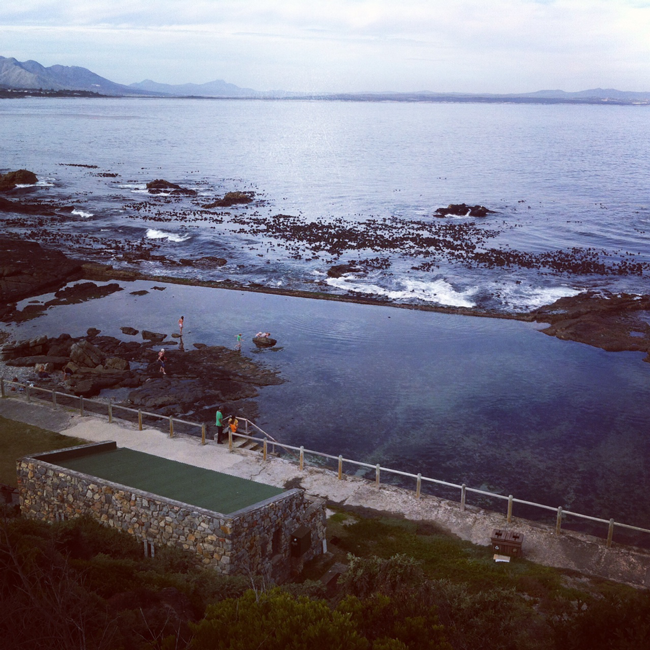
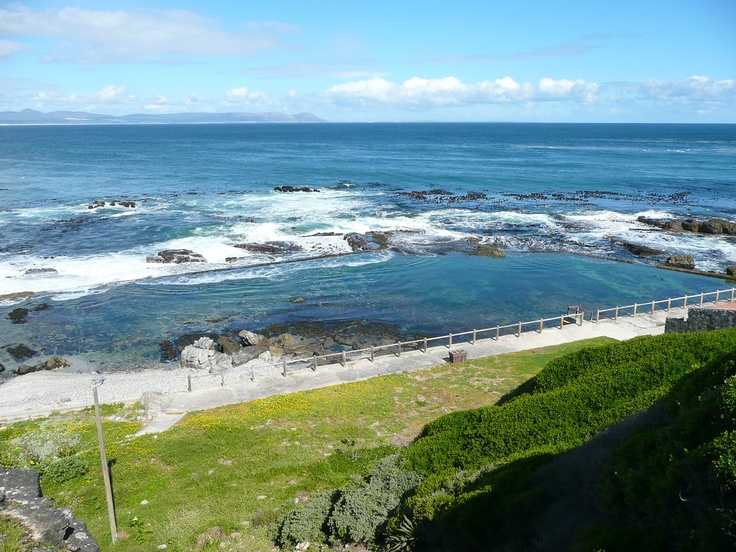
Gansbaai Tidal Pool can be found along the gravel road that is part of the Perlemoen Hiking Trail, which runs parallel to Kusweg in Gansbaai. The large tidal pool has been a popular gathering spot for generations of revellers who enjoy swimming, diving, braaing and late-night shenanigans. The Gansbaai Tidal Pool comprises one large pool that varies in-depth, depending on the tide, and a shallow freshwater kiddies pool which is filled with spring water that flows down from an underwater spring.
Gansbaai is known for its dense population of great white sharks and as a whale-watching location. It is also famous for being the site where the HMS Birkenhead sank in 1852.
The troopship HMS Birkenhead was wrecked off Danger Point in 1852. A barely visible rock 2 kilometres (1.2 mi) from Danger Point (now aptly called "Birkenhead Rock") was fatal for the troopship carrying young Welsh, Scottish and English soldiers and their officers and family on their way to Eastern Cape to fight the Xhosa. The Birkenhead became famous because it was the first shipwreck where the "women and children first" protocol was applied. All women and children were saved but 445 of the men, mostly soldiers, perished.
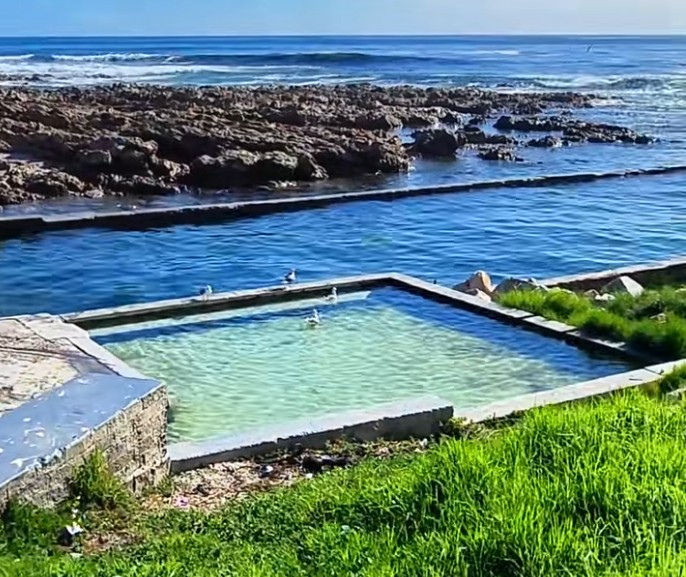
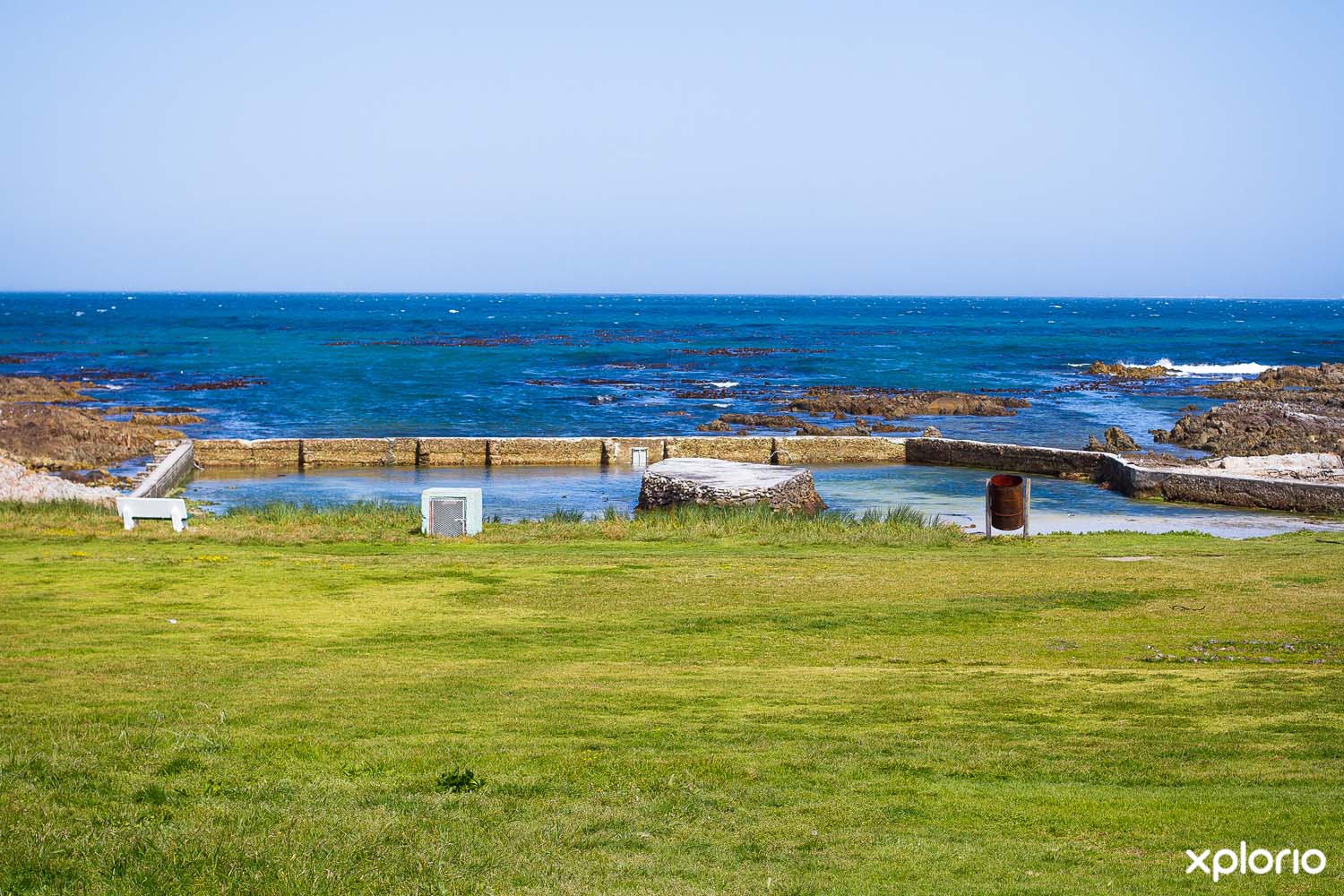
A large, well-kept lawn at the Kleinbaai Tidal Pool is ideal for picnics or lazy days reading your favourite book. The grassy alcove has a few outdoor gym equipment machines as well as a jungle gym for the little ones.
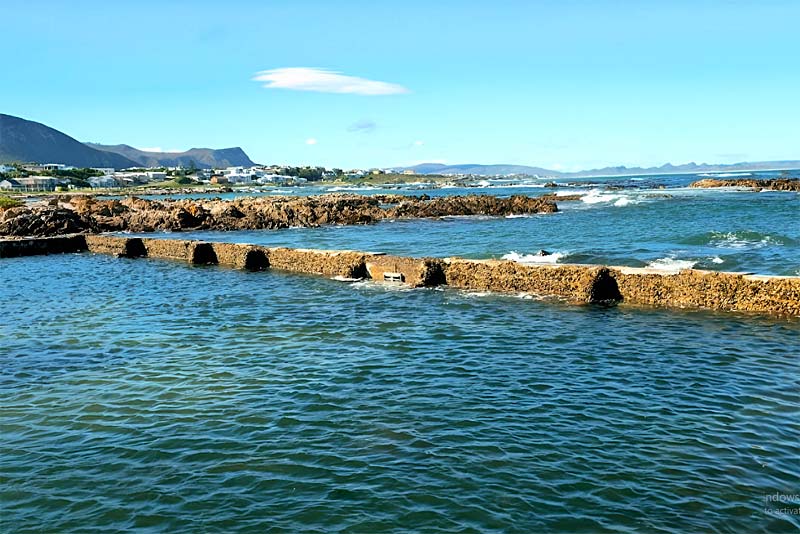
Cape Agulhas is the southernmost point of the African continent, where the town of L'Agulhas is located. Here, the waters of the southward-flowing warm Agulhas Current meets the northward flowing cold Benguela Current. Cape Agulhas has a gradually curving coastline with rocky and sandy beaches. The waters of the Agulhas Bank off the coast are relatively shallow and are renowned as one of the best fishing grounds in South Africa, which has attracted sports fishermen and led to the founding of the town of Struisbaai, which is 4km east of L'Agulhas.
The name "Agulhas" has a rich maritime history, originating from the Portuguese word "Agulha," meaning "needle." This name was bestowed by Portuguese explorers in the 15th century, who observed that around the Cape, the magnetic declination (the difference between magnetic north and true north) was zero. In other words, the compass needle pointed directly to true north, unlike in Europe where there was a noticeable difference.
To the sailors of old, it was a treacherous headland which saw the wrecking of numerous ships. The sea off Cape Agulhas is notorious for winter storms and mammoth rogue waves, which can range up to 30 metres (100 ft) high and can sink even large ships. The Cape has seen many shipwrecks since the first East Indiaman sank there in 1682. Situated at the southernmost tip of Africa, the Cape Agulhas lighthouse (built in 1849) is South Africa's second-oldest working lighthouse.
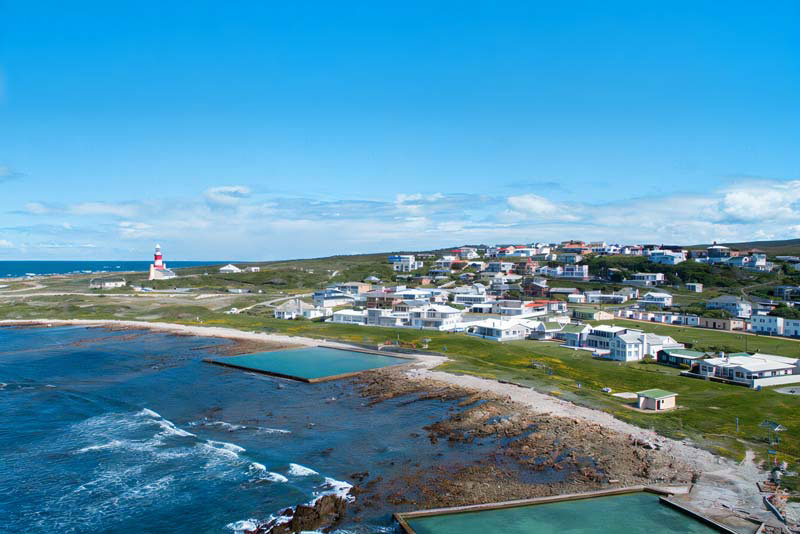
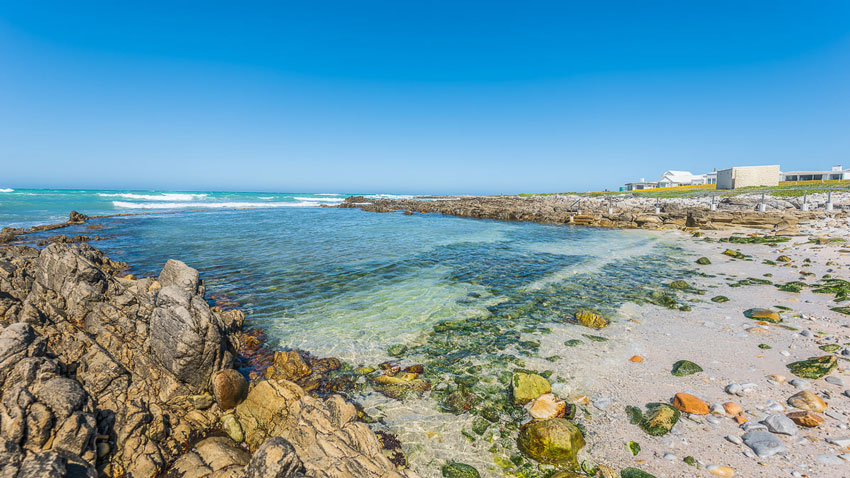
L'Agulhas and its close neighbour Struisbaai developed after 1950. Struisbaai attracted the fishermen who launched boats from the harbour built in 1959. Before 1950, the only buildings were a boarding house and a small shop. Holiday homes were only built after 1950. The rocky coast at L'Agulhas led to the creation tidal pools, while Struisbaai is at the start of a 14km long sandy beach and has no tidal pools.
There is a natural tidal pool, known as the lagoon, situated in the National Park west of the Cape.
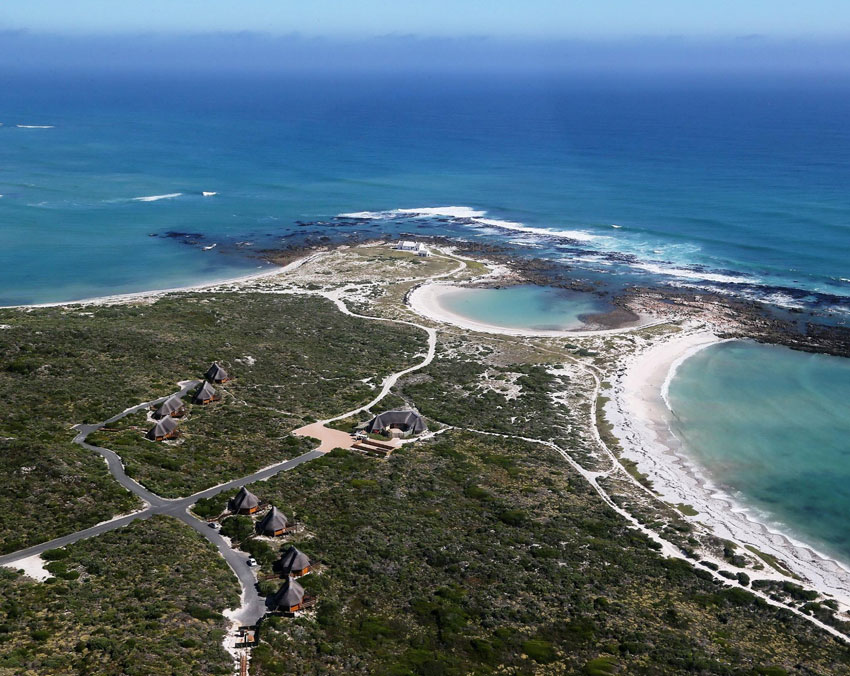
Southermost, (and no, it's not a spelling mistake), the first house in the village of L’Agulhas, is closest to the lighthouse. The southernmost private home on the continent of Africa was built in 1929 by Michiel van Breda as a family beach home. Today, it is a B+B venue. Originally, all the houses in L’Agulhas, when the village was established, were supposed to have been built according to the Southermost’s architectural style.
Michiel van Breda, the first Mayor of Cape Town, who was also known as the father of South Africa's merino sheep industry, owned the historic farm Zoetendals Vallei, which is still in the family today. In 1838, Michiel van Breda, founded the town of Bredasdorp. In 1848, when the urgent need for a lighthouse at Cape Agulhas arose, Michiel generously made available a portion of the family estate for this purpose.
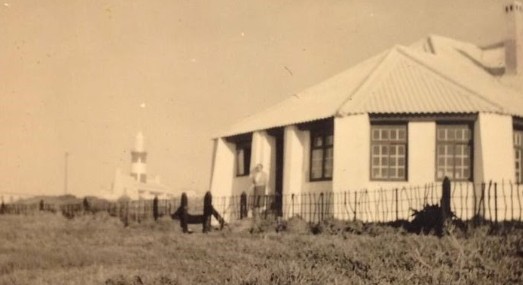
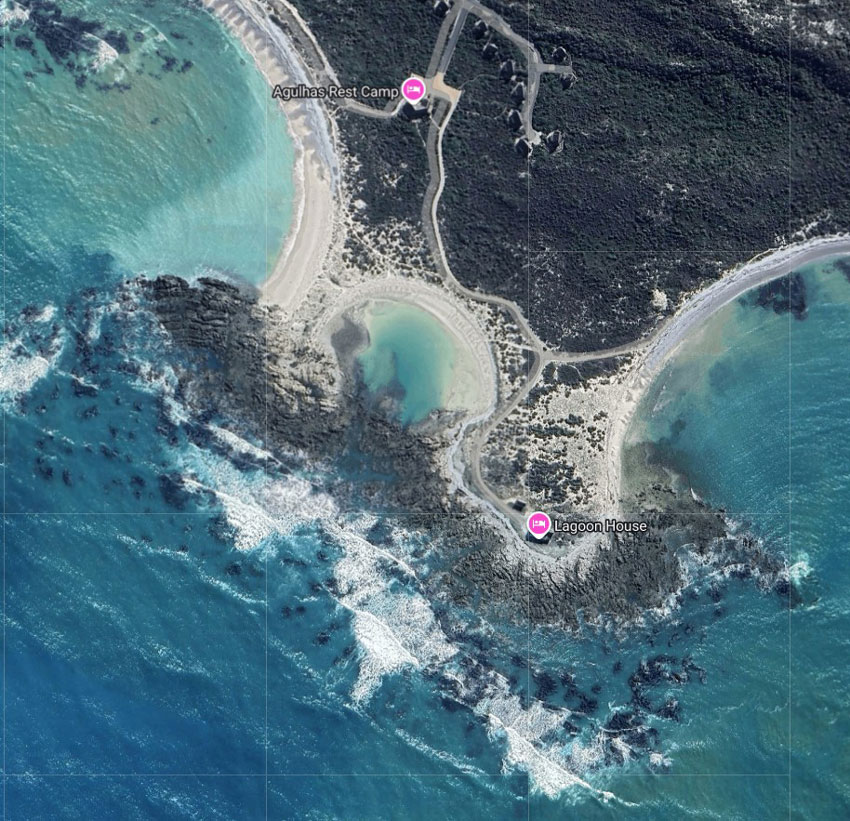
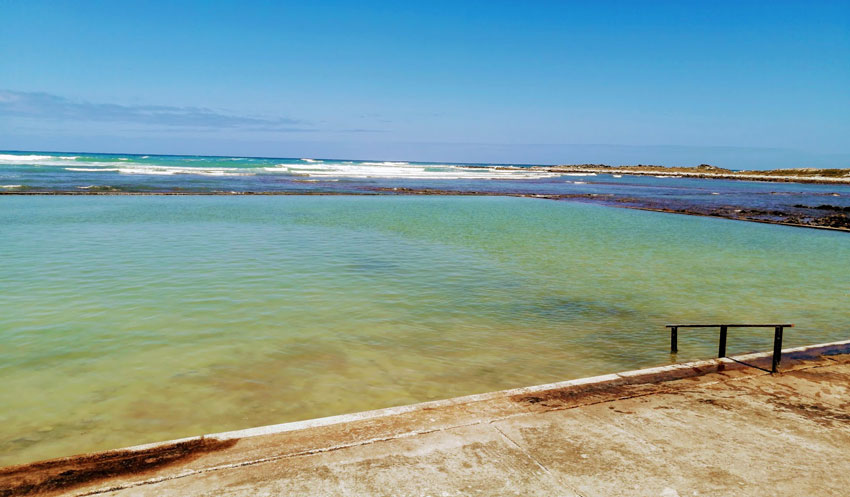
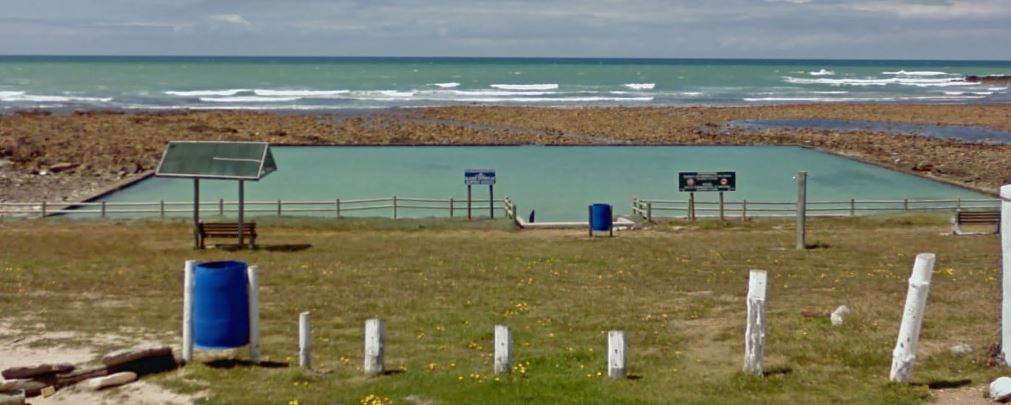
The town of L'Agulhas has two tidal pools, used by the local school for official swimming activities.
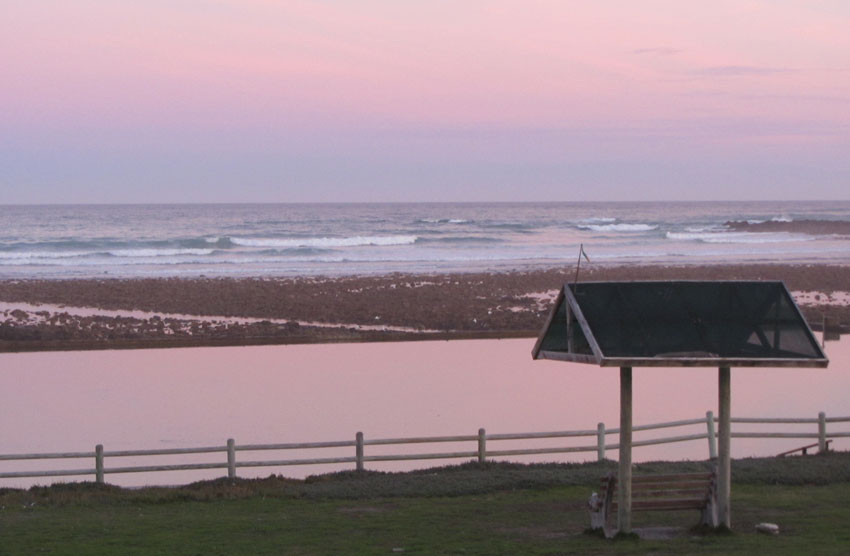
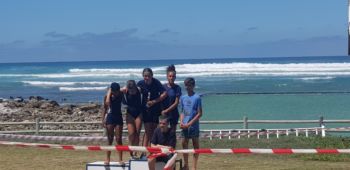
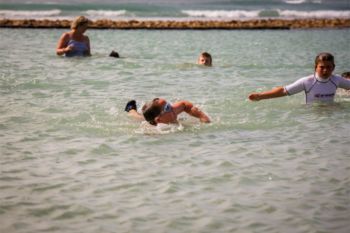
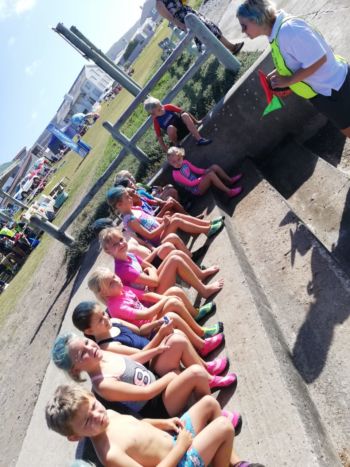
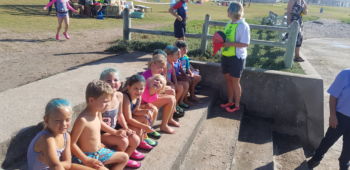
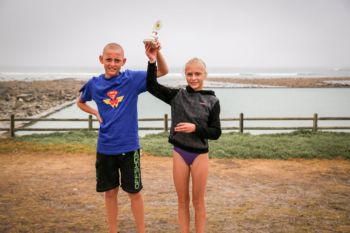
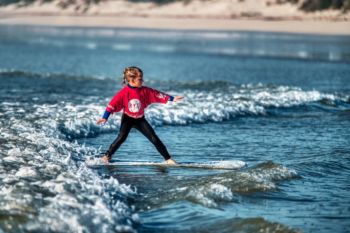
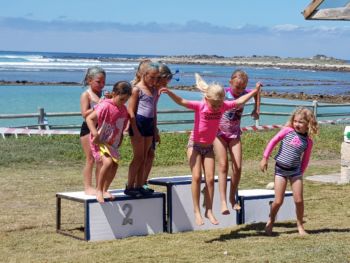
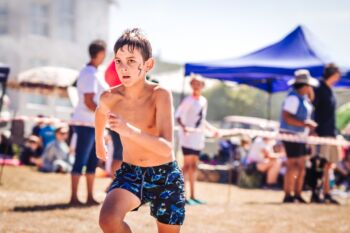
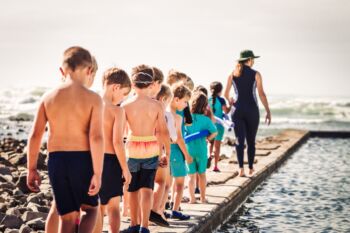
Swimming and triathlon races in the local tidal pool. Each year, the school hosts triathlons, which involve our learners swimming in the local tidal pool, a bicycle ride through a marked course along the roads running parallel to the ocean, as well as a run along the beachfront. There are usually 2 events, the first being in-house, and the second being an inter-school event.
Read more about the school →
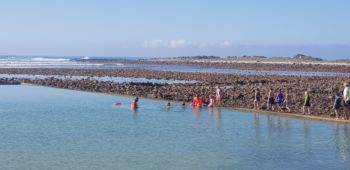
The pool was originally known as Wiener’s Pool, built before the Second World War (1939–1945) by a Mr Wiener, who is also credited with building "Shalom," the first house in the St Mungo's Point area of L'Agulhas. It earned the name "Soldatepoel" (Soldiers' Pool in Afrikaans) because soldiers and radar operators stationed at the nearby "Mount Pleasant" camp frequently visited the pool during WWII.
Click here to read more about the JB radar system developed in South Africa, under Professor Basil Schonland at Wits, and used in coastal installations during the war to detect German shipping. Many of the soldiers in the Special Signal Services Corps were women.
Further east, at the Hotel Minhetti outside Port Elizabeth, there was a tidal pool that was used by soldiers during the war.
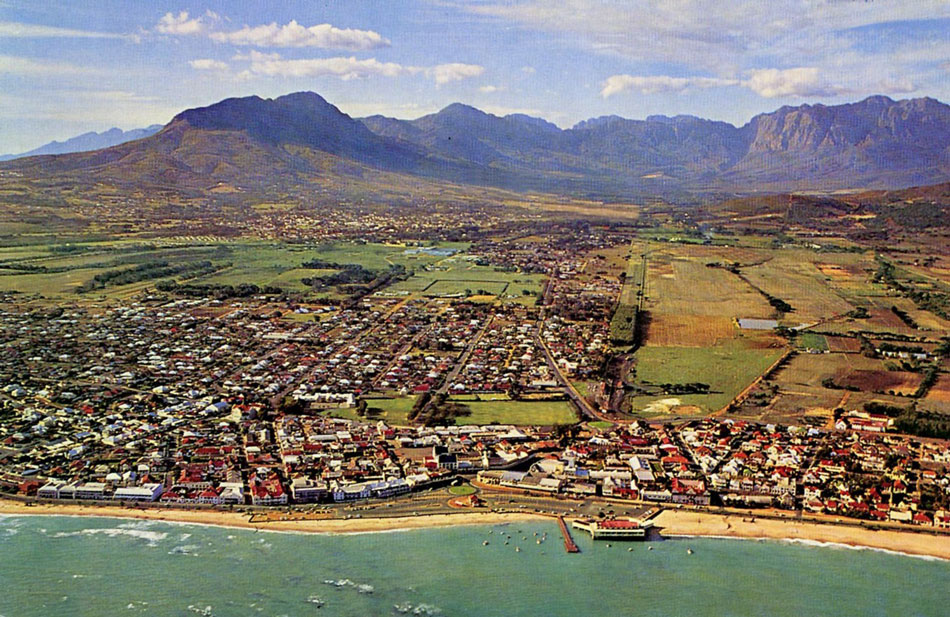
The Strand area was first mentioned in 1696 when a certain corporal Muller working for the Dutch East Indian Company set foot on the white beaches of Milk Bay. In 1714, a farm called Vlooibaai was granted to a French Huguenot, David du Buisson. David du Buisson at a certain stage, was a tutor for the children of Pierre Joubert in the Drakenstein (Close to Paarl) area. David du Buisson married the 17-year-old Claudine Lombard in 1707. The farm Vlooibaai stretched from the Lourens River to the Farm Onverwach that belonged to Phillip Morkel. In 1717 David Buisson and his family were attacked by fugitive slaves but escaped with their lives. When David du Buisson died in 1722 the farm was transferred to his widow. In 1748, the farm was sold to Olof de Wet. Later, the farm Vlooibaai was also bought by the Morkel family, and the Morkel family owned three farms: Vlooibaai, Onverwacht and Voorberg. These farms probably formed the biggest part of what is today known as the Strand.
A magistrate from Stellenbosch named Daniel van Ryneveld owned this seaside property in the early 1800s, where he allowed local farmers to camp. This informal holiday spot eventually grew into a permanent settlement. Originally called Somerset Strand, the area was proclaimed a municipality in 1897. In 1918 is was named Die Strand (the name which is still commonly used in the Afrikaans community), before becoming officially known as Strand in 1937.
Melkbaai is the main and most popular beach in Strand. It is renowned for being one of the safest and best bathing areas in the country due to its flat, white sandy shore and shallow waters that remain waist-deep for a significant distance.
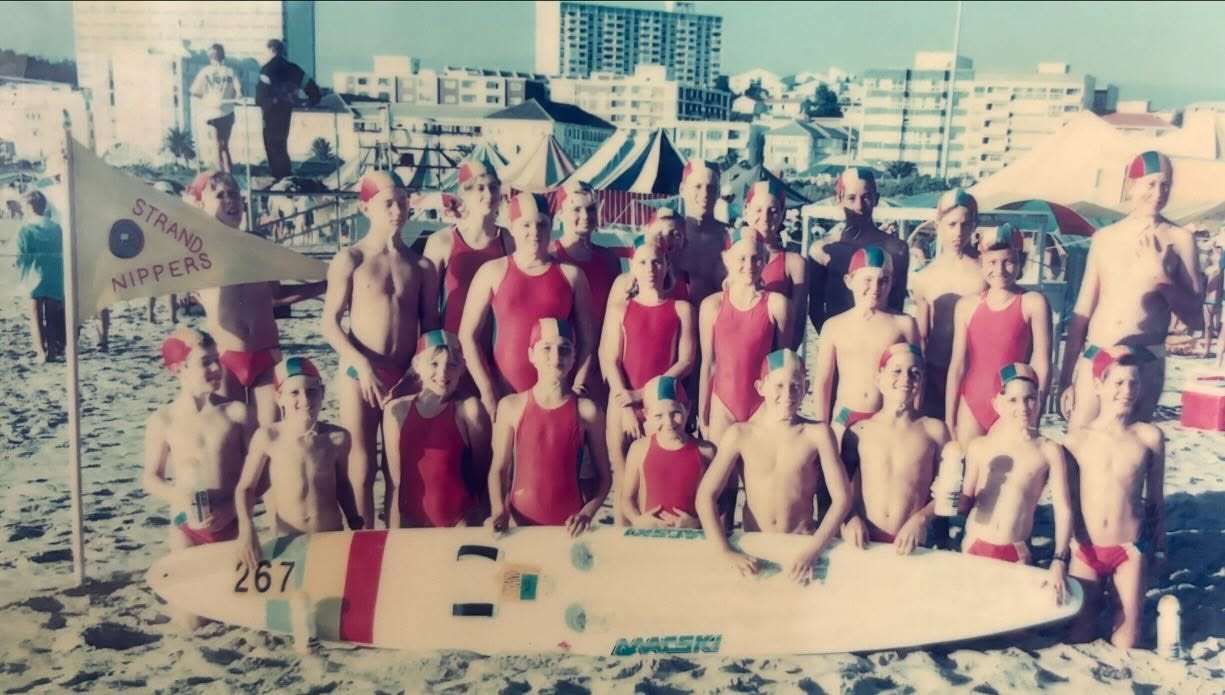
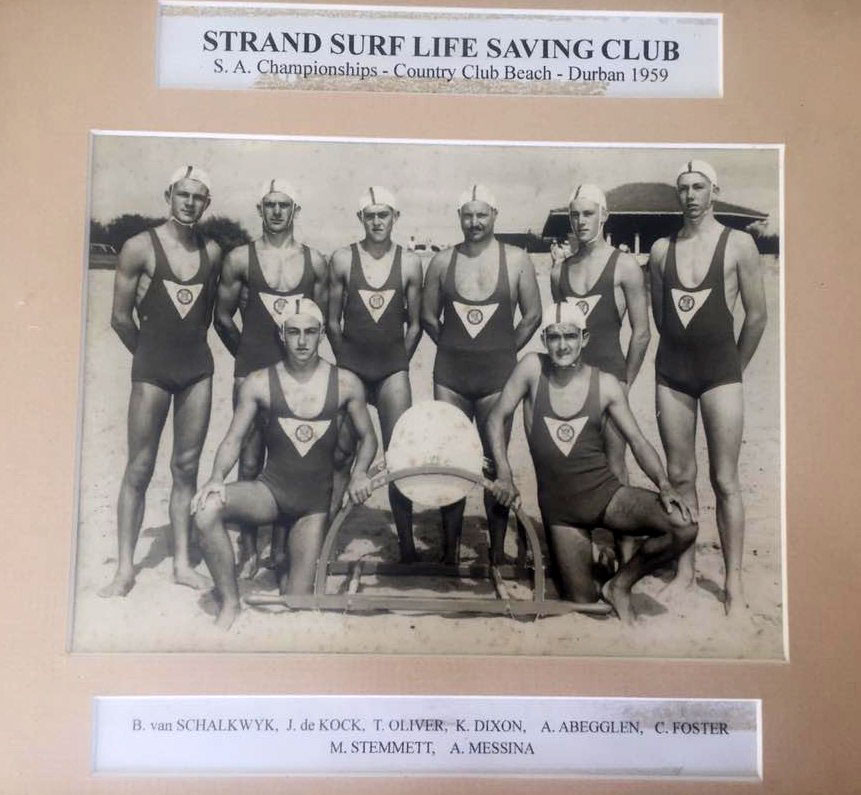
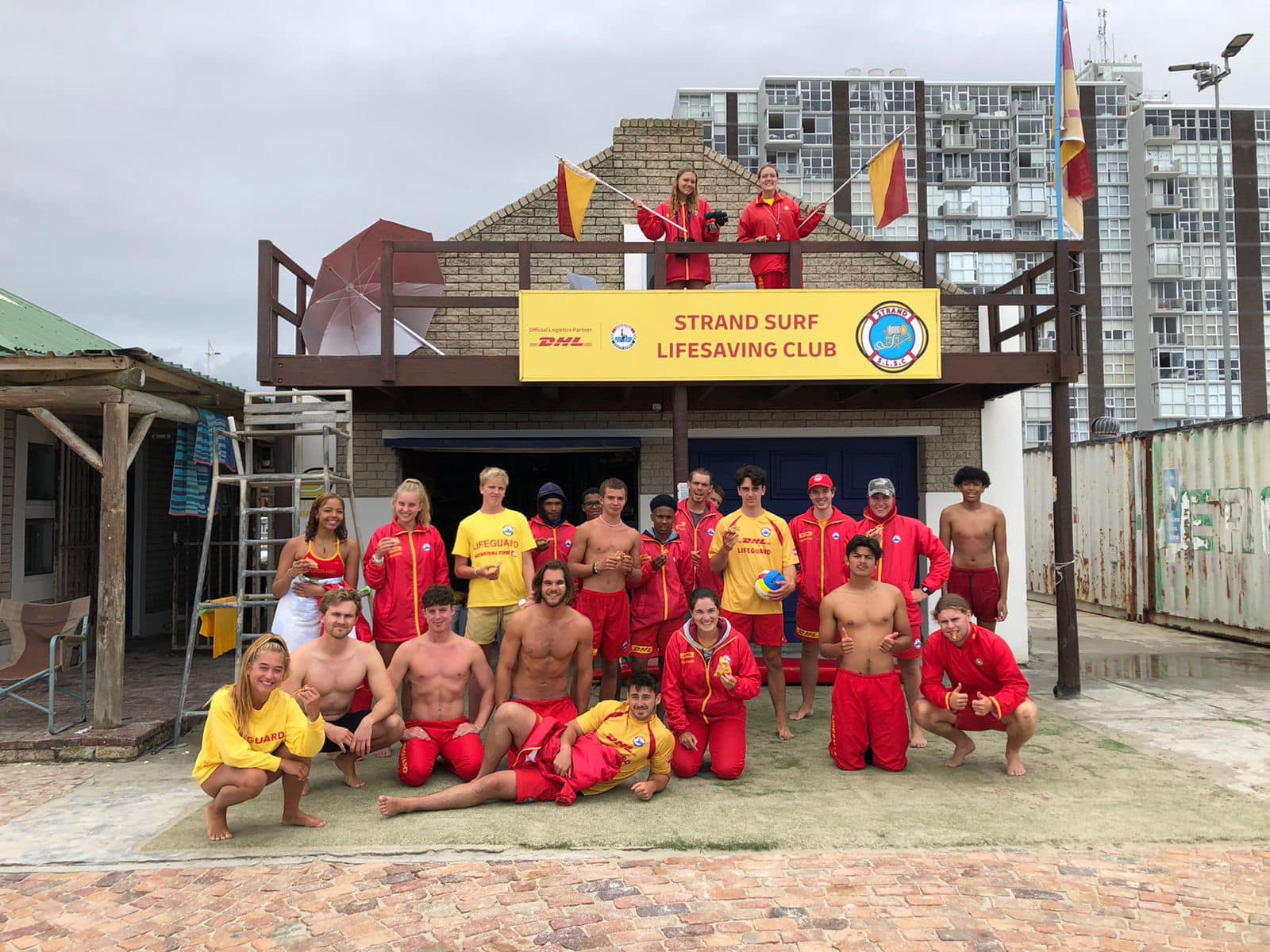
Despite the shallow beach, the Stand Surf Lifesaving Club has operated there since 1958. There have been shark attacks at Strand in South Africa. Notable incidents include a 14-year-old surfer being attacked in November 2007, suffering leg injuries, and another attack in October 2010 at Melkbaai in Strand, where a teenager sustained serious foot lacerations. Both victims survived, with at least one attack attributed to a Great White shark.
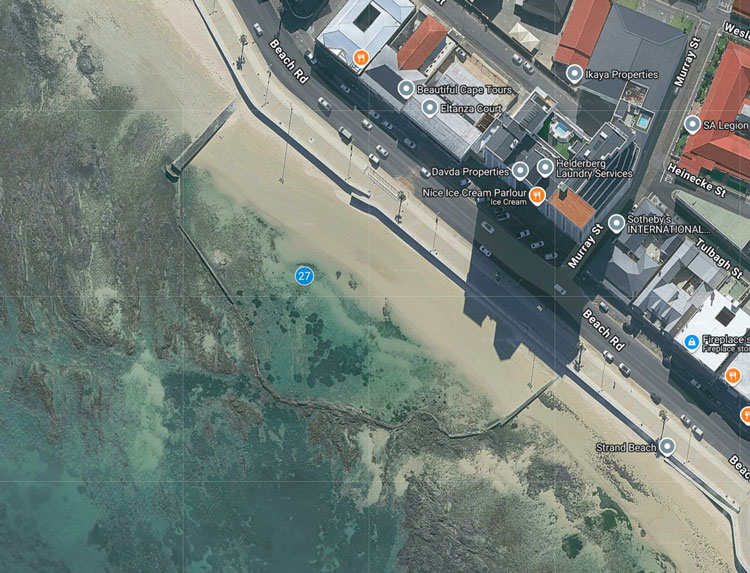
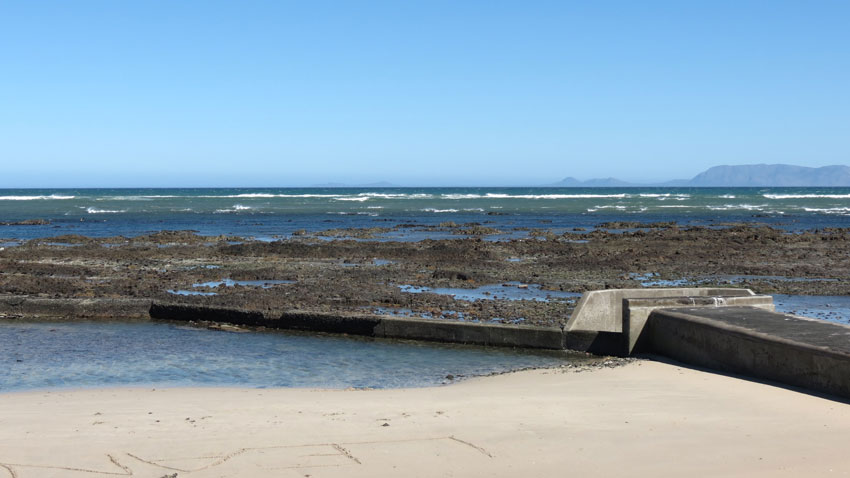
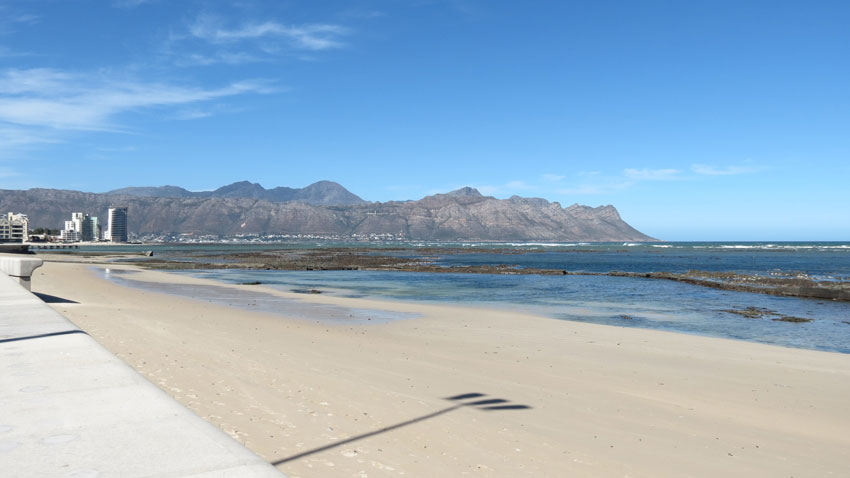
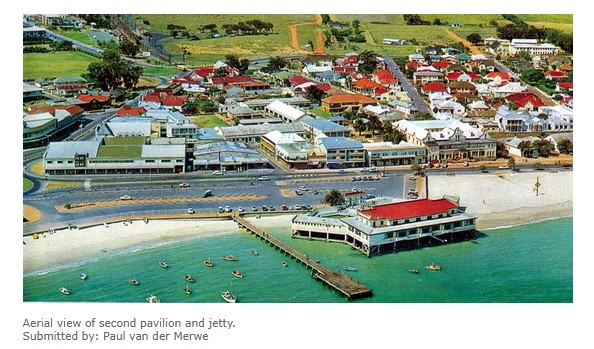
A pavilion was built along the 5km beach in 1913, creating a popular attraction, which began to decline when a tidal swimming pool was built at Melbaai, about 1km away. Today, the pavilion has been rebuilt twice, and it now features a 50m indoor swimming pool.
17 April 2025
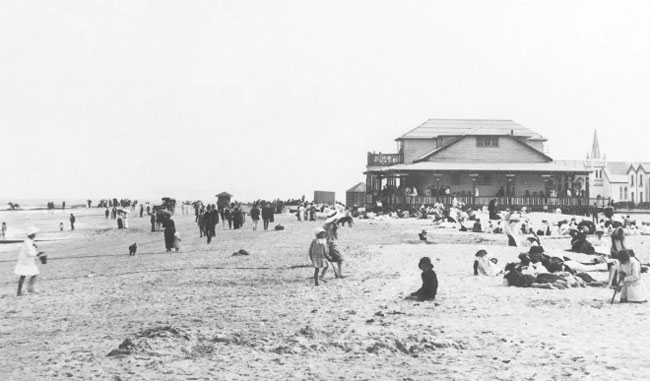
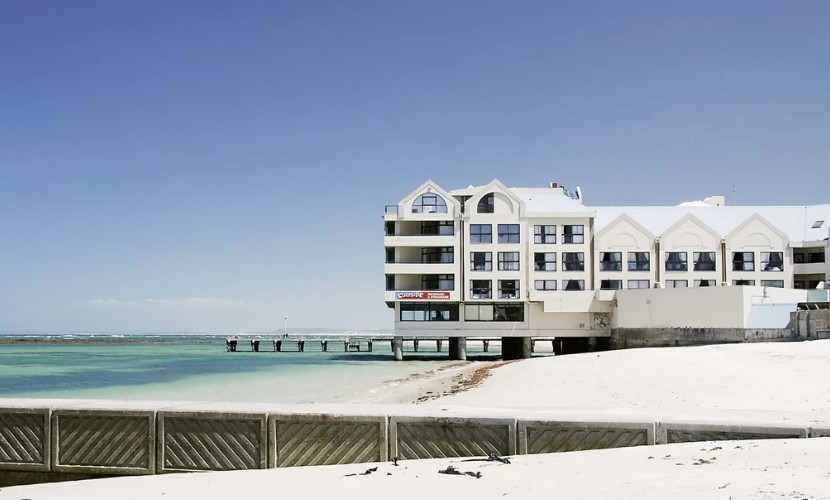
From the archives: It's difficult to believe that the modern timeshare building that now stands proudly next to the Strand's well-known pier had its origin in 1914 as a wooden structure where bathers could change into their swimming costumes.
The Strand is one of the oldest holiday towns in South Africa, and the structure in the black-and-white photo (taken between 1914 and 1920) was built specifically for the sake of holidaymakers and bathers.
Back then eyebrows were raised if you simply arrived at the beach in your swimwear, so bathers were very grateful when this first wooden pavilion was completed in 1914, complete with changing cubicles and showers.
Barely four years later, the wooden structure was damaged in a fire. It was repaired, but was reduced to ruins in 1923. In 1929, a brick pavilion was built more or less in the same place, with a playground and a cinema.
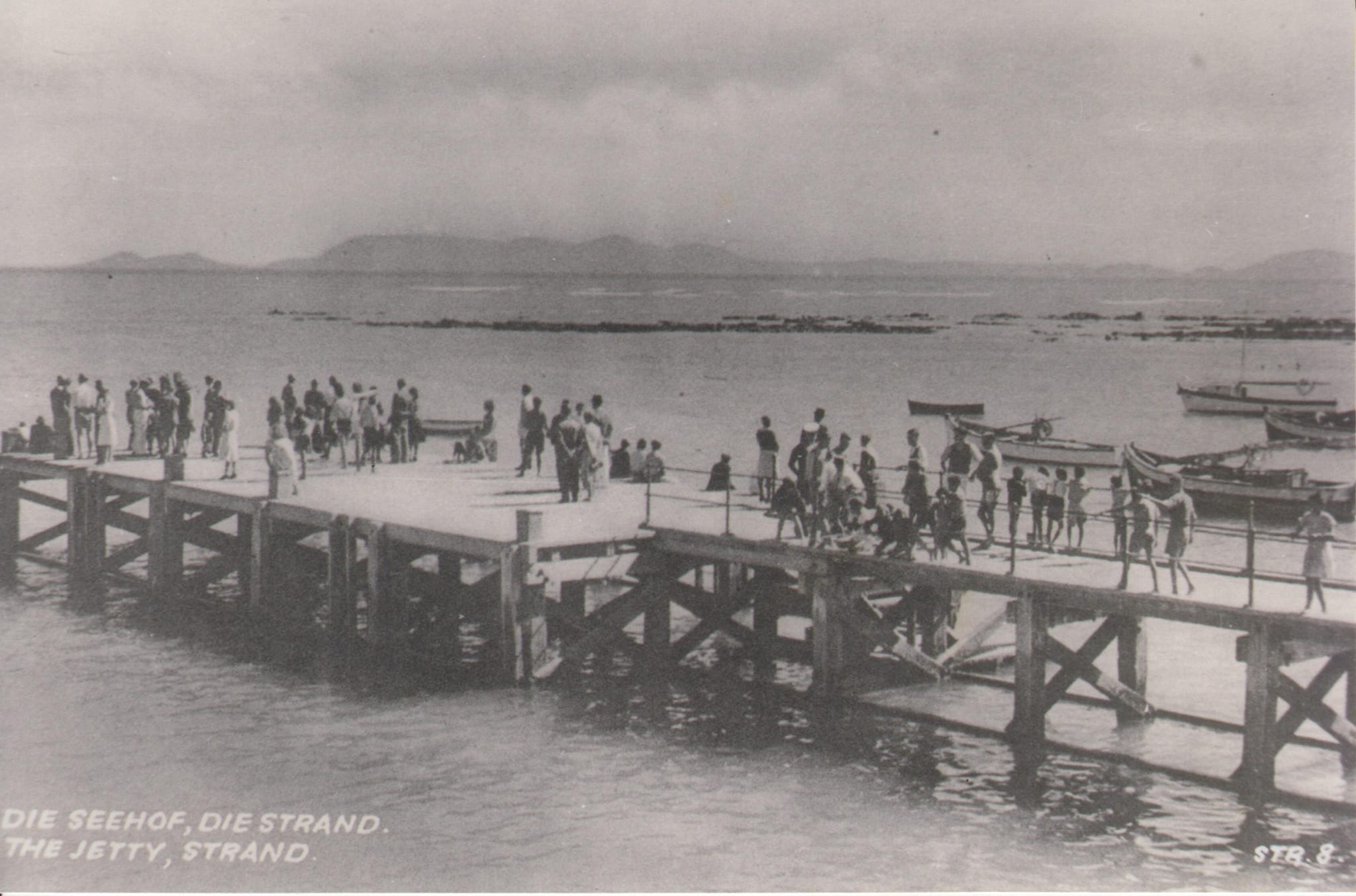
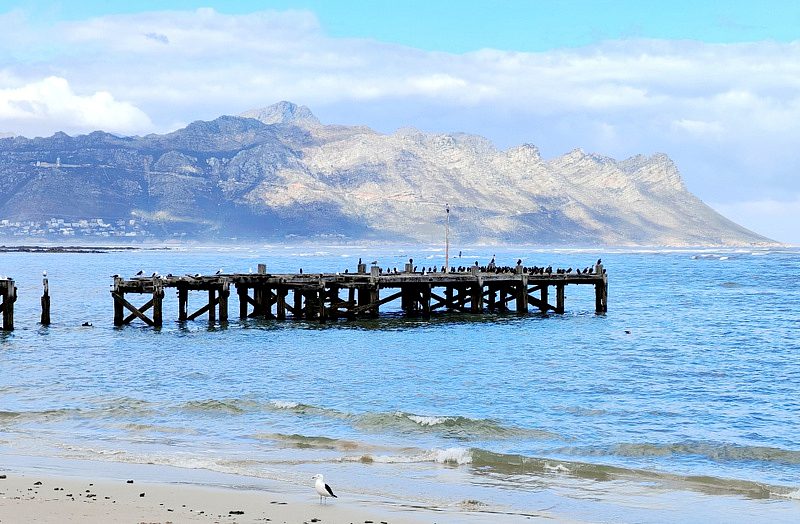
The Strand's famous wooden pier was only built next to the Pavilion in 1934. (This pier has since been closed to the public for safety reasons.)
The Pavilion's popularity began to wane when Melkbaai, a kilometer or so away, was opened as a swimming spot and people rather sought refreshment there. The Pavilion was later declared unsafe and demolished in 1972.
The Strand Pavilion complex as it looks today, with a restaurant over the water and an Olympic-sized swimming pool, was erected in 1990 on the foundations of the earlier building
.
The first Europeans who left their footprints on the Strand's white beaches were presumably four deserters who planned to walk along the coast to Mozambique to escape Jan van Riebeeck's oppression. However, they didn't get far and had to turn back with their tails between their legs.
In the early 1800s, the Stellenbosch magistrate Daniel van Ryneveld allowed farmers to camp on his farm, Somerset Strand. They could later build holiday homes.
Later, after the Anglo-Boer War, many citizens settled here.
This article originally appeared in April 2007. Facts may have changed since then.
Sources: The Story of Hottentots-Holland by Peggy Heap
Die Strand en sy mense deur Faure de Kock
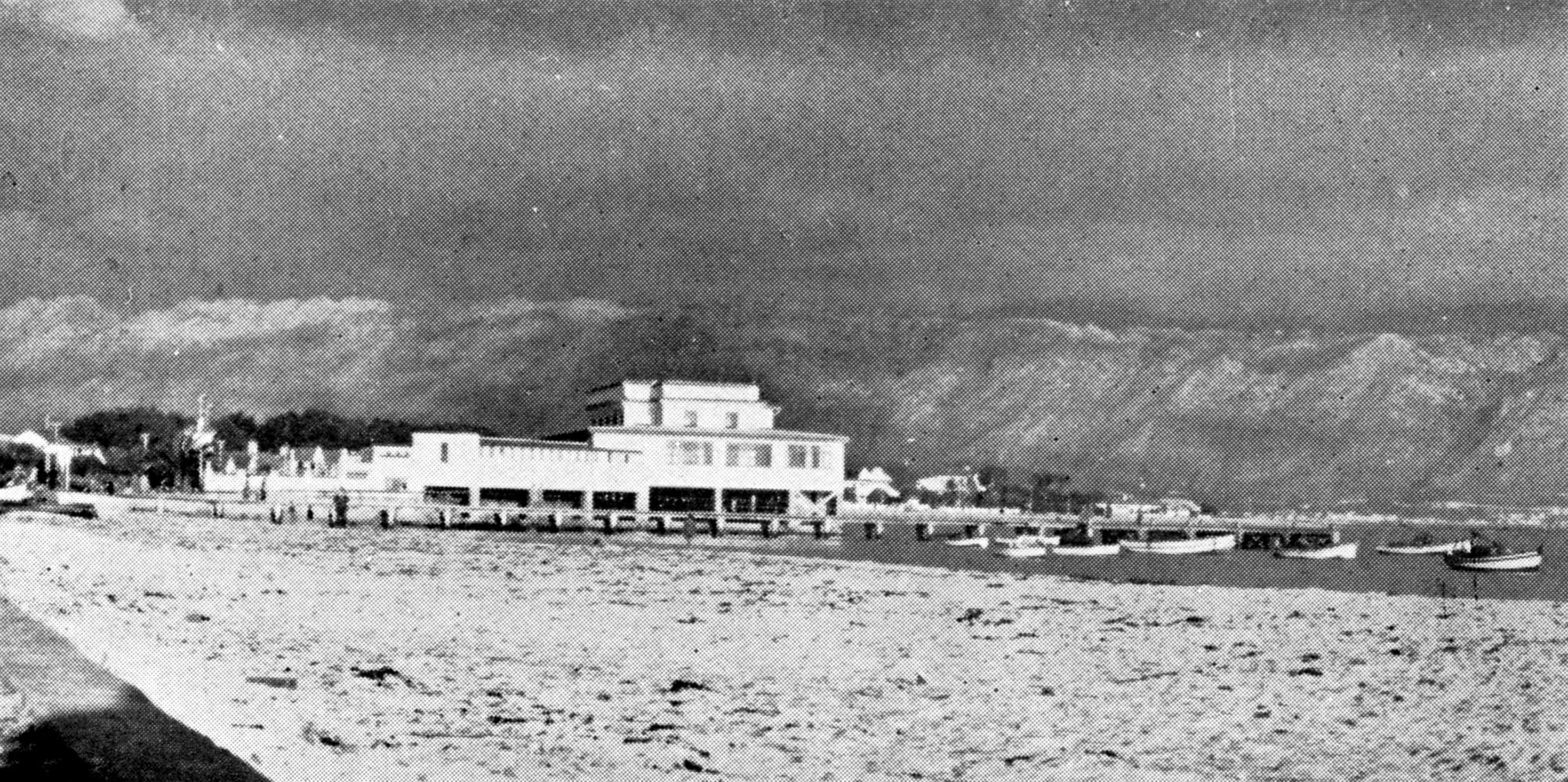
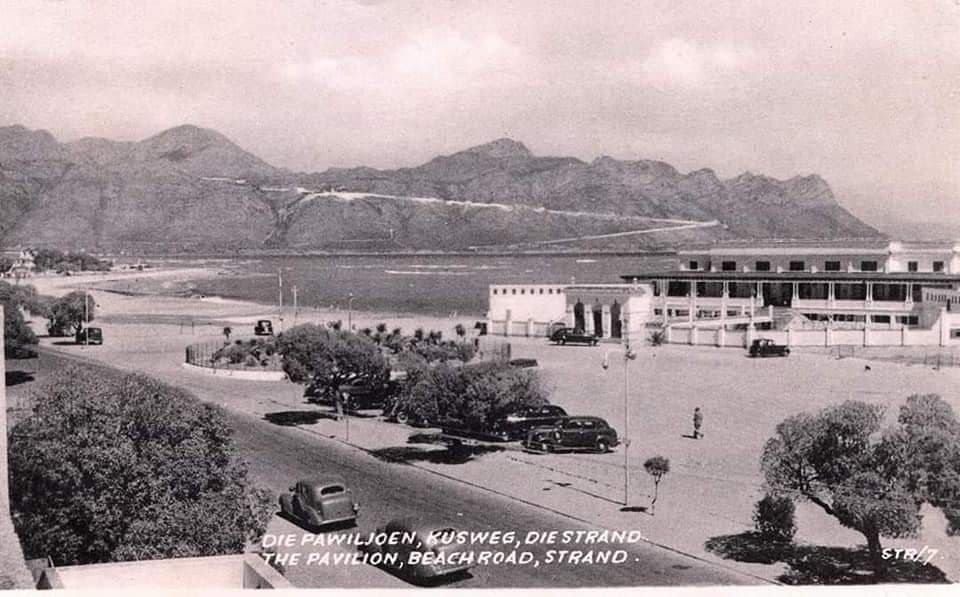
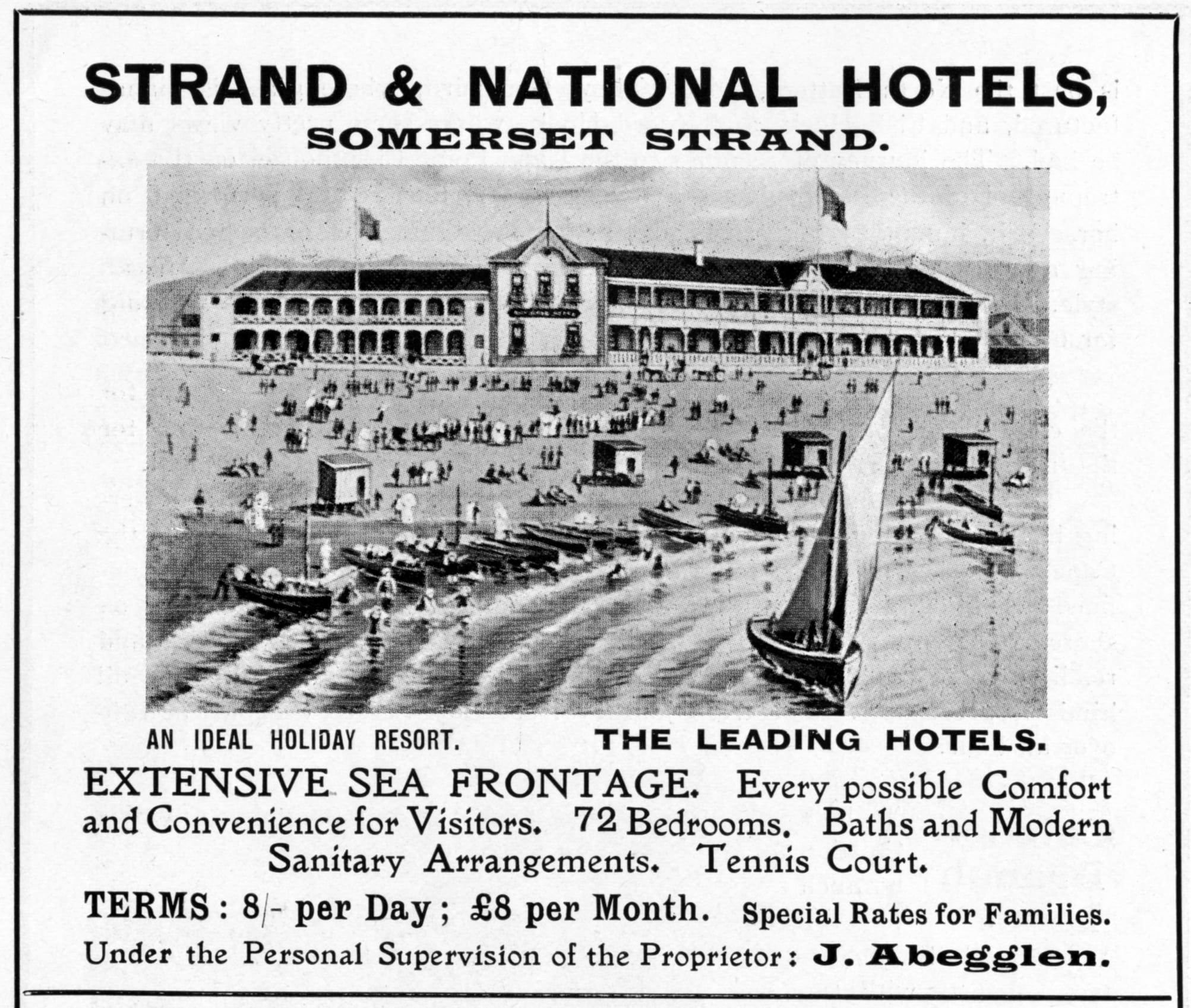
The Strand Jetty was a prominent feature of the Strand beachfront. The jetty was built by Murray and Stewart in 1934. It featured a 70-meter-long, 2.5-meter-wide walkway extending into the sea, ending in a larger 7.5 x 9-meter platform, constructed using large square Australian Jarrah timber log columns, which were driven into the seabed. Over time, the structure became derelict and broken, with its weathered beams remaining as a landmark, often described as a "skeleton" or broken structure on the beach.

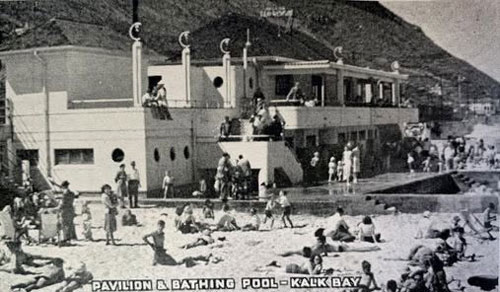
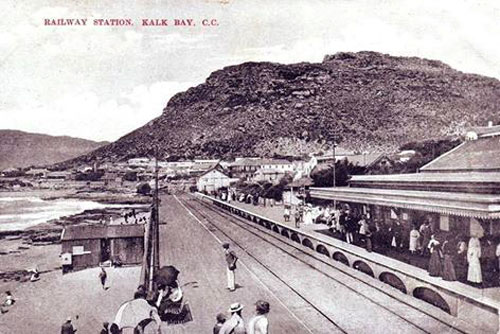
Kalk Bay (including Muizenberg and St James) was a municipality from 1895 to 1913. The Wynberg Railway Company extended the Southern Railway Line to Muizenberg on 15 December 1882 and a further extension to Kalk Bay on 5 May 1883. The railway line was built across the beach, which "jeopardised" the traditional practice of launching small fishing boats from the shore. This physical barrier was a major factor in the eventual push to build the artificial Kalk Bay Harbour (completed in 1918). In 2026, it is still a working fishing harbour, where boats bring in hauls of snoek and yellowtail.
In 1907, there were still no public bathing facilities, and in 1908, men's and women’s bathing screens, hangers, shower baths, and floor mats were provided.
In 1911, the Kalk Bay Muizenberg Municipality contracted Charles McGhie to formalise the walling of Bishop’s Pool, thereby creating a long rectangular pool that bathers walked into over a sloping sand beach.
However, these early structures were destroyed by high tides. In response, a concrete pavilion was built in 1913 for £420.
The previous structures served bathers until 1939, when they were demolished to make way for a third, more permanent pavilion. This building, which opened on the 9th November 1939, remains the core of the current Brass Bell complex.
Conflict with local residents arose when the restaurant tried to restrict public access to the pools. Read more about the access dispute below.
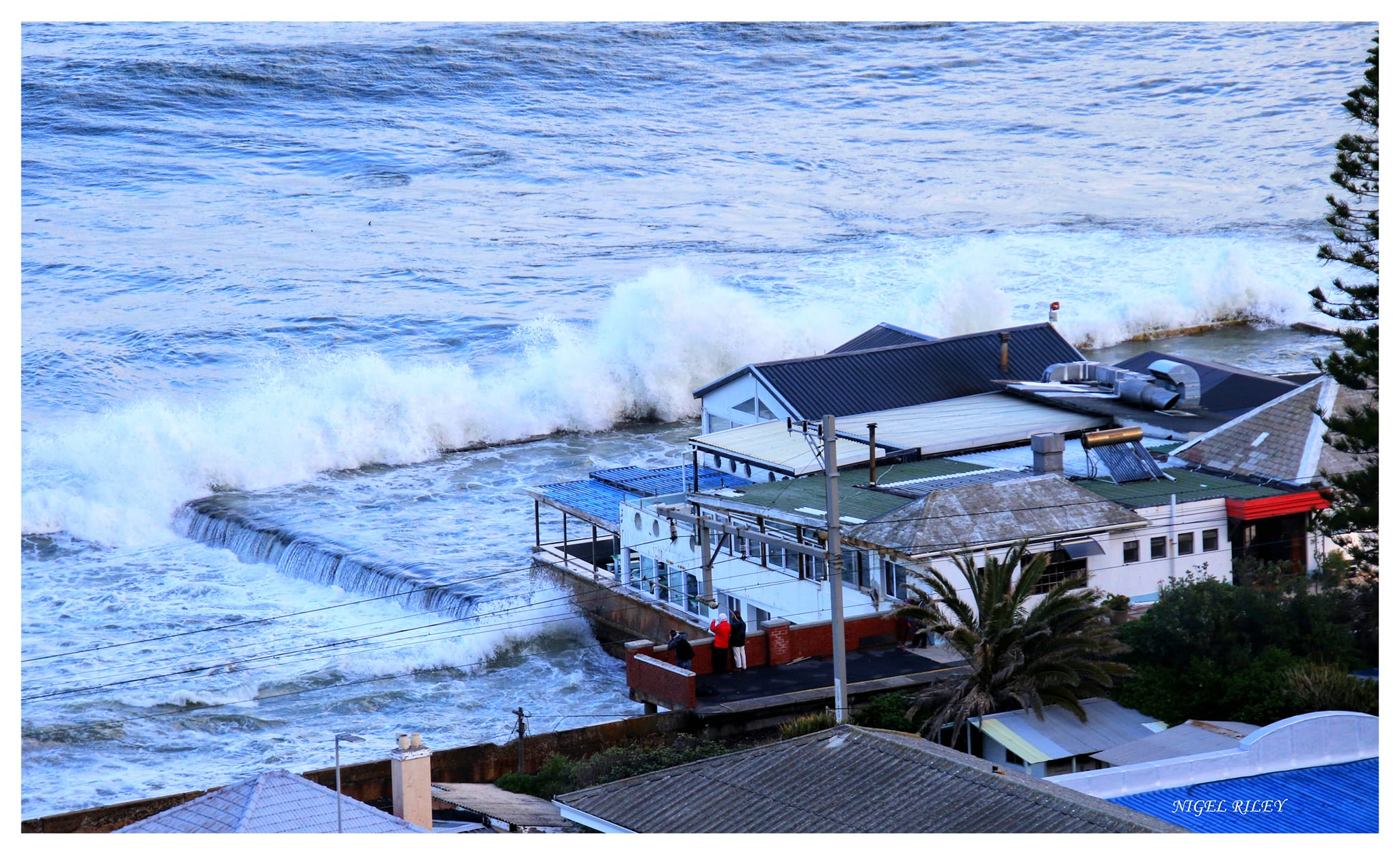
YOLANDE DU PREEZ 2025
https://falsebayecho.co.za/news/2025-01-24-echoes-of-bygone-beach-days-ring-out-at-brass-bell/
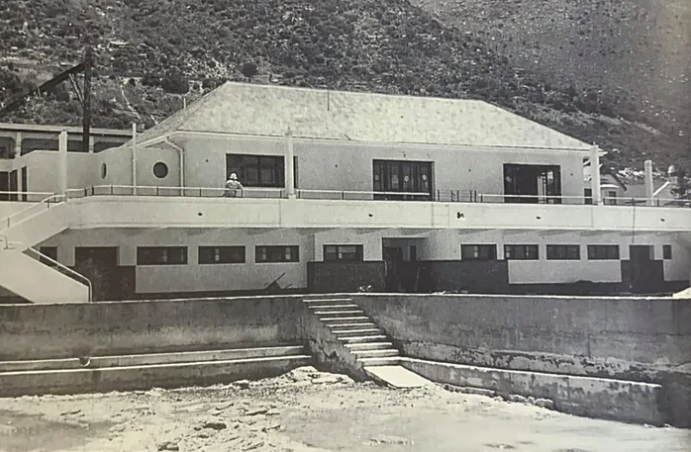
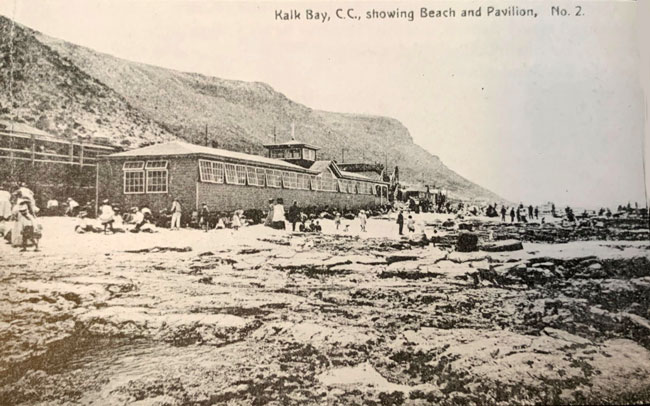
An undated picture of the Kalk Bay pavilion. Picture: Kalk Bay Historical Association.
Originally, two pavilions were built on the site to serve bathers using Bishop's Pool, a natural rock pool named after Bishop Gray, who frequented the area in the 1860s.
The Dalebrook tidal pool, further up the line, was the first of the pools to be built in Kalk Bay. It was illegally built in 1903 as a private undertaking by Mr F B Steer of Douglas Cottage.
According to the association’s records, the foreshore from Dalebrook southwards to Kalk Bay, though rocky, had a more gradual slope and broader and longer stretches of sand. Bathing was possible in many places, but the area was monopolised by boats, and fish cleaning that had polluted the water.
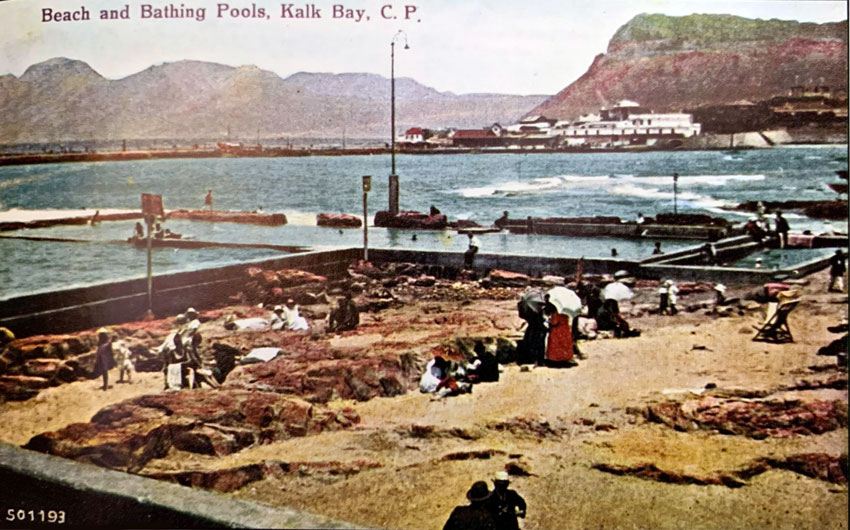
Instead, swimmers took to the rock pools and gullies near the station, one of which became known as Bishop’s Pool as Bishop Gray had often bathed there.
In 1907, there were still no public bathing facilities, and in 1908, men's and women’s bathing screens, hangers, shower baths, and floor mats were provided.
In 1911, the Kalk Bay Muizenberg Municipality contracted Charles McGhie to formalise the walling of Bishop’s Pool thereby creating a long rectangular pool that bathers walked into over a sloping sand beach.
However, these early structures were destroyed by high tides. In response, a concrete pavilion was built in 1913 for £420 which became the foundation of what is now the Brass Bell Restaurant.
It was situated south of the railway footbridge (today’s subway entrance) and provided bathing cubicles for men and women, as well as freshwater showers and toilets.
However, the following year, facilities were bursting at the seams, and Mr Dellbridge built a second pavilion north of the railway footbridge, which included a tea room.
This became the new women’s pavilion while the first pavilion became the men’s pavilion. Both offered the same facilities of seven freshwater showers and toilets, except that the men’s was larger with 44 cubicles compared to the 24 for women.
Together they catered for 700 bathers a day.
In the same year, a low wall was built across the beach end of the pool to prevent sand from silting it.
In 1914, all bathing boxes that had stood against the rail embankment were removed to open up more beach space, and the city council built 60 metres of sea wall to prevent the sea from scouring the beach sand.
In 1905, the Cape Government Railways had built a 150-metre long and 5-metre-wide wooden sea-side platform, which allowed Kalk Bay to also boast of having a promenade in addition to two pavilions and a pool.
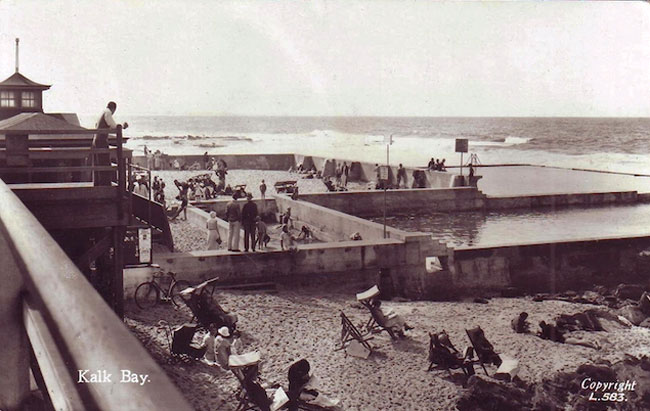
In 1922, a new square pool, named Kalk Bay Pool, was built onto the north side of Bishop’s Pool, substantially enlarging the area available for safe bathing. A new children’s pool was also built at the end of Bishop’s Pool.
During the 1930s, seawalls were built to protect the beach areas. In 1938, a sea wall was extended southwards to enclose a sand beach, and a new children’s pool was built to replace the former one.
These pavilions served many thousands of bathers until they were demolished in 1939, and a new pavilion, the third on this beach, opened on November 9, 1939.
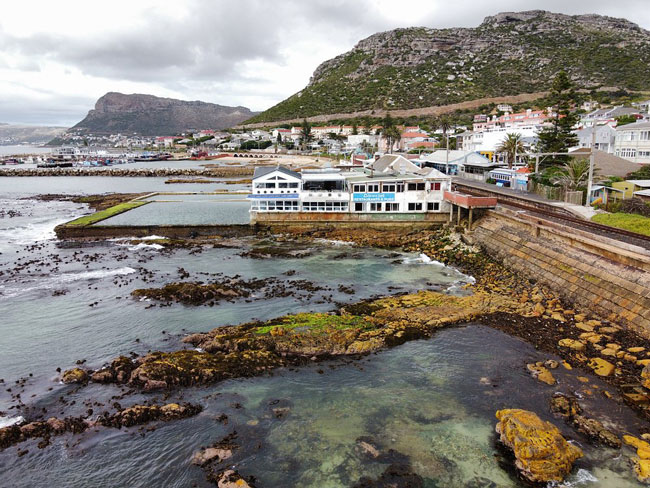
It is this structure that forms the core of today’s Brass Bell Restaurant, which has leased the premises, once the tea room, since the early 1970s, when the pavilion and the station milk bar were renovated and rebuilt to form a restaurant.
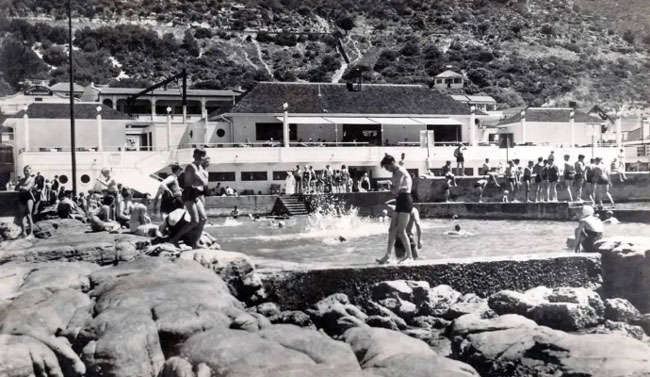
Bathers enjoying the facilities at the pavilion. Picture: Kalk Bay Historical Association.
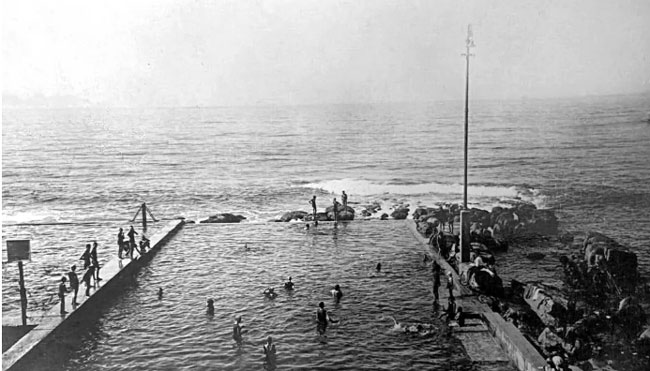
An undated picture of Bishop’s Pool in Kalk Bay. Picture: Kalk Bay Historical Association
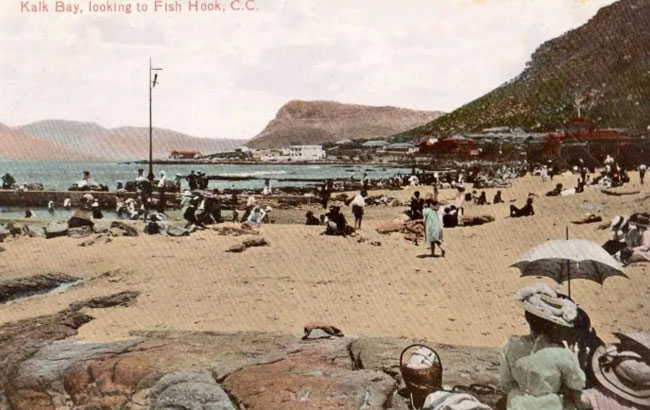
An undated postcard of the man-made beach before the pavilion was constructed. Picture: Kalk Bay Historical Association.
“I do not intend at this stage to proceed with the small wooden platform,” Brass Bell owner Tony White told Daily Maverick on Tuesday.
White began construction last month on an intended 3x7m wooden deck to “enhance the experience of patrons to the Brass Bell” by providing them with an area to sunbathe without getting covered in sand. The area had already been cleared and eight concrete footings installed on the beach when Daily Maverick visited on 31 March.
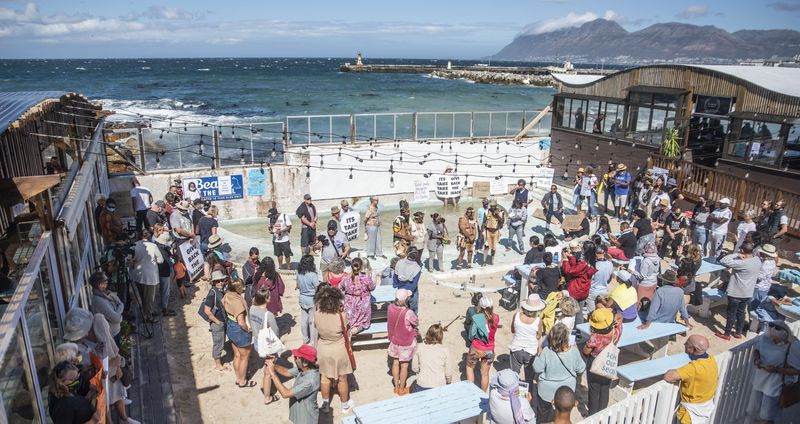
White’s expansion of the restaurant’s premises into the public space sparked an outcry from Kalk Bay residents, who called for an end to the construction that would expand the deck over a large area surrounding the children’s tidal pool.
Protests by residents took place on 30 March and 2 April at the Brass Bell, and the City of Cape Town, with a representative from Oceans and Coasts Environmental Compliance, inspected the site on Wednesday, 30 March after being alerted about the construction the previous day.
Read in Daily Maverick: Kalk Bay residents move to block businessman from ‘privatising historic public beach area’
The land is owned by Prasa and is leased to the Brass Bell for commercial purposes. Cape Town’s deputy mayor, Eddie Andrews, previously confirmed to Daily Maverick that the city does not have a copy of the lease agreement or the conditions.
The land contains the Kalk Bay tidal pools, which consist of two large adjoining pools and a smaller children’s pool, and the Brass Bell restaurant. To get to the pools, swimmers need to walk through the Brass Bell, which has expanded over the years and now covers most of the area around the pools.
At the meeting on Tuesday, 5 April, “It was confirmed that Prasa Cres requires, in terms of the lease agreement, that the tenant must be aware of and meet all of the statutory requirements, such as an Environmental Impact Assessment (EIA), building plan approvals, health and safety compliance and fire safety where applicable,” Andrews said.
“Should the lessee be found to be in breach of this requirement, he will be provided with the opportunity to comply with the applicable statutory requirements.”
On Friday, 1 April, the city’s building inspector served notices in terms of the national building regulations to White to cease building work to comply with section 4 (to obtain written approval for unauthorised building work within 60 days) and section 12 (to secure the building, ensure public safety and appoint fire and structural engineers).
“The city’s building inspector also served additional and separate notices on Prasa Cres as the landowner at the meeting on 5 April,” said Andrews.
If construction should proceed, building plans must be submitted to the city’s Development Management Department and assessed for compliance with the Development Management Scheme, which determines the use of the land.
“A land use application would need to be submitted to the city if the intended use of the erf requires consent or is not in line with its zoning rights, which may require the application to go through a public participation process prior to its consideration by the delegated authority,” said Andrews.
The construction took place within 100m of the high-water mark, which in terms of the National Environmental Management Act (Nema) would require an EIA. Andrews previously told Daily Maverick that “the determination as to whether an EIA is required depends on many factors, not only proximity to the high-water mark.
“Pre-constructed or pre-disturbed areas may not need an EIA — in this case, it is a determination that the national government will make.”
In terms of environmental compliance, Andrews said the following actions would be taken:
Andrews said White “is required to excavate and remove the eight concrete footings that he installed on the beach”.
However, White claims he had not been asked to remove remnants of the construction.
“I have not been requested to excavate and remove the concrete,” he said.
Faez Poggenpoel, a fifth-generation fisherman in Kalk Bay and a representative of the small-scale fishing community, told Daily Maverick that while this is progress, “it needs to be a statement to the government as well as to the city that they need to do more to protect these spaces — not only deal with the problem when communities rise up”.
Prasa Cres denied multiple requests for comment and maintained that this was not a Prasa issue, despite Prasa’s position as the landowner and its attendance at the meeting on 5 April.
The acting Metrorail Western Cape spokesperson, Nana Zenani, said the Brass Bell had carried out the renovations without informing Prasa Cres, and therefore the establishment had to respond to queries, not the railway agency.
“Prasa was not aware of the renovations by Brass Bell,” said Zenani.
Prasa’s spokesperson, Andiswa Makanda, previously told GroundUp that when the construction was brought to their attention, a letter had been issued to the Brass Bell requesting approval documents. DM