79. Palm Beach Tidal Pool
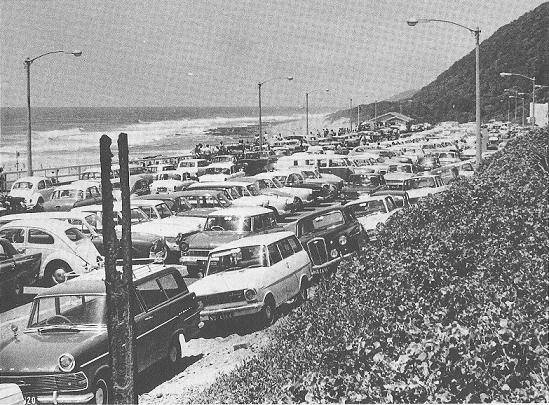
Located just north of Port Edward, Palm Beach is known for its wide sandy stretches, tidal pools, and rocky outcrops. The tidal pool is a large, natural swimming spot, ideal for safe swimming and snorkelling.


80. Trafalgar Beach Tidal Pool
Unfortunately, the tidal pool is silted up. But the beach promises a lot! There is no more perfect beach than Trafalgar's Blue Flag Beach to get away from the massive crowds.
Trafalgar Beach has unbelievably warm waters and makes for the perfect swim if you aren't a fan of those cold ones! You'll practically be swimming in a warm, oversized hot tub! Lifeguards are on duty at this blue flag beach throughout the year. Although other facilities are limited, the beach is super wide and sandy!


81. Marina Beach Tidal Pool
Marina Beach in San Lameer is a Blue Flag beach that is perfect for families.
Known for its cleanliness and safety, you can expect warm swimming waters year-round, along with a tidal pool and lifeguards on duty.

82. Granny Tidal Pool, Southbroom
The name "Southbroom" was first mentioned in 1908 when the Swedish Zulu Mission took over the mission from the Eyles family. The Eyles family renamed their home "Soutbroom" as a reminder of one of their family homes in England. Frank and Gilbert Eyles, Alfred's two youngest sons proclaimed the village in 1933.
It is a historic tidal pool built in 1937 specifically for the guests of the Southbroom Hotel. While often associated with the hotel, local historical accounts credit Jack Jones (the grandson-in-law of Southbroom pioneer Alfred Eyles) with building the tidal pools at both Southbroom and Marina Beach. The pool is located near the site of the Fascadale shipwreck, a steel barque that ran aground on the rocks seaward of the pool in 1895. The Southbroom Hotel was a landmark until 1984, when it was demolished amidst significant controversy.
Now known as Granny’s Pools because of how safe the pools are for children. There are rocks surrounding the pools that children love to climb and explore. At high tide, the waves come right in!


83. Southbroom Main Beach Tidal Pool
The tidal pool on Southbroom beach was given a facelift in 2014. See the video below.


84. Noel Tidal Pool, Ramsgate
The pool was built in 1973 by local resident Noel Quarry. She was a pioneer in the town and the owner of the famous Crayfish Inn hotel, restaurant, and pub. Built on the rocky inter-tidal shore, the pool was designed to provide a safe, calm swimming environment. It is naturally refreshed by the changing tides, often bringing in small fish for swimmers to see. It is positioned on the right-hand side of Ramsgate's main beach, near the parking area for the whale watching deck.


85. Margate Tidal Pool
The town of Margate was laid out in 1908 and later developed as a recreational area in the 1920s. The construction of swimming facilities, including tidal pools along the Natal South Coast, occurred to provide safe bathing areas free from sharks and strong rip currents, which are common in the Indian Ocean.
The tidal pool was used for school swimming and school activities. Residents have described it as a "school pool" during the late 1960s, with memories of it being used for school-related activities.
Swam many kilometers in that pool Had Galas there before Margate Primary had a pool

2026 - For two decades, the once popular tidal pool in Margate on the KwaZulu-Natal South Coast was non-functional but, thanks to the Margate Urban Renewal Project, it has now been restored to its former glory.

86. Margate Olympic Pool
The facility is a 50m x 25m, 10-lane outdoor pool that attracts swimmers year-round. It is the only Olympic-sized swimming pool South of Durban. Historically, the pool was filled with seawater, similar to other coastal pools in South Africa built during that era. These include Orient in East London, Camps Bay, Beach Bath in Durban, and Macarthurs Bath in PE. At some point in its history, the pool was converted to freshwater/chlorinated water.
It is generally believed to have been constructed in the late 1970s, following the addition of a kiddies' pool in the late 1950s. A major upgrade occurred on the beachfront, including the construction of the new Margate Lifesaving Club and lifeguard house adjacent to the pool.


87. Lucien Tidal Pool, Margate
Founded around 1919, the town is situated roughly 127 km south-west of Durban, and it serves as the vibrant "holiday capital" of the South Coast.
Lucien Beach, which was named after the Lucien Hotel. The hotel was built by the Van Dongen family, specifically the grandfather of the current descendants, in the Manaba area. It was named in memory of his great aunt, who tragically died in a bombing in Europe during World War


88. Uvongo Tidal Pool
Uvongo has developed from a seaside destination into the largest upmarket residential area on the Lower South Coast of KwaZulu-Natal.
Most tidal pools along the Natal South Coast were constructed in the early 1950s. This was driven by a surge in shark attacks during that era, which led authorities to build protected enclosures for safe sea bathing. The town of Uvongo itself was laid out as a "garden village" by surveyor T.C. Lilliecrona.
The design of these pools is rooted in British coastal culture, which introduced the concept of "taming" the ocean for leisure and health benefits during the interwar and post-war periods.


89. St Michael's-on-Sea Tidal Pool
The town was established as a quiet holiday resort destination, famous for surfing, fishing, and a 9-hole golf course. It is widely recognised for its Blue Flag status, highlighting the beach's pristine nature.


90. Shelly Beach Tidal Pool
There are two tidal pools on Shelly Beach. The largest is the Metropole Beach pool, which is the historical name for what is today known as the Shelly Beach Tidal Pool. In decades past, the beach was often called "Metropole" after the Metropole Hotel that once overlooked the shore before being demolished in the late 1960s
Safe swimming (with shark nets), beachcombing (shell collecting), and lifeguards on duty make this beach ideal for families.
The second pool is further east, at the other end of the beach.


91. Shelley Beach

92. Port Shepstone Tidal Pool
The tidal pool is simply put, huge! Have a look at the right hand corner of the pool where the life guard is paddling to get a better understanding of how big it really is. The pool is divided into three sections; the big pool with two smaller pools at the end of it.
The Port Shepstone Tidal Pool is one of the oldest and largest man-made tidal pools in South Africa, with its origins dating back more than a century. The pool is divided into three distinct areas: a large main section for distance swimming and two smaller, shallower sections specifically designed for children.
- Early Construction: Records indicate that a tidal rock pool existed at Port Shepstone as early as 1923. The pool was part of a broader movement in South Africa to create "tame" swimming spots for holidaymakers.
- Expansion & Safety: Many South Coast tidal pools were significantly upgraded or built in the early 1950s following a series of shark attacks along the Natal coast, which heightened the demand for protected bathing areas.
- Town Growth: The development of the pool mirrored Port Shepstone's rise as a premier holiday destination, often compared to Blackpool in England. Its popularity grew alongside the town's maritime history, including the arrival of Norwegian settlers in 1882 and the construction of the iconic black-and-white checkered lighthouse in 1906.


93. Umtentwini Tidal Pool
Known locally as the Granny Pool (a common name for South African tidal pools!), it has served generations of families.


94. Southport Tidal Pool
The Southport Tidal Pool at high tide.


95. Anerley Tidal Pool
The pool was constructed in the early 1950s as part of a regional beach-improvement initiative, providing a safe, sheltered swimming spot, often used by local scouts for badge testing

96. Sunwich Port Tidal Pool
The tidal pool was filled to the edge with sand after a very energetic spring tide, turning it into a shallow pool that is ideal for smaller children. Over time, some of the sand was washed away as the tides came and went and it is around hip height at the deeper side now.


97. Banana Beach Tidal Pool


98. Pumela Beach Tidal Pool
The tidal pool seems to have been abandoned.

99. Umzumbe Tidal Pool
The tidal pool has served as a centre for family holidays for generations at the Pumula Hotel. It is situated on what was once part of the "Ararat" farm, owned by Lady Charlotte St Claire Moor in the 1920s.


100. Hibberdene Beach Tidal Pool
The tidal pool is at the Mercury Hibberdene Children's Holiday Home, which provides free holidays and life-skills programmes for underprivileged and destitute children. Established in 1930 by The Mercury newspaper during the Great Depression, it was designed to bring joy to children from impoverished families across KwaZulu-Natal

101. Mtwlune Tidal Pool
Mtwalume itself evokes an era of "simpler coastal retreats". The village was once a stop on the "Banana Express," a narrow-gauge steam train that historically transported local produce and holidaymakers along the South Coast.


102. Ifafa Beach Tidal Pool
Modern development began in the mid-1800s with the Goldstone family. Samuel Goldstone, a stonemason and Byrne settler from England, established himself in the area in 1851 after an unsuccessful farming venture near Richmond.

103. Botha House Tidal Pool
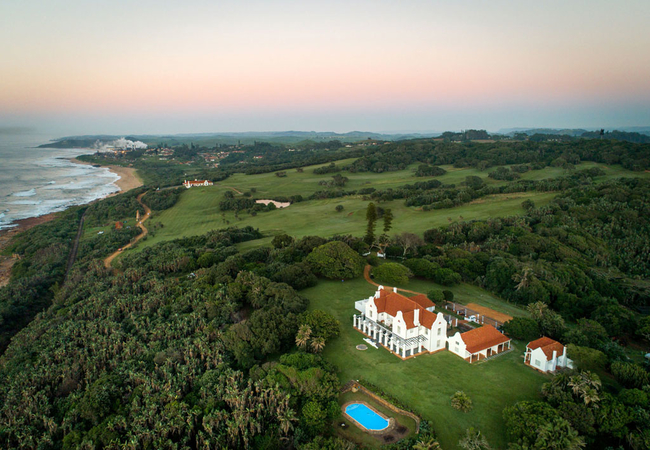
Botha House, located in Pennington, Natal, was built in 1920 by Sir Frank Reynolds as a "beach cottage" for South Africa's first Prime Minister, General Louis Botha, and his wife Annie. It included a nearby tidal pool created by blasting rocks in 1920.
The entries dated June 1918, November 1918 and January 1920 are extracts from Sir Frank Reynolds' diary:June 1918 “Before June ended, a surveyor named Hall was at work on the new project (Umdoni Park), and helped Sir Frank select a good place in the rocks at the sea’s edge for a swimming pool. Carl Hall was a civil engineer and surveyor of great ability. He was son-in-law to Bishop Bousfield, first Bishop of Pretoria.”November 1918 - “Hall came again in November to lay out the swimming pool.”January 1920: “Down at the swimming pool the ladies’ dressing room had been in hand for some two weeks, and the last rocks blasted away to allow high tide to fill the pool.”9 January 1937 - An extract from a letter written by Annie Frances Bland (Emmett) Botha about the tidal pool: - "I hear you have had nice rain - & here we are almost crying for rain - only the sea is happy, it makes such a noise! The pool has been cleaned out & now it has become quite deep – but the crabs & fishes & all kinds of goggas have disappeared - so when Louis comes again, he will have to fish in the sea - but you can both bathe in the pool."And so the Umdoni Point tidal pool came about long before the Royal proposed visit in 1952!


104. Pennington Tidal Pool


105-107. Park Rynie Tidal Pools
There are three tidal pools on the beach at Park Rynie, which was established in 1857. The town was named by John Phillip Hoffman, a partner in the firm Nosworthy & Co., which purchased the original farm in 1858. He named it after his wife, Catherine Renatta Hoets, whose nickname was "Rynie".
During World War I, Park Rynie became a significant maritime hub with the establishment of a whaling station at Rocky Bay, operated by Park Rynie Whales Ltd. Remnants of this era, such as a stone pier and breakwater used by whaling and fishing craft, are still visible today.
During the apartheid era, specific tidal pools at Park Rynie Beach were indeed reserved for different racial groups, with some designated specifically for Indian South Africans. Under the Reservation of Separate Amenities Act of 1953 (and its 1960 amendment extending to the "sea and seashore"), South African beaches and their facilities were legally partitioned by race. In Park Rynie, this resulted in a geographic divide of its tidal pools:
- 105 - Park Rynie Main Beach Pool: A third pool existed on the main beach between the northern and southern locations.
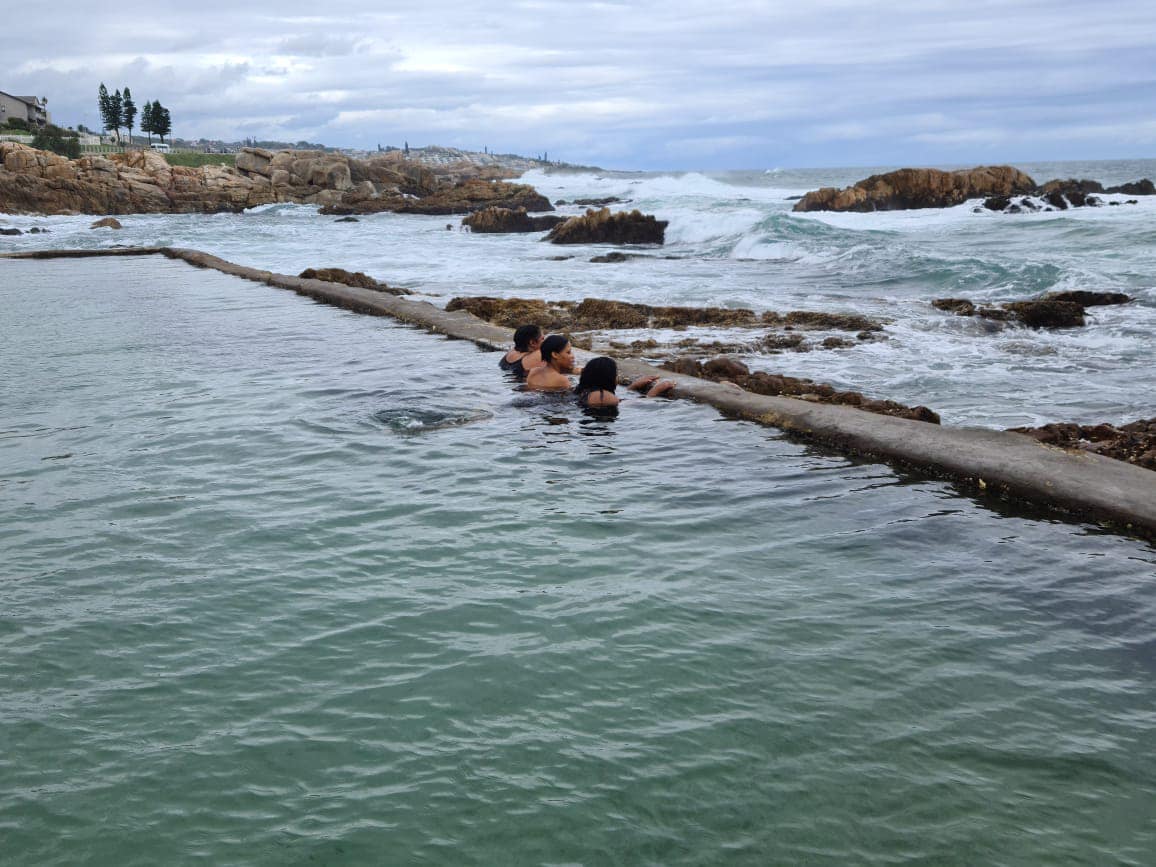
- 106 - Southern Pool: Located near the area historically known as Preston (a traditionally white neighbourhood), this pool was reserved for white bathers.
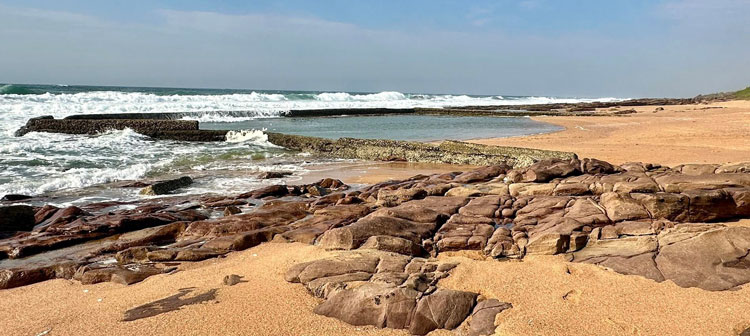
- 107 - Northern Pool: This was located in the traditionally Indian part of Park Rynie and was the primary tidal pool for that community.
106. Park Rynie South Tidal Pool
107 - Park Rynie Northern Tidal Pool
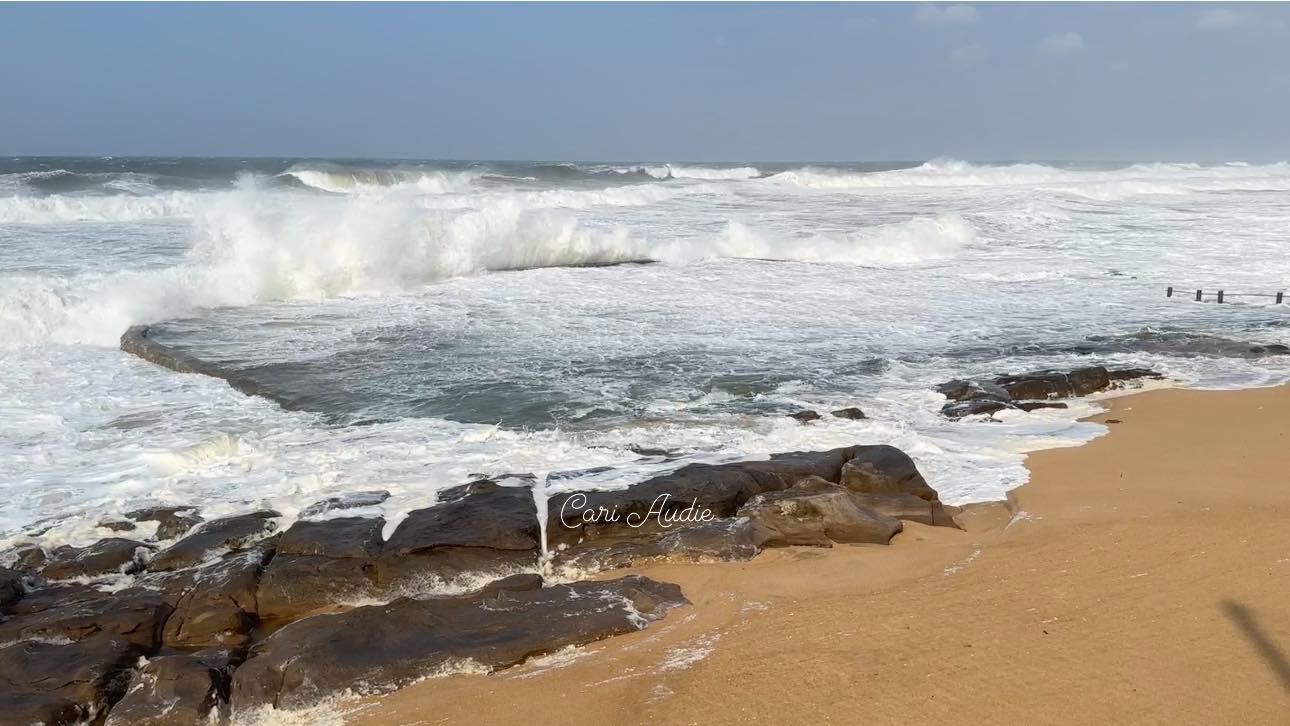

108. Scottburgh Tidal Pool
In 1860, Scottburgh became the first substantial township laid out south of Durban and named after Sir John Scott, the then Lieutenant-Governor of Natal. It initially served as a port for sugar exports and a base for fishing fleets near the Aliwal Shoal.


109. Umkomaas Tidal Pool
As early as 1905, Umkomaas was described as the "gem of the South Coast". It was then, given ideal conditions, a drive of about two hours from Durban on the old main road, crossing the river at the punt at the Drift.
The tidal pool at the former Umkomaas Hotel, which is now known as the Lodge.


110. Winkelspruit Tidal Pool
On 10 May 1875, the schooner Tonga was wrecked off the coast while carrying goods to Durban. To avoid losing the cargo, sailors set up a makeshift shop on the riverbank to sell the water-damaged wares. In Afrikaans, "winkel" means shop and "spruit" means stream, leading to the name Winklespruit.
As of May 2026, the Winklespruit Tidal Pool is currently closed due to long-standing infrastructure damage.


111. Baggies Beach Tidal Pool
Formally located at Warner Beach, it is primarily a natural tidal rock pool. Unlike many of South Africa's man-made concrete tidal pools built for safety in the 1930s or 1950s, this pool is naturally formed. It is a popular site for exploring marine life, including sea urchins and inquisitive fish.
Warner Beach has a deep-rooted surfing culture, having produced world-class surfers and serving as the host site for the Baggies Surf Pro. Historically, the beach and its tidal pool area have been major viewing spots for the annual Sardine Run in June and July, attracting thousands of visitors to the shoreline.


112. Chain Rocks, Amanzimtoti
The name comes from a heavy chain that was once stretched across a gully between two rocks to provide a safety handhold for bathers in the early 20th century. Posts made from old railway lines were concreted into holes drilled into the rocks to anchor these chains.
This particular spot became a favoured local bathing area, with the rocks providing a suitable gully sheltered on either side. With the increase in beachgoers, the need for a safety mechanism to prevent drowning arose.
The anchoring of the chains in the water posed a rather tricky task. Corrugated water tanks were cut in half and floated out to the desired position, then filled with concrete and the chains were set in these. The aim of the chain was to prevent bathers from being washed out to sea, as it could be held onto.
However, the chains did not stop local residents from being called upon to rescue holidaymakers.
The two Reinbach brothers and a Mr Grainger were often called upon to rescue the stragglers. No one knows the exact date when the chains were fixed into the rocks. The Reinbachs were involved in the project, as well as several other locals. The chains, however, were there when Noel Wright arrived in Amanzimtoti in 1926.


113. Inyoni Rocks Tidal Pool
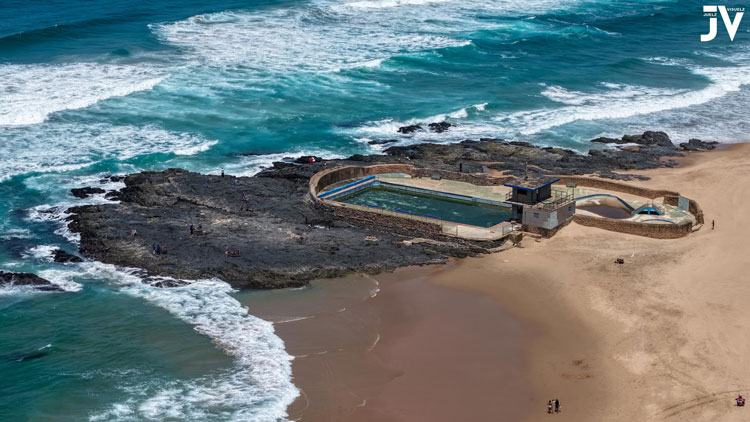
The Goodwill Hotel on the Amanzimtoti beach was particularly active from the 1930s through the early 1970s, before it was demolished, like many other similar establishments along the coast.
It had a swimming pool on the Inyoni Rocks.
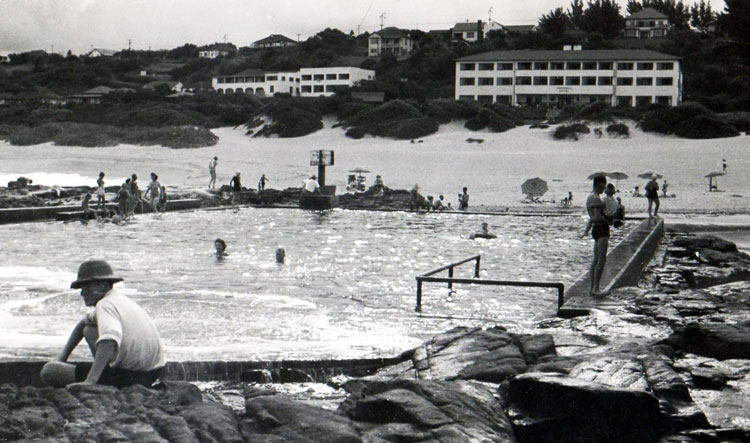
That tidal pool was upgraded to the current facility, as shown in a hotel marketing brochure.
The most recent upgrade, before its demise.
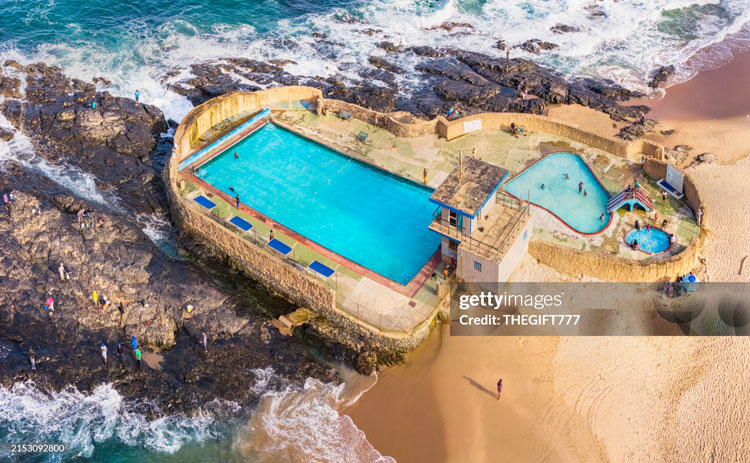
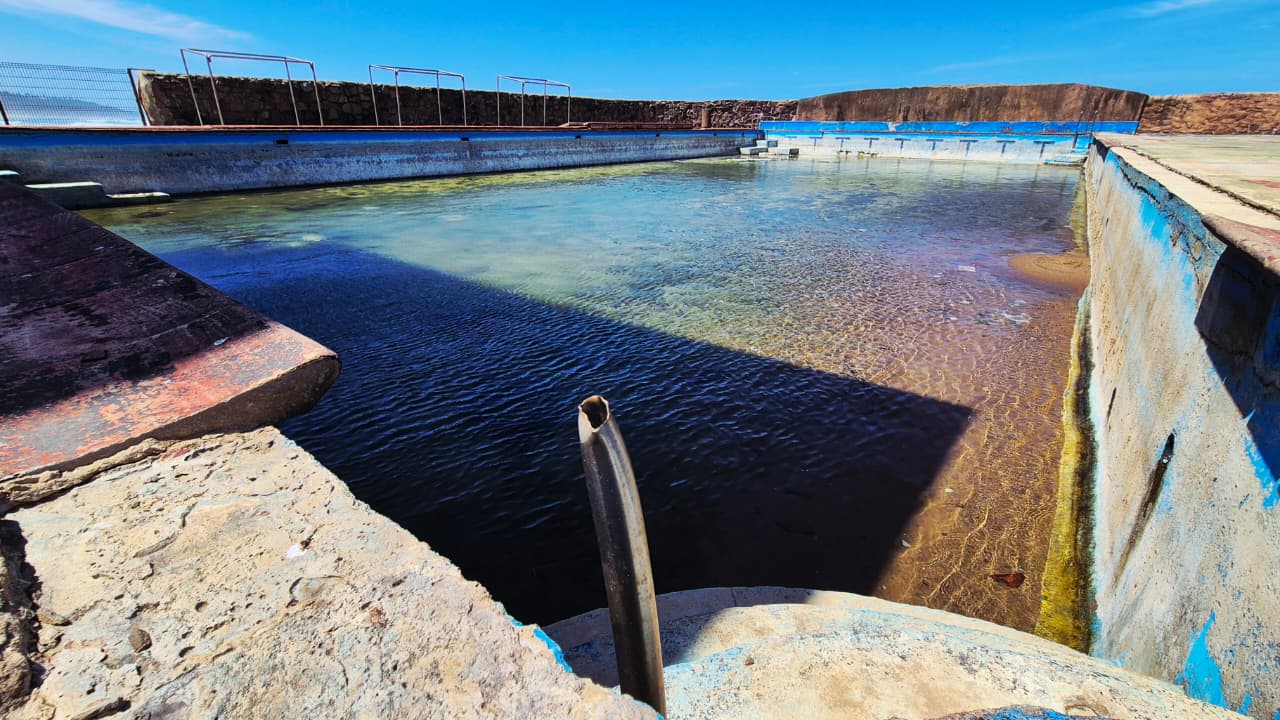
Unfortunately, the tidal pool is now derelict.
114. Isipingo Swimming Pool
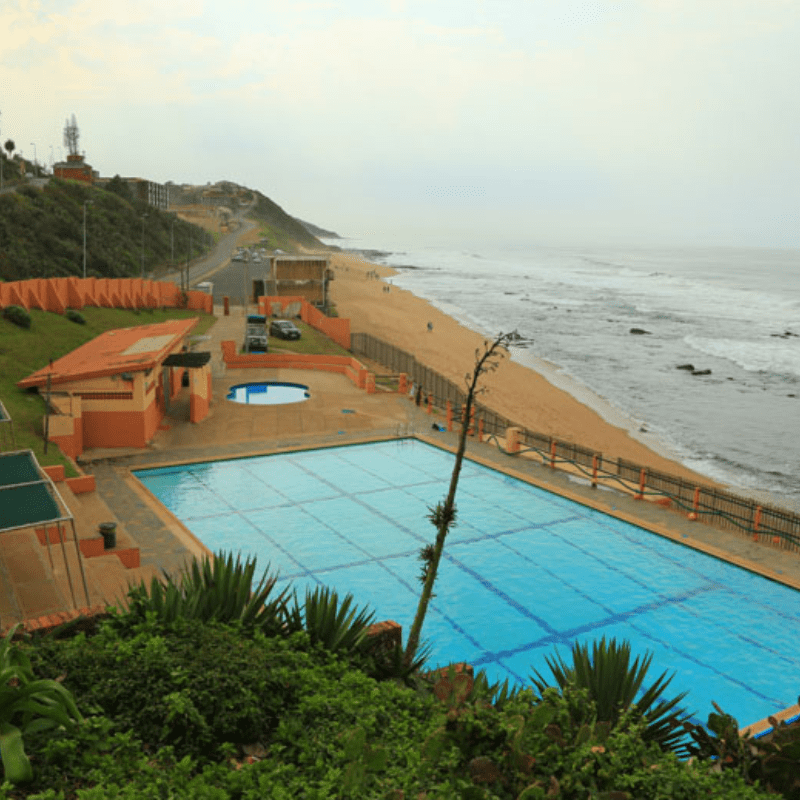
The historic town of Isipingo, home of the renowned Natal soldier named Dick King, who died there in 1871, was a small British village with a church, a mission school, two inns and two shops. The Isipingo Beach Golf Club opened in March, 1916. There was a 25m swimming pool on the beachfront, as well as a tidal pool known as the Tiger Rock pool. Local legend suggests the beach and its rocks were named after a shipwreck off the coast; rumour has it the ship was carrying exotic animals, and a tiger managed to swim ashore.
The Dakota Beach swimming pool is a historic landmark that dates back to the early 1920s. Originally built as a recreational facility for the small British seaside settlement, it has evolved through decades of significant social and structural changes. In 1973, a Boeing DC-3 Dakota aircraft crashlanded on the beach, giving it the name.
115. Tiger Rocks Tidal Pool
: Built in the 1920s, the pool was originally shallow. In an attempt to deepen it, a visitor from Johannesburg used dynamite at the bottom. This cracked the structure, causing it to leak and making it difficult to hold water afterwards.


116. Brighton Beach Tidal Pool
The Brighton Beach Tidal Pool is the last south of Durban. It was completed and officially opened in 1938. The pool was commissioned by the Durban City Council as part of a development to enhance the local area for recreation. At the time of its opening, it was considered a grand project and was notably floodlit to allow for evening use.