Articles

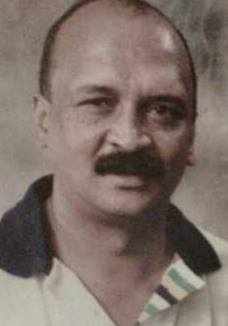
Brian Hermanus

Brian Hermanus

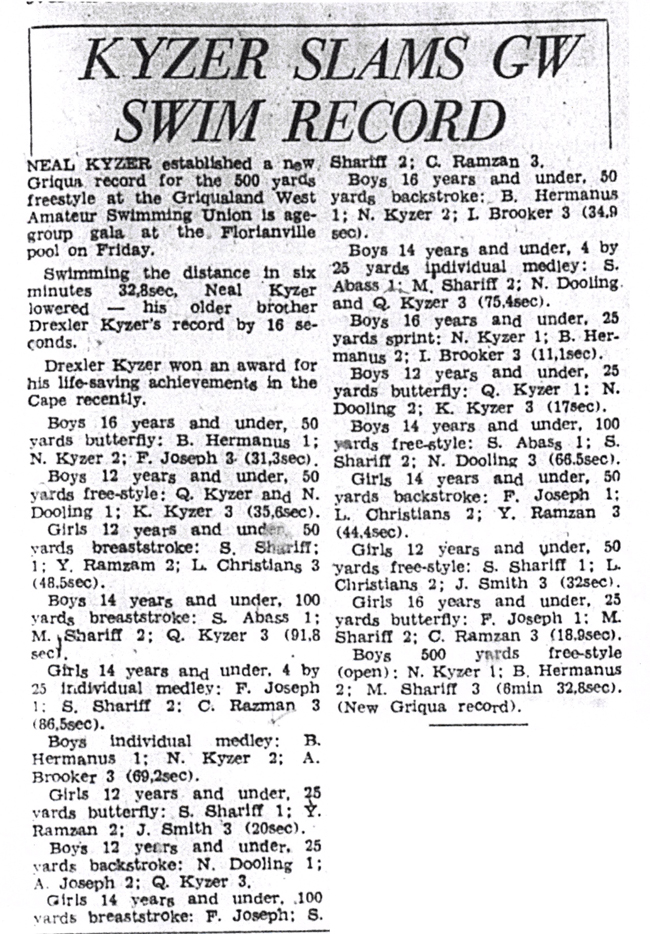
Brain was from Floors in Kimberley, and he swam for the (coloured) Griqualand West team. His swimming fame appears to come from a 1972 swimming trip to London, where he is said to have equalled the 100m record of the World and Olympic champion David Wilkie.

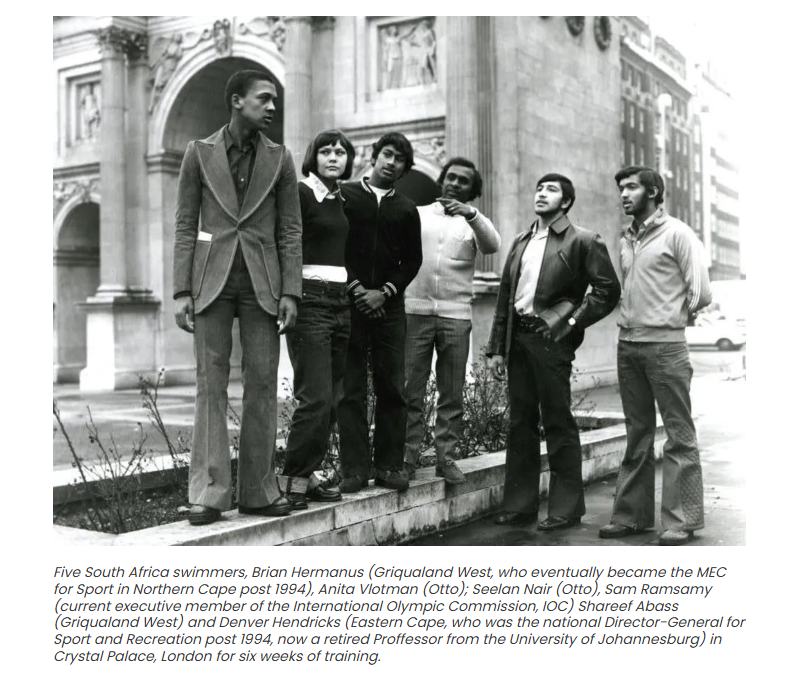
In 1972, Brian, together with Shreef Abass, both from Kimberley, were selected amongst the top five swimmers in the country for further training in London. Brian would probably have broken the world record or been chosen for the Olympic Games had it not been for the restrictive apartheid laws. His times would certainly have seen him contest the finals at the Olympics.

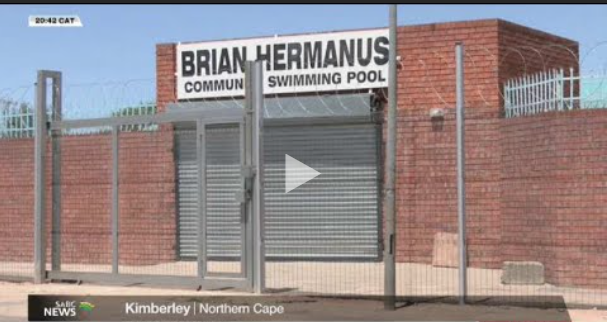
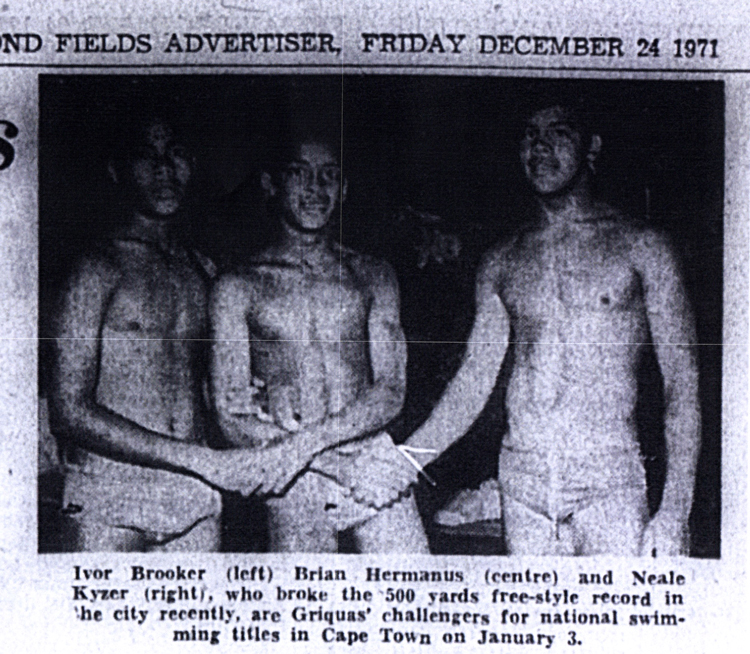
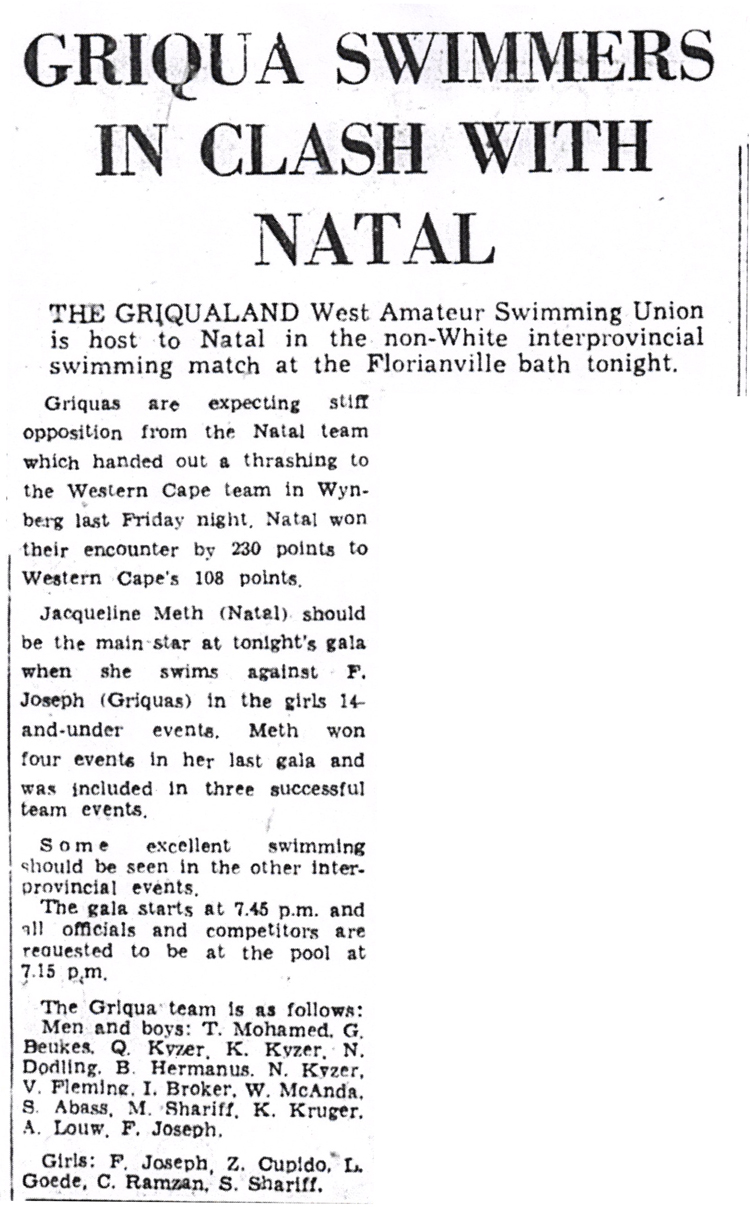
NOTE: Claims about equaling Wilkie's times are unsubstantiated. Results from 1971 swimming galas in Kimberley show Brian winning the boys under 16 200m breaststroke in 2:51,0 - in the 25m Florainville swimming pool. The pool has subsequently been renamed the Brian Hermanus Swimming Pool. 

Pool


He also displayed excellence in soccer, rugby, tennis, table tennis and athletics at school and Provincial level. Apart from his involvement in sport and as an MEC, Brian was determined to see every child take part in sport as he believed that a “Child in Sport is a Child out of Court”.

He is reported to have been a founding member of the National Union of Mineworkers (NUMSA) and the United Democratic Front (UDF). He joined the ANC  when it was unbanned in 1990 and eventually became a Member of the Northwest Province Executive Council (MEC). He died in a car crash in 2000.

Honourable Speaker

Through its flagship programme, Honouring Heroes and Heroines of the Liberation Struggle, the department is ensuring that the sacrifices and contributions of the many unsung heroes and heroines of our freedom struggle are recognised and honoured. 

To this end, we have recently named our provincial archives repository after the late Comrade Khotso Flatela, who died in exile and is buried outside the country. We have also renamed the Ministry for Sport, Arts and Culture to Brian Hermanus House in honour of this outstanding sportsman and dedicated activist. Comrade Brian Hermanus was also the first MEC of this department with its establishment in 1999. 

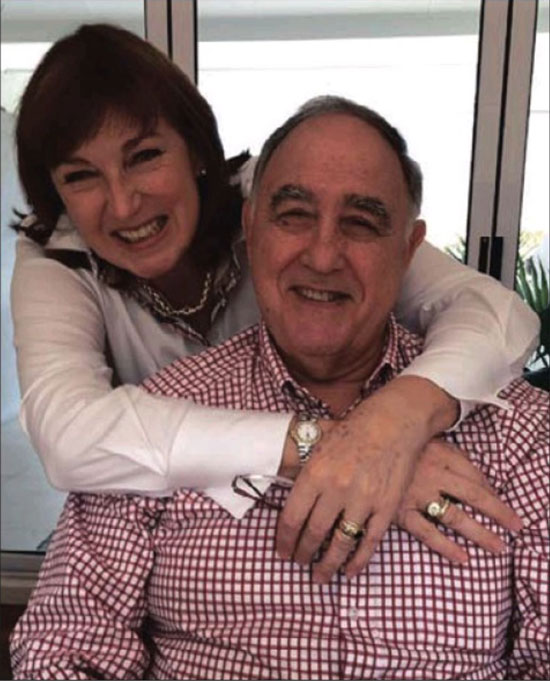
Brian Hermanus, world-rated swimmer from the apartheid years, was killed in a car accident. He was the MEC for Sport, Arts and Culture for the Northern Cape. 2000.

DID YOU KNOW

Northern Cape Minister of Arts, Sports and Culture Brian Hermanus and his private secretary, Mervin Erlank, were killed in a road accident on Wednesday afternoon, 26 July 2000. Hermanus, 44, and Erlank, 36, were killed instantly, while the minister's bodyguard, Norman Zenzile Job, had minor injuries.

The accident happened on a gravel road between Britstown and Vosburg. Police spokesperson Rita Crafford said that Job received medical treatment at the Britstown clinic and was discharged.

The deaths of the two men sent shockwaves through the provincial administration and the province. The then Northern Cape Premier Manne Dipico, who had just returned from Belgium, and his cabinet expressed their condolences to the Hermanus and Erlank families.

Spokesperson for the Hermanus family, Bradley Swartland, said the minister was on his way to Calvinia to make preparations for a hearing on racism in sport. He said Hermanus was travelling in a rented 4 x 4 vehicle when the accident happened. According to Swartland, Hermanus was driving the vehicle when it overturned.

He was survived by his wife, Lynn, and daughters Anita and Samantha.

Erlank was survived by his wife, Olga, five-year-old daughter Maxine, and one-year-old son Aiden.

Brian Hermanus was a great sportsman, and a family man. Brian displayed his versatility and was ranked amongst the country’s best ten swimmers irrespective of colour during the trying times of apartheid.

  • Hits: 153

Brewery Boys

The Brewery Boys

THE BREWERY BOYS CLUB

The Brewery Boys Club came into being through a challenge during the Currie Cup Tournament in Bloemfontein, O.F.S., in 1939. The local officials challenged visiting officials to participate in a relay race; the challenge was accepted, and the visiting officials turned out in red jerseys, borrowed from the local branch of the SA Breweries Ltd.

Needless to say, the absorption of water by the jerseys equalled the capacity of absorption by the wearers, and they were unsuccessful in their attempt to win the relay event, but this little comedy event gave birth to the Club, and from the jerseys came the name.

At first these few officials used to "fine" anybody for any undignified infringement, and at the eventide all repaired to pleasant surroundings and slaked their thirst at the expense of the "wrong doers".

Thereafter the Brewery Boys Club really became an established organisation, in order to raise funds for charity, and its first major effort was at the Cape Town Currie Cup Tournament in 1940, to raise funds for World War II, and carried on with its War Funds effort until 1942, when all S.A. swimming ceased until 1946, at the conclusion of hostilities.

Immediately on the resumption of S.A. swimming, the Brewery Boys' Club changed its name to the "Goodwill Club" and co-opted the President of the S.A. Swimming Union onto its executive committee, for the purpose of raising funds to create a Swimmers' Memorial, in memory of those swimmers and officials who gave their lives in the cause of peace and freedom in the 1939/45 World War II.

Mr Aubrey Nunn, ex South African Champion swimmer and record holder, was also elected to the "Goodwill Club" executive, and in his capacity as an Architect, de­signed the magnificent portable memorial, and Mr Jack Glendenning, the Brewery Boys' Club President, brought out from overseas four silver cups, which were allocated to four S.A. Championships as Memorial Trophies.

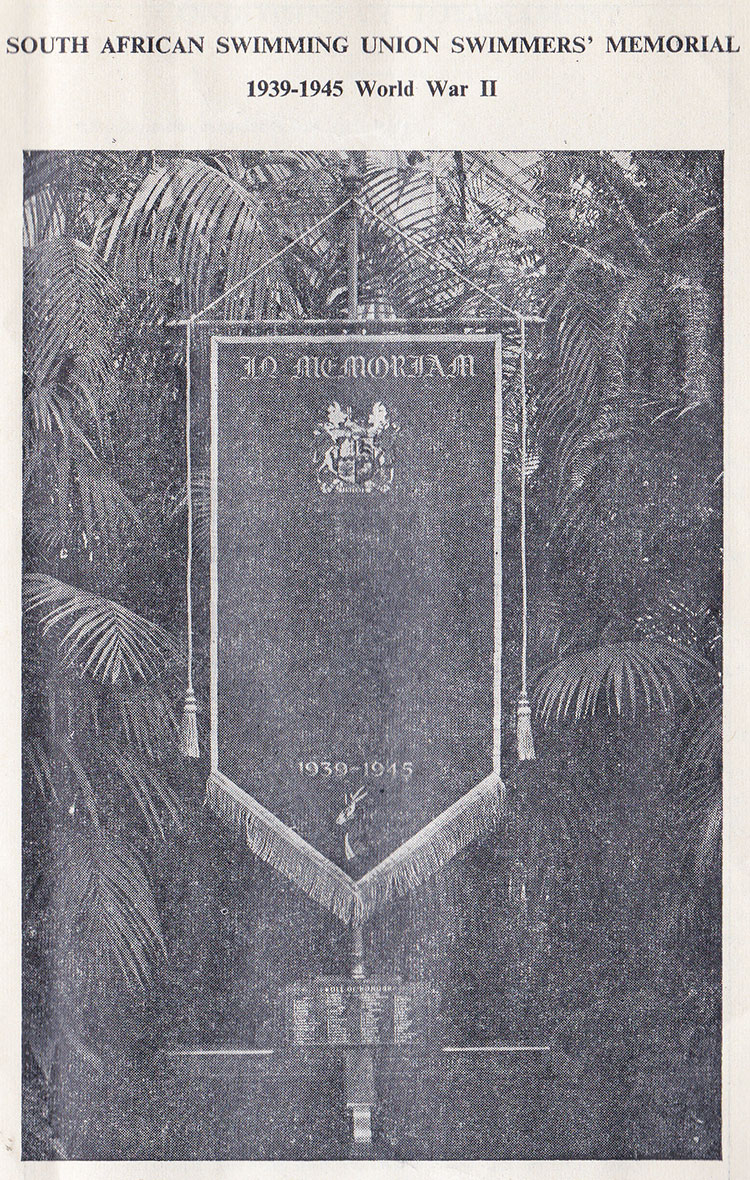
The Memorial itself comprised of a beautifully worked Banner in bottle green with gold braid, and the South African Coat of Arms worked thereon in coloured silks. This was hung on a specially designed upright and crosspiece which fitted into a hand-carved wooden base, onto which was incorporated a series of bronze plaques with die names inlaid in white enamel.

The Memorial Banner and Cups were presented to the S.A. Swimming Union at a special unveiling ceremony in Salisbury, 1948, where the S.A. Championship and Currie Cup Water Polo Tournament were being held.

The Governor of Southern Rhodesia performed the unveiling ceremony, in the presence of the Military Chiefs of Staff of South Africa and Rhodesia and attendant high-ranking officers, together with the Mayor of Salisbury. Dignitaries of the Church representing several denominations, officials and competitors attending the tournament and Government and Municipal representatives. A very moving and memorable occasion that will live long in the memory of all those privileged to attend, and a worthy tribute to our fallen comrades.

The Club then reverted to its former name and has remained very active, officiating at every tournament and has been instrumental in raising considerable sums for Olympic and Commonwealth Games Funds, to ensure of our swimmers are well represented in the South African contingents to the various Games; and will continue to do so in the future.

At a ceremony in Johannesburg in 1950, at the well-renowned headquarters of the S.A. Breweries Ltd., Mr Mackenzie presented our President with a Presidential Chain and Insignia and when he is in attendance at Currie Cup Tournaments and wears this chain of office, it means the Brewery Boys are on the watch for members, officials, swimmers and public notabilities, who may transgress, according to the traditional laws laid down, resulting in their being fined for their misdeeds or, in some instances, their splendid deeds. These fines, together with blanket collections, establish the yearly fund drives, which are named at the tournament.

 Members comprise Brewery Boys and Brewery Maids, and their insignia of membership is the Castle Brewery bottle opener in the case of men and a miniature opener in the form of a brooch for the women, and in addition, a special tie of maroon colour on which is a design of several small openers in silver.

The members of the Goodwill Club executive were Messrs. Jack Glendinning (President), Alex R. Bulley (Hon. Secretary), Abbie R. Taylor, John Cohen, the late Aubrey V. Nunn, Charles E. Harris, the late Rufe Smith and the late Harry C. Varley.


  • Hits: 22

John Keyter

John Keyter

John Keyter

1969 Keyter 100 fly

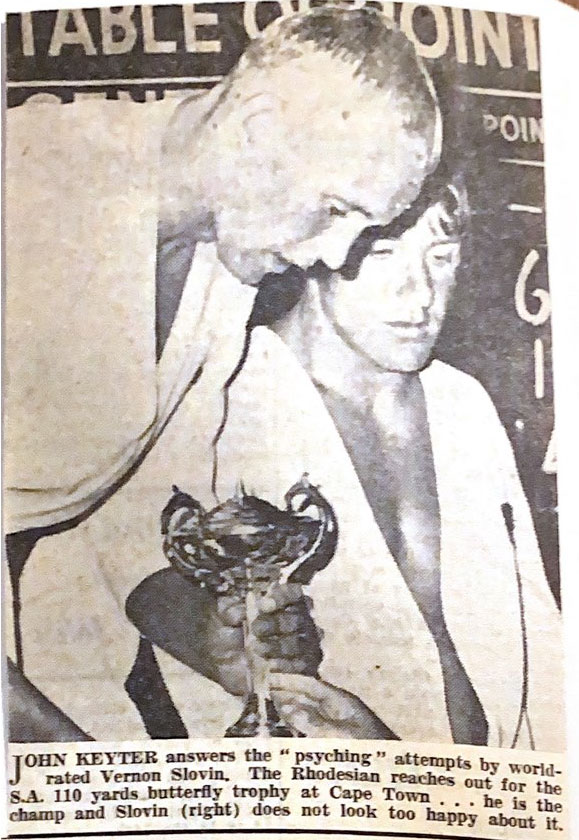
Medals and the Eastern Province trophy for the men's 100 butterfly award at the 1969 South African swimming Championships in Cape Town. Vernon Slovin on the right won silver, and Rodney Hamilton of Rhodesia on the left was third.


Keyter won eleven S.A. titles 1965-1970. Gold Medallist at the S.A. Games in 1969 (beat Empire Games Gold Medallist Ron Jacks and Olympic Silver Medallist Martin Woodruff in the 100m Butterfly). Held SA. Record in the 100m Butterfly, 58.8 seconds. Ranked in the world's top 10 for 1968/69. Rhodesia's Sportsman of the year in 1970.

Starved of international competition through political isolation and maintaining gruelling training schedules for only flimsy local challenges, Rhodesia's human torpedo John Keyter was eventually to get the chance to prove he was a world-class butterfly swimmer. He was in the team preparing for the greatest test of them all: the 1968 Olympic Games at Mexico City.

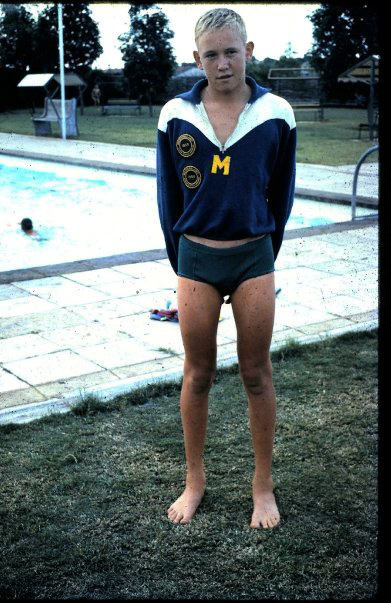
John Keyter at Mabelreign

An early photo of John Keyter at the Mabelreign in Salisbury, Rhodesia.

But big John's elation was short-lived and turned to bitter disappointment just three weeks before the Games, when news was received that the Mexican Government would not grant visas to the politically outcast Rhodesians. Keyter had long learned to live with the disappointment of being marooned from the outside sporting world following the Government's Unilateral Declaration of Independence, which virtually coincided with his rise to the top in swimming. But this was the bitterest pill, and he was pushed to the very verge of retirement. He already had seven South African butterfly titles ... why should he continue the gut-wrenching training schedules? Then in November 1968, a powerful young Springbok butterfly swimmer, Vernon Slovin, returned to South Africa after a four-year stint in America, where he had gained an international ranking and was at one time third in the world. Suddenly there was a fresh challenge on the home front yard. Keyter's competitive spirit was stimulated. This was a new challenge for me, said Keyter. It was a new incentive, and I found myself fighting again. And so the scene was set for the 1969 South African championships at Cape Town, where the Keyter-Slovin confrontation was billed as one of the week's major highlights. Slovin, of Western Province, was determined to reclaim the butterfly titles he had relinquished while in America. In the most magnificent race of his career, the nineteen-year-old Keyter rose to the occasion, timing his effort superbly and turning for the final lap of the 220 yards fly, half a body-length behind Slovin. With a powerful finishing burst he lunged for the wall to touch in the South African record time of 2 min. 12,1 sec., 0,3 sec. faster than Slovin.

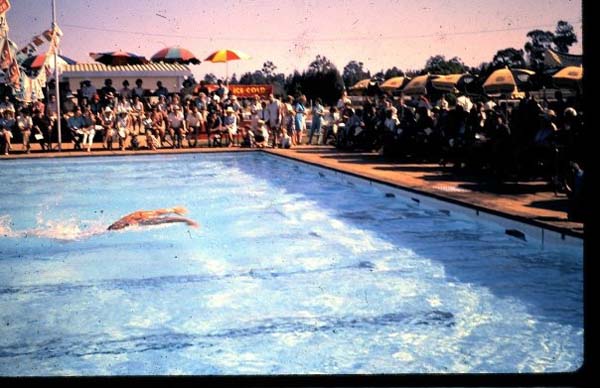
Mount Pleasant pool grand opening 1968. John Keyter demonstrating his superb butterfly

At the opening of the Mabelreign pool in 1968.


His confidence high, the blond 6 ft. 4 in., 195 lb. Rhodesian beat the Slovin challenge again the next night, smashing his own South African 110 yards fly record by 0,5 sec. returning a time of 59,2 sec. Slovin stopped the watches at one minute dead. The rivalry continued a short time later in the South African Games at Bloemfontein, but Keyter stepped onto the starting blocks, not only with Slovin but also with a Welsh wizard named Martyn Woodroffe, a Silver Medal winner in the 200 metres fly at the 1968 Olympic Games. The trio fought a thrilling battle for the 100 metres butterfly Gold Medal and it needed elaborate timing equipment to separate them, Keyter getting the verdict in 59.6 sec., with only four hundredths of a second between them all. It was confirmation, indeed, that Keyter was world-class, even though in the 200 metres fly the previous night, he had had to be content with the Bronze Medal, with a time of 2 min. 12,9 sec. behind Woodroffe (2 min. 11,9 sec.) and Slovin (2 min. 12,3 sec.).

Keyter's achievements that year were enough to make him a popular choice as the country's Sportsman of the Year and he was awarded the magnificent John Hopley Memorial Trophy at a glittering banquet at Salisbury. He said: I’m tremendously proud to have been honoured. All the things I’ve missed in the past and will miss in the future don't seem to matter anymore. But I only wish I could have done more to earn this. He remains the only swimmer to have been honoured as the nation’s supreme sportsman. Born in Kent, England, where his father was a flying instructor during the War, John Keyter came to Rhodesia with his parents at the age of eight months. Tall, with powerful shoulders and a slim waist he was destined to be the country's greatest male swimmer, pocketing eleven South African butterfly titles before retiring after the 1970 championships.

Keyter’s debut into the cauldron of Currie Cup competition was at Port Elizabeth in 1964, where he showed his rich potential as a fourteen-year-old by finishing fourth in the 220 and sixth in the 110 yards butterfly events. But in 1965 he was to set the ball rolling for Rhodesia’s golden era of men's swimming, with champions like Chris Sherwell, Tony Fisher, Tony Mellon, Bob Hatherley, Rodney Hamilton, Ken Borain and Kim Brant dominating the South African men's scene until the early 1970s. Keyter, now fifteen, took both fly titles at the South African championships at Salisbury in 1965, and he retired in 1970 with both records and without losing the records in the pool. In these, the most gruelling of events, he had dropped just one championship race out of twelve over six straight years. That gave him an outstanding tally of eleven South African titles and made him the double champion five times, with Harold Pearce spoiling a perfect record by snatching the 110 fly in 1966 at Durban. Keyter also won fifteen senior Rhodesian championship titles in his career from 1965-70 (one fewer than Rodney Hamilton’s record), but he still holds the distinction of being the most prolific winner of South African titles produced by this country.

During the Keyter era, Rhodesian swimming was at a crest and the national team won the inter provincial Ellis Brown trophy for points aggregate at the South African championships for seven successive years, from 196U-bb. Concerned that a land-locked country like Rhodesia, with a European population of no more than that of an average South African city, could have such a vice-like grip, the South African Amateur Swimming Union contrived to curtail this domination. They decided to separate diving and swimming into two aggregate competitions, thus effectively depriving Rhodesia of the Ellis Brown Trophy, because at the time, Rhodesia was totally dominating diving to the extent that they occasionally took the first four places in both men's and women's competitions.

Despite all his hard work in the water, Keyter went on only one overseas tour with the Rhodesian team, in 1966. This pioneering team was: Chris Sherwell (backstroke), H. Grimmer (individual medley), T. Fisher (breaststroke), John Keyter (butterfly), Terry Rossiter and Don Liebermann (both diving), Miss M. Simpson (freestyle) and Miss Lindsey Grant-Stuart (diving). Their manager was Ron Ward. The team took part in the Amateur Swimming Association championships at Blackpool and the diving at Crystal Palace, London, with Keyter placed third in a controversial finish to the men’s 110 yards butterfly. The first three clocked the same time. On five occasions Keyter suffered the frustration of watching Springbok sides go overseas while he stayed at home, because, as a Rhodesian, he was not eligible. Despite this serious drawback he reached a remarkable standard, thanks largely to his dedicated coach Frank Parrington, who guided four South African butterfly champions, starting with Syd Gibbons in 1962, then Keyter, Rodney Hamilton and David Lowe, who cracked Keyter’s yellowing South African marks at Cape Town in 1977 and then headed for America on a scholarship. Keyter was offered tempting American scholarships at various times, but declined them.

In 1966 the famous Indiana University coach, Dr. J. Councilman, said in a letter to Frank Parrington: I am very interested in John Keyter and the possibility of his attending Indiana University next year when he graduates from secondary school. I have been following his progress and I think he is one of the outstanding young butterfly swimmers in the world. I think if he had gone he would have developed into a world beater, said Parrington wistfully. By the end of 1970, having missed the Olympics and various Commonwealth Games, the spark went out in John Keyter. He had grown tired of swimming, averaging more than 200 miles a season in training, and clocking up an estimated 2 000 miles in his entire career.

He had won every honour open to him and there was no prospect of the country's stifling isolation ending. 1 can promise there will be no comeback for me, he said. Being a swimmer is a Spartan business and nobody can be a machine for ever. My major regret is that I never had the chance to swim in the Olympic Games. -

GLEN BYROM in Rhodesian Sports Profiles

1964 Port Elizabeth -SA Swimming Champs -Rhodesian Haircuts -Rogan Etheredge, John Keyter, Tony Fisher, Nigel Gardener and Ron Prior

1965 - Keyter, Stewart, Etheredge, Whiteley, Sherwell, Martin, Cameron, Freer, Fairbairn, Harris, Sharpe, Burden, Bezuidenhout, Newsome

1965 - Rhodesians Marilyn Sidelsky and John Keyter

1968 - Mike Bolstridge, John Keyter and Rodney Hamilton

1968 - Sarie Bezuidenhout (Rhodesia), Jeanne Warren (Canada), Carol-Figueroa (Transvaal), Tyrone Tozer (South Africa) and John Keyter (Rhodesia).

1969 - John Keyter with the John Hopkins Trophy awarded to the Rhodesian Sportsman of the Year.

Don Lieberman, Terry Rossiter, Manager Ron Ward, Lindsay Grant Stuart, John Keyter, Coach Tom Connell, Margaret Simpson, Chris Sherwell, Hilton Grimmer, Tony Fisher
  • Hits: 40

Fialkov

Kevin Fialkov

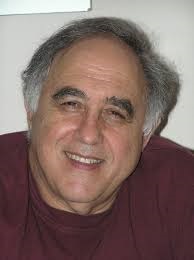
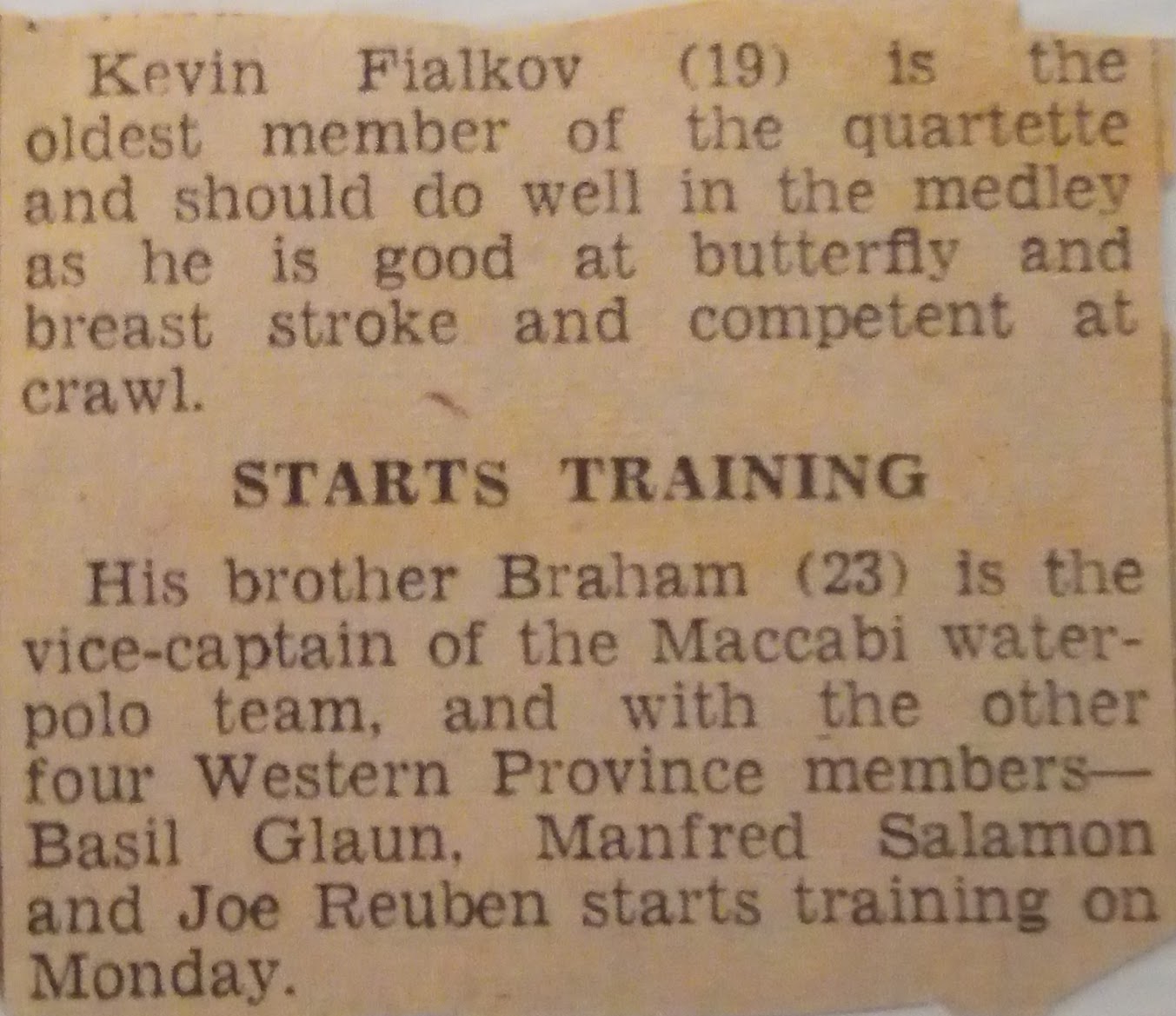
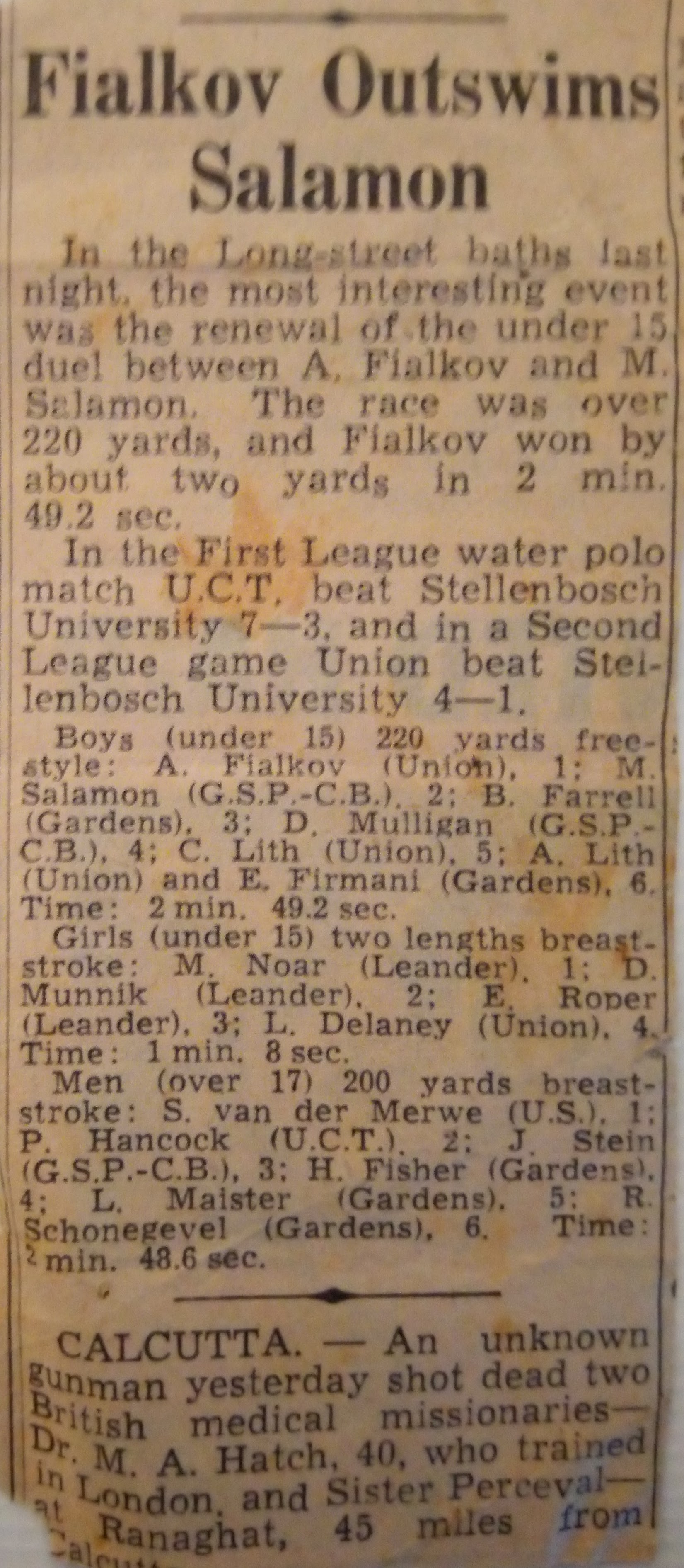
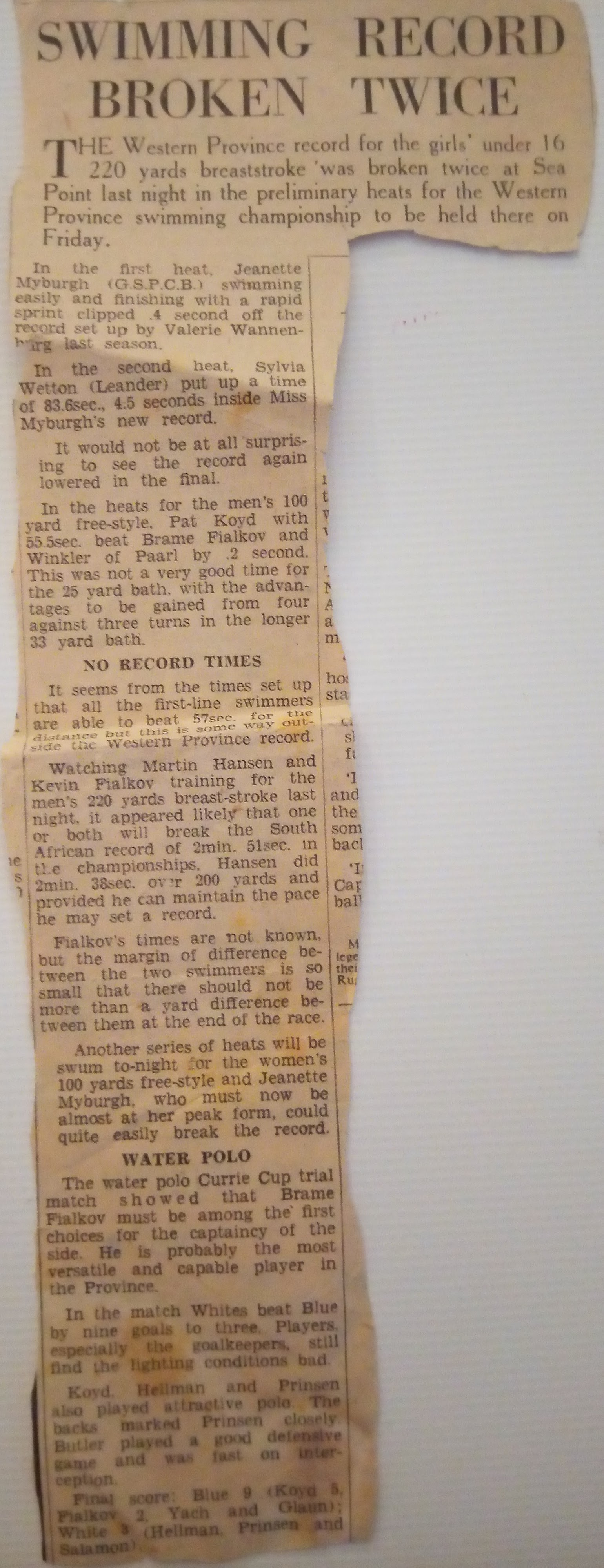
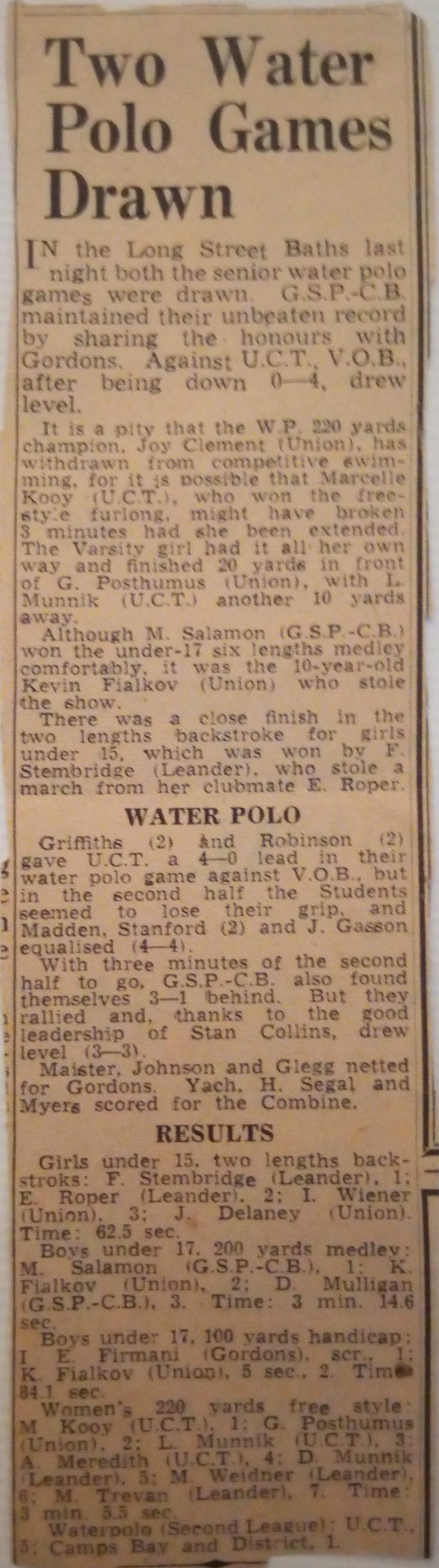
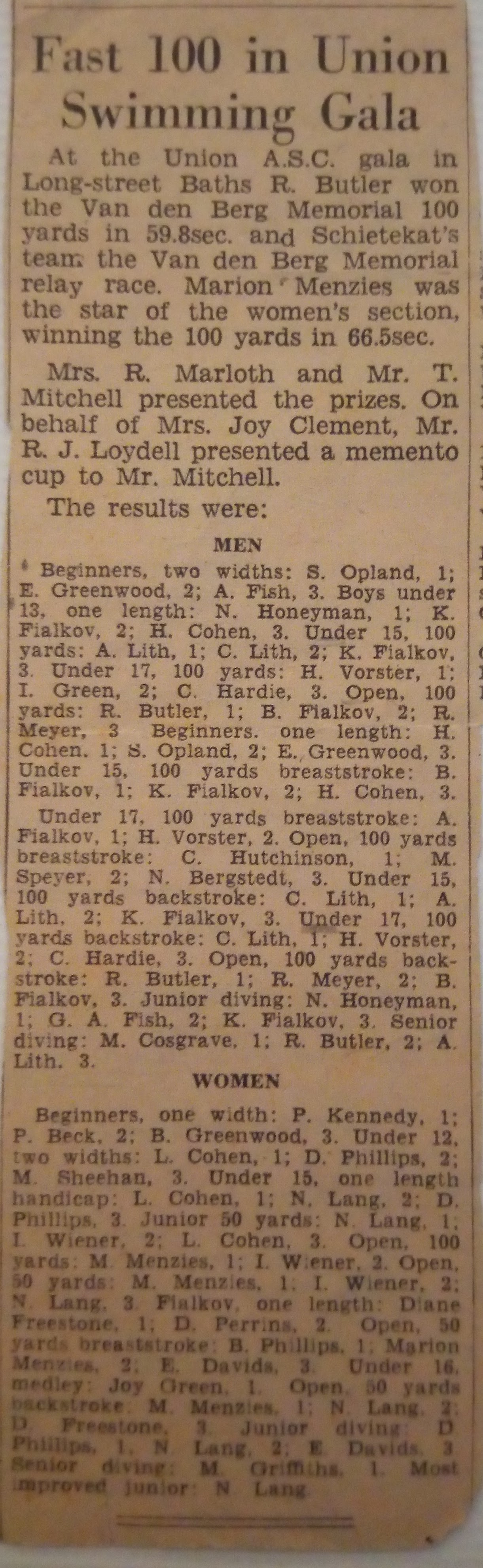
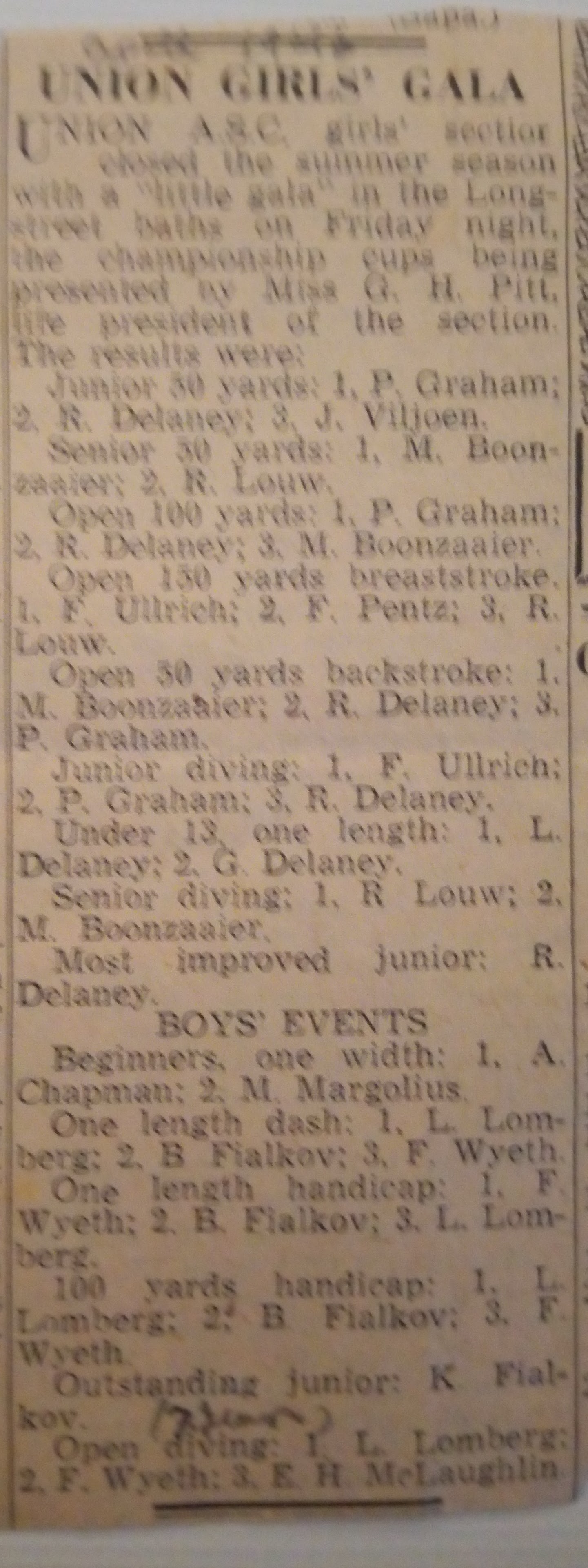
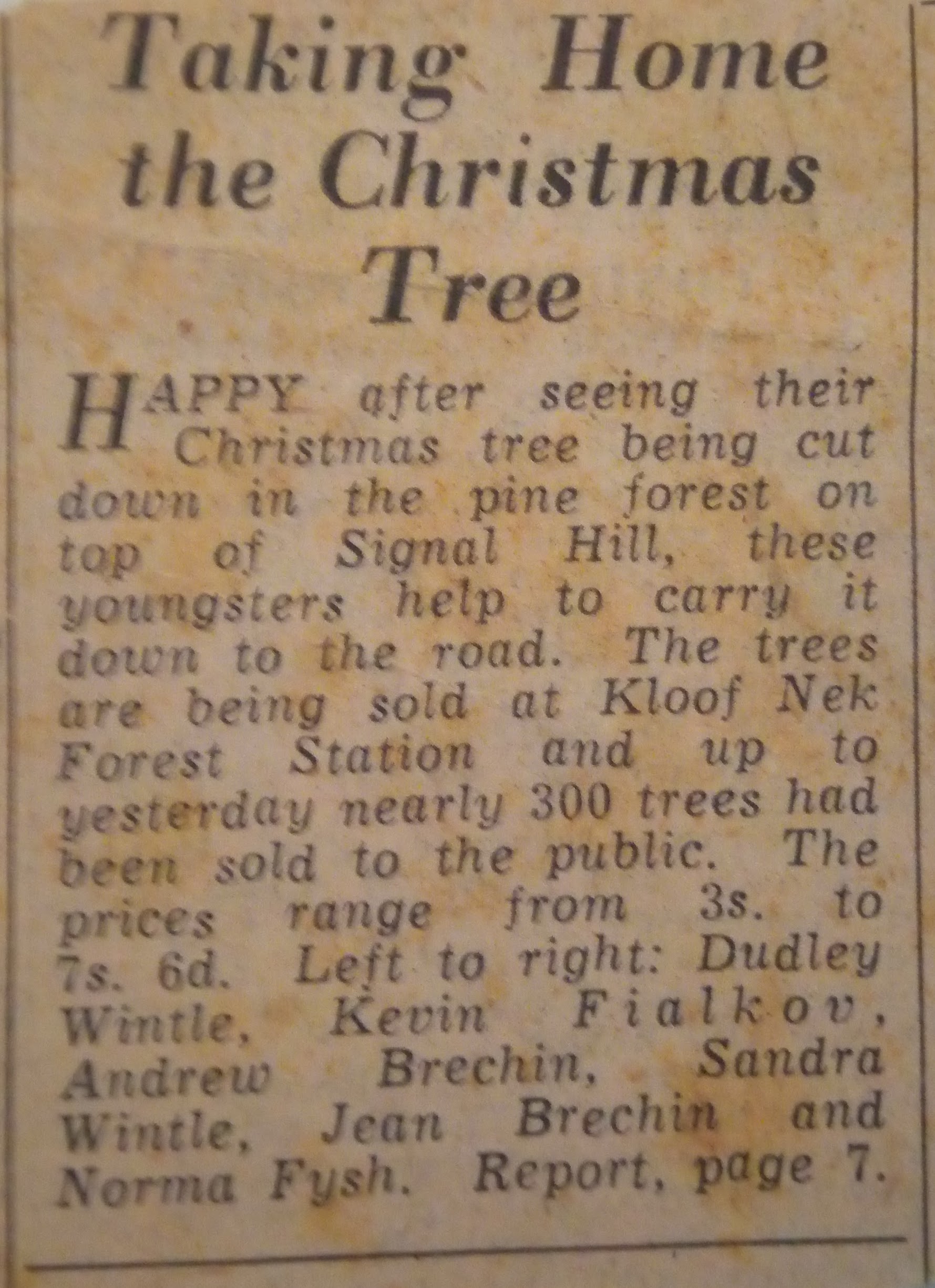
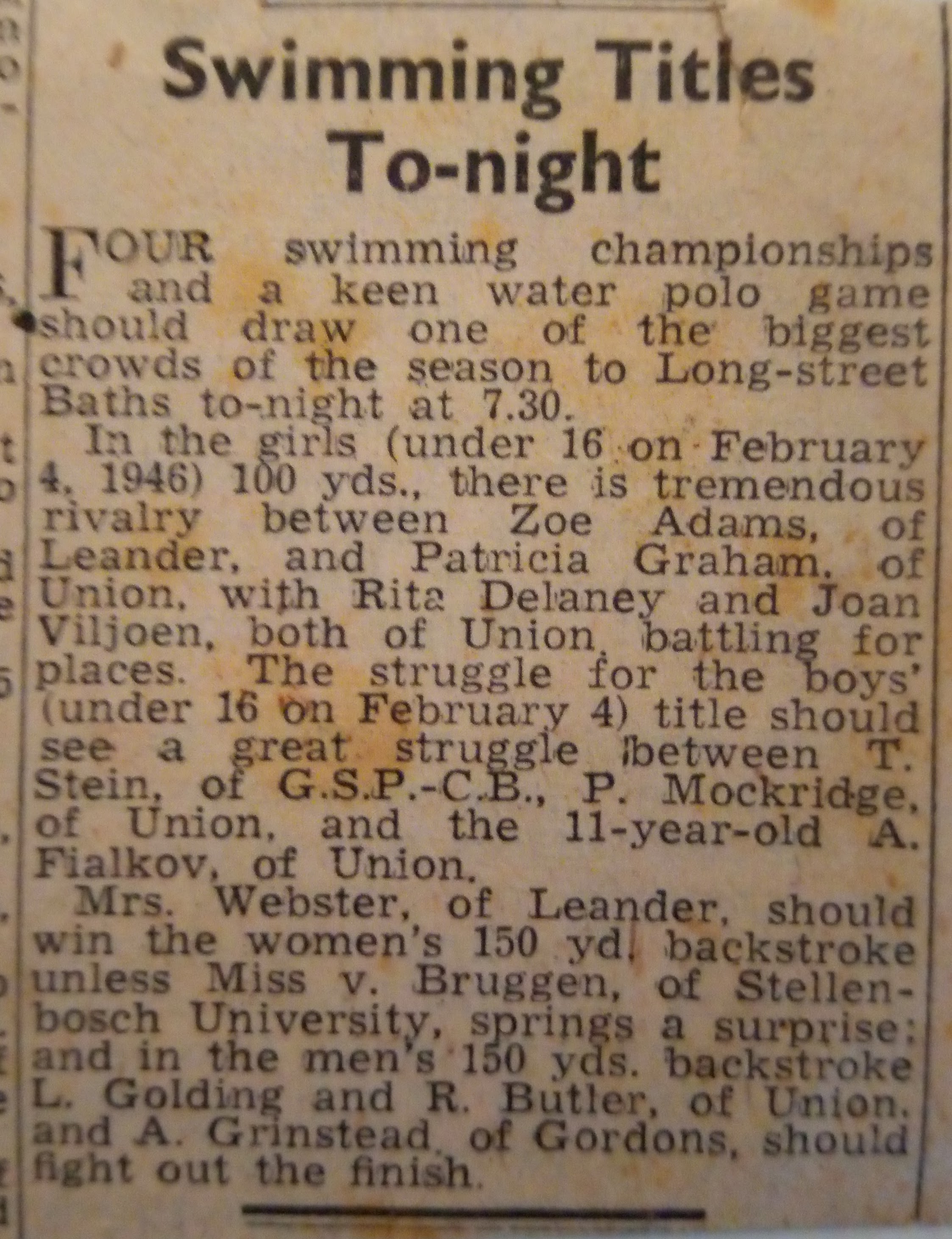
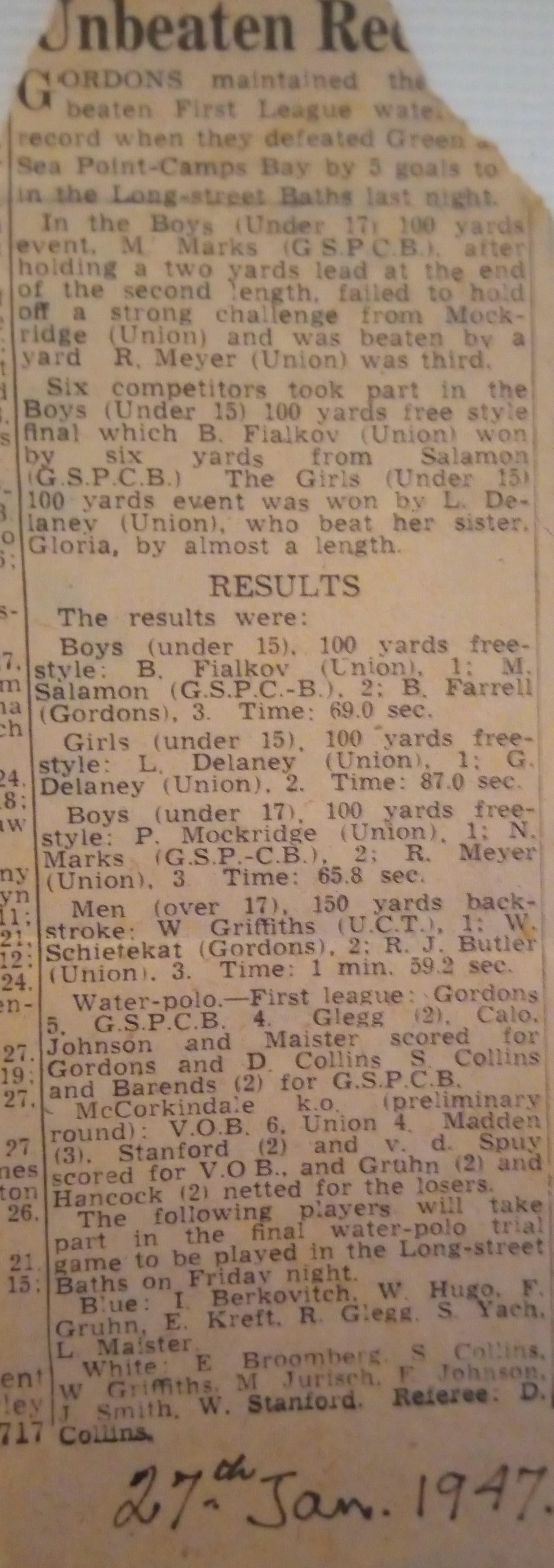
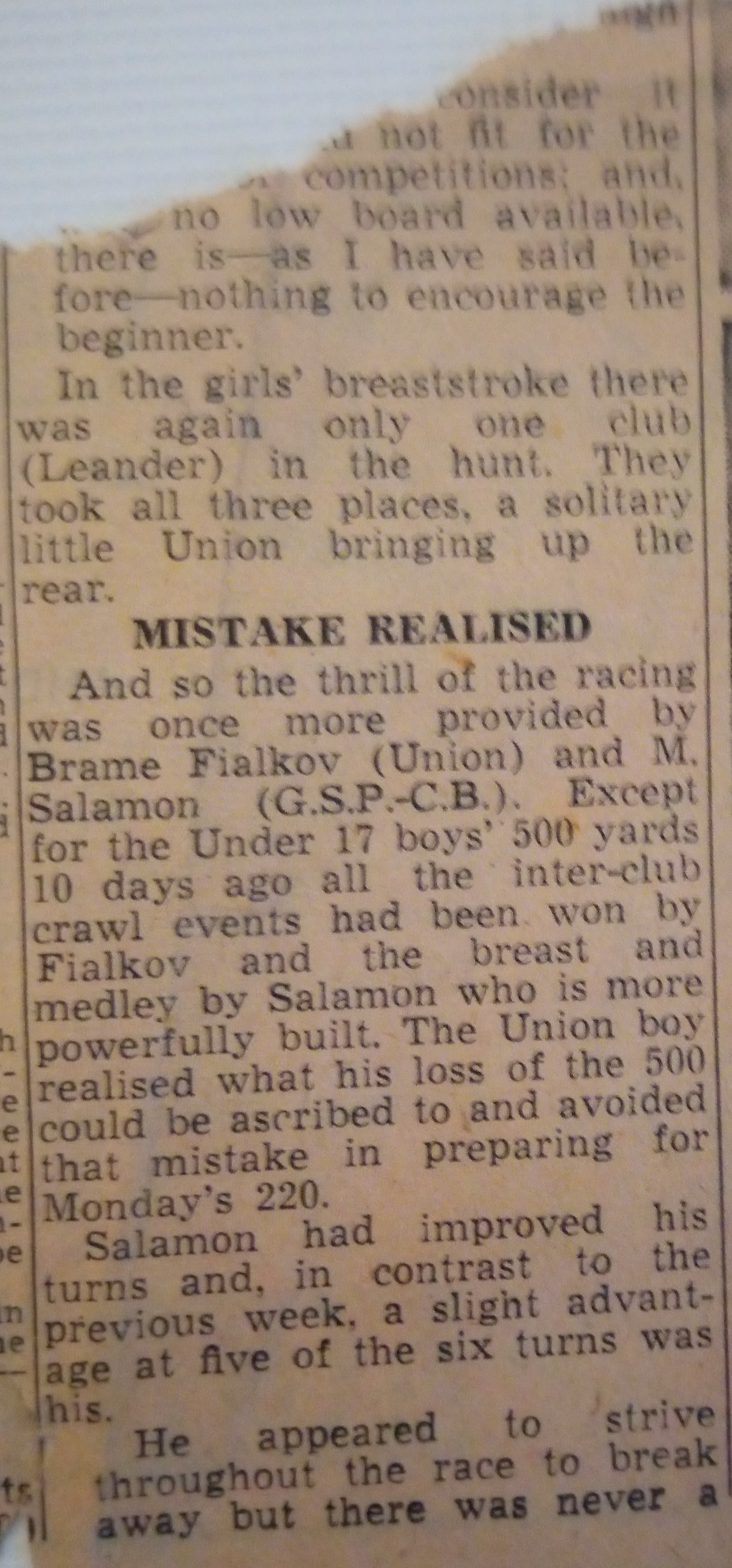
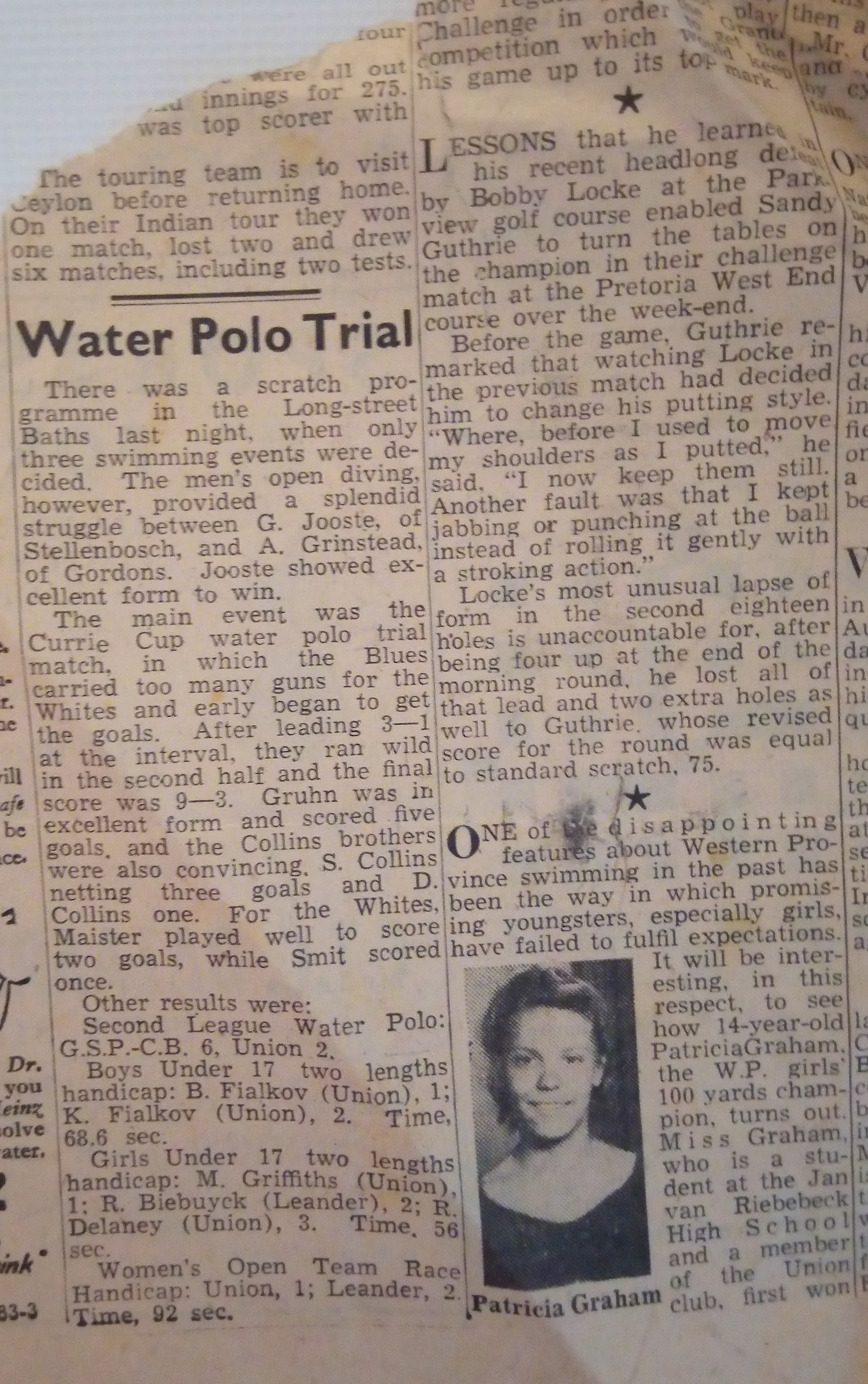
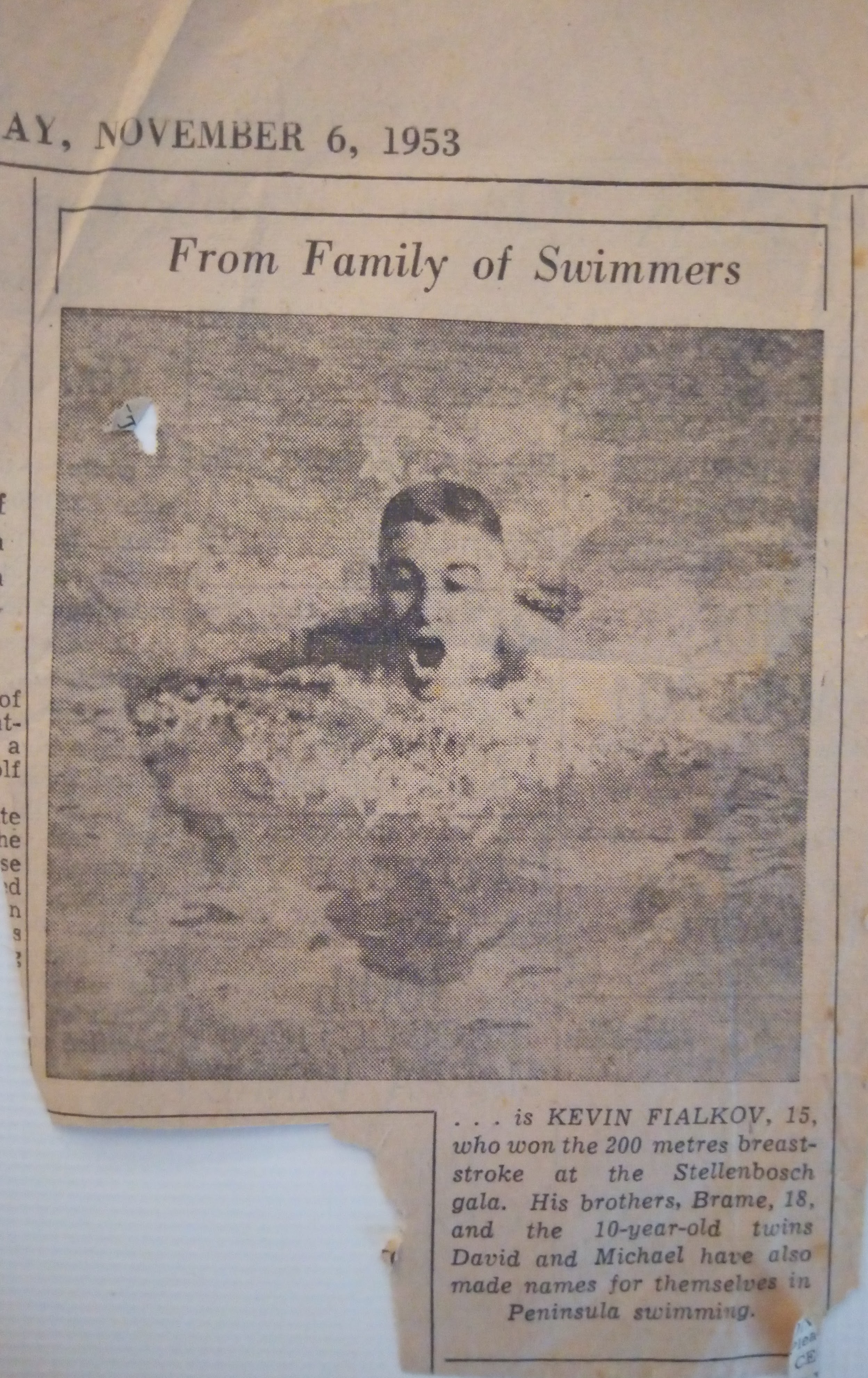
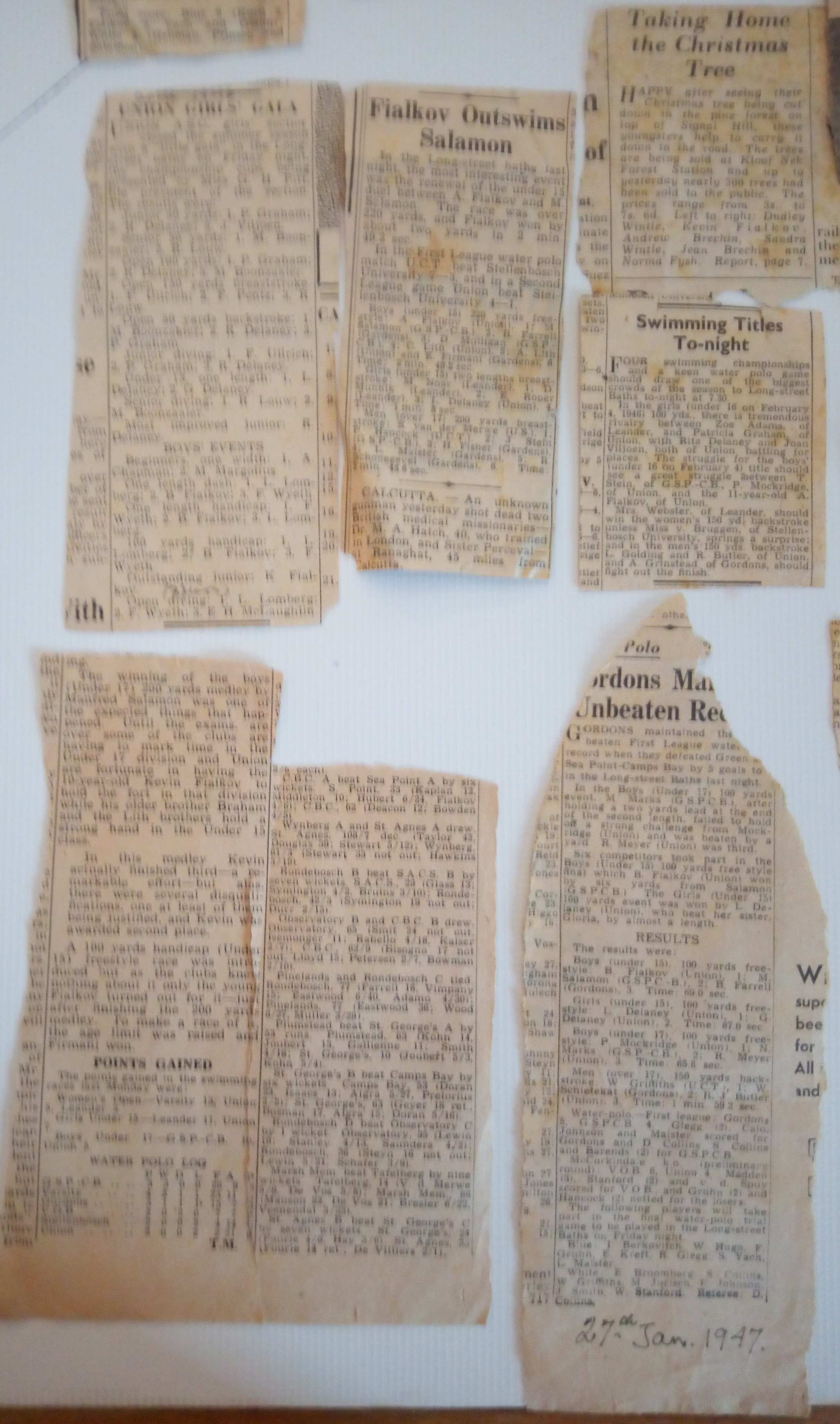
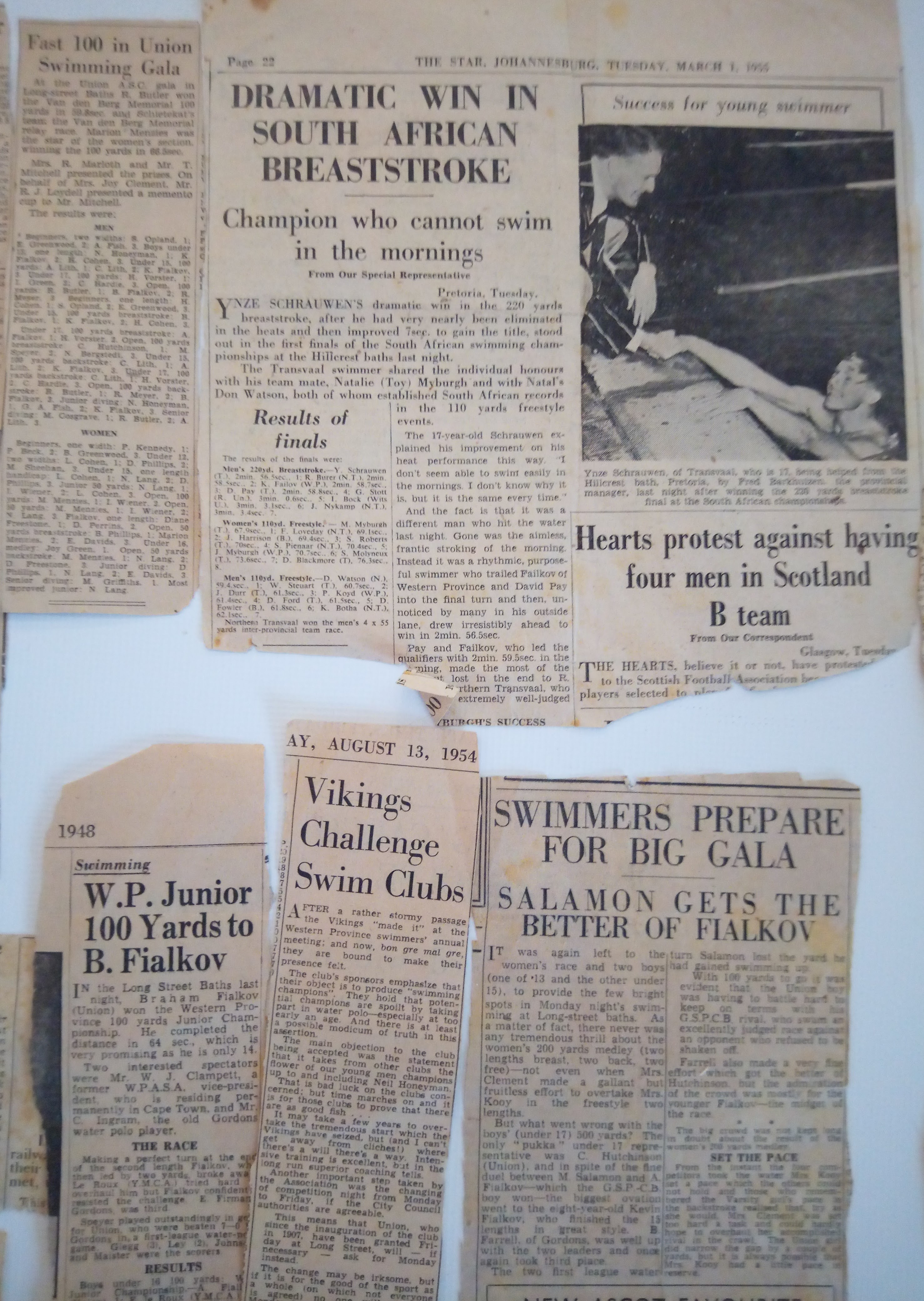
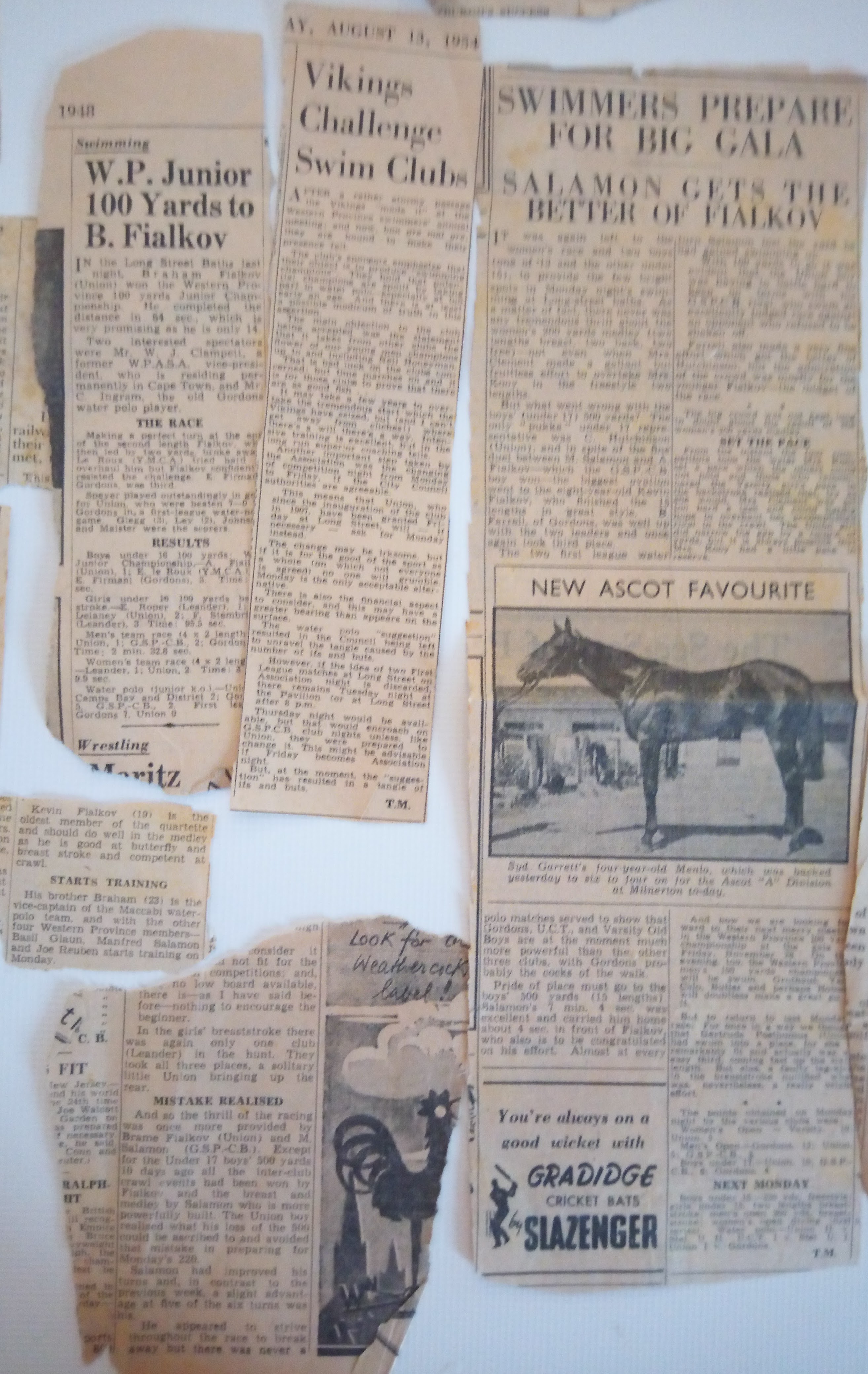
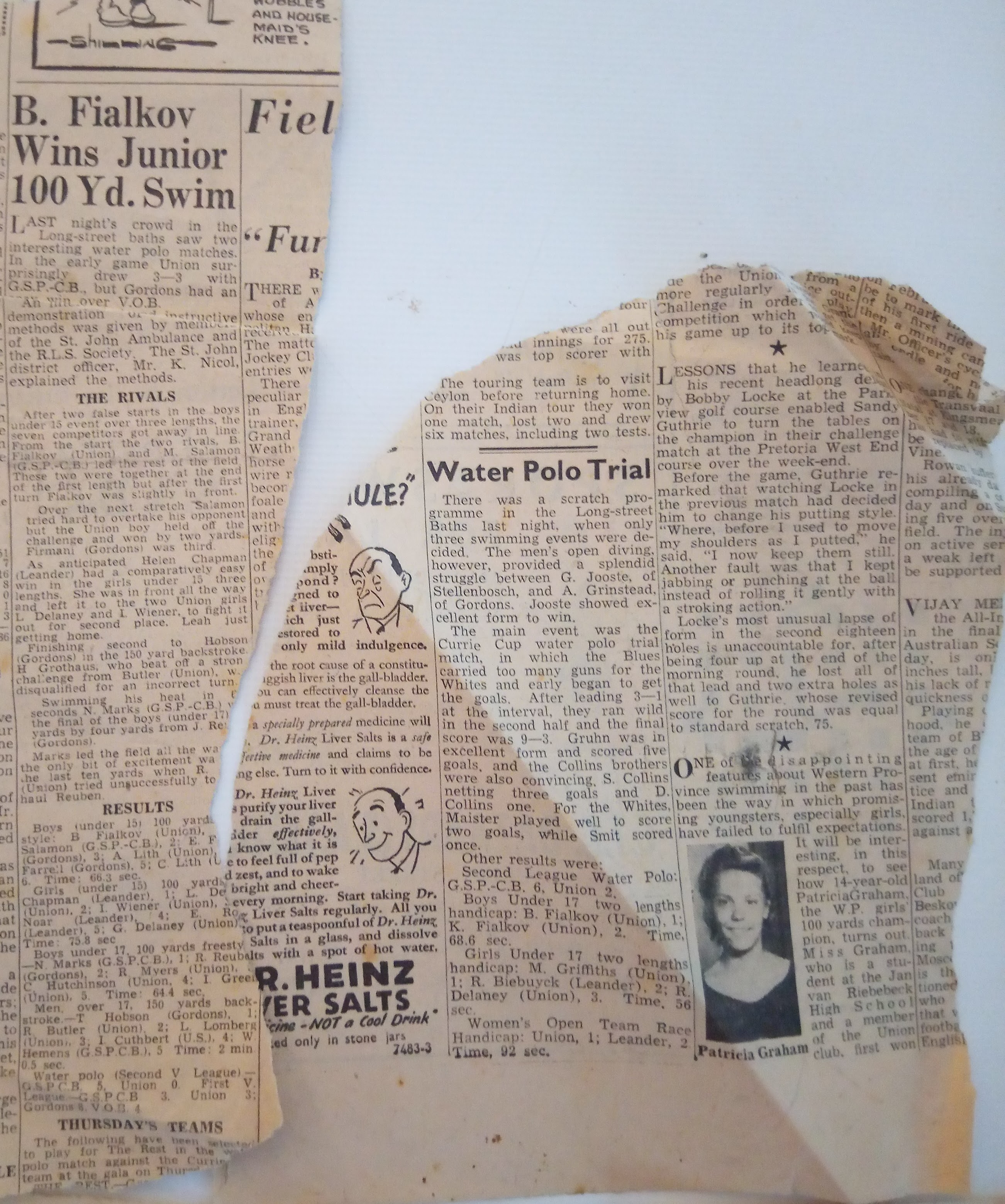
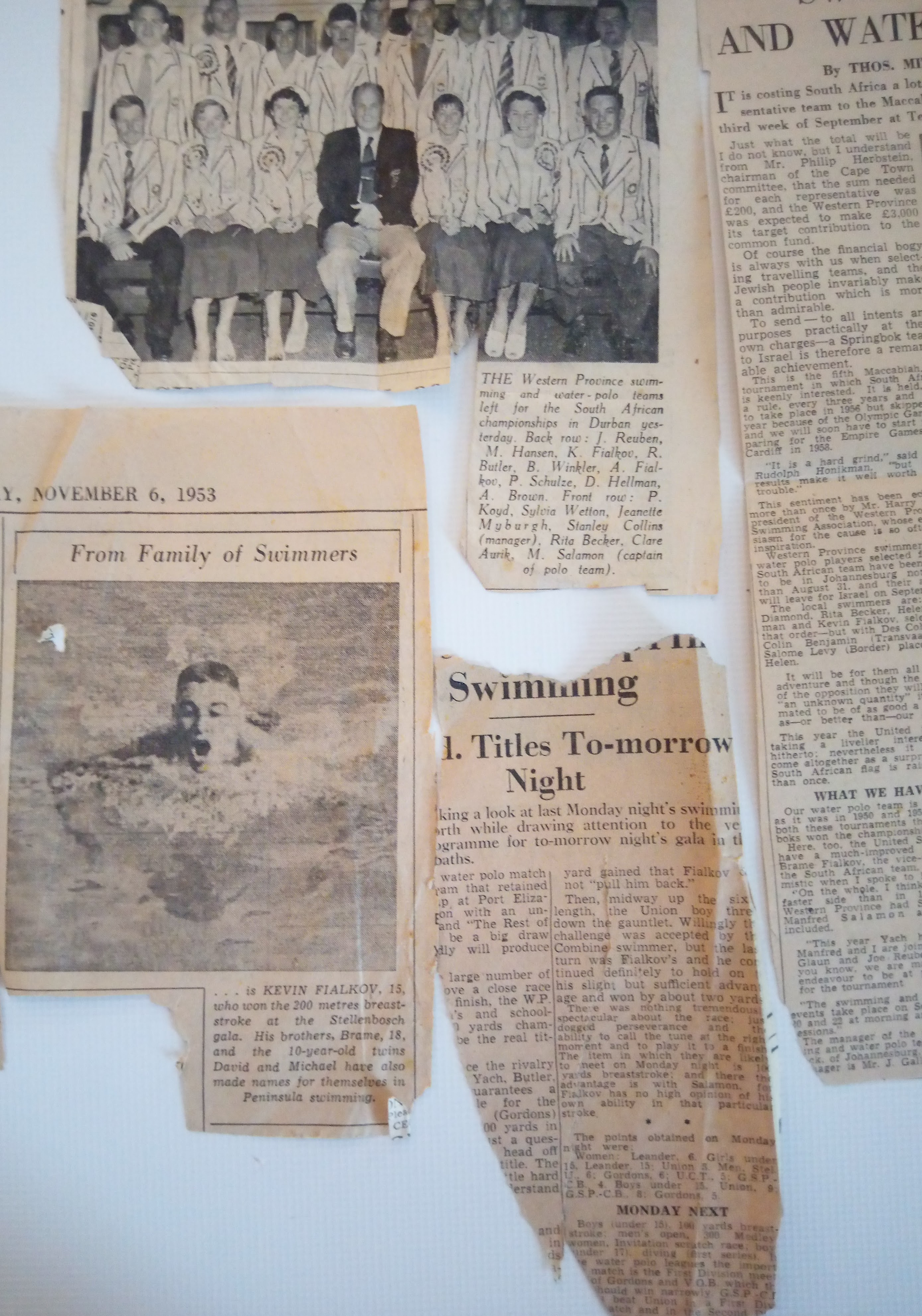
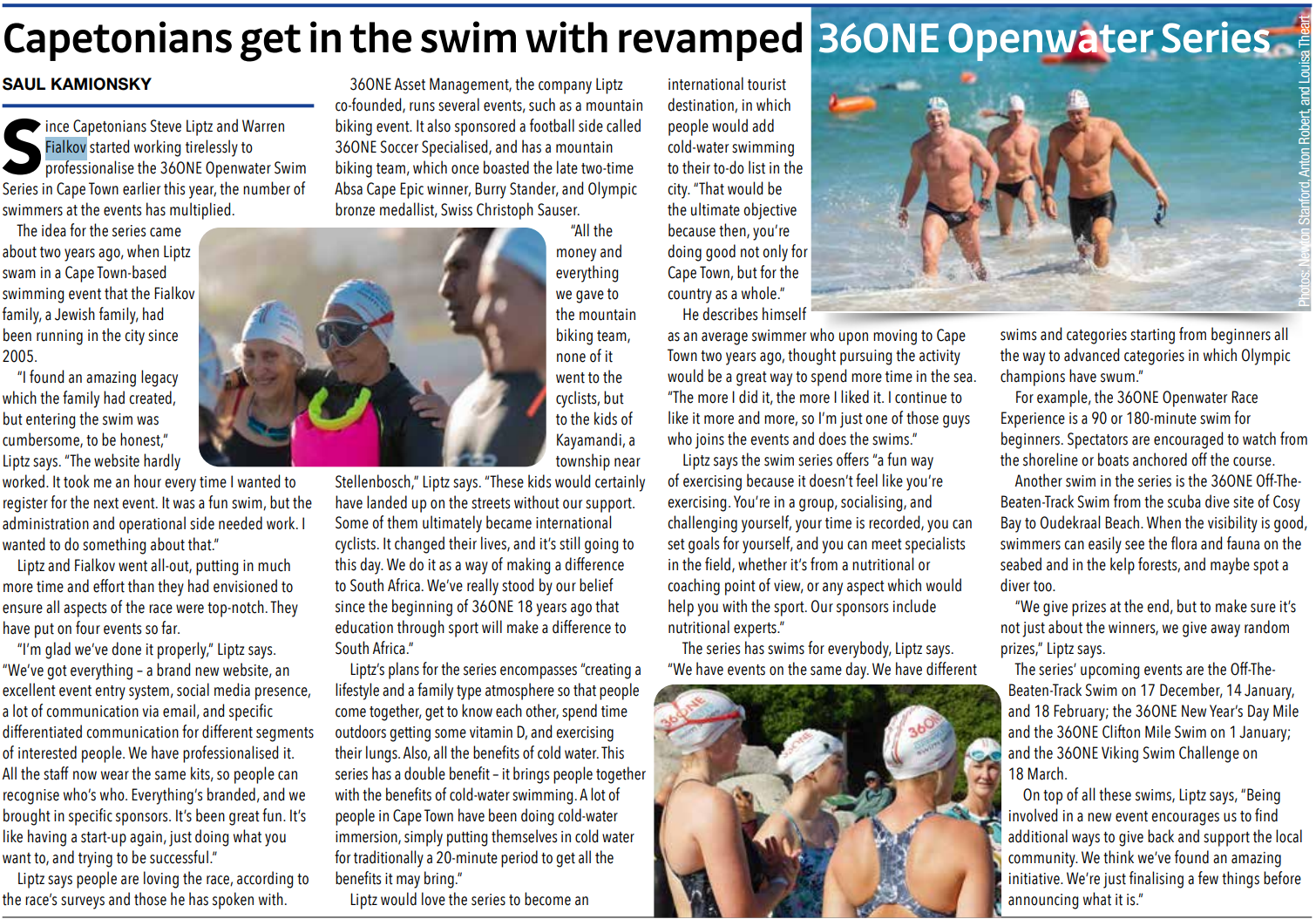
Kevin Fialkov was born in Cape Town on 23 April 1936, and he died there on 18 November 2016, at the age of 80. He played a big part as a competitor and a coach in swimming, water polo and surf lifesaving in the Cape over many years. 

Kevin Fialkov : an accomplished open water swimmer, who’s whole family seem to be water-babies. Kevin coaches a high-intensity 45-minute session in the evenings and was the person who helped me plan my swim with regard to tempo, milestones & keeping my mind occupied for the swim.

Andy Pfaff
English Channel swimmer 2007


City man made swimming fun

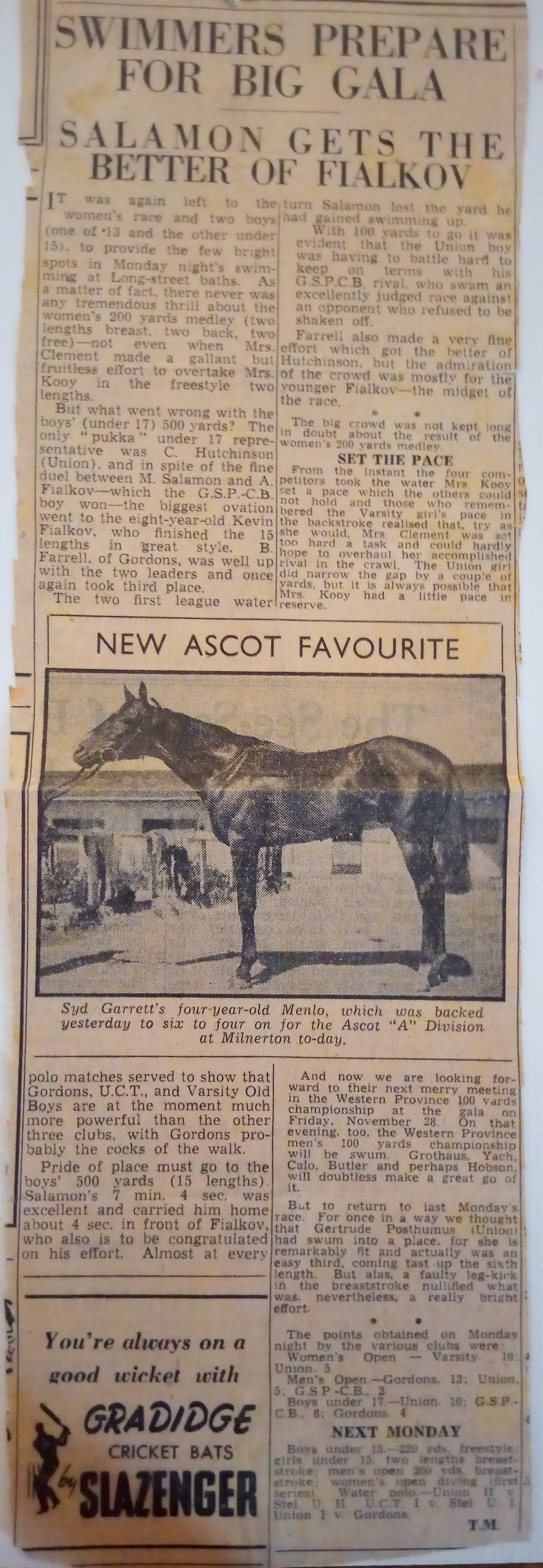
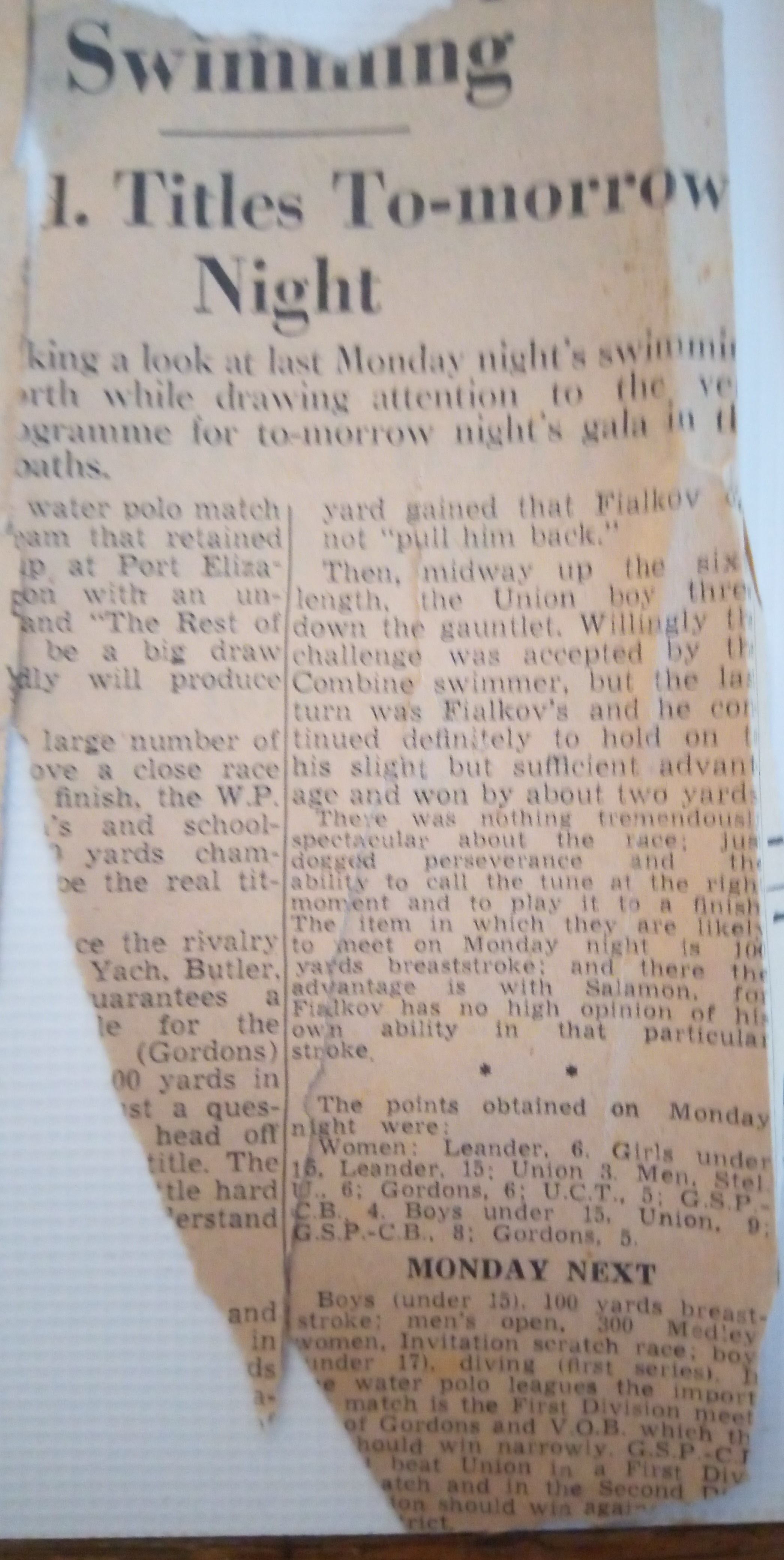
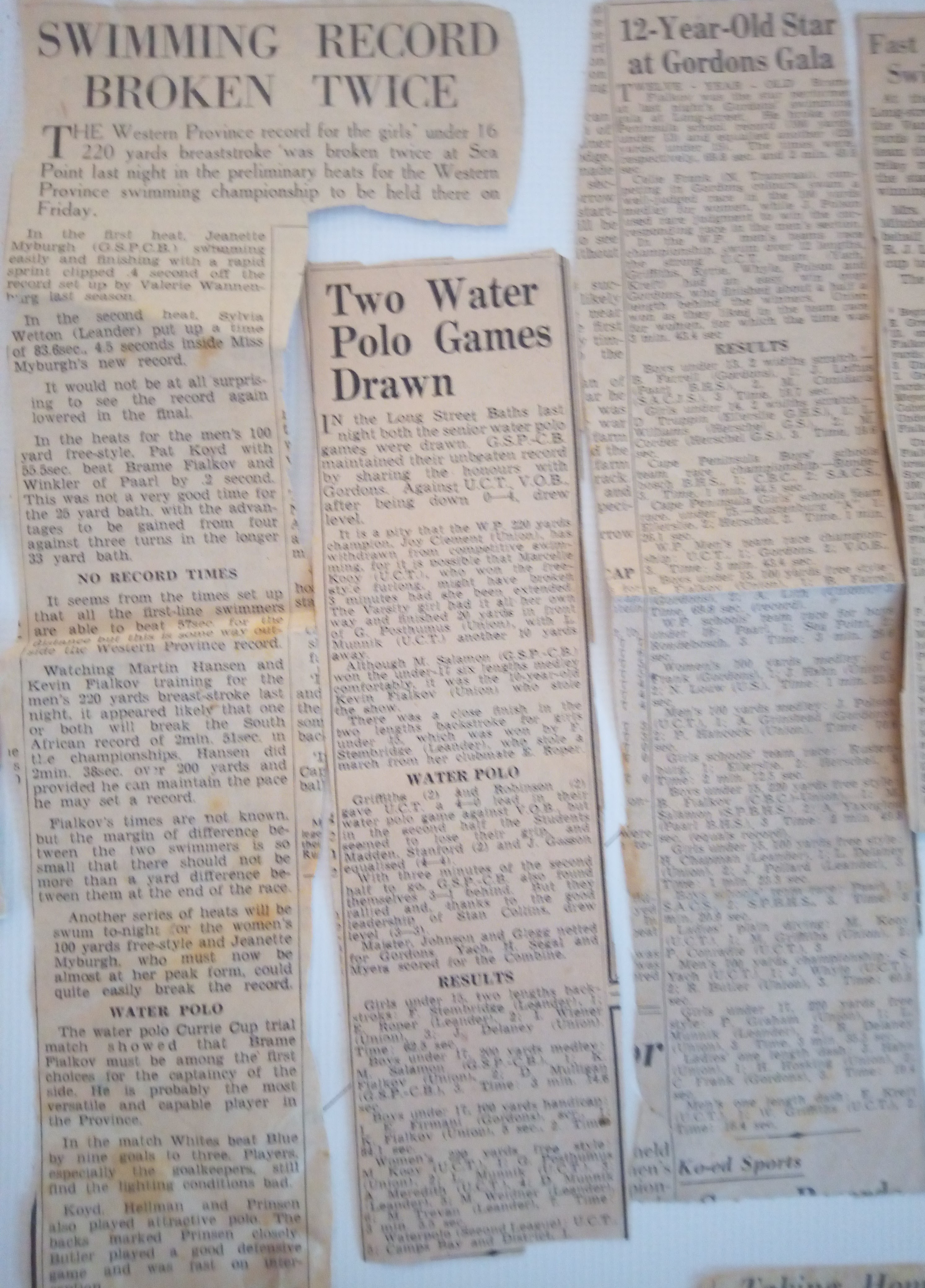
CAPE Town lost one of its most colourful swimming legends this week, with the passing of Kevin Fialkov. Over the past 60 years, Fialkov quietly helped shape every facet of swimming in Cape Town, from pool racing, water polo, life-saving, masters swimming, and open-sea swimming to coaching, a discipline he excelled at and became renowned for.

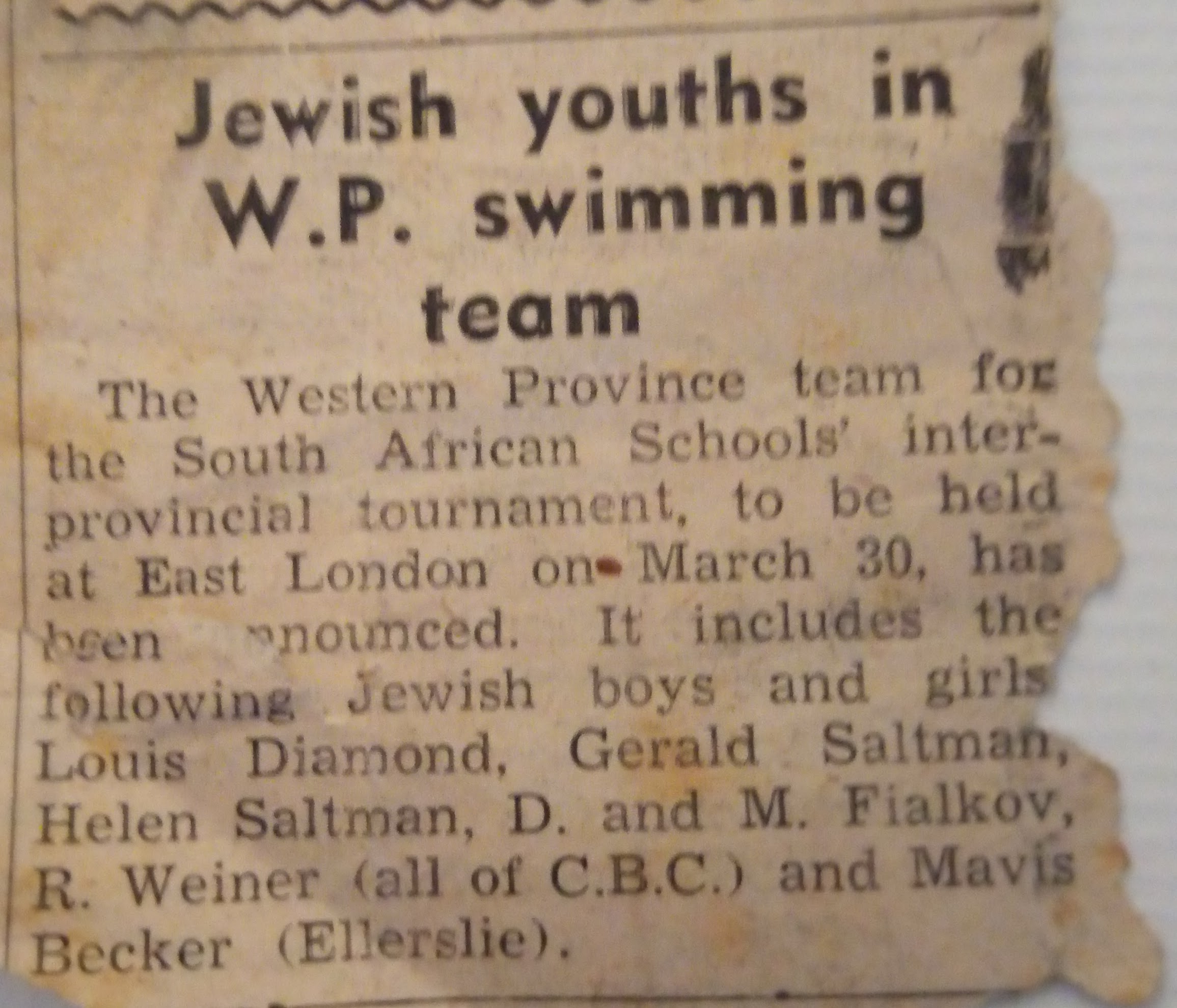
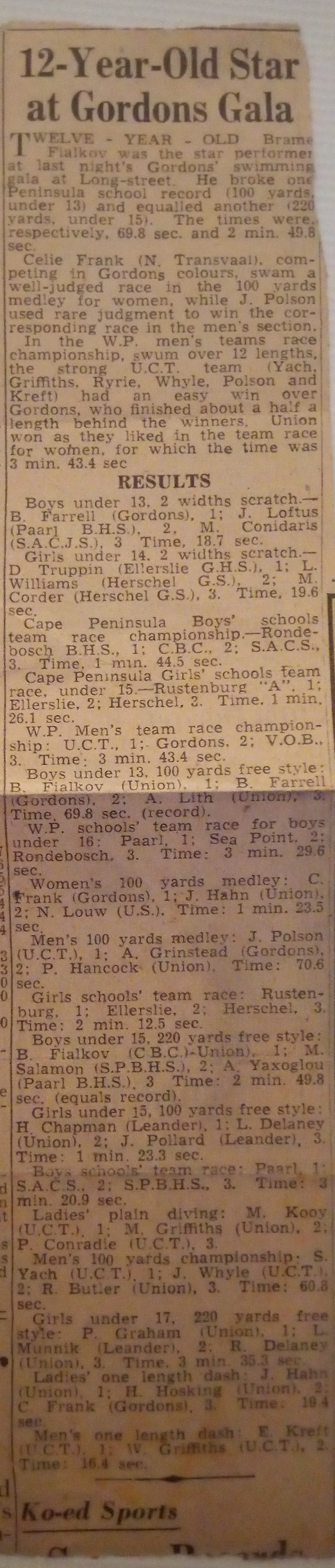
Born on April 23, 1938, to Aaron and Nita Fialkov in Sea Point, Fialkov was the second of four brothers, Avram and twins David and Michael. Educated at Christian Brothers College in Green Point, Fialkov’s swimming prowess was evident at school, where his records stood for many years.

He matriculated in 1955 and became one of the founders of the Clifton Surf Lifesaving Club the following year. Lifesaving at Clifton played a vital role later in his life, as he relived his youth through the activities of his three sons, Laurie, Warren and Deon.

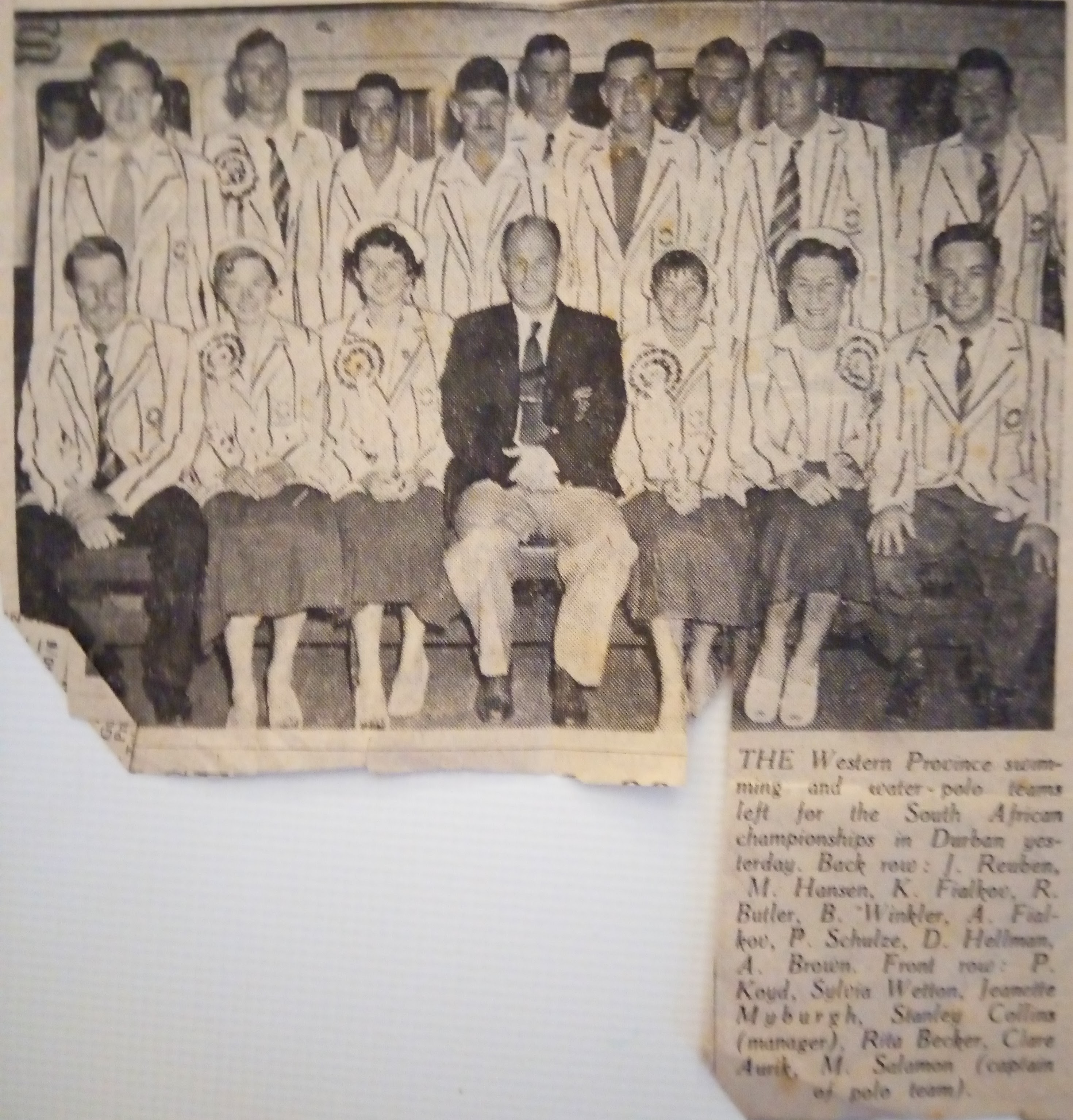
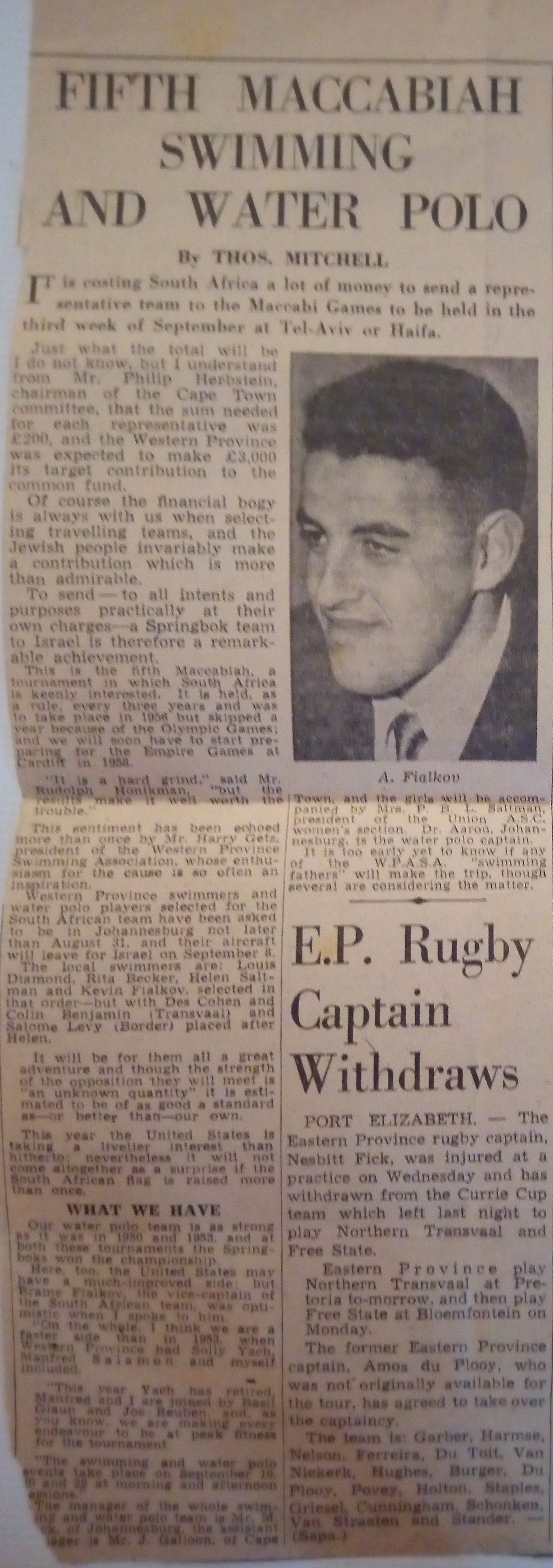
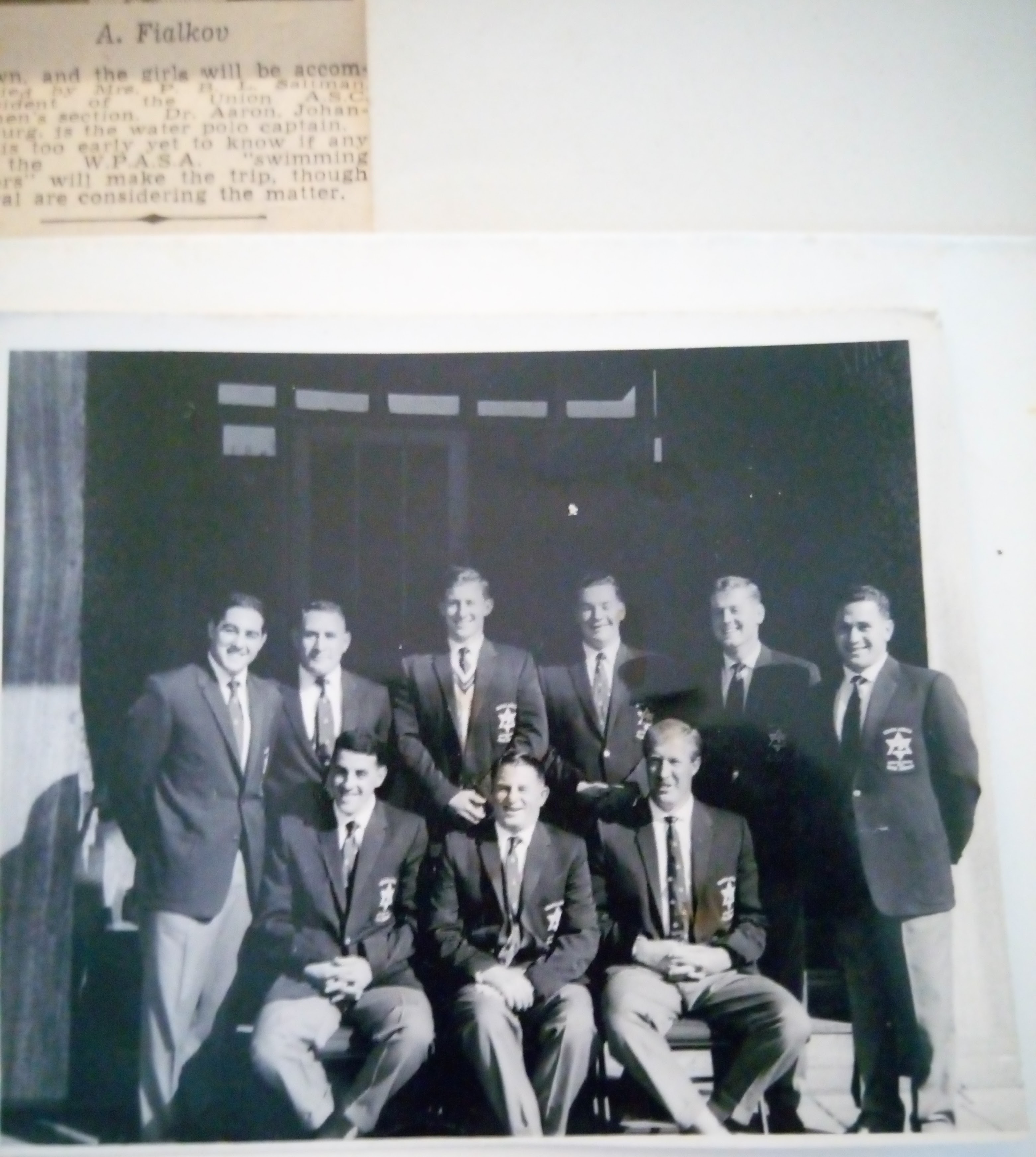
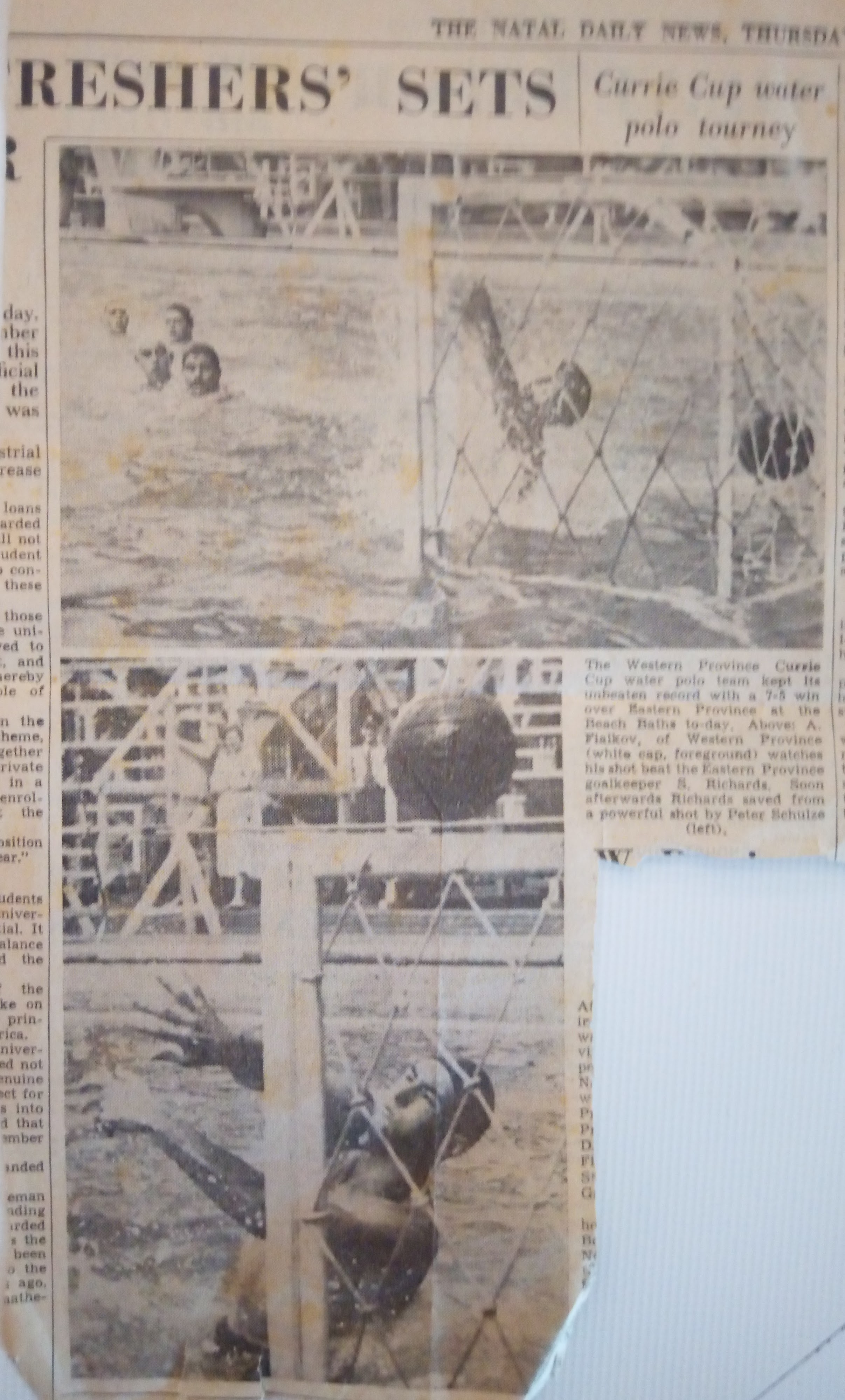
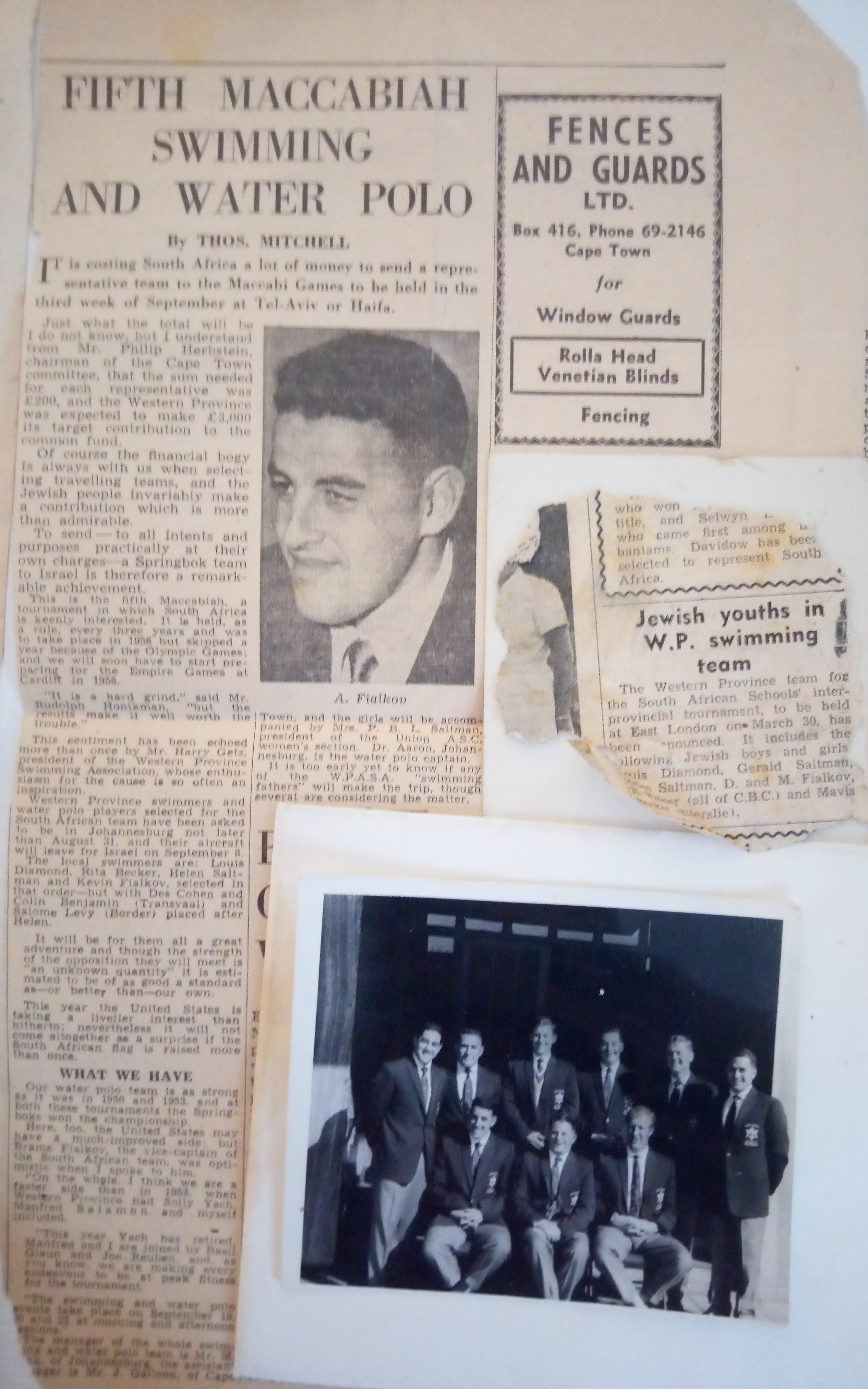
Fialkov represented Western Province in both swimming and water polo in the 1950s, finishing 3rd in the 400m IM at the 1956 South African swimming championships in Durban. He earned SA Maccabi Colours for both disciplines in 1964.

He married his school sweetheart, Hazel Baker, after dating her for 13 years. Fialkov studied part-time and trained as an accountant and was accepted as a member of the Public Accountants and Auditors Board as well as the SA Institute of Chartered Accountants in 1972.
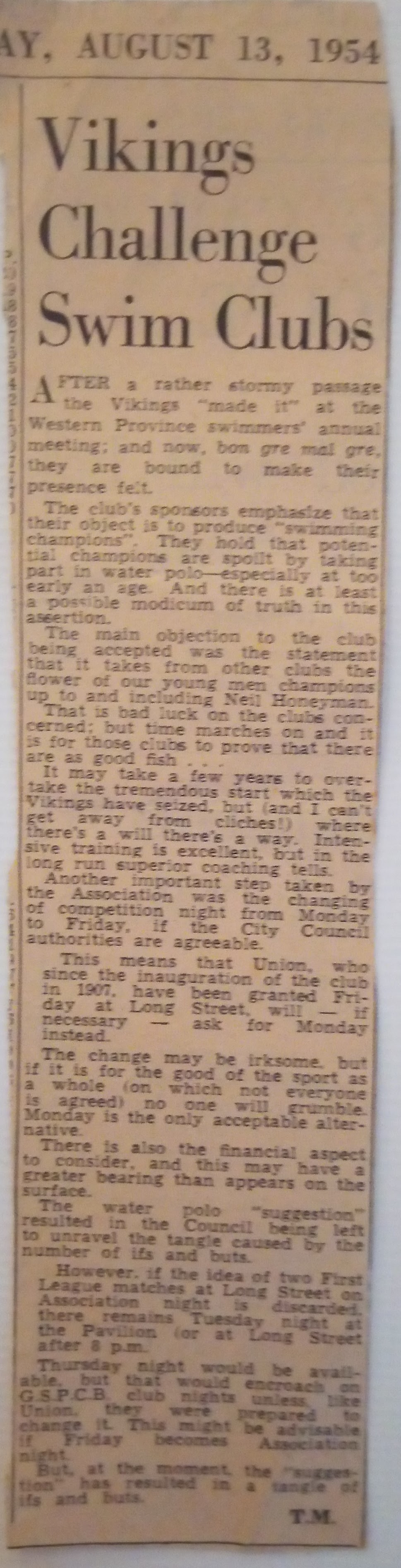
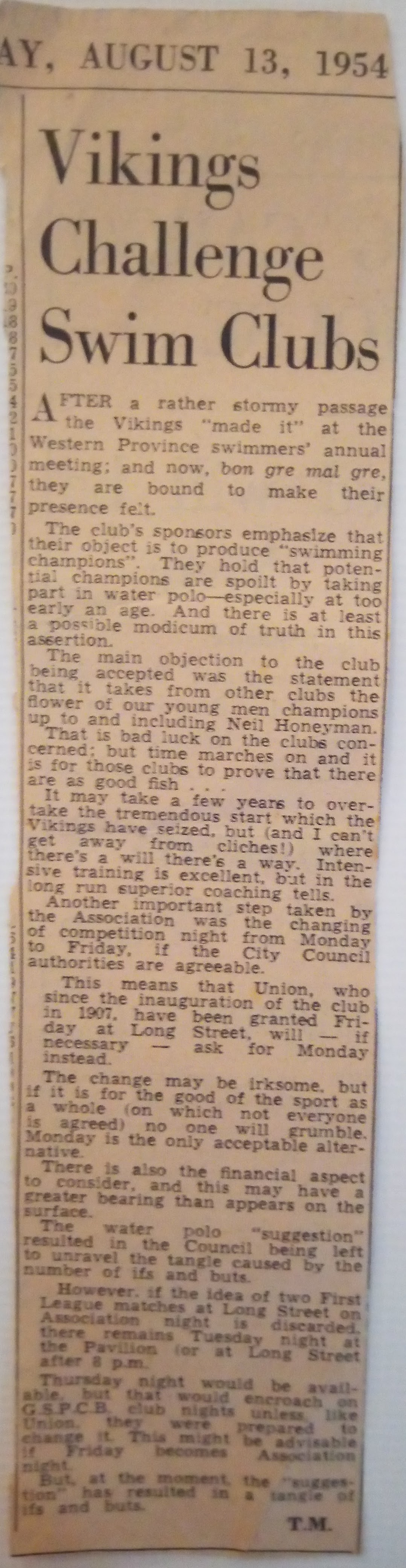
In the 1980s he was instrumental in launching masters (age-group) swimming and introduced the Masters Mile phenomenon at the Sea Point Pavilion and kept a register of everyone’s mile time, 32 lengths at the “old” Sea Point Pavilion.
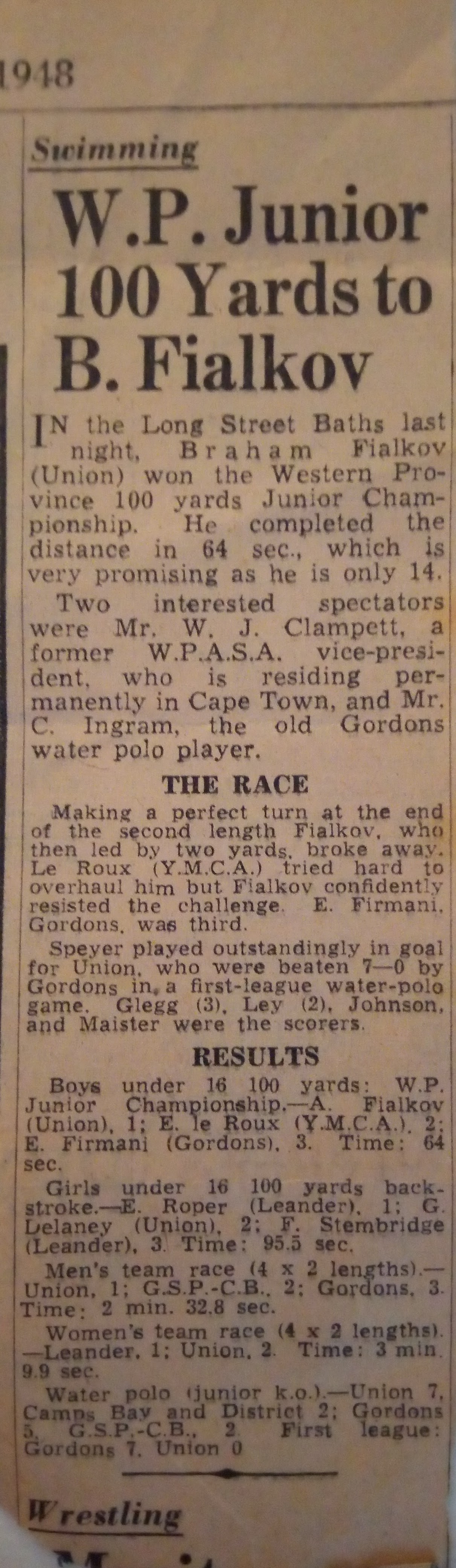
Coaching came naturally to Fialkov, and he imparted his knowledge to strangers he saw at the pool. He coached Theo Yach for his first English Channel swim in 1996, and accompanied Lewis Pugh on his first Robben Island crossing.

Over the years, Fialkov’s accounting practice grew, and he became a financial adviser to many.

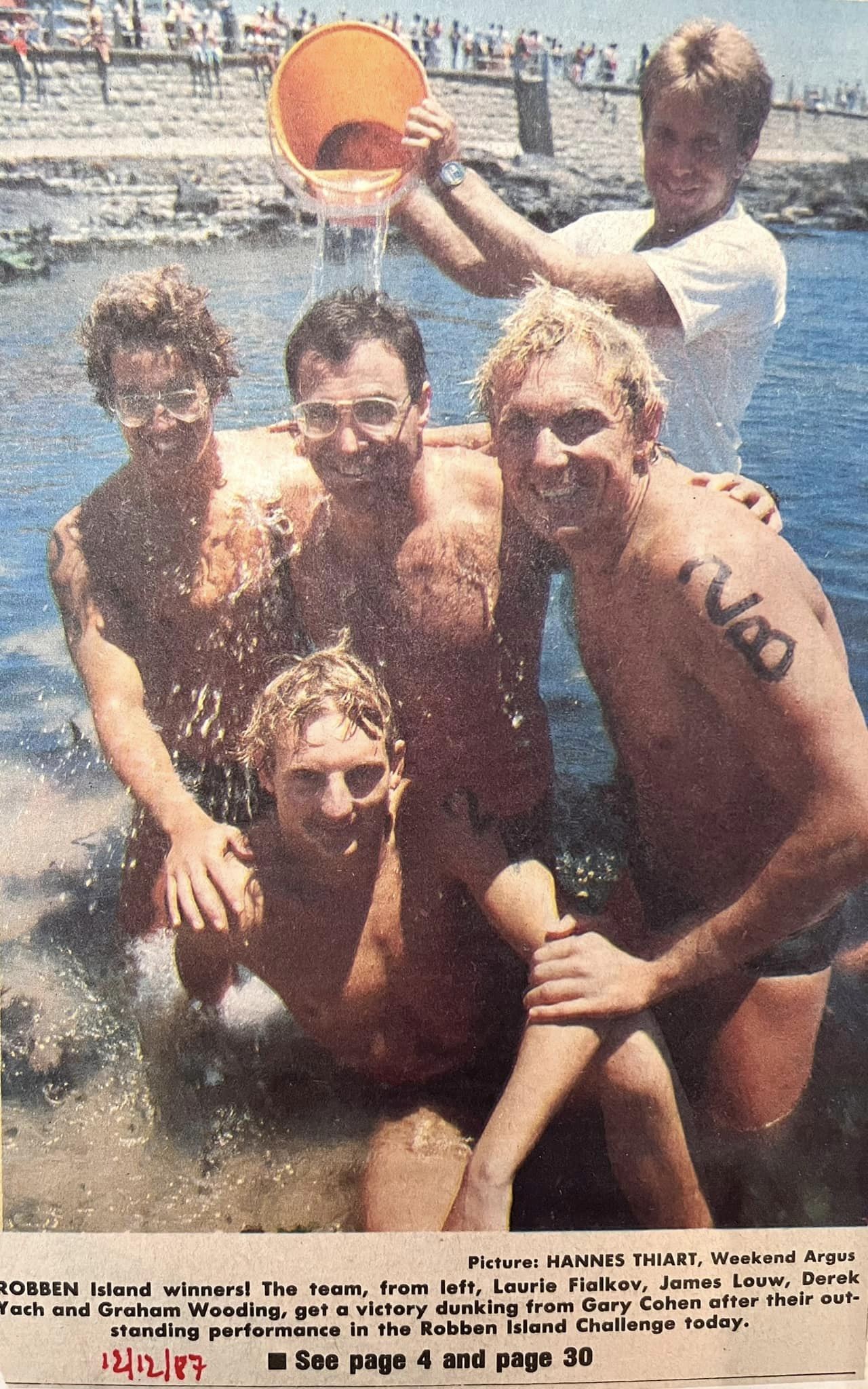
With the resurgence of Robben Island swimming in the late 1980s, Fialkov trained his firstborn Laurie, as an 11-year old, to swim from the Island to Three Anchor Bay, a distance of 12km in 1983. The age record still stands.

Hazel Fialkov passed away in 1996. Fialkov married Joy Gordon years later. The relationship ended in 2007.

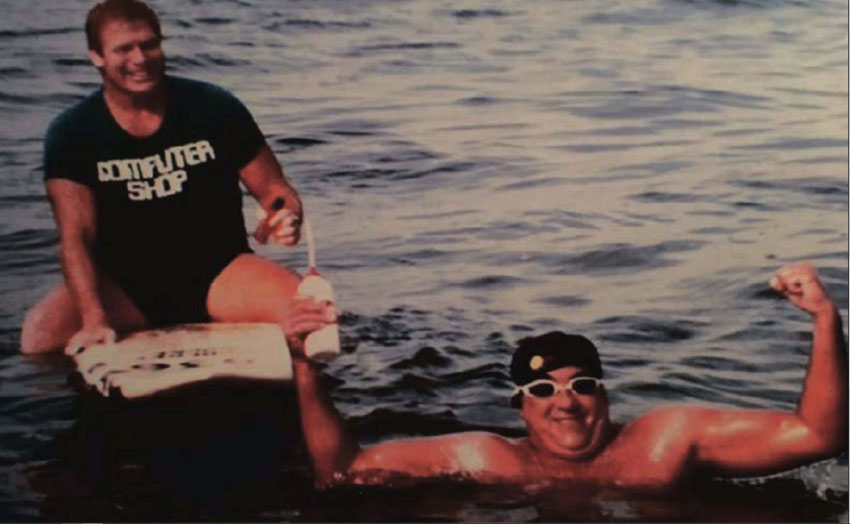
Fialkov swam Robben Island every decade since his 30s. In 2008, he completed a Robben Island to Blouberg race. Almost half the field withdrew because of poor conditions and icy water, but obstinate Fialkov completed the race at 70, becoming the oldest person to swim the crossing, in 3:55.

He would select the date and no matter the conditions and water temperature he would stick to it. A case in point was his 22km swim from Three Anchor Bay, around Robben Island to Melkbos in May 1995. Swum in huge 4m swells, an exhausted Kevin reached Melkbos eight hours later, only to be confronted by 3.7m waves breaking onto the rocks. Using his life-saving acumen, he body surfed over the reef, safely to shore. The record remains today.

Kevin found happiness in the last years with his partner, Gaby Pieper, with whom he enjoyed life till his death on November 18. Kevin leaves Pieper and his three sons, Laurie and his wife, Joon and their children, Kingston and Sofie and Warren and fiancé Andrea Levitt and Deon.

  • 1

  • 2

  • 3

  • IMG 20230103 053723 996

  • IMG 20230103 053741 904

  • IMG 20230103 053951 705

  • IMG 20230103 054029 025

  • IMG 20230103 054056 794

  • IMG 20230103 054245 814

  • IMG 20230103 054303 878

  • IMG 20230103 054338 800

  • IMG 20230103 054342 711

  • IMG 20230103 054405 629

  • IMG 20230103 054434 112

  • IMG 20230103 054501 335

  • IMG 20230103 054542 410

  • IMG 20230103 054558 575

  • IMG 20230103 054616 346

  • IMG 20230103 054655 966

  • IMG 20230103 054716 167

  • IMG 20230103 054829 792

  • IMG 20230103 054854 270

  • IMG 20230103 054919 058

  • IMG 20230103 055256 984

  • IMG 20230103 055316 896

  • IMG 20230103 055322 527

  • IMG 20230103 055339 401

  • IMG 20230103 055423 862

  • IMG 20230103 055428 718

  • IMG 20230103 055522 071

  • IMG 20230103 055615 486

  • IMG 20230103 055826 023

  • IMG 20230103 060015 241

  • IMG 20230103 060404 103

  • IMG 20230103 060603 134

  • IMG 20230103 060610 198

  • IMG 20230103 060617 860

  • IMG 20230103 060626 338

  • IMG 20230103 060632 172

  • IMG 20230103 060637 734

  • IMG 20230103 060646 983

  • IMG 20230103 060656 643

  • IMG 20230103 061820 504

  • IMG 20230103 061922 420

  • 2023 Warren Fialkov

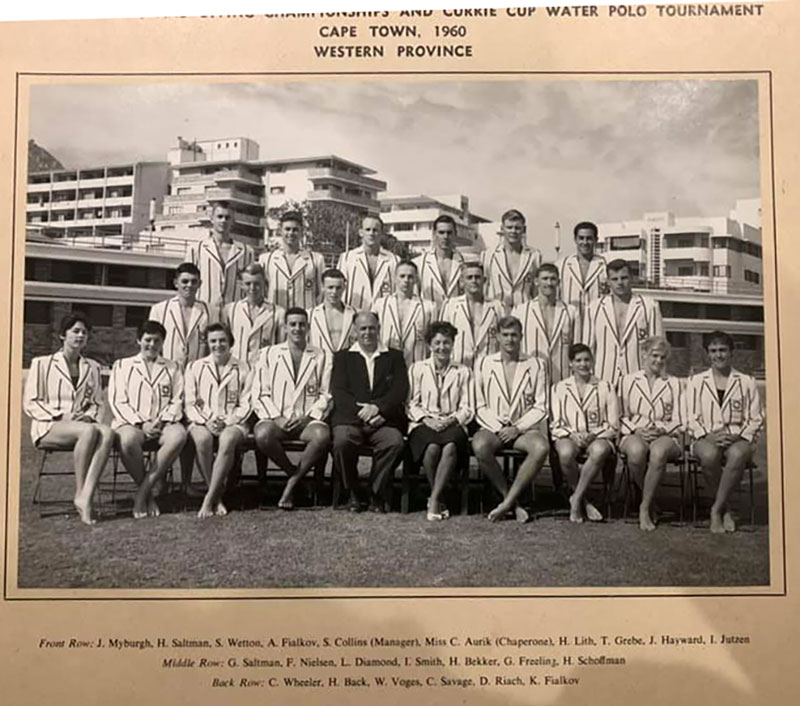
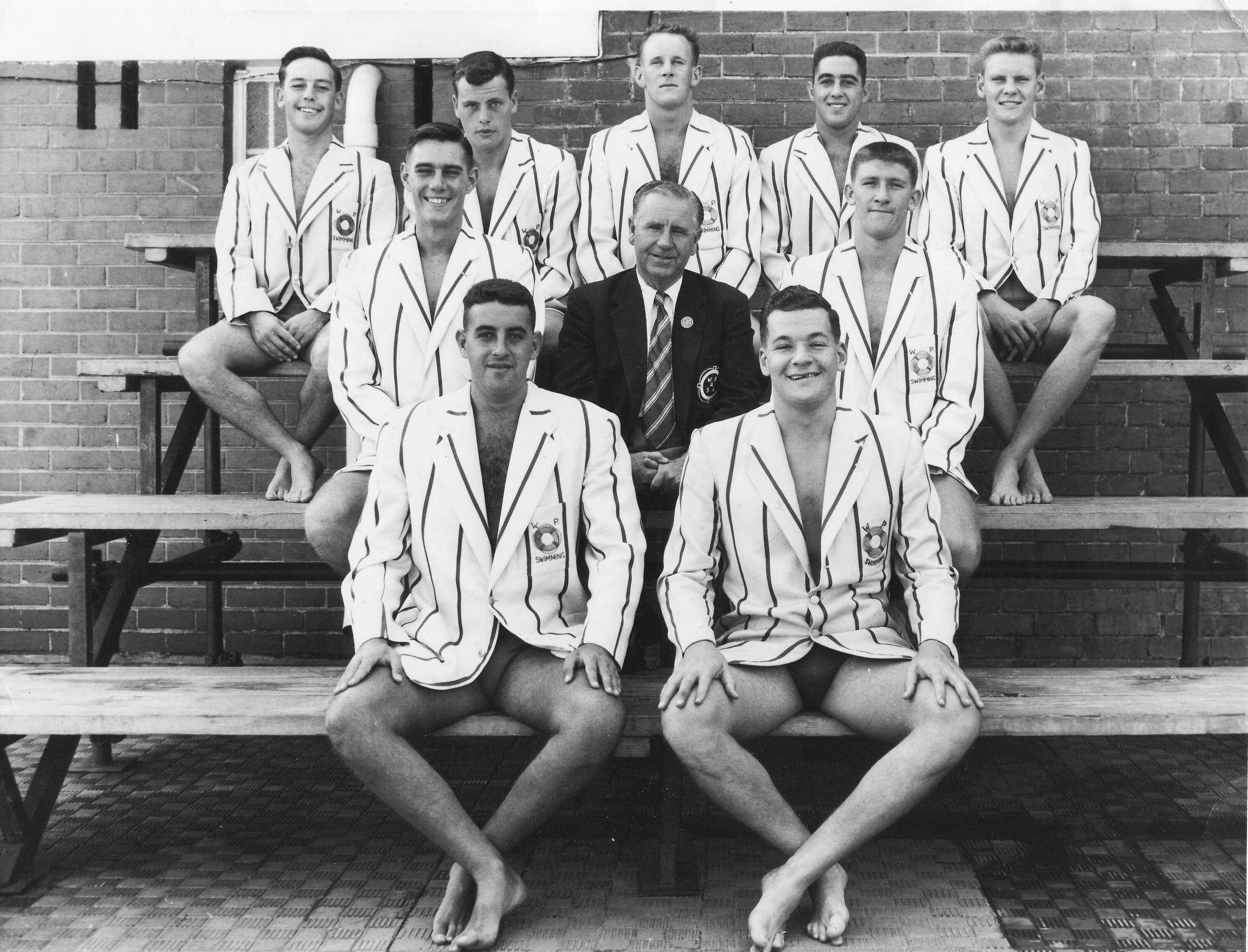
  • 1960 WP Team

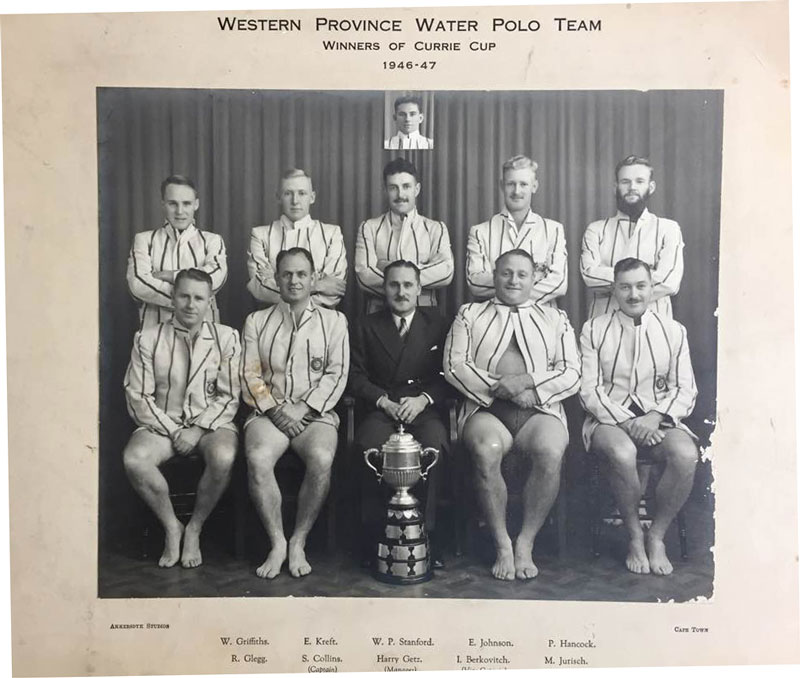
  • 1946 Wp POLO TEAM

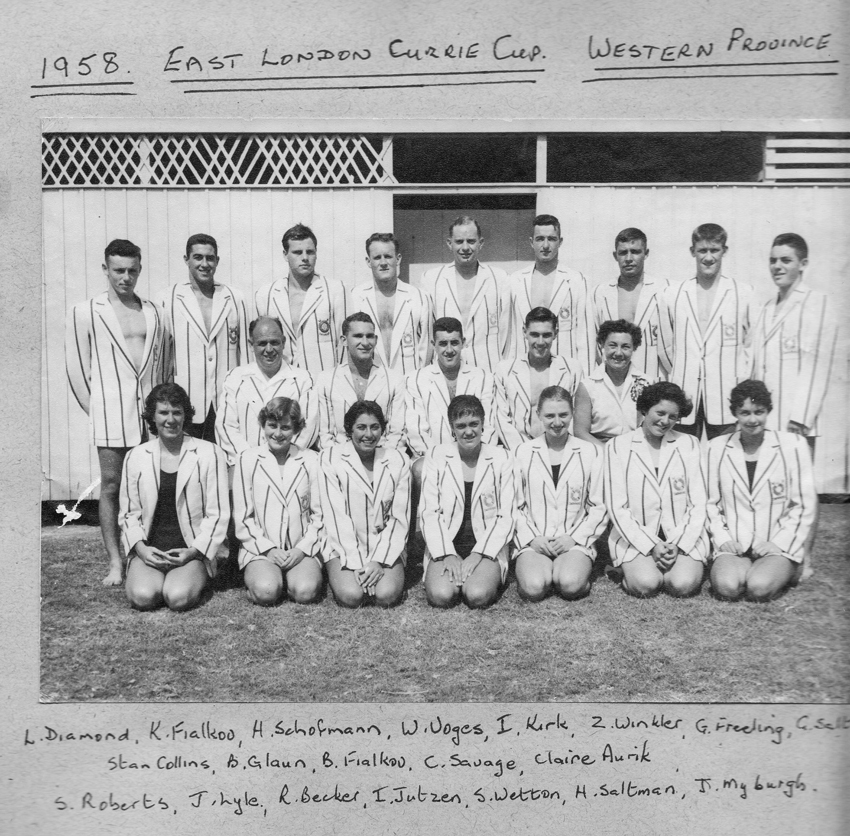
  • 1958 Nationals WP Polo Team 2

  • 1953 Brame Fialkov

  • 1958 Nationals WP Team

  • 1959 Western Province Waterpolo

  • Dereck Yach 2

  • Hits: 1294

South African Universities

SAU - South African Universities

There are 26 universities in South Africa in 2026, and according to the governing body, University Sport South Africa, all participate in competitive sports. 

In the Cape Colony, Natal, Orange Free State and Transvaal Republic, there were a number of University Colleges in the country that provided the teaching, while the University of South Africa, based in Pretoria, provided exams and awarded degrees, following the English system. This changed with the University of South Africa Act (No. 12) 1916, which created the University of Cape Town and the University of Stellenbosch. The Act also recognised six University Colleges: Natal University College (Pietermaritzburg), Rhodes University College (Grahamstown), Grey University College (Bloemfontein), South African School of Mines and Technology (Wits)(Johannesburg), Huguenot Kollege (Wellington) and Potchefstroom University College (in 1922).

These institutions participated in the 


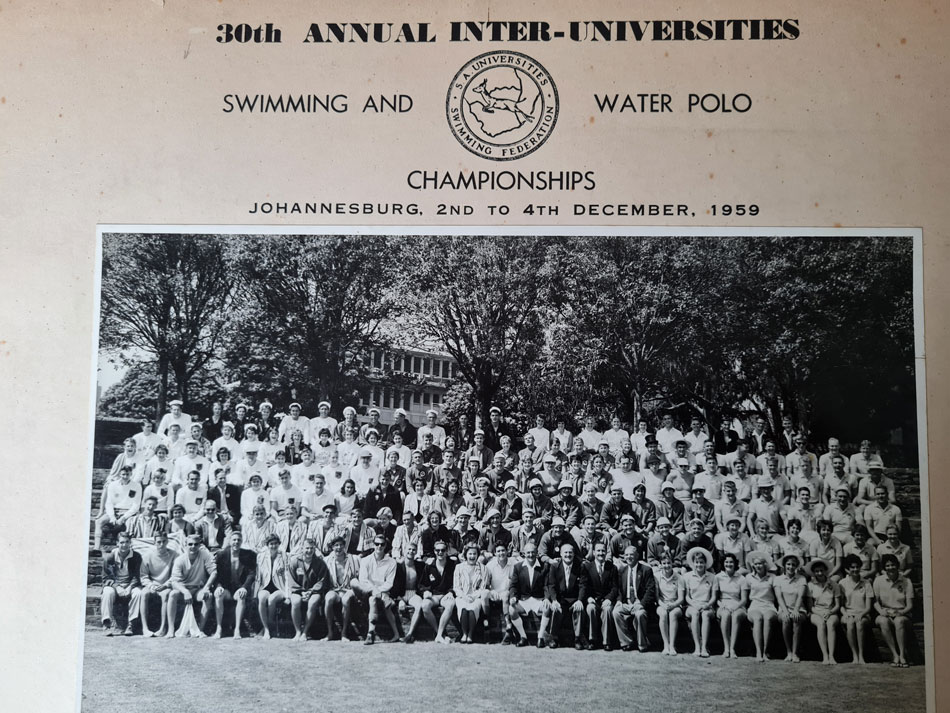
Inter-varsity sports have been a feature of student life since  1911, when the Victoria College of Stellenbosch and South African University College of Cape Town began a series of annual rugby matches. 

The timeline of South African Universities officially begins in 1929, when the first inter-varsity tournament was hosted by the Transvaal University College (TUC) at the  Central Municipal Swimming Pool in Pretoria. The TUC was renamed the University of Pretoria in 1930.

1935 April 20 SAU


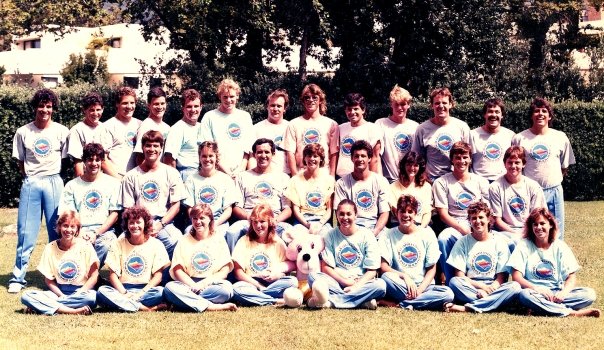
University of Natal (Durban) Aquatics Team ~ 1985 ~ SA Universities Champs ~ Cape Town — with Shaun Callaghan, Derek Ethelstone, Rory Mapstone, Rob Lumb, Tracey Wannenburg, Udo Jurressen, Pierre Venter, Haden Mottram, Robbie Portsmith, Allan Tenant, Allison Gittings, Peter Mommogos, Herman Chalupsky, Tracy Cockheadand Keith Armstrong in Cape Town, South Africa.

Click here to see the results from SAU in 2008.


1956 SAU at Rhodes


First South African Universities Tournament - 1929 - where they competed for the Roberts Shield


Much of this material is from the private archive of former SAASU president Harry Getz, who was the driving force behind the annual inter-varsity swimming, diving and water polo tournament for many years. In 1961 and 1963 he arranged the participation of South Africa in the Universiades (World Student Games) held in Bulgaria and Brazil.

Intervarsity was not part of the SAASU programme, although the same competitors and officials participated, and new national records were recognized. The host universities were initially UCT, Rhodes and Wits, where students stayed in university dorms during the holidays and swam in the university pool.


13 March 1939 - SAU at Rhodes University in Grahamstown


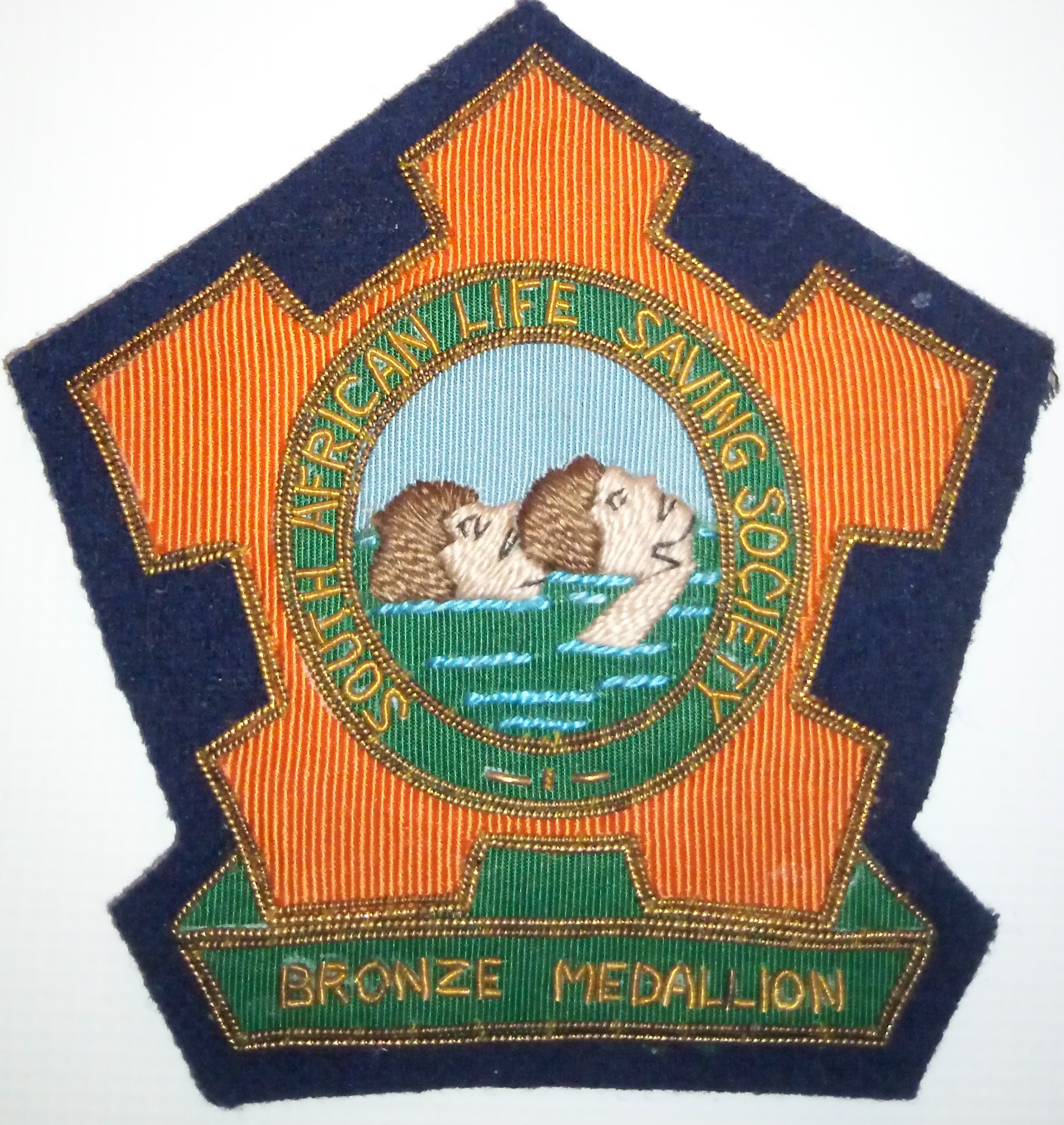
South African Universities Swimming badge

Stellenbosch c.1985 - Thys Lombard, Ellen Lombard Mason, Herman Nienaber,Libby Burrell, Harald Ruck and Monique Dokter.


With Monique Dokter, Ellen Lombard Mason, Harald Ruck and Libby Burrell, Anton Loubscher, Thys Lombard, Claire Taylor, Marilise Lucouw, Eureka Barnard 
 

University of Natal (Durban) Aquatics Team ~ 1985 ~ SA Universities Champs ~ Cape Town — with Shaun Callaghan, Derek Ethelstone, Rory Mapstone, Rob Lumb, Tracey Wannenburg, Udo Jurressen, Pierre Venter, Haden Mottram, Robbie Portsmith, Allan Tenant, Allison Gittings, Peter Mommogos, Herman Chalupsky, Tracy Cockhead and Keith Armstrong in Cape Town, Western Cape.
 
 
  • Hits: 1046