Southern Cape
Tidal Pools of the Southen Cape
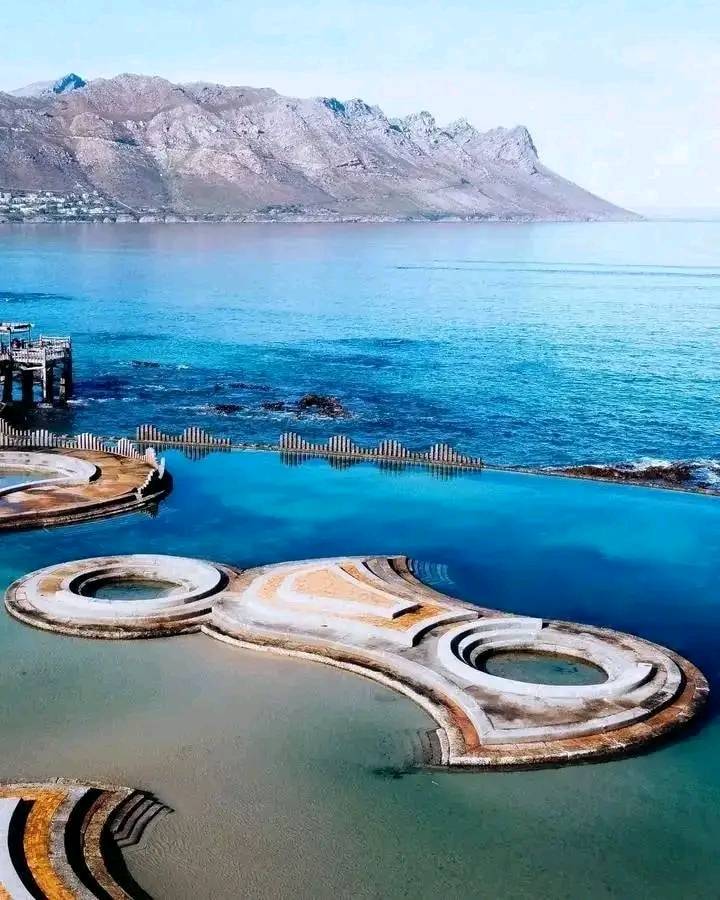
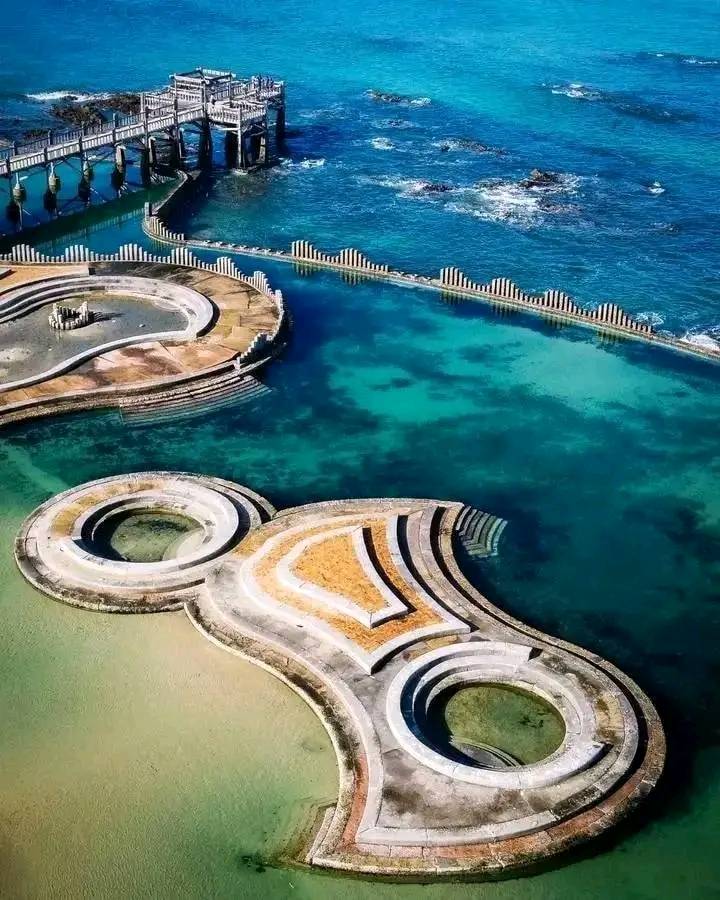
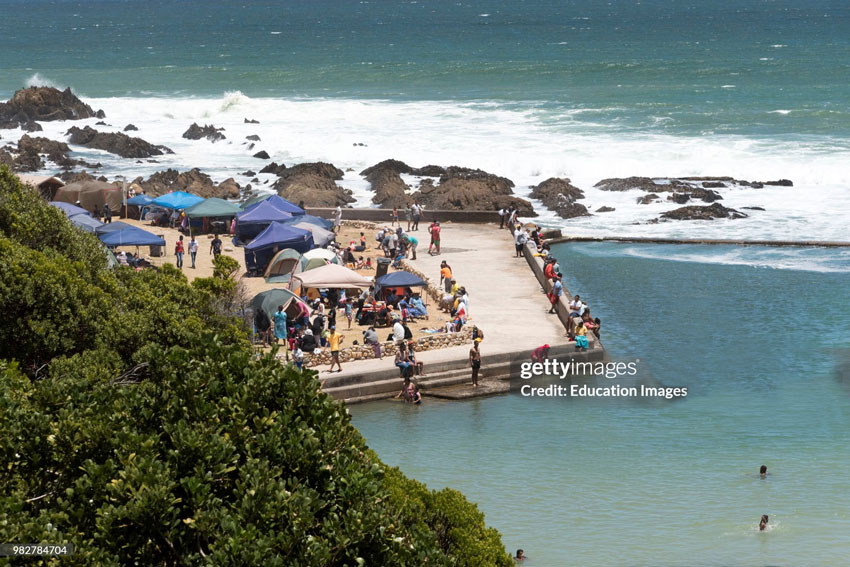
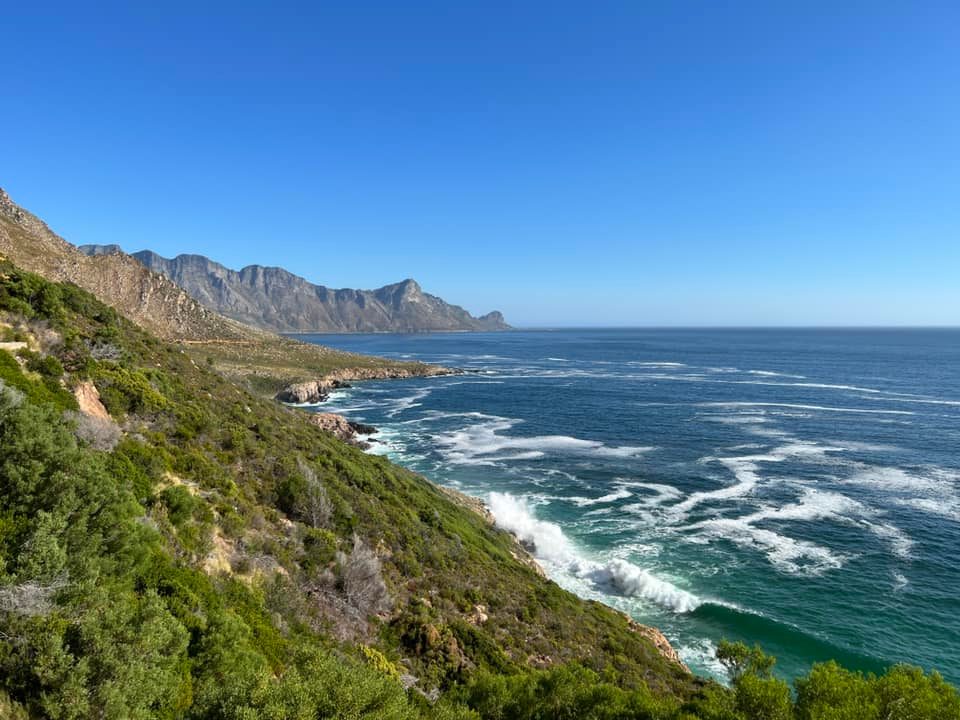
The coastline eastwards from Cape Agulhas is a mixture of steep rocky sections between long sandy beaches. The area is largely either privately owned farms or nature reserves, accessible by a few roads leading down to the coast from the N2 national road. From Mossel Bay, the famous Garden Route follows the coast to Port Elizabeth.
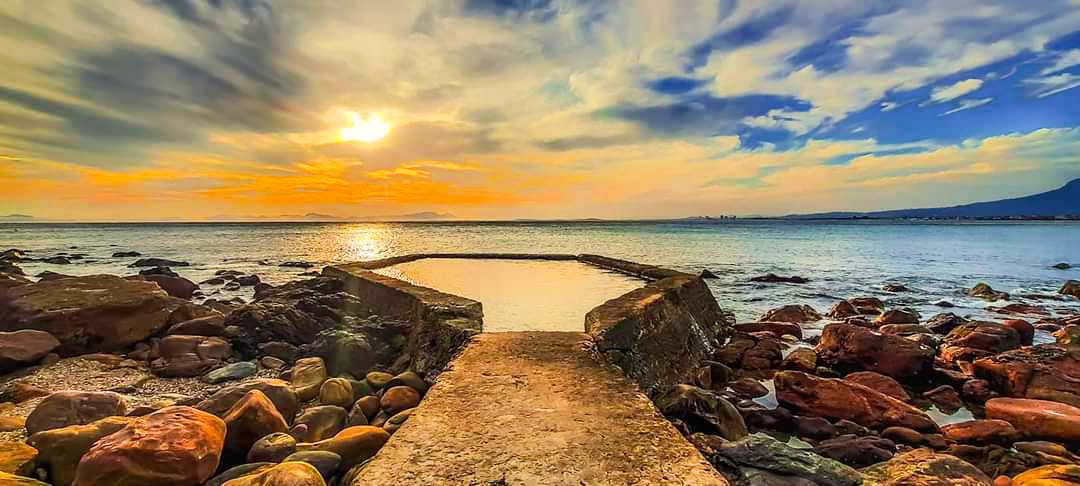
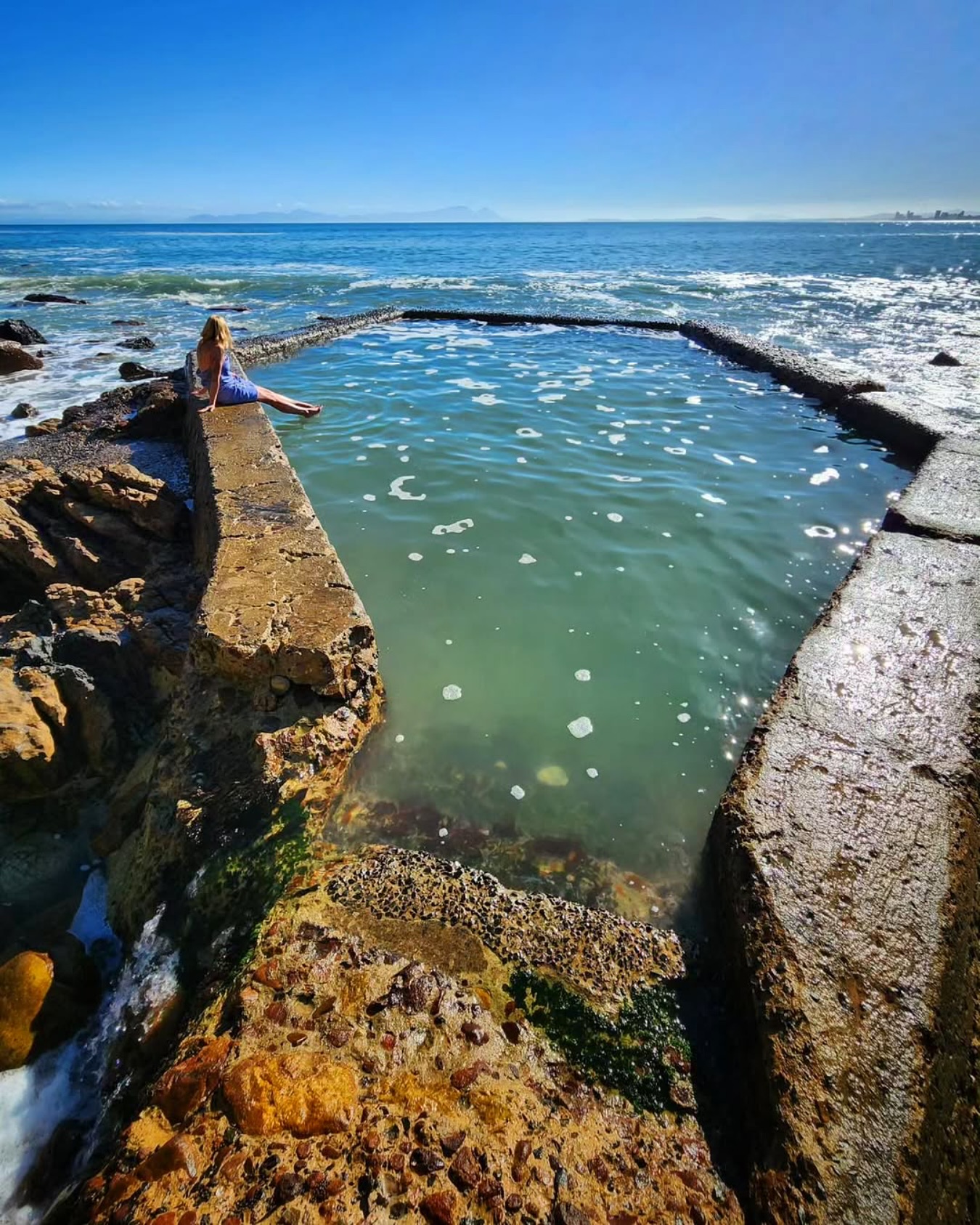
Despite the lack of tidal pools built along the coastline, just about every small settlement boasts a slipway for the launching of sports fishing boats.
Along this stretch of coast, there are numerous rock fish traps, which are considered by some to be the work of pre-colonial inhabitants, although there is no evidence to support this belief.
There are also several significant archaeological sites, such as Blombos Cave (Stilbaai), which is famous for yielding the "world’s oldest known drawing"—a cross-hatched design in ochre dating back 73,000 years. The caves at Pinnacle Point at Mosselbaai were occupied 164,000 years ago, and the Robberg Caves at Plettenbergbaai.
45. Witsand Tidal Pool
After Agulhas, the next road from the N2 to the coast ends at the resort town of Witsand, at the mouth of the Breederivier.
Witsand’s history dates back to 1831, when the British colonial government granted the land to Captain Benjamin Moodie. The town, named after its white sandy beach, has been known as Witsand since at least 1867. Initially a fishing haven, it officially became a town in 1951 as more people built cottages.
On the opposite bank, in a small settlement named Infanta, where English is the dominant language, it is popular with Cape Townians. Witsand (Afrikaans for White Sands) is a predominantly Afrikaans town, drawn from the local farming community.
Known as "South Africa's whale nursery," the area is famous for land-based sightings of southern right whales between June and November.
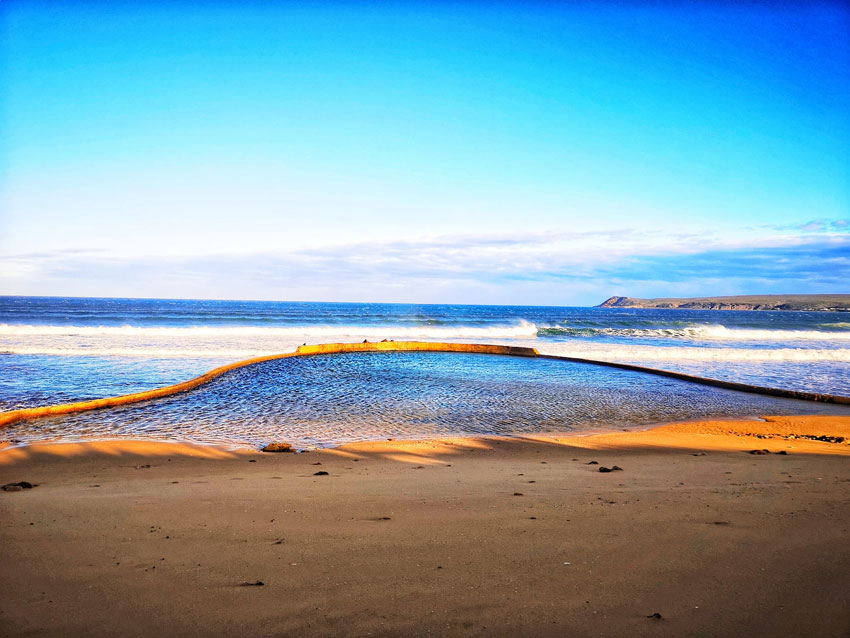
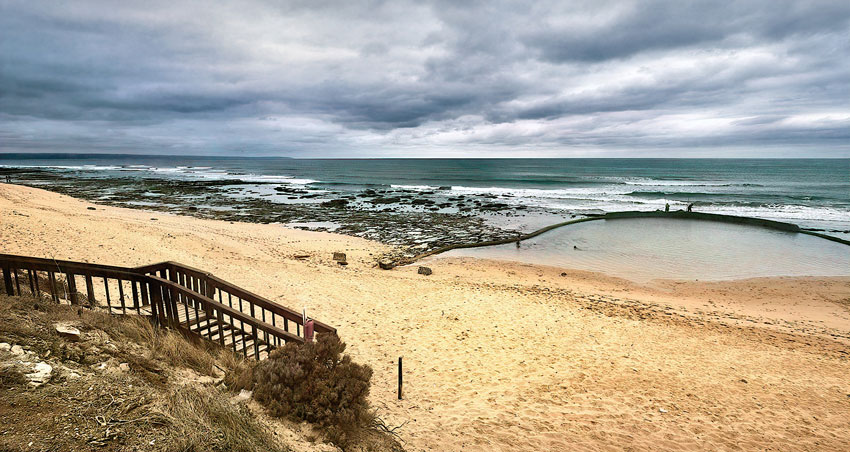
46. Jongensfontein swemgat
A natural tidal pool that provides a swimming space, as the beach is prone to strong currents and rip tides.

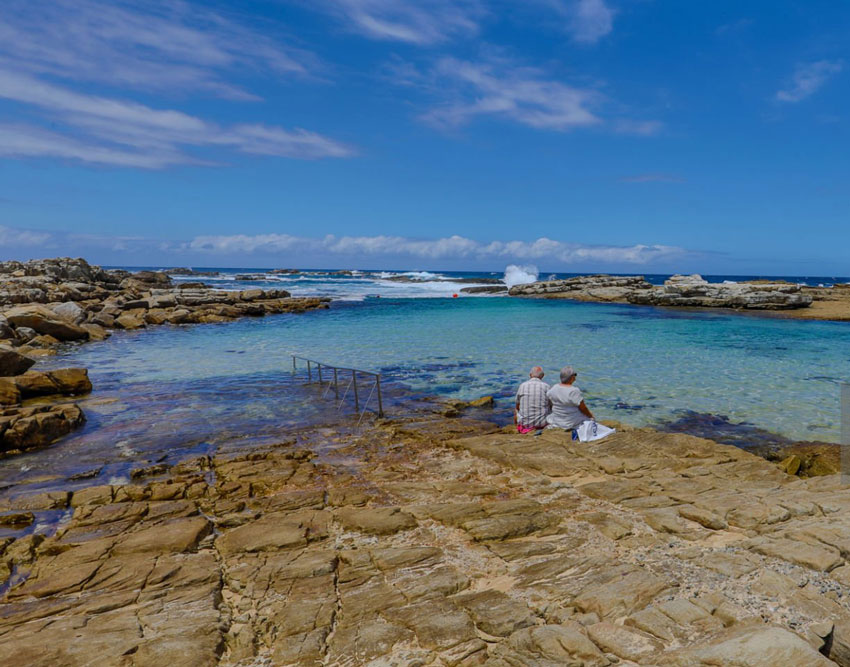
47. Jongensfontein Tidal Pool
Located at the end of the road from Stilbaai, the town of Jongensfontein dates from at least 1762, when it first appeared in official records of the Cape Colony. The early growth of Jongensfontein pre-1960 was haphazard and unplanned, although growth happened slowly and thoughtfully, with homes spaced out to protect the open landscape and uninterrupted ocean views.
1916: The farm was subdivided, granting property rights to 31 individuals.
1920s: Construction of mud and reed holiday homes began, marking Jongensfontein’s transformation into a holiday destination.
In 1960, the Cape Provincial Administration became aware of the arbitrary manner in which the town had grown when 38 owners of ground and houses attempted to have their ownership registered. The Township of Jongensfotein was proclaimed in 1970.
The tidal pool is opposite the municipal caravan park.
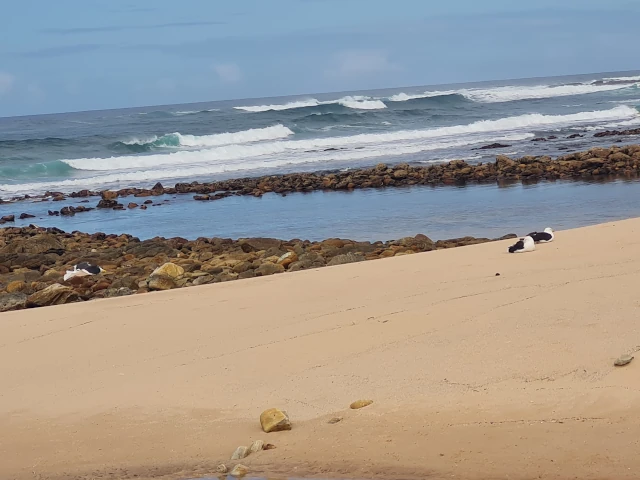
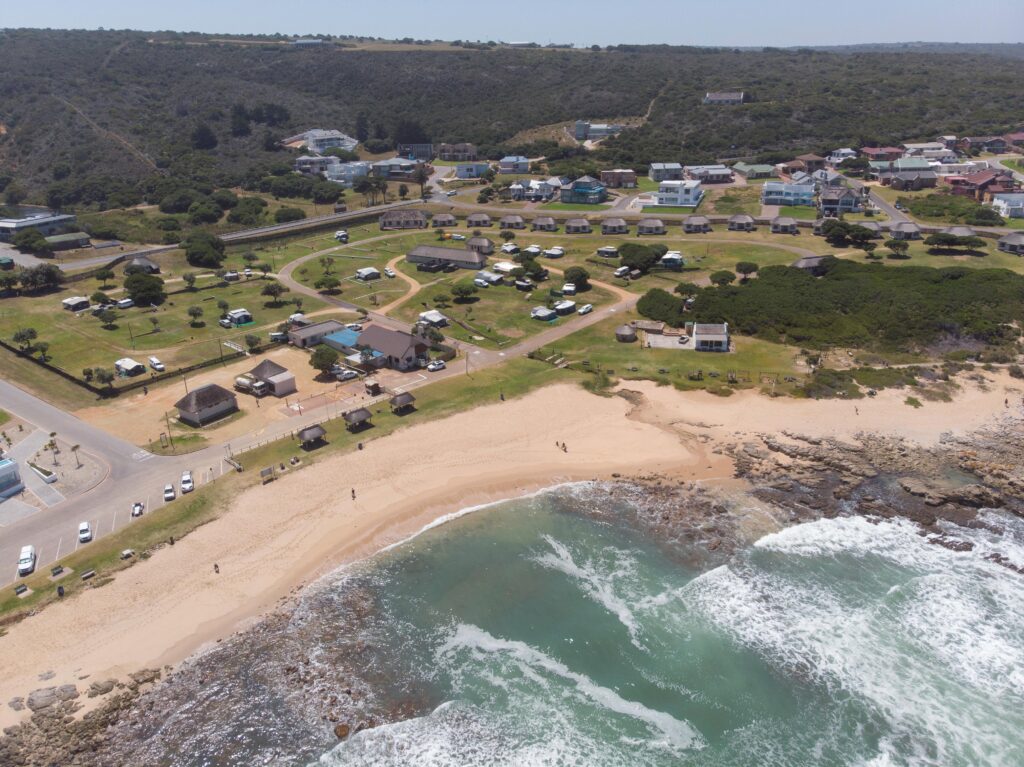
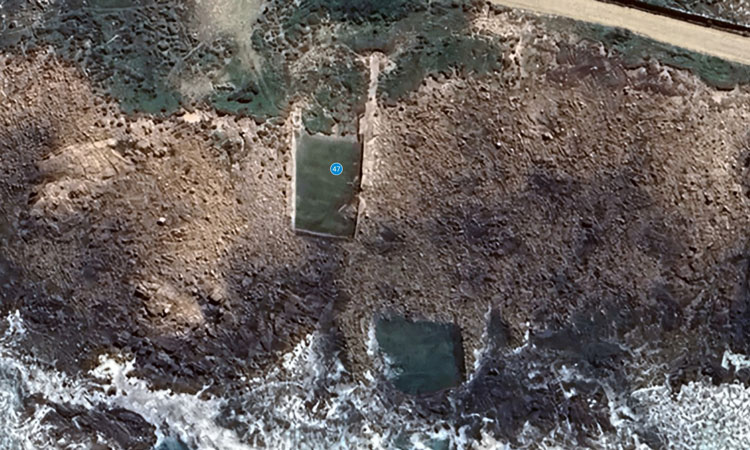
48. Neliesgif
The name translates to Nelie's Gift, referring to the fact that the farm was given as a gift - gif in Dutch. The farm produces 230 000 bushels of thatch annually. The owner had the pool built for his wife.
Oom Tienie Botha, hieronder links was die eienaar van die Neliesgif. Dit was sy strandhuis. Hy het in die Paarl gewoon, in Sinagoge straat. Al die huise in die straat en twee koshuise het aan hom behoort. Sy eerste vrou was n Engelse lady en dis Vir haar wat Hy die swembad laat bou het, Om haar voete te baai.
https://www.facebook.com/groups/411118035737550/user/100001183341005/
49. Gouritsmond Tidal Pool
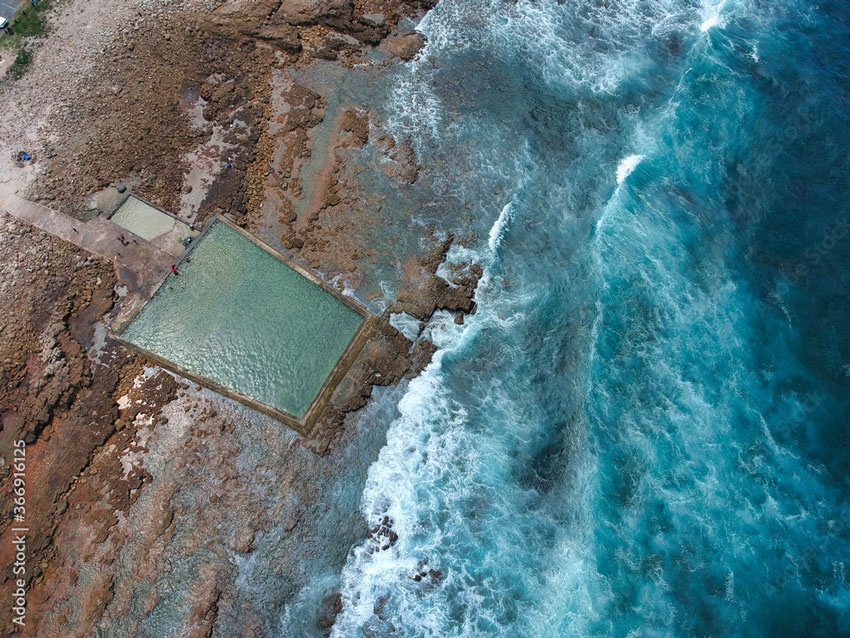
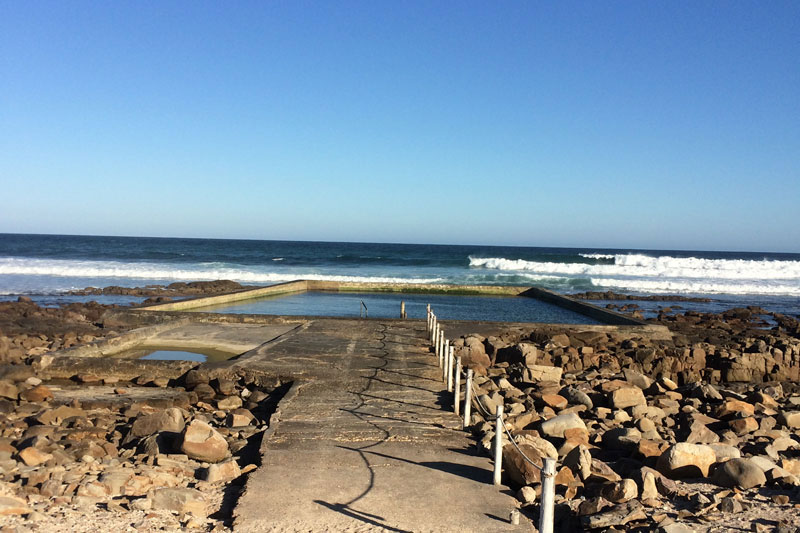
The modern settlement began as a fishing outpost in the 1700s, and the town was officially established in 1915. The river remains famous for fishing, with the second-largest Cob population in the country.
Like many small coastal holiday "towns", for decades, the town remained nearly hidden. It benefited from restricted access only via a route involving 25 manual gates. The first tar road was only constructed in 1983, finally opening it up to more visitors. It is also somewhat famous as being near the South African Government nuclear testing site, which was decommissioned.
In 2025, Gouritsmond has quietly become one of South Africa’s most unusual semigration hotspots. Despite this growing interest, about 80% of the town’s 411 houses stand empty for most of the year. Gouritsmond’s safety is one of its biggest attractions. With only around 800 permanent residents, the town remains far removed from the security concerns seen elsewhere in the Garden Route.
“It’s very safe here. Most of the Garden Route has seen lots of people moving down, and crime is moving with them. But not here. We don’t have crime.”
https://businesstech.co.za/news/property/846142/new-semigration-hotspot-in-south-africa-where-80-of-houses-stand-empty/
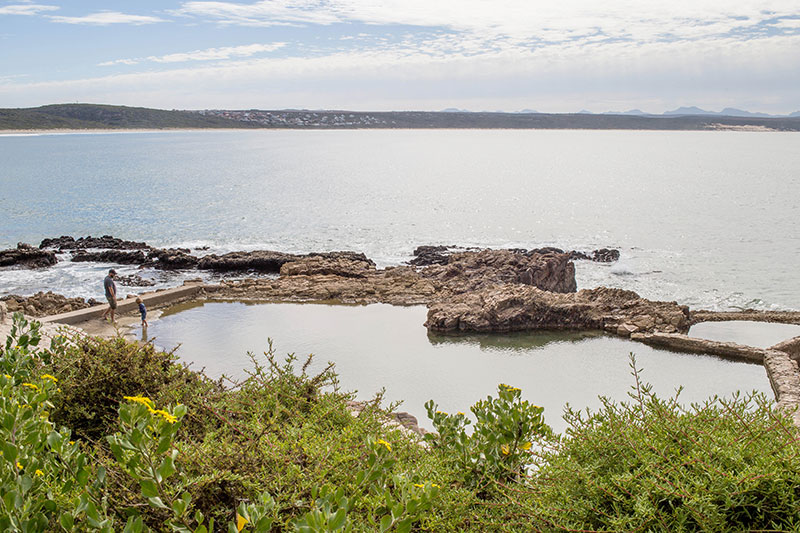
50. Vleesbaai
Vleesbaai is a private beach village situated on the Garden Route, approximately 35 km west of Mossel Bay. The modern history of Vleesbaai can be traced back as far as 1601, when stormy weather forced the Dutch mariner and explorer Paulus van Caerden to seek refuge in the protected bay now known as Vleesbaai. He was so pleased with the well-fed livestock which he was able to trade from the local inhabitants that he named it “Vleys Baeye”, the Old Dutch word for Vleesbaai, directly translated into English as “Bay of meat”. By the late ninteenth century holiday-makers from as far as Calitzdorp began to visit Vleesbaai for their holidays. They camped near the freshwater fountain at the Tarka ravine and came with donkey-carts and ox-wagons, often accompanied by chickens, sheep and even milch-cows to supplement their food supply. These visitors can be considered as the first proverbial “Vleesbaaiers”.
51. Die Poort, Mosselbaai
The town of Mosselbaai (or Mossel Bay - mossel meaning mussel in Afrikaans) is today best known as the place at which the first Europeans landed on South African soil (Bartolomeu Dias and his crew arrived on 3 February 1488).
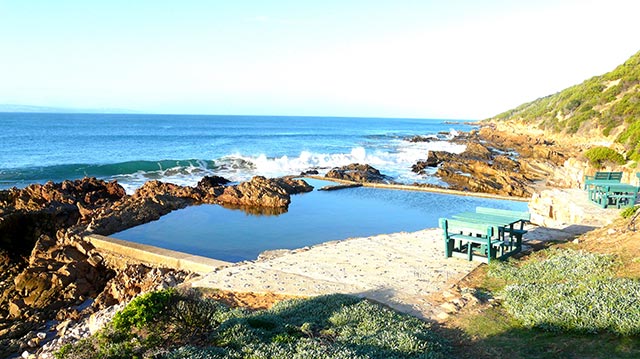
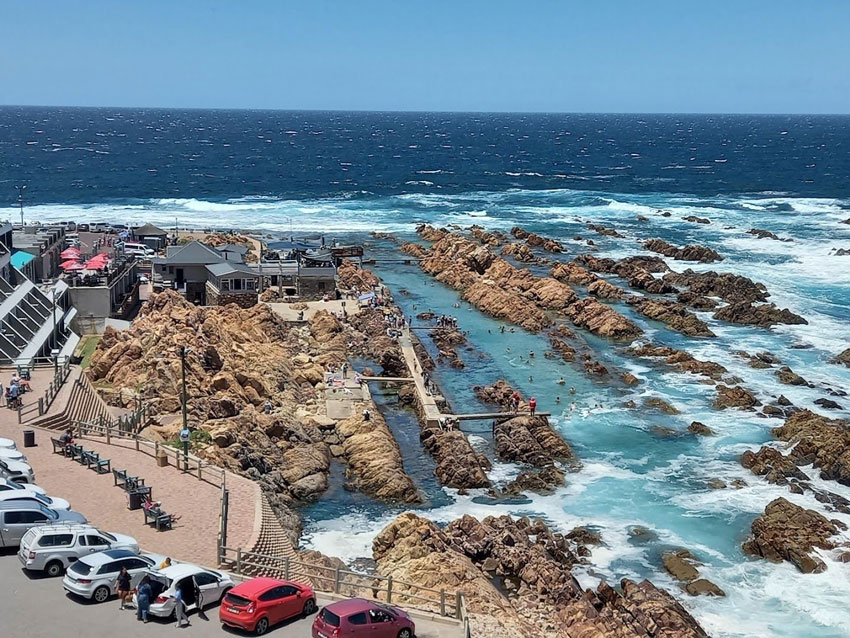
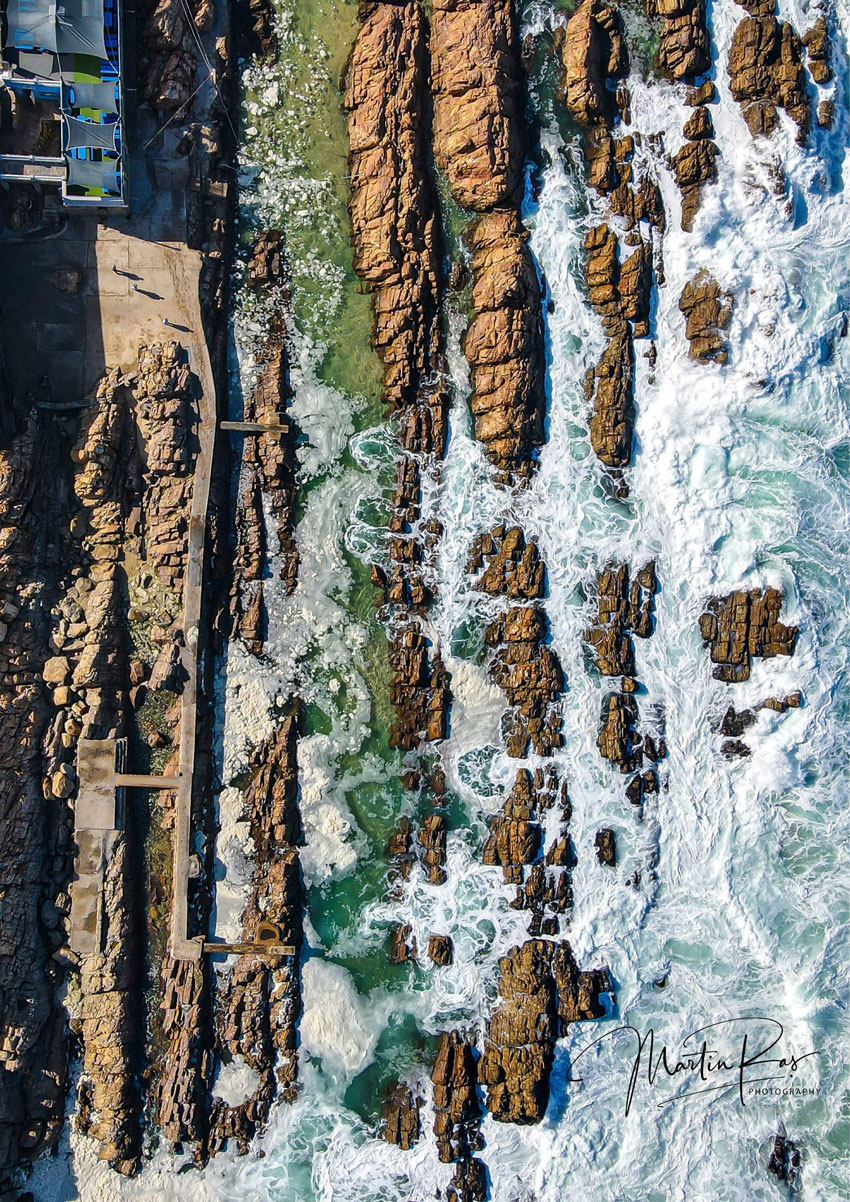
Die Poort is a natural gully found below the cliffs under the Cape St Blaze lighthouse.
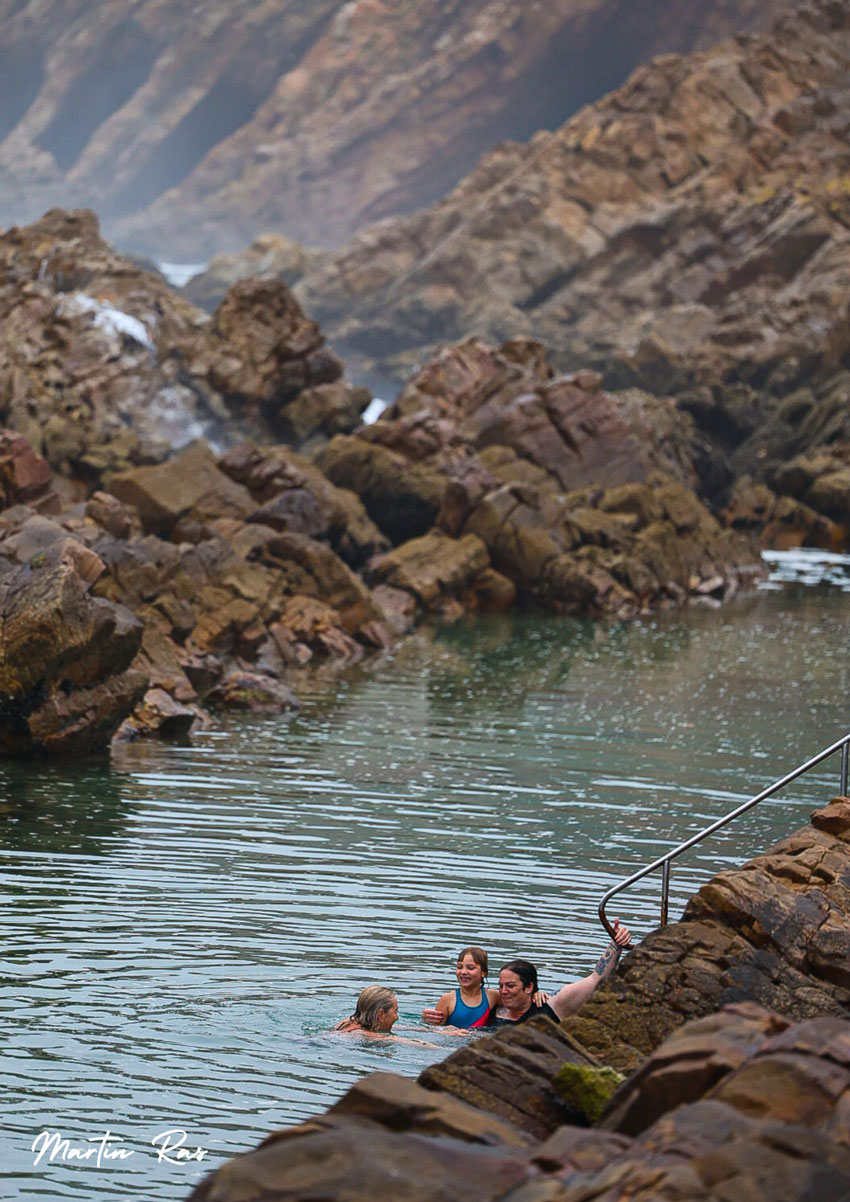
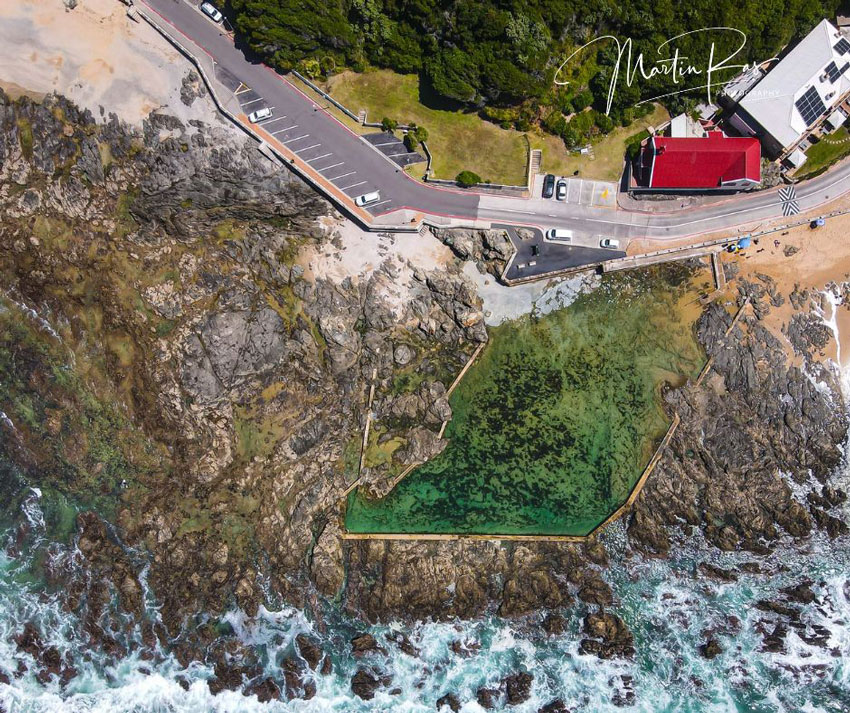
For generations, the town’s children have learned to swim in this tidal pool where chains and ropes have been secured to assist swimmers when the surging high tides cause strong currents to wash down the alley The pool has a smooth sandy bottom and the water of the Indian Ocean is mild, perfect for almost year-round bathing. It is deep enough for diving except at low tide. Swimming in the Poort’s live water, protected from the open ocean by the walls of rock with breakers thundering a stones’ throw away and showers of spray leaping in the air within sight is a rare sensation only to be experienced on a holiday in Mossel Bay. Martin Ras photography
For generations, the town's children have learned to swim in this pool where chains and ropes have been secured across the pool to assist swimmers when the surging tides cause strong currents to wash down the pool. Blougat (Blue Hole) lies at the upper end of the tidal pool and is a much deeper pool than the first, this giving it its deep blue colour and thus its name. It is here in this pool that the local children have learnt to dive to this day.
52. Mossel Bay Paddling Pool
Conveniently located near vibrant restaurants and entertainment options. A great spot for families, where parents can keep an eye on little ones while enjoying the lively atmosphere.
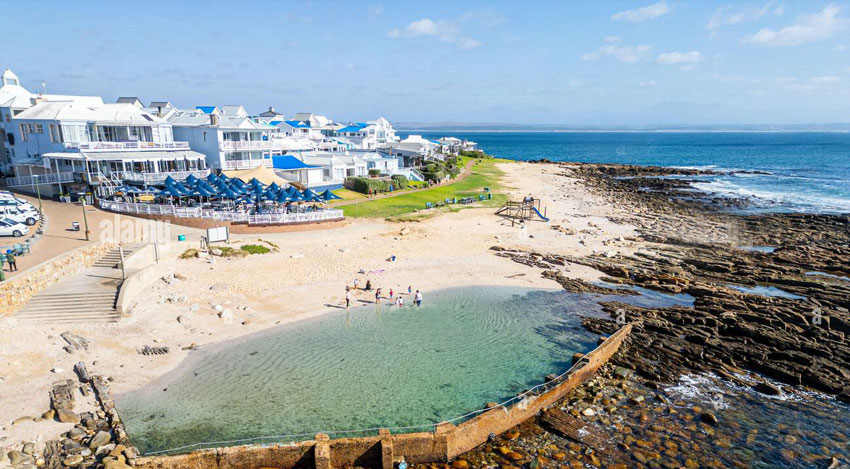
53 +54. Reebok and Tergniet Tidal Pools
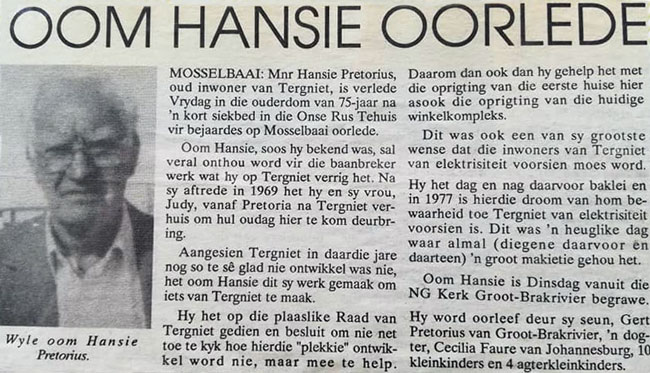
There are two tidal pools built on Reebok Strand, named after the two dorpies of Reebok and Tergniet. Located between the Klein Brak Rivier and the Groot Brak Rivier, Tergniet (together with the adjacent village of Reebok) likely developed from the ‘Old Klein Brak’ village, the settlement in the middle of the Klein Brak River floodplain, which would have been a historic crossing point.
Reebok and Terniet lie between Klein Brakrivier and Groot Brakrivier, two of a handful of beachside holiday hamlets of Mossel Bay. These towns tend to run into one another, functioning more as suburbs of Mossel Bay. Historically, Mossel Bay has functioned as a holiday town for inland farmers, and the tradition continues in places like Tergniet and Reebok, although if car number plates are anything to go by, visitors are from across the country.
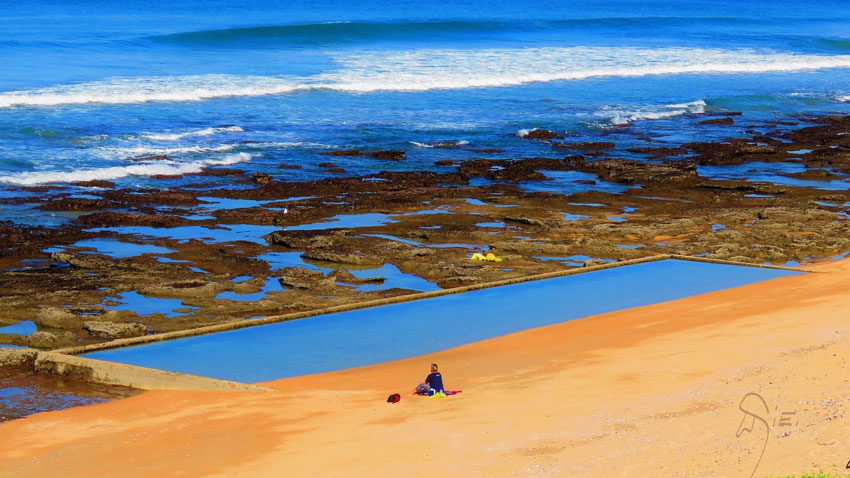
Tergniet (do not tease)
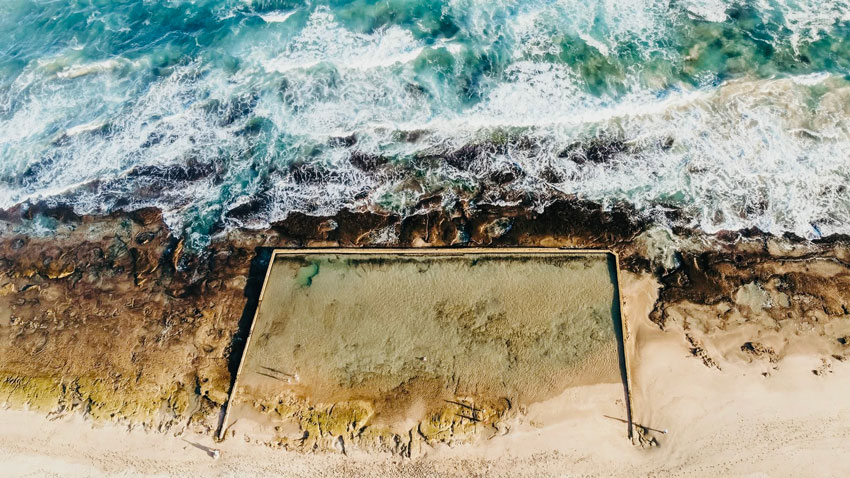
55. Skulpieshoek, Heroldsbaai
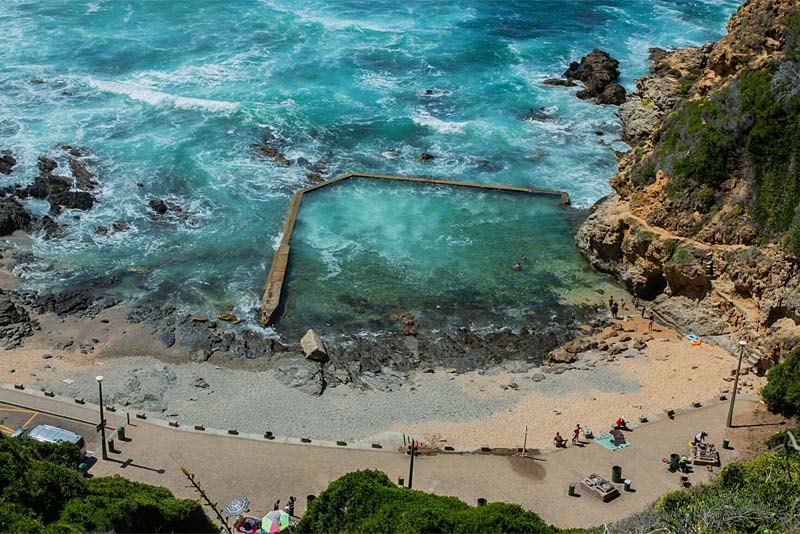
There are two tidal pools at Herols Bay. This one is the smaller, located at the end of Beach Road, approximately 150m from the main tidal pool. It has a dedicated braai area allocated for public use.
56. Heroldsbaai
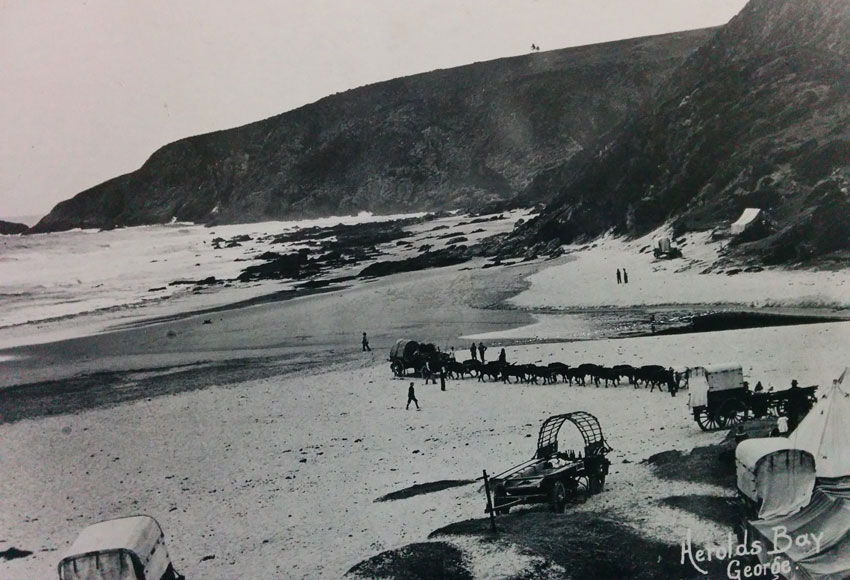
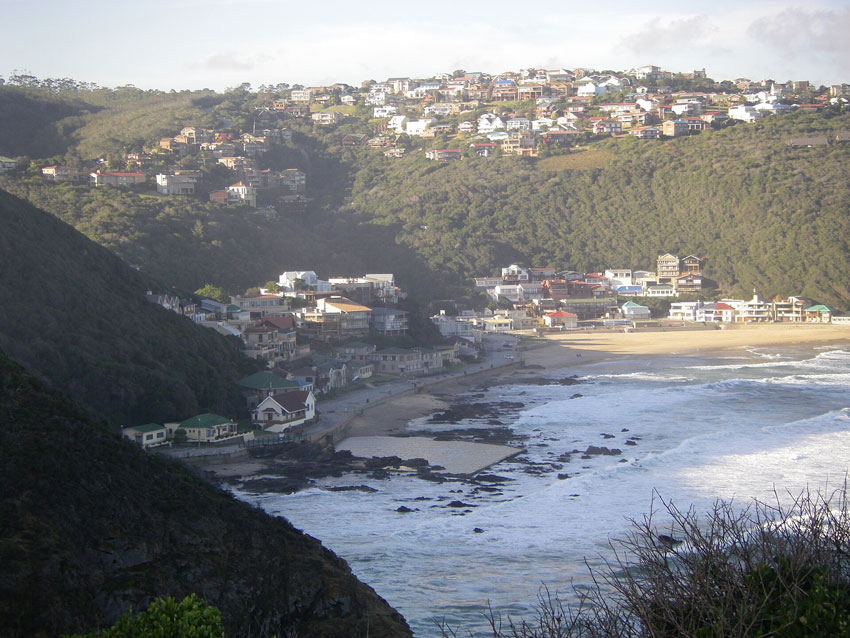
The first house in Heroldsbaai was built in 1895 for Matilda Howitson of Blanco, which was originally an 18th-century timber outpost for the Dutch East India Company. Although it was first known as Sandstrand, in 1823 it was named after the first vicar of George, Tobias Johannes Herold, a keen angler. At first, it was mainly George and people from the immediate vicinity who camped here. The waves are a popular playground on hot days.
Across from the Stella Maris Chapel, John Urban and the George Divisional Council had a large tidal pool built for swimmers in 1935. The first photo shows summer holiday campers, before the houses were built.
57. Victoria Bay
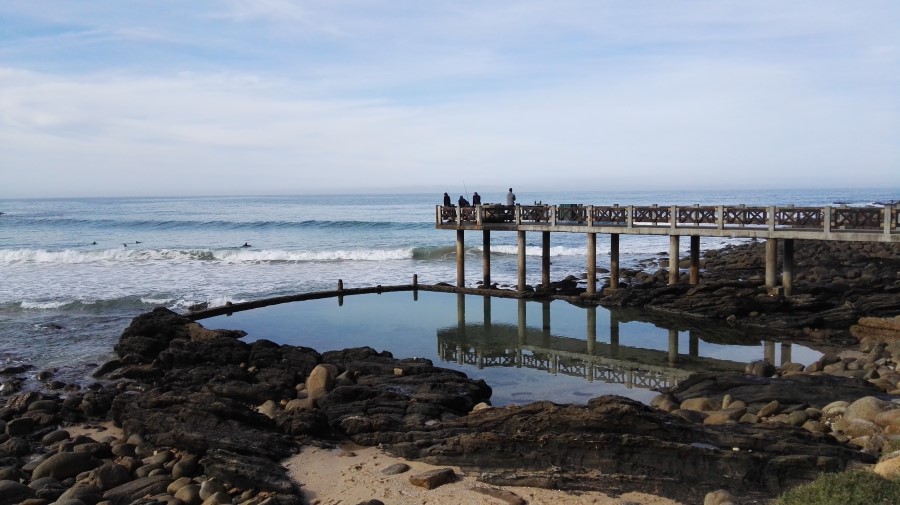
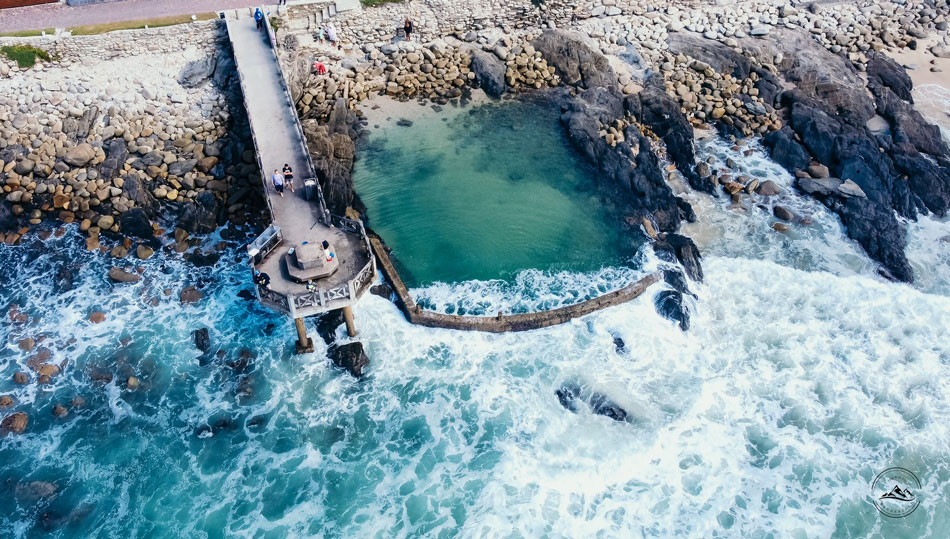
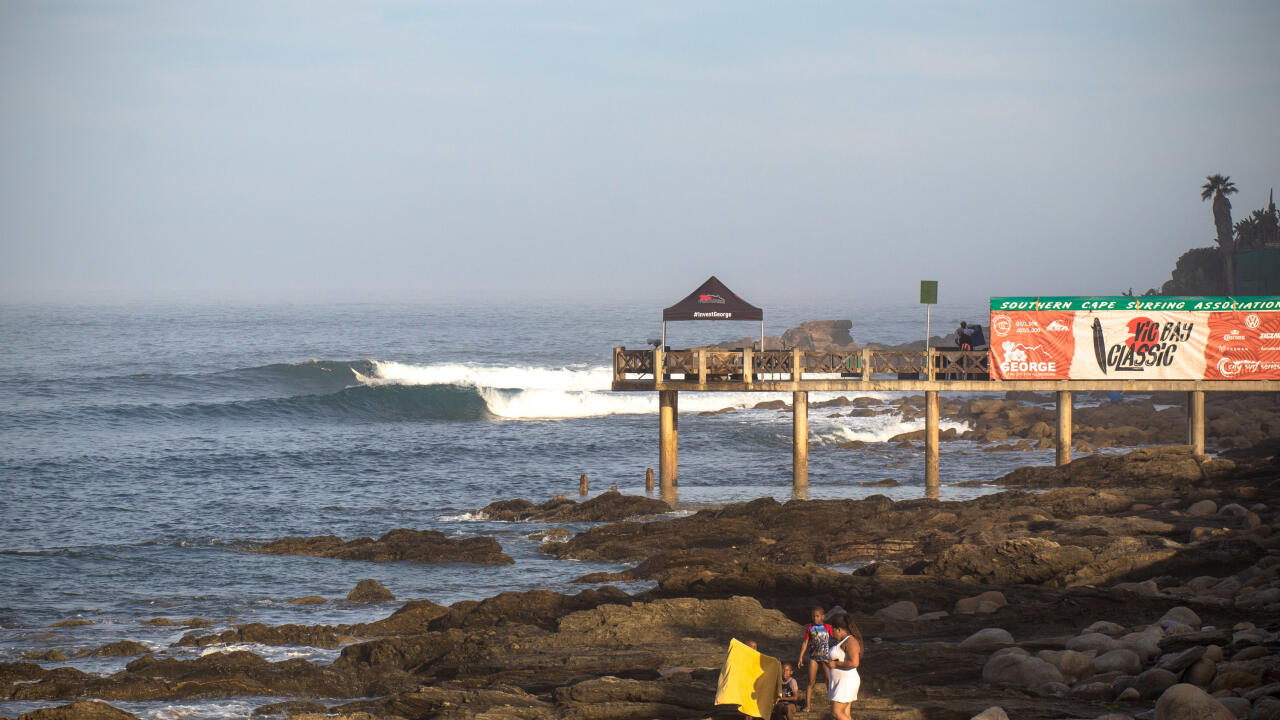
Victoria Bay is a small cove in the Western Cape, South Africa, situated on the Garden Route between George and Wilderness. It is a popular beach for surfers, consisting of a right-hand reef-like wave which rolls over small boulder-like rocks for about 200m. A 2019 article described Vic Bay (as it is locally known) as being "well known as the best right hand point break in the Southern Cape". District and National surf competitions are often held at Vic Bay, and despite its small size, Vic Bay is a well-known and much-visited spot.
World-class surfing to be seen at Vic Bay
Monday, 17 June 2019
GARDEN ROUTE NEWS - Local surf break Victoria Bay will host a high-profile professional surfing competition this month. Top international athletes will face off against our best local talent in the Vic Bay Classic from 20 to 22 June.
It will be the first time in 25 years that Victoria Bay has featured on the South African World Surf League Qualifying Series.
George Municipality stepped in to support the City Surf Series event after the cancellation of the Zigzag Durban Surf Pro in May. "This is an excellent opportunity to showcase our local surf break," says tourism manager Joan Shaw. "Victoria Bay is clean and safe and well known as the best right-hand point break in the Southern Cape. The event will be streamed online, and viewers from all over the world will see our world-class surf break. We are proud to support the event and trust it will provide a welcome boost for surfing tourism in George."
Over 100 competitors will face off in men's, women's and pro junior divisions in the inaugural event. Local pro surfer Bianca Buitendag is a confirmed entrant and hopes to use the event as a stepping stone to the WSL Championship Tour.
Other competitors expected include local surfing icons Sean Holmes and David Pfaff, as well as internationally rated J-Bay athletes Dylan Lightfoot and Matthew McGillivray.
The surfing competition has been warmly welcomed by the local surfing association, Eden Surf Riders.
"The Vic Bay Classic is a great opportunity to host a professional tournament and to have world-class surfers in our bay," says Eden Surf Riders chairman Robert Pollock. "Events such as this help young South African surfers to raise their standard and earn points towards the Championship Tour. We are proud to have been offered nine wild card entries and we can't wait to see how our local chargers fare against international competition.".
Ocean safety and education
In addition to world-class surfing action, spectators can expect a menu of ocean safety and educational events. City Surf Series and Surfing South Africa will host a community beach clean-up as well as a waste reduction workshop.
The NSRI is set to host an ocean awareness campaign.
Over 500 guests are expected at Victoria Bay over the three-day tournament, including international surfing competitors, coaches, family members and local spectators. "We are confident that this world-class event will have significant economic benefits for George," says Economic Development manager Pedro Oliphant.
The Vic Bay Classic is officially supported by George Municipality's economic development division and is backed by George Tourism. "We are delighted to showcase George as a city for a sustainable future," Oliphant says.
"The event is a welcome addition to the calendar, falling over the winter season, which is usually is a quiet period for tourism. We trust our visitors will savour George's quality lifestyle, scenic beaches and spectacular coastline."
https://www.knysnaplettherald.com/Sport/Article/Water-Sport/world-class-surfing-to-be-seen-at-vic-bay-201906130900
- Hits: 2092