Derek Yach

I come from a family of mad swimmers: my father, Solly, was an Olympic water polo player; my sister, Diana, was a provincial school swimmer; my brother, Theodore, has done more Robben Island swims than anyone on the planet – we’re the only brothers I know who’ve swum the Channel. My brother Jonathan has swum to Robben Island. My son swims.

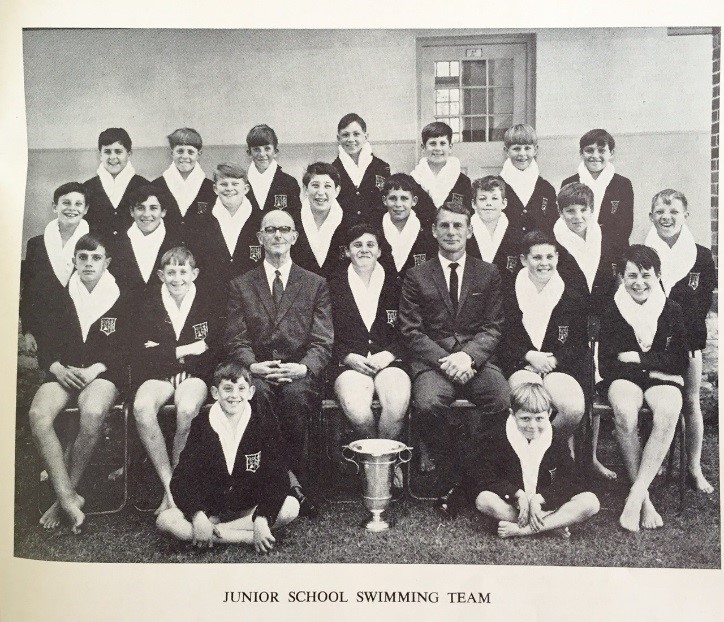
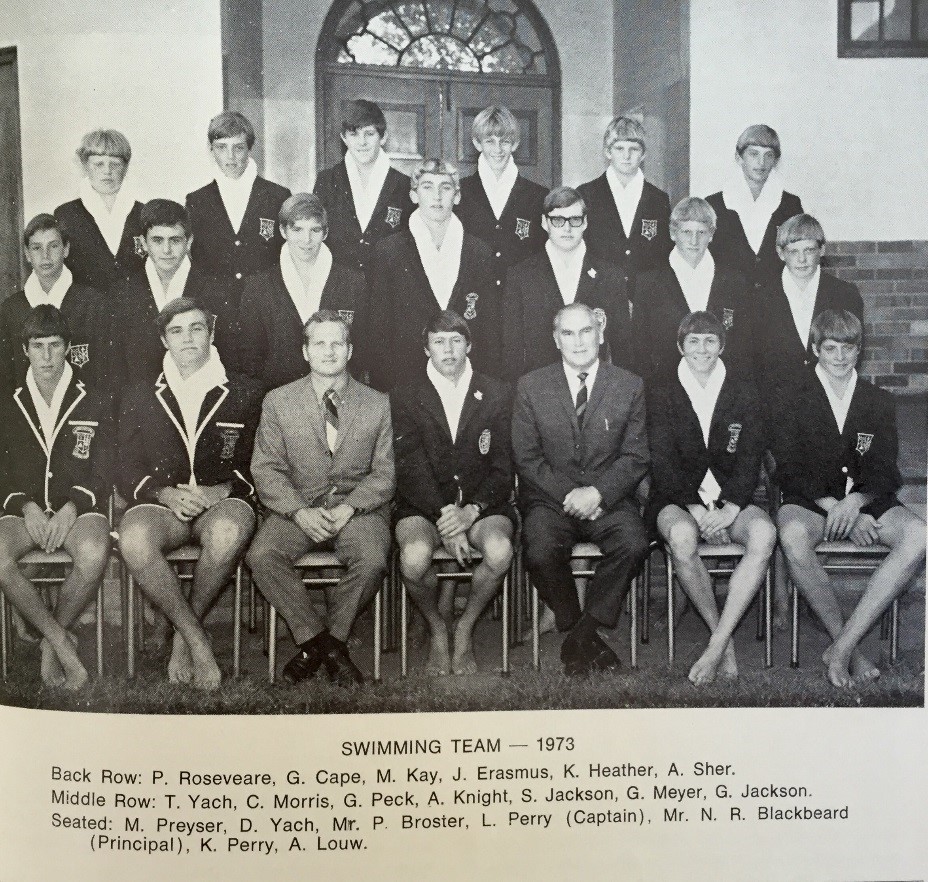
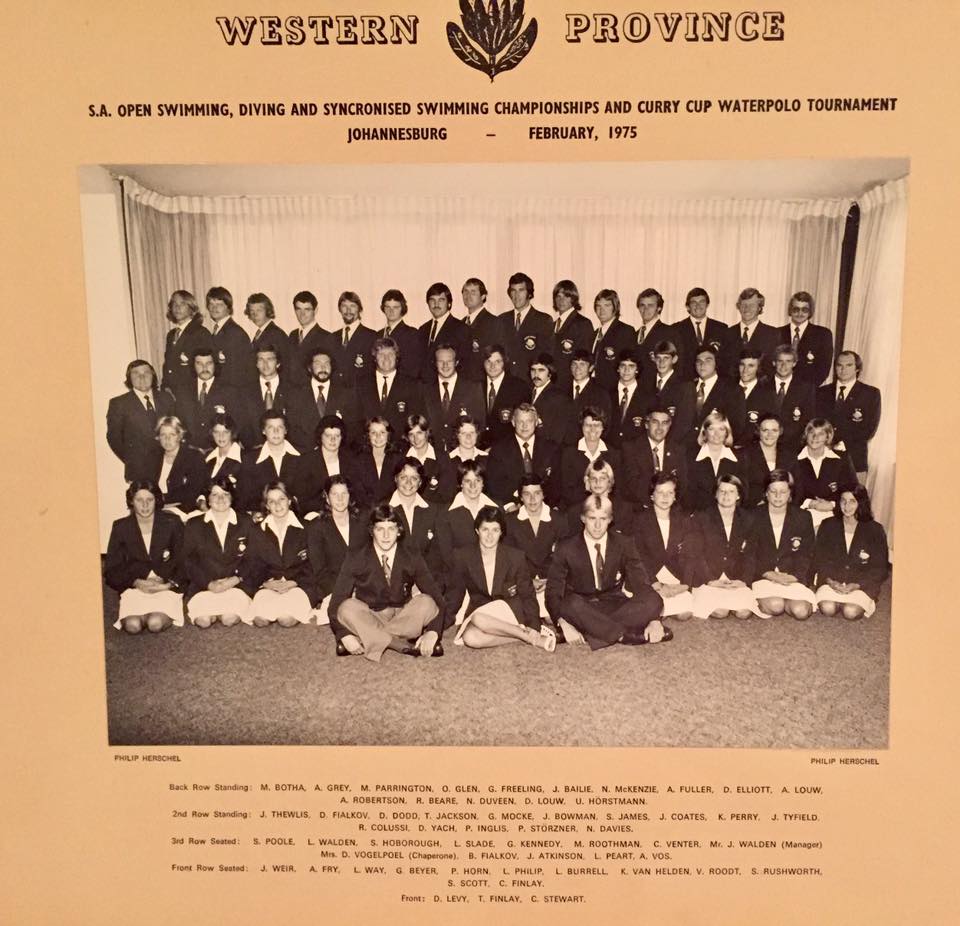
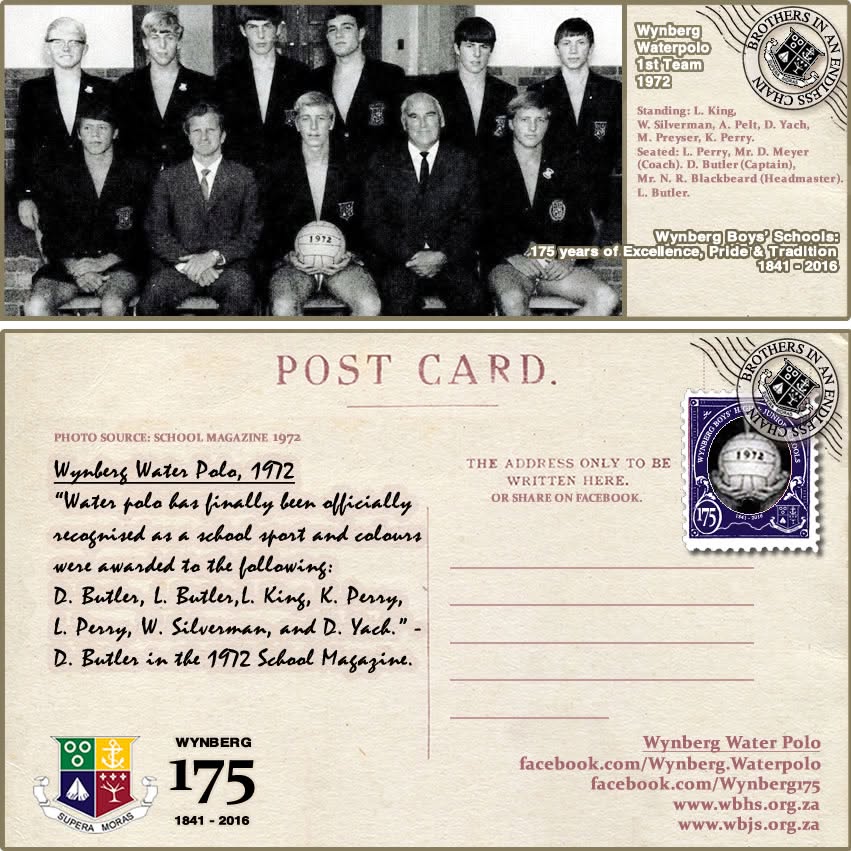
Derek is known internationally as a doctor of medicine, but also for his exploits as a long distance marathon swimmer. His father was a Western Province water polo player and his brother Theodore Yach is famous for completing a record 108 Robben Island swims. Both boys swam for their school Wynberg Boys, in Cape Town. Derek was also a Western Province swimmer.
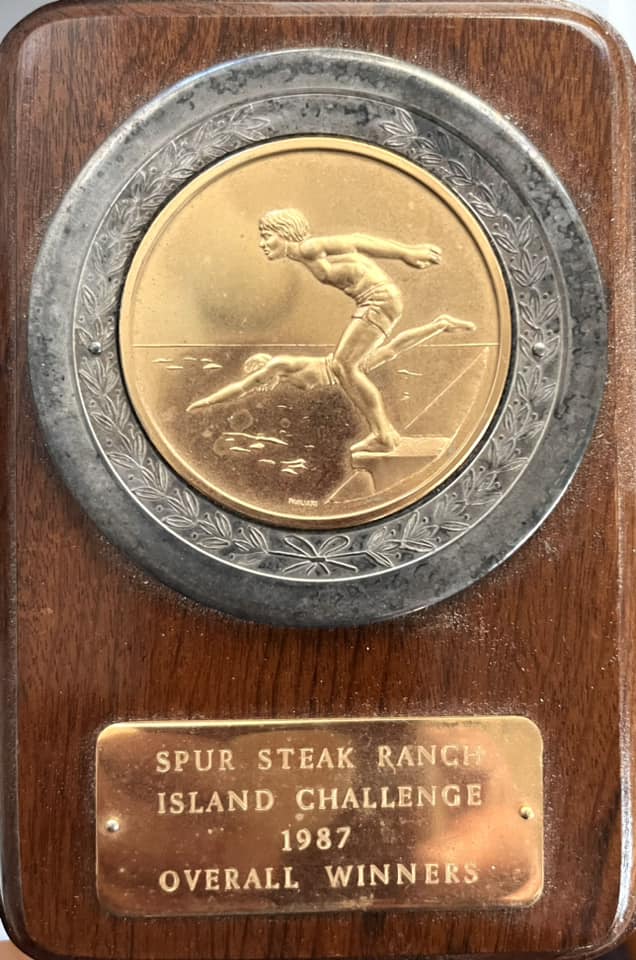
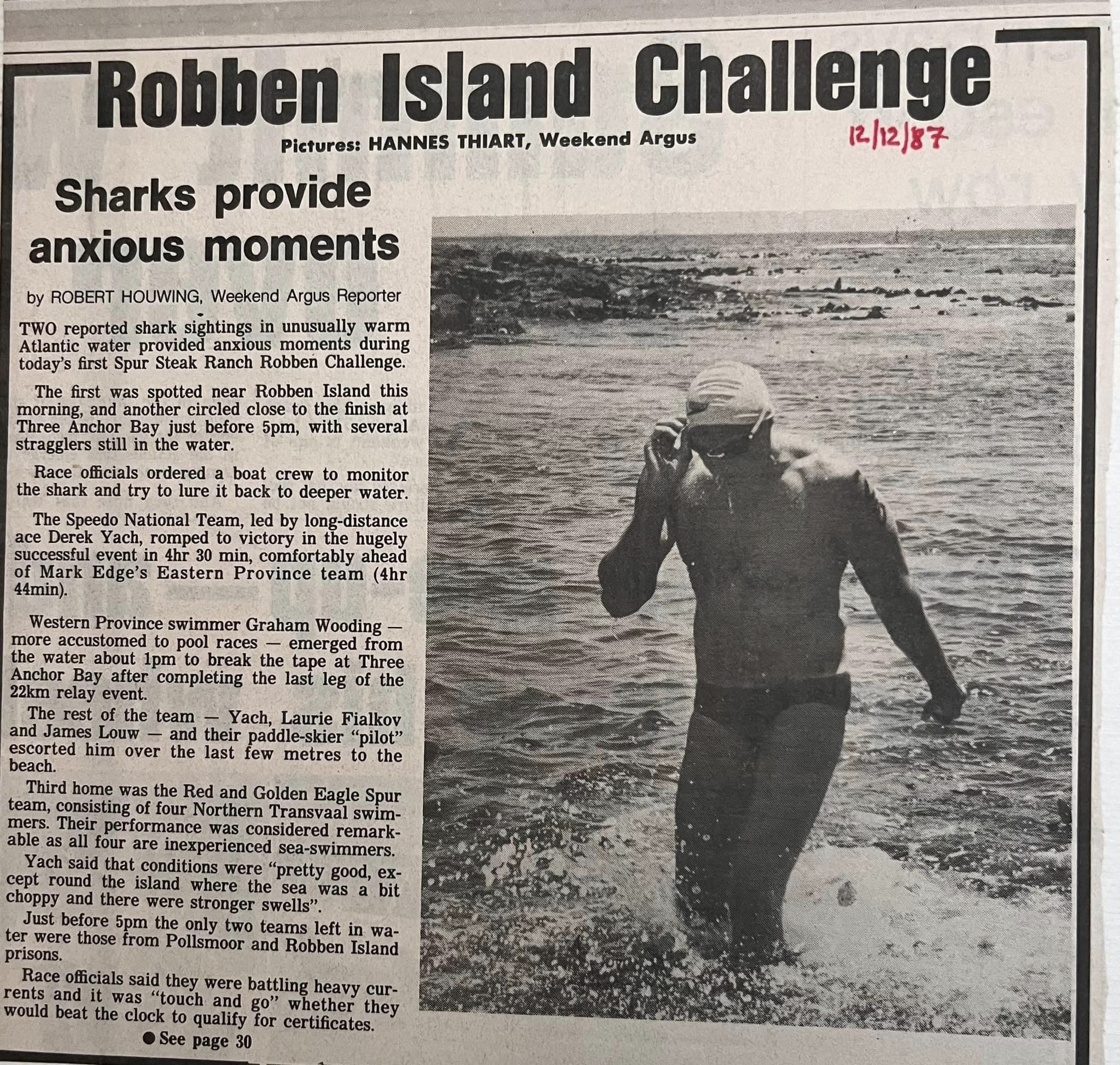
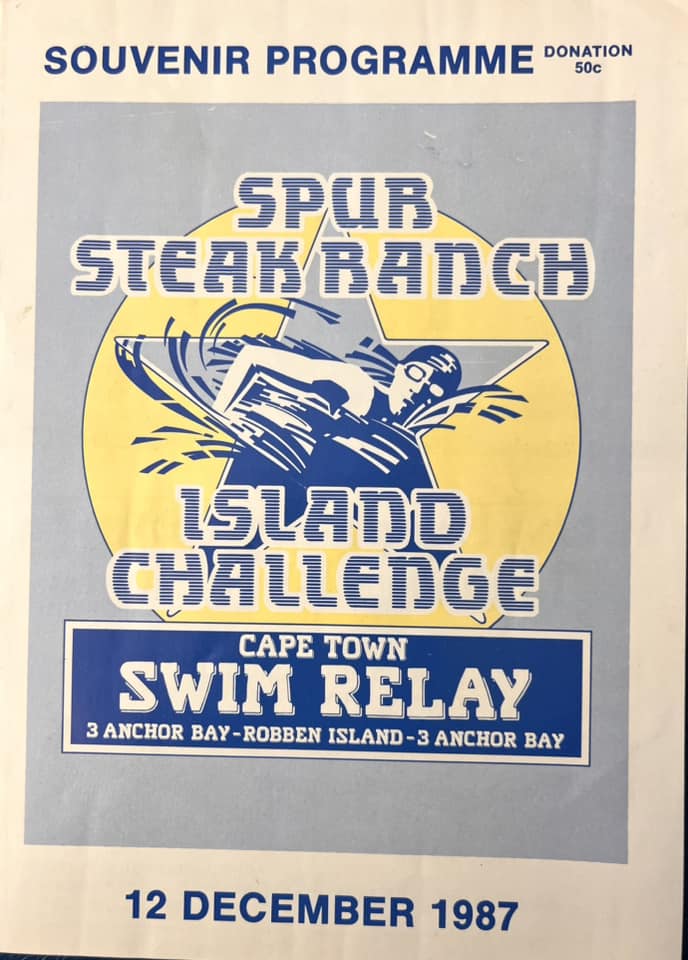
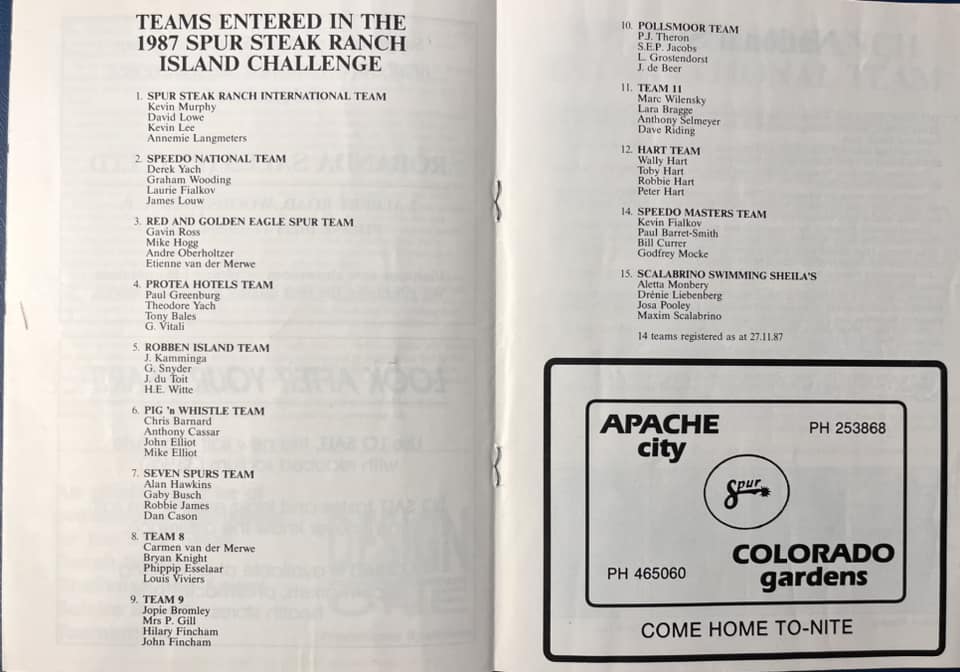
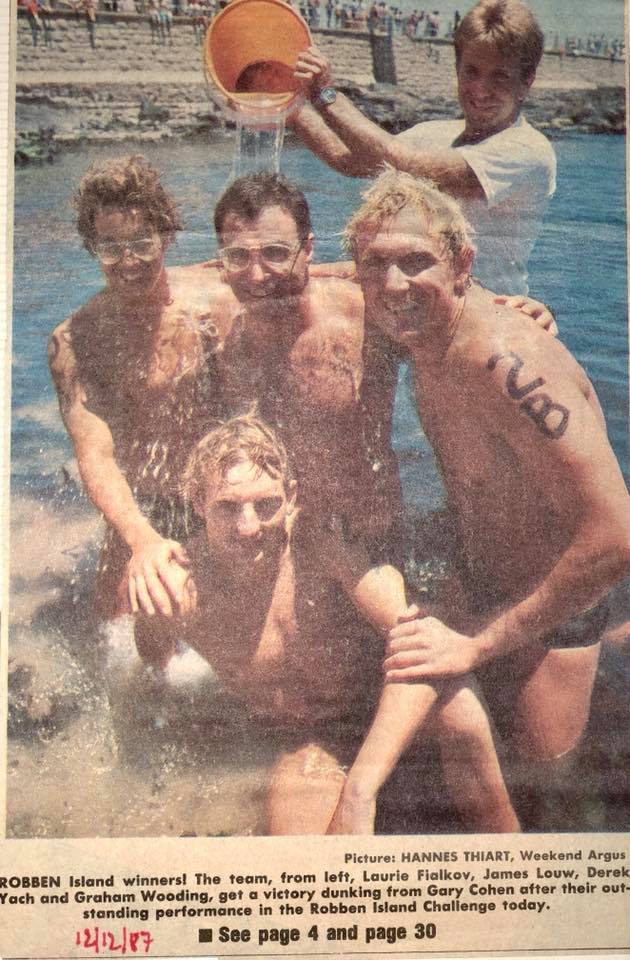
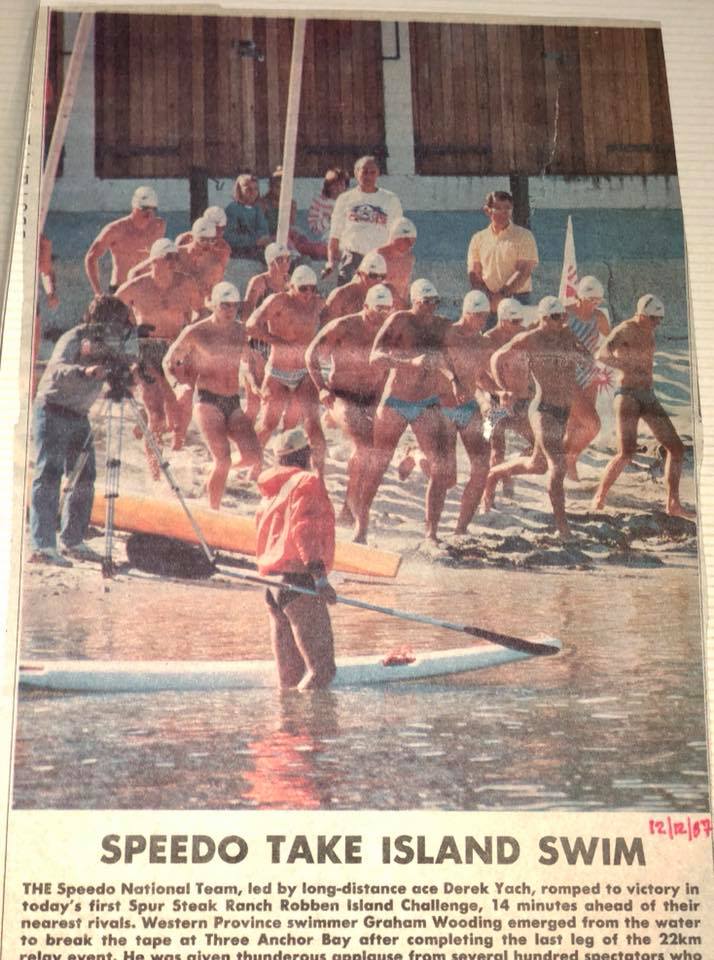
Derek completed a successful English Channel crossing ion the 4th August 1987. He was also a member of the winning team at the 1987 Robben Island relay race with Graham Wooding, Laurie Fialkov and James Louw.

Peter Bales, Clive Lurie, Tony Leng and Derek Yach at the start of a Robben Island swim in the early 1980s
Reflections on swimming through school and beyond!
Derek Yach (Wynberg Boy’s Junior and High 1961-1973)
It all started in my grandparents’ pool with Mrs. Mack and her long pole. The Mauerberger house, Alwyn then-designed by Herbert Baker, today the Palm House, is opposite Wynberg Boy’s Junior School and had one of the larger private pools in Cape Town in the late 1950s. It’s where my mother Estelle grew up and a mere mile from where we lived.

My sister Dianna (who went on to swim for Wynberg Girls and Western Province Schools) and Theodore (who joined my innumerable Wynberg swim meets and recently completed his 100th Robben Island swim) suffered the same fate as me. Thrown in to the pool-encouraged to grab the pole and start swimming. And the swimming never stopped. I suspect that was our father’s doing-and his effort to ensure that his love of swimming endured. Solly was a competitive Provincial and Springbok swimmer and water polo player who competed in the 1952 Helsinki Olympics.
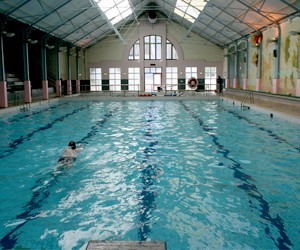
From those early survival training sessions we soon got into serious competitive swimming. This involved hours and hours of gazing at the bottom of Long Street pool in winter and Newlands pool in summer. I took part in one of the first gala there after it opened in the early 1960s that featured a Japanese national team! Daily swims in the Wynberg School pool over lunch were the norm as a first class school swimming team was shaped and excelled in inter-school meets throughout my school years.
As part of our Western Province Schools and Currie Cup squad we got to travel the country on steampowered trains. One lesson learned the hard way was humility! In Wynberg inter-house galas I was the swimming “valedictorian” for 2 years. In inter-club meets across Western Province I did well enough to make the provincial teams-but once we ventured beyond the Hex River Valley-I could rarely make a final! The national champions of the time who dominated came from the Transvaal and Natal.
As a teenager, Theodore and I were sent for to swimming camps in Kimberley led by Frank Gray. He coached the late Karen Muir leading her to a world record in backstroke in 1965 at 12 years of age. His son Simon, who went on to become a fine swimmer and notable coach, seemed to spend 10 hours in the pool at about the age of 8. And we spent a summer swimming camp in Bethlehem in the Free State led by Cecil Colwin. One of the best swimmers in the squad who went on to great things was Tyrone Tozer. Cecil was one the first full time swimming coaches in South Africa and had swimmers in every Olympics from the late 1940s till South Africa was excluded due to apartheid. Both these coaches have subsequently died leaving legions of inspired swimmers. My two main coaches though played a massive role in Western Cape swimming development-Clara Aurik (a Dutch Olympic swimmer herself) and Niels Bowes also Dutch. Niels went on to play a key role as a coach in Germany and continues to inspire his swimmers despite the gruelling 3 times 1km fly sessions that are etched in my memory. Both taught me both the love and techniques of swimming-and the value of dedicated perseverance. Strange to think that we trained then in an era when speedo swimsuits were just emerging and swimming goggles were being used for the first time!
There were many great swimmers I could never hope to beat but was always inspired by! Vernon Slovin was the first person I saw go under 2min 10 sec for 200m ‘fly. Paul Blackbeard had the most perfect butterfly, backstroke and freestyle strokes-and still today at 60 years old remains an inspiration in long distance swims across Australia. Jonty Skinner was a bullet in the water being the first person to go under 50 seconds in the 100m ‘free. One year I swam 1500m in a race with him in the next lane. I kept track of laps by counting the many times he lapped me!
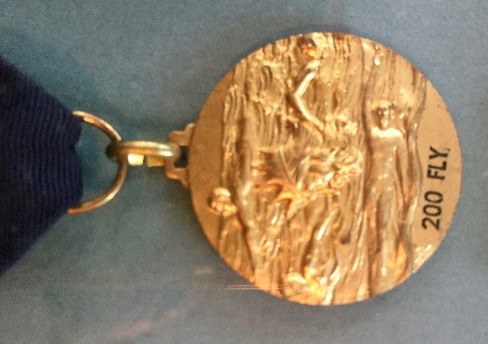
So many great pools we swam in then have long gone. Camps Bay indoor salt water pool was built at the end of a tram line linking the Bay to Long Street going over the Nek. Both pools were heated by excess steam from the power stations used for the tram. We trained there in winter to prepare for meetings in Durban’s salt water pool. The Swakopmund indoor Olympic pool had a short life! Built by wealthy mining interests-we took part in the opening gala (representing Gordon’s Club) in the mid-1970s and won solid gold, silver and bronze medals and a massive silver trophy for our efforts. It was closed in 2010 due to the high costs of upkeep. And I wonder if the 150 yard pool we trained in in Maselspoort outside of Bloemfontein remains?
Apartheid meant that we spent all of our school years in segregated pools. For swimming and all other sports it meant that the best could never compete internationally, and for most South Africans it meant virtually no access to pools or coaching. National inter-provincial competitions tried to keep swimmers competitive and for years included Rhodesia as a province with one of our more memorable South African National galas being in Bulawayo in 1974! By the time I was in medical school we knew segregated swimming would soon end. In 1975 I took part in the first swimming gala at Newlands that allowed the “coloured” teams to compete. When I lost, the newspapers, reflecting their continued racial bias, reported that a “grossly overweight Derek Yach allowed himself to be beaten by “coloured” swimmers! I might have been overweight but never once failed to try my best. I was beaten by better swimmers.
My father had always discouraged sea swimming. But through friends I started to compete in life saving tournaments for Clifton. That meant many hours of true open water swimming between Clifton and Barker Rock and to Saunders Rocks-never accompanied by a paddler. This is until a shark attack on Clifton Christmas weekend of 1976! It left a young swimmer with a deep gash in his back and ended unaccompanied swims over 400m off shore.
The joy of swimming in open waters took hold and soon I started doing regular Simonstown to Muizenberg and other combination races before Peter Bales (Channel swimmer in 1969) persuaded me to try a Robben Island swim from Three Anchor Bay. In 1981 I completed it as part of a UCT rag fundraiser supporter by Yasmin von Schirnding (then on the UCT Rag Committee and years later to become my wife!). Many other Island swims followed including the first successful double swim from Three Anchor Bay.
One the toughest sea swims I ever did was from Kommetjie Lighthouse past Noordhoek beach and Chapman’s Peak into Hout Bay. The recorded water temperature that day was below 10 degrees C! I started with Annemie Landmeters (a Belgium long distance swimmer) but after 2 hours she became hypothermic and was pulled out—leaving me to complete it in just under 3 hours. She then took up the challenge of False Bay after the late Godfrey Mocke, Kevin Fialkov (who also died recently) and I failed to complete it is despite 8 hours of glorious swimming from Rooi Els.
In time, Theodore took over custodianship of the Robben Island waters and went on to also complete a Channel swim as well as many others at insanely cold temperatures and our youngest brother, Jonathan, with Theodore’s support, became the third Yach to swim to Robben Island.
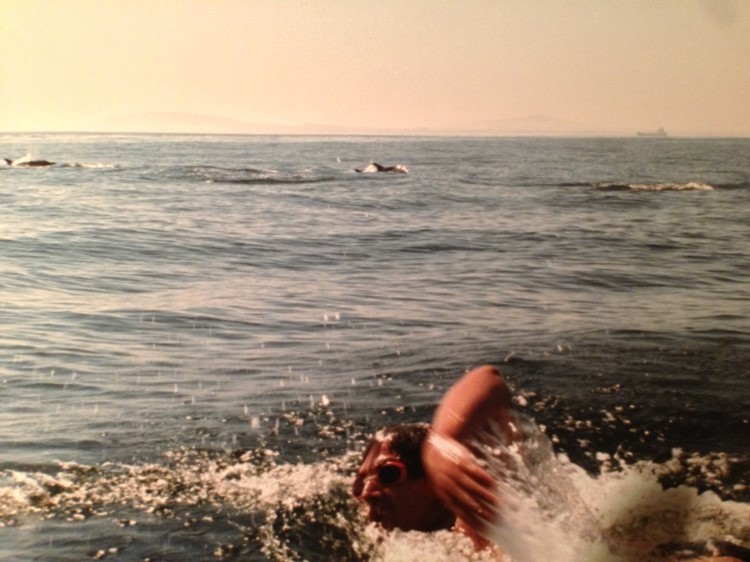
The joy of open water swims is made even more wondrous when accompanied by dolphins as experienced in the photo below!
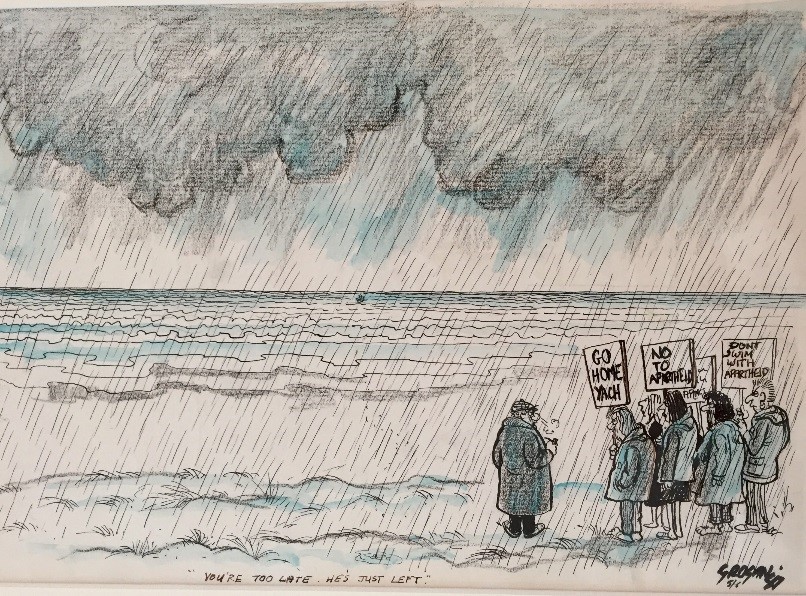
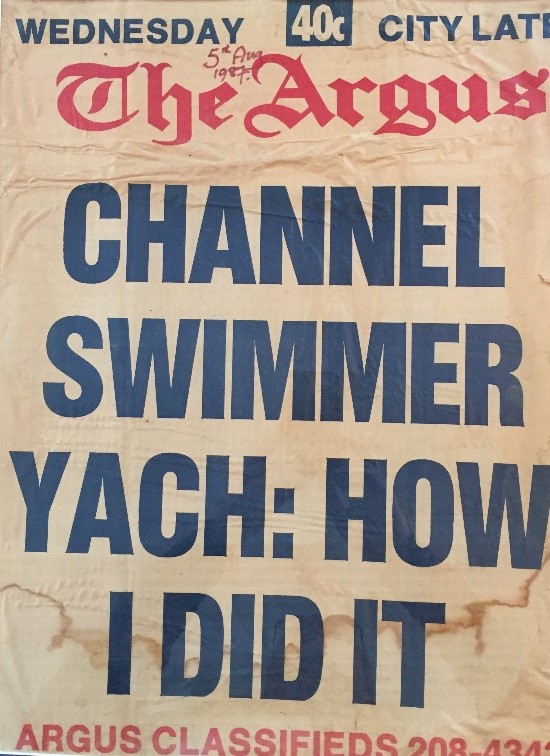
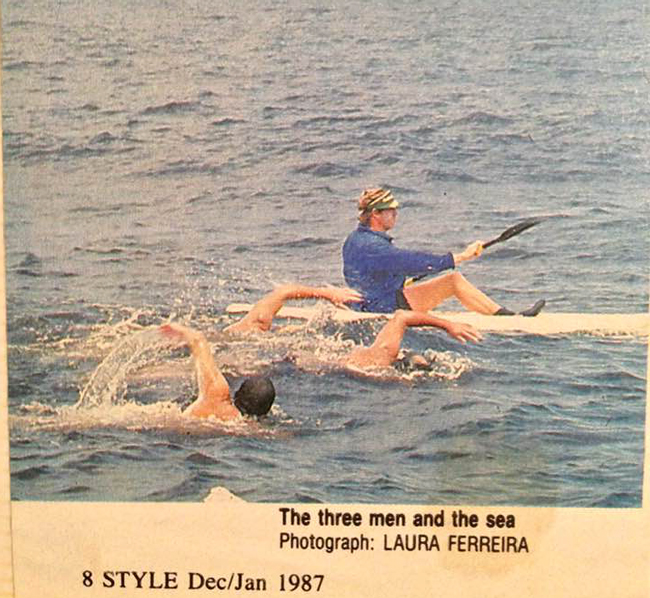
Not satisfied that I had done enough long-distance swimming, Peter Bales suggested in the mid-1980s that if I could do Robben Island why not try the English Channel? And after winter training in the dark in the Sea Point Pavilion when it was still 75 yards long (allowing exactly 60 second lap swims) and in the surf line off Fish Hoek at dusk (well before the now too regular shark visits!), Yasmin (my official “coach” and feeder) and Eddy Cassar (my very calming manager) set off for Dover sponsored by Constantia Carpets! The swim to Calais took 9 hours 48 minutes and ended in stormy seas but with a sense of real exhilaration and an ability to look at the map of England very differently.
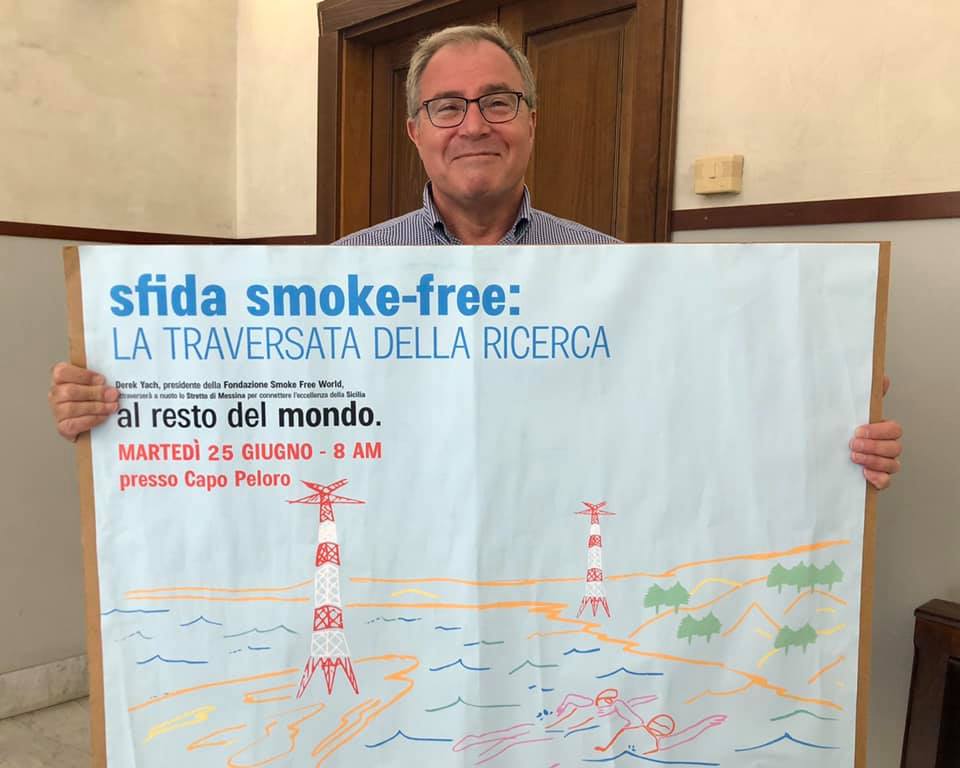
Other long swims followed-including Capri to Naples in 1990. Slightly longer then the Channel but warmer and an FINA official race. That led the officials to officially change my country of origin from South Africa to Rhodesia (even though it had been Zimbabwe for over a decade-that had been missed by the Italian race organizers)! Yasmin and my late father fed me Italian patisseries and mozzarella and tomato sandwiches on the 10 hour swim.
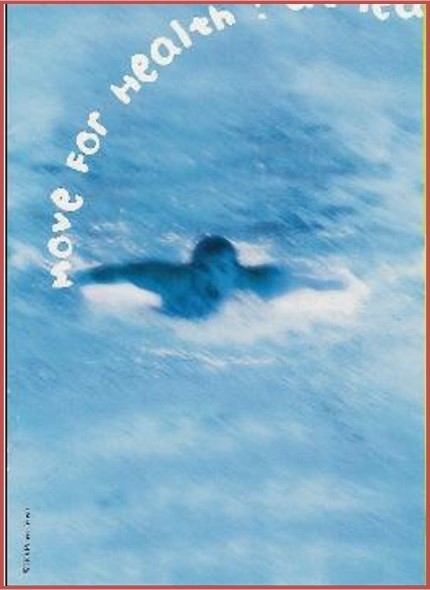
Yasmin and I moved first to Switzerland where we worked at the World Health Organization (WHO) for a decade and then to the USA where we still live. While at WHO I snuck onto the global “move for health” posters that went global as part of World Health Day 2002! My chance for global fame as the poster were translated and used in over 100 countries!
Global health requires travel and that has meant swimming in pools, rivers, lakes and oceans on all continents. From the bizarre experience of having South African lifeguards protect me on the Dubai beaches, to the need to swim naked with a swimming cap in the century old University Club in central New York, to experiencing a rare swimming pool in Jeddah, the exquisite setting of Lake Como surrounded by renaissance villas and the start of the Italian Alps, to one of the few pools in an airport (in Qatar), to the beaches of Monte Carlo where I could swim before and after a recent Tedx talk, to one of my favorite pools in London-the world’s first YMCA-I continue to find new places to appreciate the joy of a daily swim.

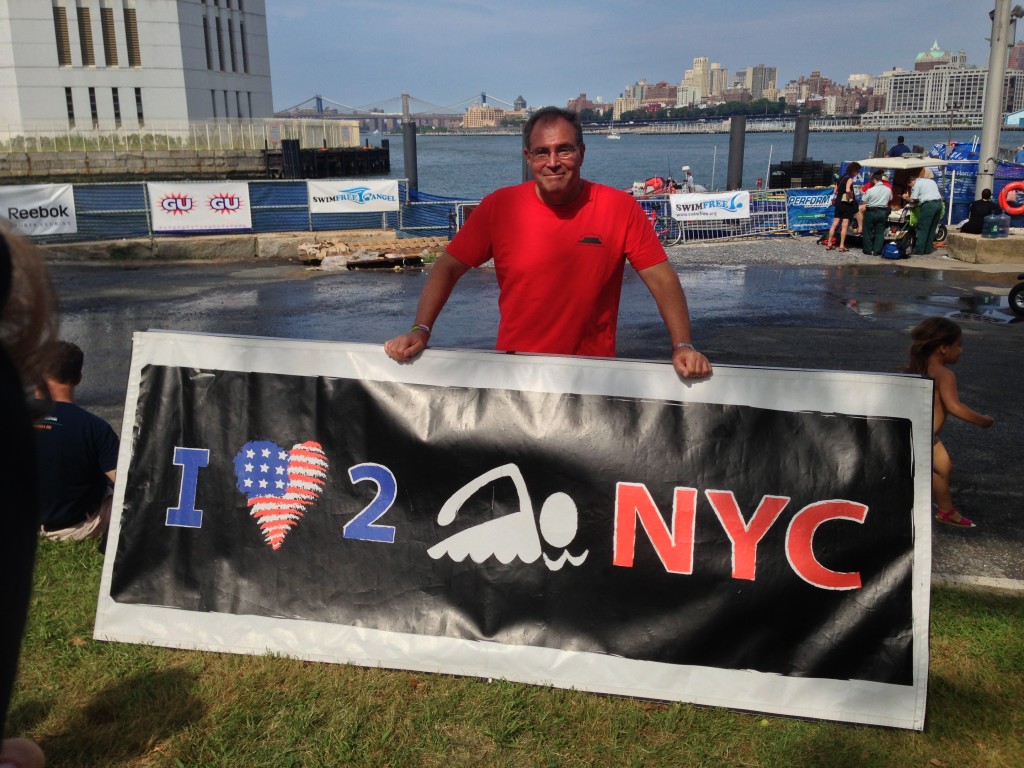
The pool races that filled my Wynberg School weekends have given way to open water swim meets where place is less important than the experiences of the settings and the diversity of people. My summer now includes 3 or 4 of these-including swims up the Hudson River passing the Little Red Lighthouse under the imposing George Washington Bridge, relays around Manhattan Island and most recently, a swim the day before the anniversary of 9/11 from the base of the Statue of Liberty to Ellis Island and ending at the new Freedom Tower.

Swimmers for that event in 2016 came from Mexico, Turkey, France, the Netherlands, Egypt, the UK and more. We all felt and knew that it was more than a swim. But more a pilgrimage to appreciate the deep sacrifices made by people to build the US. In much the same way that many swimmers completing the Robben Island swim experience. I first swam to Robben Island when Nelson Mandela and many of South Africa’s leaders were imprisoned there. Now we can all enjoy the swim in a free country-but one where the vision of what Mandela pondered sitting on that island remains to be realized.
It is a long way from Alwyn and Wynberg to the US but those early experiences get relived every day I swim. Many of the swimmers I trained with and had fun with join me as I enter the water and enjoy the freedom to think about everything and nothing.
Derek Yach February 2017 @swimdaily


















“Swimming has been my lifesaver”

Derek Yach kept swimming while receiving treatment for cancer – he shares his incredible story with us
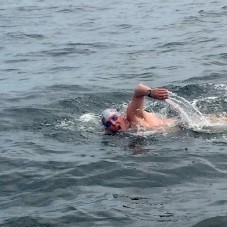
I have swum my whole life. It started in pools in Cape Town and led to years of following the black lines, building friendships, being soaked in chlorine, enjoying the thrill of competitions and the milkshakes that followed. I migrated to open water during medical school in Cape Town. I was a lifesaver on Clifton, one of the most beautiful beaches in the world, and started swimming longer distances. First around our bay, then and under the direction of my wife to be, Yasmin, my first Robben Island crossing (about 10km from the Cape Town shore). Many more followed including the first double between Three Anchor Bay and the Island in Cape Town accompanied by dolphins and threatened by Great Whites.
The views of Table Mountain, the pull of currents, the fresh cool waters (usually about 55 degrees Farenheit) and the mere challenge of finishing kept me seeking more. The English Channel, many open water swims in Europe followed before moving to the US.
We settled in the town of Fairfield on the Long Island Sound, where almost daily swims in the Sound became my morning routine. Usually with a great group of friends. Our Sound swims intensified during the pandemic when indoor pools closed, and we agreed to keep going through the winter even as temperatures dropped into the 30s. Sans wetsuits we built our rituals to get warm fast on exiting and then enjoy the hours of euphoria that followed.

We swim at dawn at Penfield Beach and try to start just before the sun rises to soak in the sun’s wake, the gentle sounds of waves, the ever-present gleaming white egrets, and screaming seagulls. I cannot help but feel awe, gratitude and joy during those early morning swims. Imagine my shock when having been diagnosed five months ago with esophageal cancer (thankfully early stage) I was told I may never swim again, starting with the onset of my four months of chemoradiotherapy. I stoically prepared myself for this by having my last pool swim at our local YMCA and then two “last” Sound swims, the first with my accomplished and inspiring swim friend Jim Bayles and then with Yasmin watching.
Chemotherapy started. It included Oxaliplatin which is known to induce severe cold sensitivity and peripheral neuropathy and the usual nausea and exhaustion. After the first infusion I immediately experienced the cold sensitivity. I could not open the fridge, needed gloves to hold cold items, got severe cold “prickles” in my hands and feet once I stepped outside, could not eat or drink anything cold, and developed “first bite” symptoms with any food, which sent searing pain down the sides of my mouth.
On day three I asked again why I could not swim. Fear of infection seemed the only real concern. We agreed to watch for this and closely monitor my blood status. So, I started swimming again in the YMCA and within a few days, with the cold sensitivity subsiding, returned to the Sound and our exquisite waters of Sherwood State Park. And kept going. With radiotherapy now completed and a week of chemotherapy to go, I have clocked over 300km on my Garmin between the Sound and the YMCA. In addition, I’ve been doing over 10,000 steps daily for four months.
On the days I got infusions and could not swim, I walked the beach early in the morning, watching my swim friends, Jim, Chris, Keith and Markus as they glided across the bay. The sunrises seemed more perfect, the egrets more plentiful, and the chance to save a few lives of stranded horseshoe crabs felt like a blessing. There were days when the combination of the red sunrise (thanks to Canadian smoke!) and the silky greyblue surface of the water led me to feel what is described in Genesis 1: “and the spirit of God was hovering on the waters”. It left me with a sense of deep peace and gratitude.

The days turned into weeks and then months. The dreaded symptoms were modest. No nausea severe enough to warrant taking one of the pills from boxes of medications I had been prescribed. I learned to live with the cold sensitivity and adjust my diet accordingly. Some peripheral neuropathy lingered and still does, but not enough to affect my daily activities. I have felt slightly more tired and enjoy a daily nap, but overall feel that swimming has been a real lifesaver. The physical act of swimming, the deep immersion in open waters, and most importantly the support and camaraderie of fellow swimmers have all helped me get through what many patients describe with pain, exhaustion and depression.
I still have a long road ahead – including surgery – and know that for many people swimming is not an option. But what I have learned is that physical activity has many benefits for those on cancer treatment. This is backed by years of substantive epidemiological research focused on several cancers. Physical activity reduces the severity of chemotherapy and radiotherapy side effects and contributes to improved survival. These benefits being in addition to better mental health and wellbeing.
My advice to people facing similar challenges is to stay active and try swimming: your life may depend upon it! Special thanks to my core Penfield swimming friends: Jim Bayles, Chris Spearing, Markus Marty, Cathy Lozier, Ellen Finnegan and Keith Kirkpatrick; my oncology team led by Drs Du and Persico at Yale Smilow Cancer Center; and my wife, Yasmin von Schirnding for their exceptional constant support.